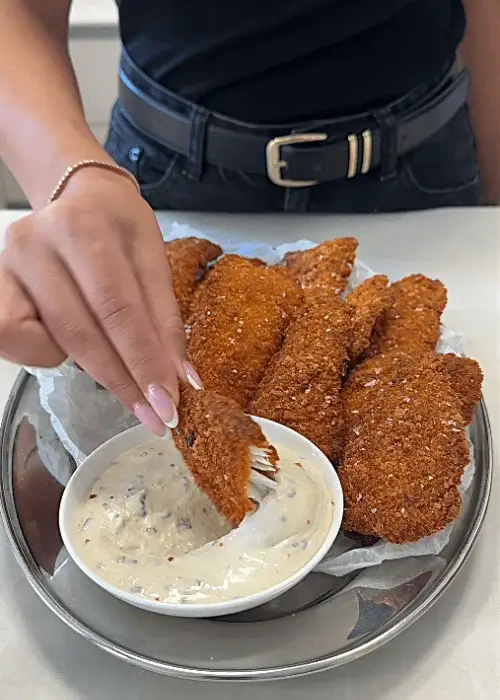
Crispy Fried Fish Sticks
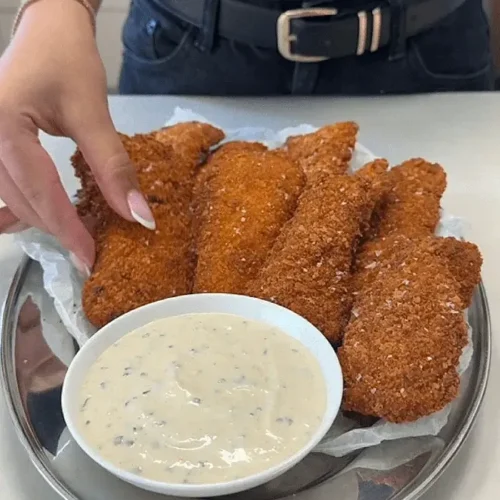
Watch the Full Step-by-Step
- large mixing bowls
- Shallow bowls
- Large skillet
- Wire rack
- Microplane
- Chef's knife
INGREDIENTS
Fish:
- 1.5 pounds/680 grams sea bass fillets, cut into 20 pieces
- 1 teaspoon salt
- ½ teaspoon black pepper
- 3 large eggs
- 1 tablespoon seasoned garlic spread
- 1½ teaspoons mustard
- 1½ cups garlic-flavored panko
- 1½ cups plain panko breadcrumbs
- ½ teaspoon granulated garlic
- 1 teaspoon paprika
- 2 teaspoons fresh thyme leaves
- 1 teaspoon salt
Dip:
- 5 tablespoons seasoned garlic spread
- 2 tablespoons spicy mayonnaise
- ¼ cup chives, chopped
- 1 teaspoon fresh thyme leaves
- 1 tablespoon lemon zest
- 2 tablespoons lemon juice
- ½ teaspoon mustard

INSTRUCTIONS
- Season the fish with salt and pepper.
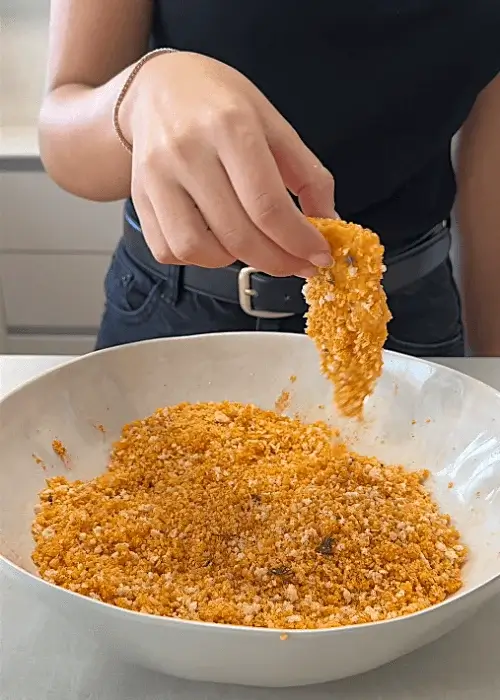
- In a medium bowl, whisk the eggs, garlic spread, and mustard until smooth. In a shallow bowl, combine the panko, granulated garlic, paprika, thyme, and salt.
- Working one piece at a time, dip the fish in the egg mixture, then coat in the panko, pressing to adhere. Repeat, dipping again in the egg and coating once more in the panko to form a thick crust.
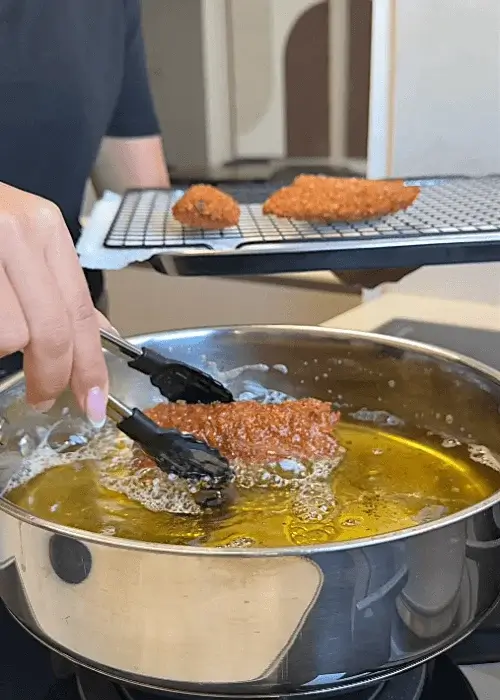
- Pour oil to a depth of 2 inches/5 centimeters into a large skillet and heat over medium-high to 350°F/175°C. Fry the fish in batches until deep golden and crisp and the fish flakes easily, 2 to 3 minutes per side. Transfer to a wire rack set over a sheet pan.
- In a small bowl, stir together the garlic spread, spicy mayonnaise, chives, thyme, lemon zest, lemon juice, and mustard until smooth.
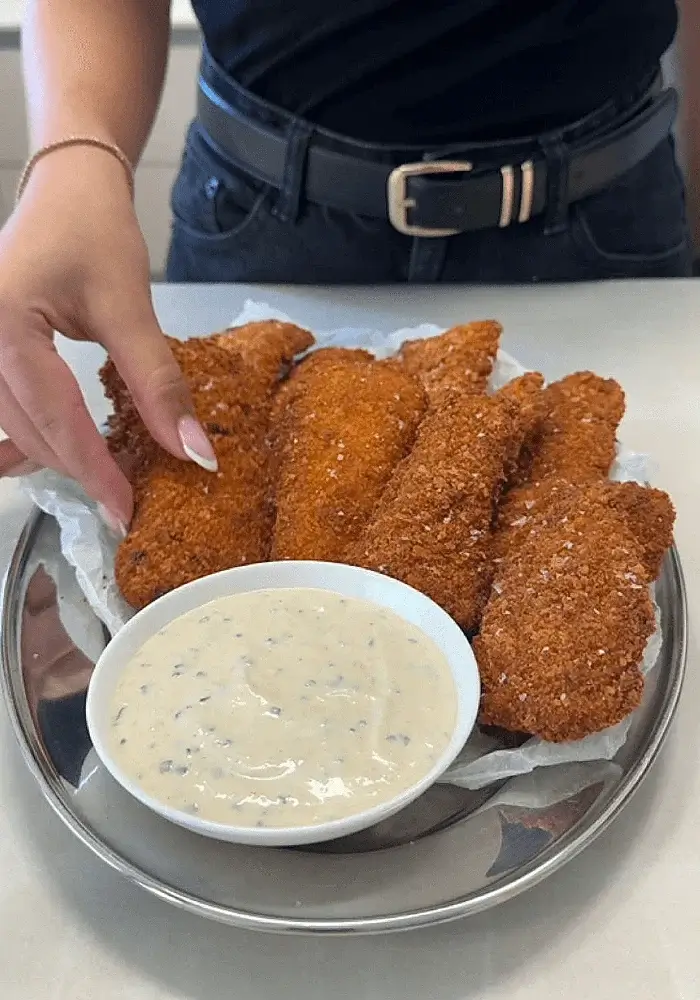
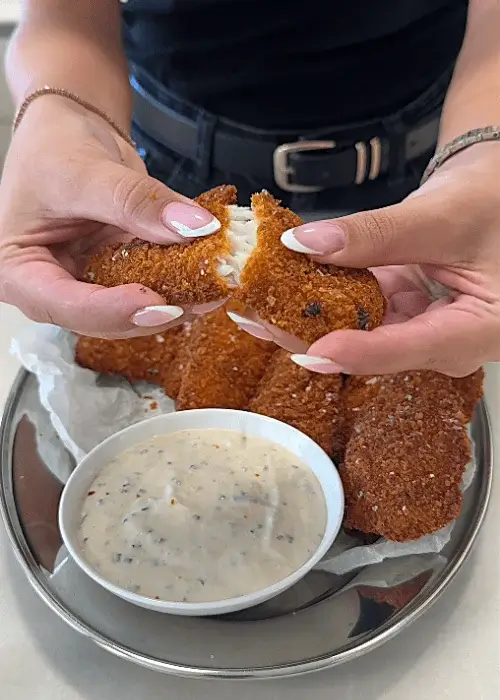
- Serve hot with the dipping sauce and a light sprinkle of coarse salt.
FAQ
How do you get crispy fried fish with a thick, crunchy coating that doesn’t fall off?
The key step is the double coating process, where the fish is dipped in the egg mixture, then coated in panko, and repeated once more. This builds a thicker crust that locks onto the surface of the fish. Pressing the breadcrumbs firmly onto the fish ensures maximum adhesion and prevents gaps that could cause the coating to separate during frying.
Moisture control is also critical. Patting the fish dry before seasoning helps the egg mixture stick more effectively. If the surface is too wet, the coating can slide off. Additionally, allowing the coated fish to rest for a few minutes before frying helps the layers set. During frying, avoid overcrowding the pan, as this lowers oil temperature and leads to soggy results.
What type of fish works best for crispy fried fish sticks?
For crispy fried fish, firm white fish with low oil content is the most suitable choice. Sea bass, as used in this recipe, offers a delicate yet structured texture that holds together well during frying. Other excellent options include cod, haddock, halibut, and pollock. These varieties have large, flaky muscle fibers that remain moist while providing enough integrity to withstand breading and frying without breaking apart.
Avoid overly delicate fish like sole or flounder, which can fall apart during coating or frying, and oily fish like salmon, which can overpower the flavor profile and affect the crispness of the coating. Thickness also matters. Fillets should be cut into uniform pieces to ensure even cooking. Uneven sizes will result in some pieces overcooking while others remain underdone.
What oil and temperature are best for crispy fried fish?
Neutral oils with high smoke points, such as canola, vegetable, or peanut oil, are ideal because they can withstand high heat without breaking down or imparting unwanted flavors. The target temperature for frying is 350°F/175°C, which allows the coating to crisp quickly while preventing excessive oil absorption.
If the oil is too cold, the coating will absorb oil and become greasy rather than crisp. If it is too hot, the exterior may burn before the fish is fully cooked. Using a thermometer is the most reliable way to maintain consistency. Frying in batches helps stabilize the oil temperature, as adding too many pieces at once can cause a sharp drop in heat.
Why is panko better than regular breadcrumbs for crispy fried fish?
Panko breadcrumbs are significantly more effective than traditional breadcrumbs for achieving crispy fried fish due to their structure and composition. Panko is made from crustless bread and processed into larger, airy flakes. These flakes create more surface area and trap air during frying, resulting in a lighter, crunchier texture. In contrast, regular breadcrumbs are finer and denser, which can produce a heavier, less crisp coating.
The irregular shape of panko also promotes better oil circulation around each crumb, allowing for more even browning. When combined with a double coating technique, panko forms a structured crust that stays crisp longer after frying. Additionally, panko absorbs less oil than standard breadcrumbs, which helps maintain a clean, non-greasy finish.
How do you know when the fish is fully cooked?
The exterior should be deep golden brown and uniformly crisp, which typically takes 2 to 3 minutes per side at the correct oil temperature. Internally, the fish should flake easily when pressed with a fork, indicating that the muscle fibers have separated properly. The flesh should appear opaque rather than translucent.
For more precision, the internal temperature should reach approximately 135–140°F (57–60°C). Because fish continues to cook slightly after being removed from the oil, it is best to pull it just before it reaches full doneness. Overcooking can result in dry, tough fish, even if the exterior remains crisp. Cutting into one piece from the first batch can help calibrate timing for the rest.
How do you keep the fish crunchy after frying?
The most effective method is transferring the fish directly to a wire rack set over a sheet pan rather than placing it on paper towels. A rack allows excess oil to drip away while preventing steam from building underneath, which would soften the crust. Paper towels trap heat and moisture, leading to sogginess within minutes.
It is also important to avoid stacking the fish immediately after frying. Stacking traps steam and compresses the coating, reducing crispness. If cooking in batches, place finished pieces in a low oven at 200°F/95°C on a rack to keep them warm and dry without overcooking. Proper oil temperature also plays a role, as well-fried crispy fried fish absorbs less oil and retains its structure longer.
Can you make crispy fried fish ahead of time and reheat it successfully?
Crispy fried fish is best served fresh, but it can be made ahead and reheated with good results if handled correctly. The key is to avoid moisture during storage and use dry heat when reheating. After frying, allow the fish to cool completely on a wire rack before storing it in an airtight container lined with paper towels to absorb residual oil. Refrigerate promptly to maintain food safety.
For reheating, use an oven or air fryer rather than a microwave. Heat at 375°F/190°C for 8 to 10 minutes, or until the coating is re-crisped and the fish is warmed through. The circulating hot air restores the texture of crispy fried fish by evaporating surface moisture. Avoid overcrowding during reheating to ensure even airflow.
How does double coating improve the texture of crispy fried fish?
Double coating significantly enhances the texture of crispy fried fish by building a thicker, more structured crust. The first layer of egg and panko establishes a base, while the second layer reinforces it, filling gaps and creating a more uniform surface. This layered structure traps air and moisture during frying, resulting in a crunchier exterior.
The additional coating also provides better insulation, allowing the fish inside to cook gently while the exterior crisps. This reduces the risk of overcooking the interior before achieving the desired golden crust. Double coating also improves durability, making the crust less likely to break or fall off during handling.
Can you bake instead of fry and still get a crunchy result?
The key is to maximize surface dryness and heat exposure. Preheating the oven to a high temperature, around 425°F/220°C, helps initiate rapid browning. Placing the coated fish on a wire rack over a sheet pan allows hot air to circulate around all sides, improving crispness compared to direct contact with a flat surface.
Lightly spraying or drizzling the coated fish with oil before baking promotes browning and mimics the frying effect. While the result will not be identical to deep frying, using panko and a double coating still produces a satisfying crunch. Flipping the fish halfway through baking ensures even crisping.
What size and thickness should fish pieces be for even cooking?
Ideally, each piece should be about 1 to 1½ inches wide and roughly the same thickness throughout. This ensures that all pieces cook at the same rate, preventing some from overcooking while others remain underdone. Cutting the fish into consistent portions also improves frying efficiency and helps maintain oil temperature stability.
Pieces that are too thick may brown on the outside before the interior is fully cooked, while very thin pieces can dry out quickly and lose their tender texture. Maintaining a balanced thickness allows the coating to crisp at the same pace as the fish cooks through.
Can you use frozen fish?
Frozen fish can be used for crispy fried fish, but proper thawing and moisture control are essential for good results. Fish should be thawed slowly in the refrigerator overnight rather than at room temperature, which helps preserve texture and prevents bacterial growth. Once thawed, it is critical to pat the fish completely dry with paper towels to remove excess moisture. Any residual water will interfere with coating adhesion and create steam during frying, leading to a less crisp crust.
After drying, the fish should be seasoned and coated immediately to avoid reabsorbing moisture. Frozen fish can sometimes release additional liquid compared to fresh fish, so extra attention to drying is necessary.