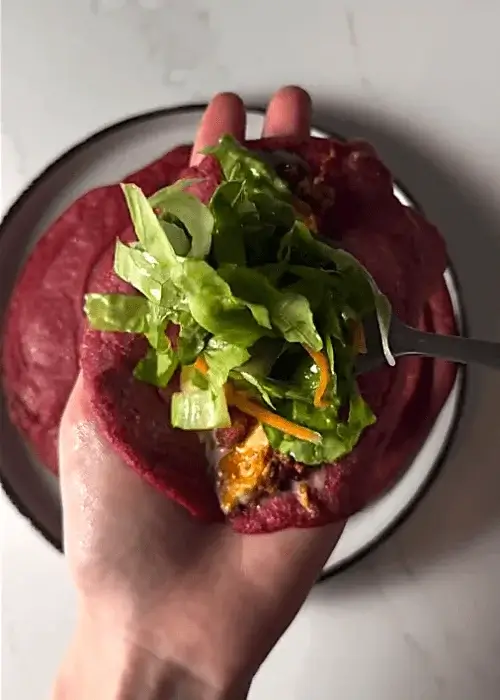
High Protein Tortillas with Quinoa and Beet
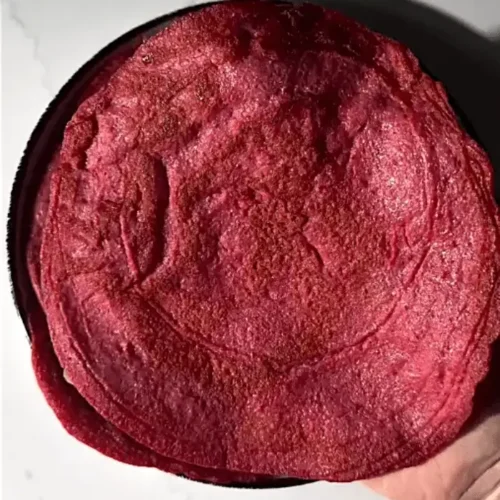
Watch the Full Step-by-Step
- Blender
- Nonstick skillet
INGREDIENTS
- 1 cup/170 grams quinoa, soaked overnight and drained
- 1 medium cooked or roasted beet
- 4 tablespoons red lentil flour or ⅓ cup rolled oats
- ½ teaspoon salt
- ½ teaspoon garlic powder
- ½ teaspoon dried oregano
- Pinch of dried basil
- ½ cup/120 grams water, plus more as needed

INSTRUCTIONS
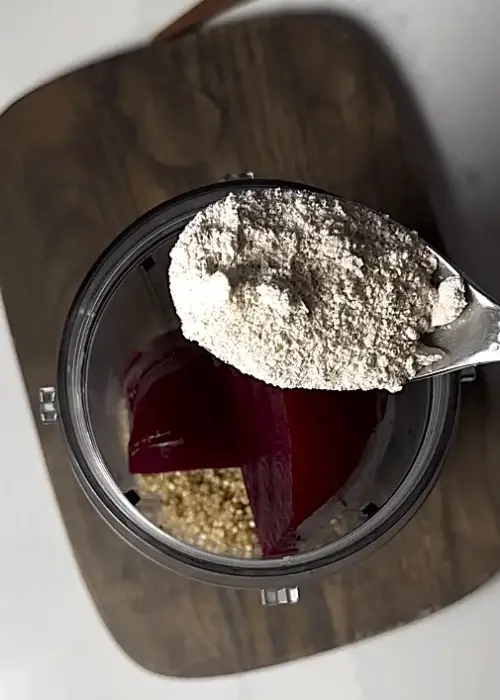
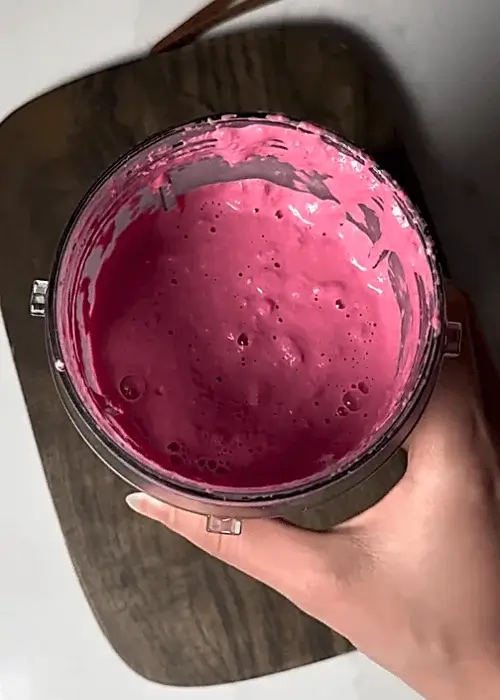
- Put the quinoa, beet, flour or oats, salt, garlic, oregano, basil, and water in a blender. Blend until smooth, adding more water as needed for a pourable batter.
- Heat a nonstick skillet over medium heat. Pour in a thin layer of batter and spread it out.
- Cook until bubbles form and the top looks dry, 1 to 2 minutes. Flip and cook for 30 to 60 seconds more.
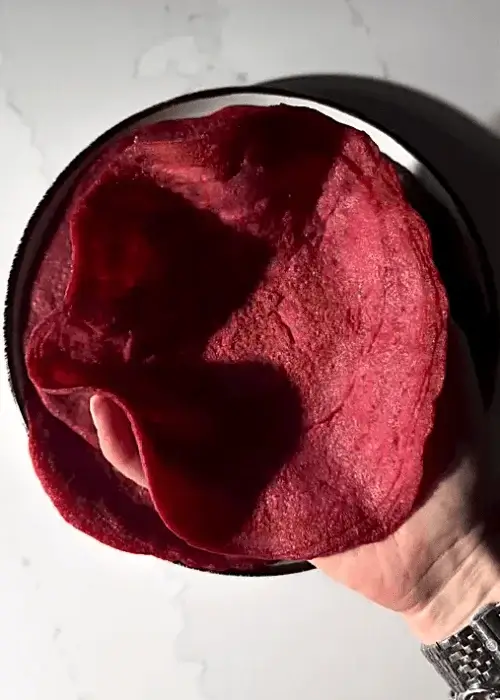
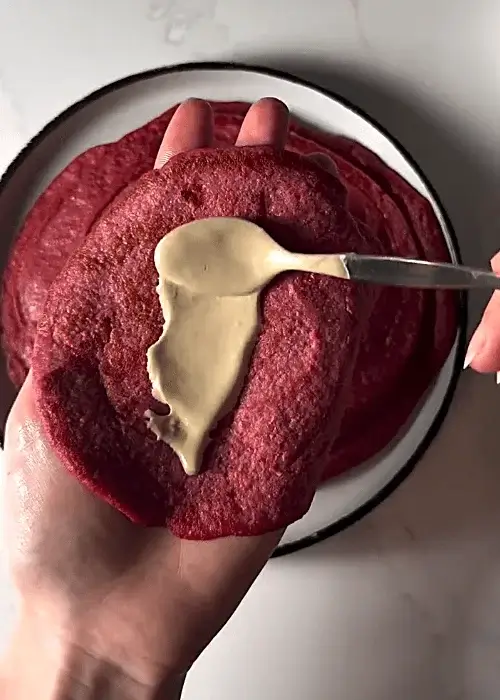
- Wrap the tortillas in a clean kitchen towel to keep them soft. Fill and serve.
FAQ
What makes these tortillas nutritious and high in protein?
The nutritional profile of a high protein tortilla like this comes primarily from the combination of quinoa and red lentil flour or oats. Quinoa is a complete plant protein, meaning it contains all nine essential amino acids, which is relatively rare in plant-based foods. When blended into a batter, it contributes both protein and complex carbohydrates that support sustained energy release.
Red lentil flour further increases the protein density while adding fiber and micronutrients such as iron and folate. The beet contributes antioxidants like betalains, which support cellular health but does not significantly alter protein content. Overall, the structure of this high protein tortilla is designed to balance protein, fiber, and slow-digesting carbohydrates, making it more satiating than a standard wheat-based wrap.
What fillings work best with a high protein tortilla without causing it to tear?
Because a high protein tortilla is more delicate than gluten-based wraps, fillings should be chosen based on moisture control and structural weight. Dry to moderately moist fillings work best, such as grilled vegetables, scrambled eggs, shredded chicken, or thick legumes like hummus. High-moisture ingredients such as raw tomatoes or watery sauces can weaken the tortilla surface and increase tearing risk.
Layering technique also matters; spreading a thin barrier like hummus or mashed avocado helps protect the tortilla from direct moisture contact. Overfilling is another common issue, as this type of tortilla has less tensile strength than wheat-based alternatives. Ideally, fillings should be distributed evenly in a central strip rather than overloaded in one area.
Can I substitute ingredients in the high protein tortilla recipe?
In a high protein tortilla, quinoa is central because it provides both structure and protein after soaking and blending. If quinoa is unavailable, soaked buckwheat or cooked brown rice can work, though the protein content and elasticity will change. Red lentil flour can be replaced with chickpea flour, which maintains protein levels and improves structure, but it may produce a slightly denser texture.
Rolled oats work as a milder alternative but reduce overall protein density. The beet can be substituted with cooked carrots or pumpkin, but these will change color and sweetness. Water ratios may need adjustment depending on moisture content of substitutions. Any change should still maintain a pourable batter consistency for proper cooking.
Why is my high protein tortilla sticking to the pan even when using a nonstick skillet?
Sticking issues in a high protein tortilla usually come down to heat control, pan condition, and batter composition rather than just the cookware type. Even nonstick surfaces require proper preheating to form a temporary barrier between the batter and the pan. If the pan is not fully heated before pouring, the proteins in quinoa and lentil flour begin setting too slowly and bond to the surface instead of releasing cleanly.
Another common issue is insufficient fat in the batter itself; this recipe is intentionally low in fat, so the thin layer must rely on correct heat rather than oil. If the batter is too wet, it can also cling because it spreads too thin before setting. Finally, old or scratched nonstick coatings lose effectiveness. For consistent results, ensure medium heat, fully preheated pan, and a batter that is smooth but not watery.
Why do my high protein tortillas shrink after cooking?
Shrinkage in a high protein tortilla is typically caused by moisture loss and internal tension in the cooked starch-protein network. As water evaporates during cooking, the structure contracts, especially if the batter was spread unevenly or too thick. Quinoa and lentil proteins tighten as they set, and if the tortilla is flipped too early or cooked at inconsistent heat, this contraction becomes more pronounced.
Another contributing factor is insufficient resting time after cooking; immediately stacking or moving the tortilla can trap steam unevenly, causing it to pull inward as it cools. Additionally, low-fat formulations like this one lack the lubricating effect that fats provide in traditional tortillas, which normally helps maintain flexibility and reduce shrinkage. To minimize this effect, ensure an even thin spread, controlled medium heat, and allow the high protein tortilla to rest briefly under a towel to stabilize its structure before stacking or filling.
How does beet affect the texture and flavor of the high protein tortilla?
Beet plays a functional and sensory role in this high protein tortilla recipe. From a texture standpoint, cooked beet contains natural sugars and moisture that help create a smoother, more cohesive batter when blended with quinoa and flour. This improves spreadability in the pan and prevents cracking during cooking. Beets also contain pectin, which can contribute slight binding properties.
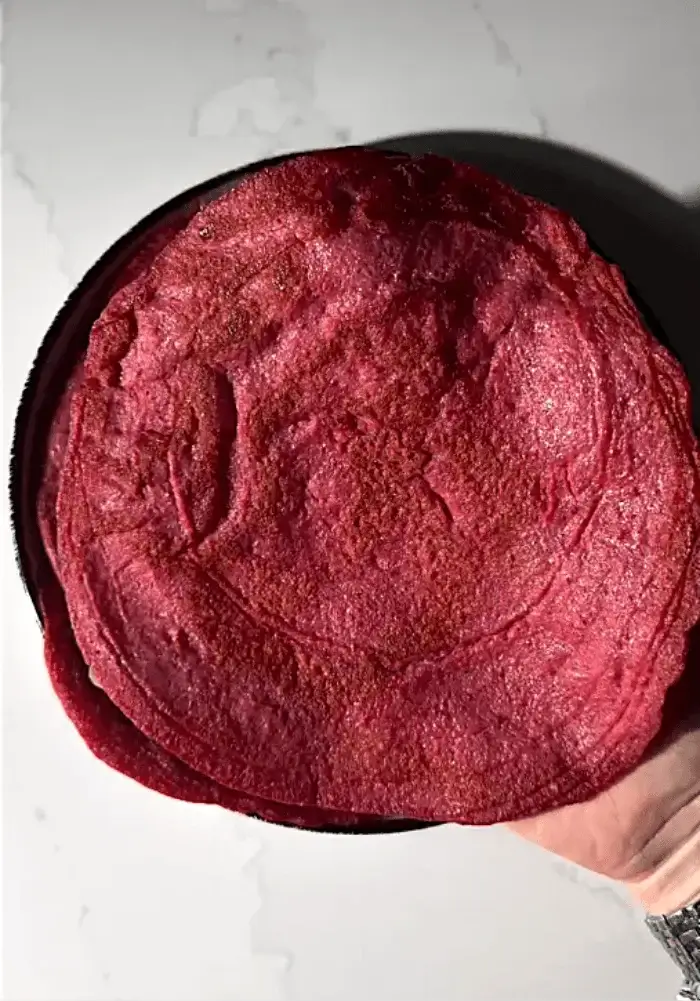
In terms of flavor, beet adds a mild earthiness and subtle sweetness that balances the neutral profile of quinoa and legumes. This prevents the tortilla from tasting overly grainy or bitter, which can happen with high-protein plant-based batters. Additionally, beet provides a natural deep red color, which improves visual appeal and makes the final high protein tortilla more attractive for serving or social media presentation without using artificial coloring.
How can I adjust this tortilla recipe for higher protein content without ruining texture?
The most effective way is to slightly increase red lentil flour while reducing oats, since lentil flour has a higher protein concentration. You can also add small amounts of unflavored pea protein, but this must be done carefully, typically no more than 1 to 2 tablespoons per batch, because excessive protein powder can make the tortilla dry and rubbery.
If increasing protein, you will likely need to raise water content slightly to maintain a pourable batter. Another option is to add an extra spoon of soaked quinoa, which increases protein while preserving structure. The key principle is that a high protein tortilla must remain hydratable; otherwise, higher protein density will compromise flexibility and lead to cracking during folding or reheating.
What causes the high protein tortilla to become gummy instead of soft?
A gummy texture in a high protein tortilla usually results from excessive starch activation combined with insufficient evaporation during cooking. Quinoa and oats both contain starches that gelatinize when heated, and if the batter is too wet or the heat is too low, these starches do not set properly into a stable structure. Instead, they remain partially hydrated, producing a sticky or gummy mouthfeel.
Over-blending can also contribute by breaking down starch granules too finely, increasing their tendency to gel. Another factor is thickness; if the batter layer is too heavy in the pan, the interior may not fully cook while the exterior sets, trapping moisture. To prevent this, the batter should be thin, the pan properly preheated, and cooking time tightly controlled.
How should I store and reheat high protein tortillas?
Proper storage is important to maintain flexibility in a high protein tortilla because plant-based batters tend to dry out faster than wheat-based wraps. Once cooked, tortillas should be cooled completely and stacked with a layer of parchment or a clean kitchen towel between each one to prevent sticking. They can then be stored in an airtight container in the refrigerator for up to 3 to 4 days.
For longer storage, freezing is effective; place parchment between each tortilla and store in a sealed freezer bag for up to 2 months. To reheat, avoid dry heat alone, which can make them brittle. Instead, warm them in a nonstick skillet over low heat with a light cover, or briefly steam them to restore pliability. This helps the high protein tortilla regain softness and flexibility for folding and filling.
Why does soaking quinoa overnight matter in this high protein tortilla recipe?
Soaking quinoa overnight is a critical step for both texture and digestibility in a high protein tortilla. Raw quinoa contains natural saponins, which can create bitterness and interfere with flavor if not properly removed. While rinsing helps, soaking further reduces these compounds and softens the grain structure, allowing it to blend into a smoother batter. This is important because a high protein tortilla relies on a uniform, lump-free base to cook evenly in the pan.
Soaking also begins partial hydration of the starches, which improves binding and reduces grittiness in the final texture. From a functional standpoint, soaked quinoa blends more efficiently, requiring less water adjustment and producing a more consistent batter viscosity. Skipping this step often results in a grainy texture and weaker structural integrity in the cooked tortilla.
Can I make the high protein tortilla without a blender?
It is technically possible to make a high protein tortilla without a blender, but the texture and structural quality will be significantly affected. The blender is essential for breaking down soaked quinoa and cooked beet into a uniform, emulsified batter. Without it, the mixture tends to remain grainy and uneven, which leads to inconsistent cooking and weak binding.
If a blender is not available, a food processor is the closest alternative, though results may still be slightly coarser. Manual methods such as mashing or whisking are not sufficient because quinoa grains require high shear force to fully break down. If attempting it by hand, the beet should be fully mashed into a paste, and quinoa should be overcooked slightly to soften it before mixing. Even then, the final high protein tortilla will likely be thicker and less flexible than the intended version.
Why did my high protein tortilla turn out brittle or cracking?
A high protein tortilla can become brittle for a few predictable technical reasons, mostly related to hydration, fat balance, and cooking time. If the batter is too thick, it won’t spread into a thin, even layer, which leads to a dense structure that cracks when folded. Insufficient water in the blending stage is the most common issue, especially since quinoa and lentil flour both absorb moisture over time.
Overcooking is another factor; even an extra 30–60 seconds on the pan can dry out the surface too much, preventing elasticity. Beet also contributes moisture, but if it is under-blended or unevenly distributed, the batter won’t emulsify properly. To fix this, adjust water gradually until the batter pours like thin pancake mix and ensure the skillet is only at medium heat, not high.
What is the best way to achieve a thin, restaurant-style tortilla?
Achieving a thin, even high protein tortilla depends mainly on batter viscosity, pan temperature, and spreading technique. The batter should be smooth and pourable, similar to crepe batter rather than pancake batter, which allows it to spread quickly when it hits the pan. Using a nonstick skillet is essential, and it should be preheated over medium heat so the surface sets immediately upon contact.
Once the batter is poured, tilt and rotate the pan quickly to distribute it evenly before it begins to set. If needed, use the back of a spoon to lightly guide it outward, but avoid overworking it. A thinner layer results in better flexibility and a more authentic wrap texture. Cooking too thick will create a dense, bready result instead of a pliable high protein tortilla suitable for folding and stuffing.
How does red lentil flour function structurally in the high protein tortilla?
Red lentil flour plays a critical structural role in a high protein tortilla because it provides both protein and binding starches that stabilize the batter during cooking. When hydrated, lentil flour absorbs water and forms a viscous matrix that helps hold quinoa particles and beet solids together. During heat exposure, its proteins coagulate and its starches gelatinize, creating a flexible but cohesive network.
This is essential because quinoa alone lacks the same binding strength, and beet contributes moisture but not structure. Without lentil flour or a similar legume-based ingredient, the tortilla would likely crumble or tear easily after cooking. It also contributes to browning reactions in the pan, improving flavor complexity. However, too much lentil flour can make the high protein tortilla dense, so balance is important to maintain elasticity while still achieving structural integrity.