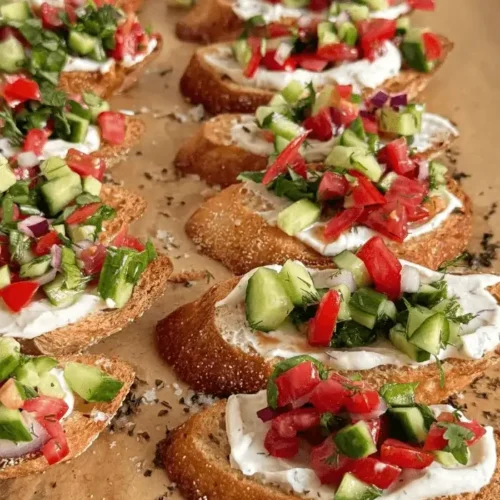
Mediterranean Bruschetta with Cucumber-Tomato Salad
Watch the Full Step-by-Step
- Chef's knife
- Medium mixing bowl
- Measuring spoons
- Microplane
INGREDIENTS
- 1 baguette, sliced
- 2 tablespoons olive oil
- 1 teaspoon flaky or coarse salt
- 1 teaspoon dried parsley
- 2 garlic cloves
- 4 ounces/115 grams garlic-dill cheese
Salad:
- 2 medium cucumbers, diced
- 10 cherry tomatoes, halved
- ¼ small red onion, thinly sliced
- 10 basil leaves, torn
- 1 tablespoon chopped fresh dill
- 2 tablespoons chopped cilantro
- 1 tablespoon olive oil
- ½ teaspoon salt
- ½ teaspoon apple cider vinegar
- 1 teaspoon lemon juice

INSTRUCTIONS
- Heat the oven to 400°F/200°C.
- Arrange the baguette slices on a sheet pan. Drizzle with olive oil and season with flaky salt and dried parsley. Bake until crisp and golden at the edges, 8 to 10 minutes.
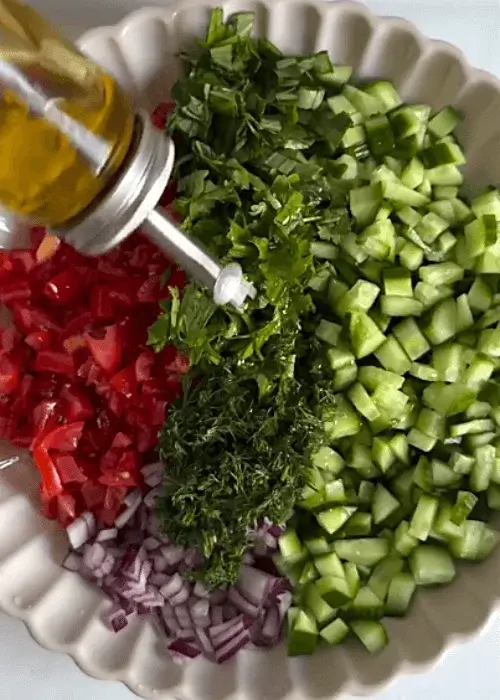
- Meanwhile, combine the cucumbers, cherry tomatoes, red onion, basil, dill, cilantro, olive oil, salt, vinegar, and lemon juice in a medium bowl. Toss until evenly coated.
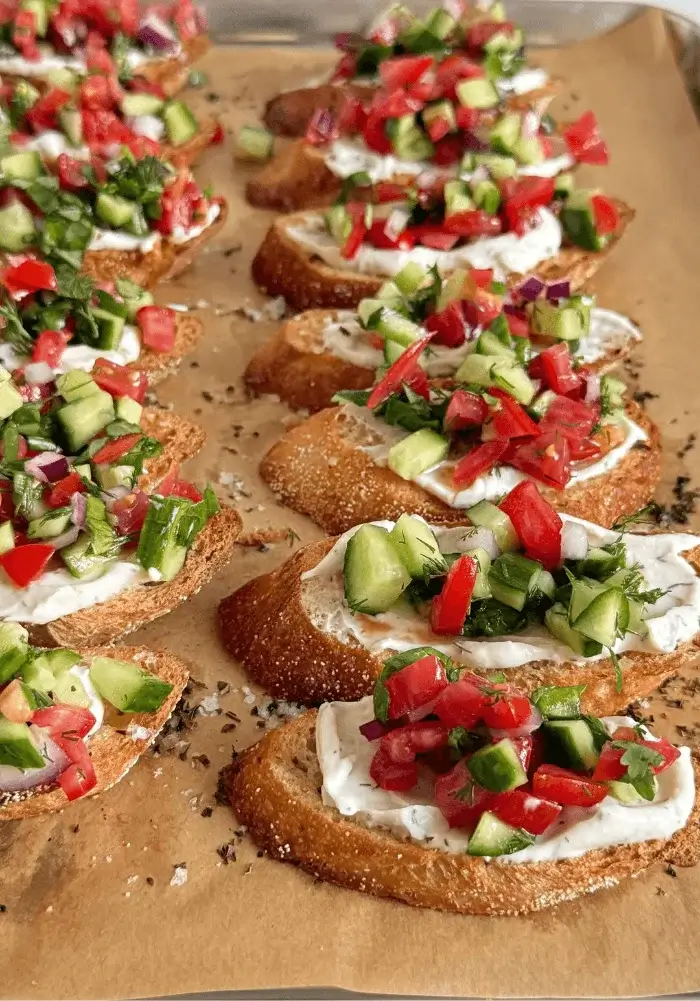
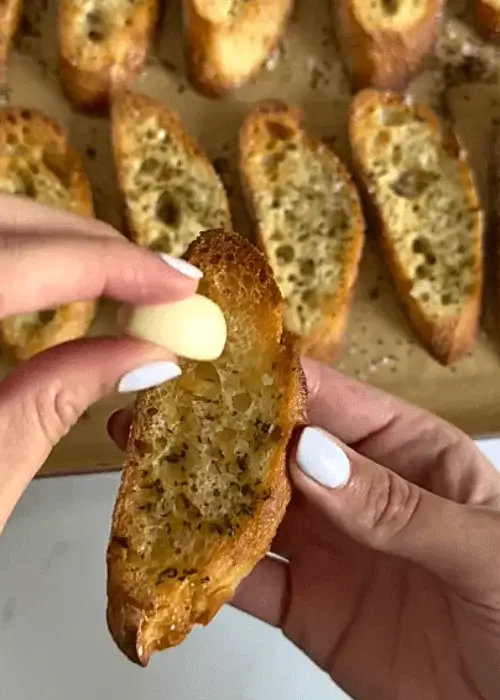
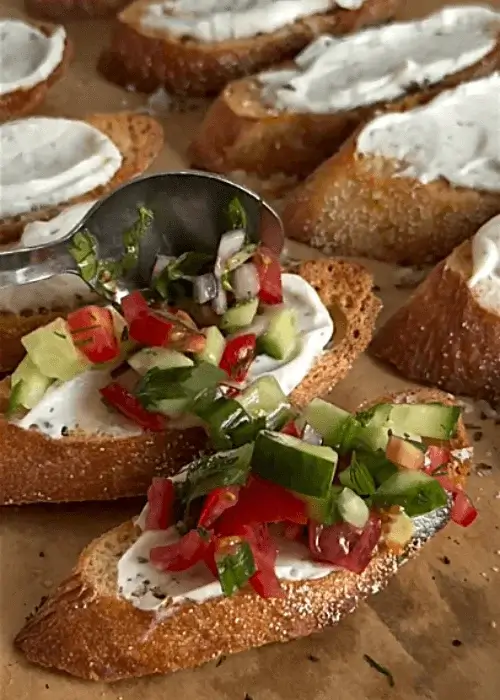
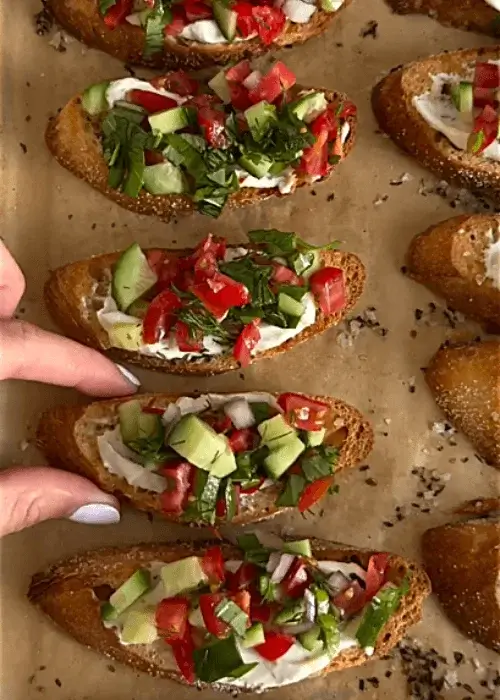
- Rub the warm toasts with the garlic cloves. Spread each slice with garlic-dill cheese, then spoon the salad over the top. Serve immediately.
FAQ
What makes Mediterranean bruschetta different from classic Italian bruschetta?
Mediterranean bruschetta differs from traditional Italian bruschetta primarily in its topping composition and flavor layering. Classic Italian versions usually rely on a simple tomato, basil, garlic, olive oil, and salt mixture, often served on grilled bread rubbed with garlic.
Mediterranean bruschetta, as in this recipe, expands the flavor profile by incorporating a more complex herb salad with cucumbers, cherry tomatoes, red onion, dill, and cilantro. This creates a fresher, more hydrating topping with greater textural contrast. The addition of garlic-dill cheese also shifts the dish toward a creamier, richer profile, balancing acidity and herb brightness.
What is the best way to toast the bread?
Baking at 400°F/200°C is ideal because it allows the surface to caramelize quickly without drying the bread excessively. The slices should be arranged in a single layer on a sheet pan to ensure even airflow and browning. Brushing or drizzling with olive oil before baking enhances flavor and promotes golden edges. The goal is not just dryness but structural integrity, so the bread can support the moisture-rich topping without collapsing.
Can Mediterranean bruschetta be made ahead of time without getting soggy?
Mediterranean bruschetta can be partially prepared ahead of time, but timing is critical to maintain texture. The bread can be sliced, seasoned, and baked several hours in advance, then stored at room temperature in an airtight container to preserve crispness.
The cucumber-tomato salad can also be prepped ahead, but it should be kept separate and only lightly dressed or fully dressed just before serving to avoid excess liquid release. Tomatoes and cucumbers naturally release water as they sit, which can quickly make the bread soggy. For best results, assemble Mediterranean bruschetta only at the final moment.
How do you scale Mediterranean bruschetta for a large crowd?
The bread can be toasted in multiple sheet pans ahead of time and held at room temperature in a single layer to maintain crispness. The salad ingredients should be prepped separately in large bowls but only combined with dressing in smaller batches to prevent excess liquid buildup.
Garlic-dill cheese can be pre-spread or portioned in advance to speed up final assembly. When serving, it is best to set up a build-your-own station or assemble in waves rather than fully preparing all pieces at once, which risks sogginess. Mediterranean bruschetta is highly sensitive to timing, so keeping components separate until the last possible moment ensures consistent texture and flavor even when serving dozens of portions.
Can Mediterranean bruschetta be customized with protein additions?
Mediterranean bruschetta can easily be customized with proteins to make it more substantial without compromising its flavor profile. Grilled chicken, shrimp, or flaked salmon are common additions that pair well with the herb-forward salad and garlic-dill cheese.
For plant-based options, chickpeas or white beans can be lightly seasoned and folded into the vegetable mixture to add protein and texture. The key is to avoid overly heavy or strongly flavored proteins that would overpower the fresh, bright components of Mediterranean bruschetta. Any added protein should be cooked simply, seasoned lightly, and kept in small, even pieces so it integrates rather than dominates.
What is the best bread to use for Mediterranean bruschetta?
The best bread for Mediterranean bruschetta is a rustic baguette or a country-style loaf with a firm crust and airy interior. These breads provide the structural strength needed to hold moist toppings like cucumber-tomato salad without collapsing. A baguette around 14 ounces/400 grams works well because it slices evenly and toasts into a crisp base while remaining slightly chewy inside.
Sourdough is also an excellent option due to its natural acidity and sturdy crumb, which complements the brightness of the herbs and lemon in the topping. Avoid soft sandwich bread, as it becomes soggy too quickly and lacks the necessary texture contrast. Proper toasting is essential: baking at 400°F/200°C until golden edges form ensures the bread can support the moisture from the Mediterranean bruschetta topping while maintaining structural integrity.
How important is the resting time of the salad?
Once salt, lemon juice, and vinegar are added to cucumbers and tomatoes, osmosis begins immediately, drawing moisture out of the vegetables. This process enhances flavor but also creates liquid that can dilute the mixture and compromise texture.
If the salad sits too long, it becomes watery and loses its crispness, which directly affects the quality of the final dish. Ideally, vegetables should be chopped in advance but combined with dressing only right before assembly. A short 2–5 minute rest after mixing is acceptable to allow flavors to slightly integrate, but anything longer begins to degrade the structural integrity of Mediterranean bruschetta.
How do you keep the garlic flavor balanced in Mediterranean bruschetta?
Balancing garlic in Mediterranean bruschetta is about controlling both intensity and distribution. The recipe uses two garlic cloves rubbed directly onto warm toast rather than mixing raw garlic into the salad. This technique imparts aroma without overwhelming sharpness. Rubbing garlic on hot bread gently cooks it from residual heat, reducing bitterness while enhancing sweetness.
The garlic-dill cheese also contributes a mellow garlic profile, further smoothing the flavor. If garlic is too strong, reducing the rubbing time or using only one clove can soften the impact. Conversely, for a stronger profile, finely mincing garlic into the olive oil before brushing the bread can intensify the flavor.
What type of cucumbers work best for the salad?
The best cucumbers for the salad are firm, low-seed varieties such as English cucumbers or Persian cucumbers. English cucumbers are ideal because they have thin skin, minimal seeds, and a mild flavor that does not overpower the herbs or cheese. Persian cucumbers are slightly smaller but similarly crisp and less watery than standard slicing cucumbers.
Regular garden cucumbers can also be used, but they should be partially peeled and seeded to reduce excess moisture, which can dilute the salad and make the bread soggy. For best results, cucumbers should be diced evenly so they distribute well across the toast. Their role in Mediterranean bruschetta is to provide crunch and freshness, balancing the richness of the garlic-dill cheese and the acidity of lemon and vinegar.
What mistakes affect the flavor of Mediterranean bruschetta the most?
The most common flavor-related mistakes in Mediterranean bruschetta involve under-seasoning or over-wetting the components. Insufficient salt in the salad can make the dish taste flat, even if the herbs and vegetables are fresh. Conversely, over-salting can draw out too much water, leading to a diluted topping.
Another frequent issue is using low-quality olive oil, which significantly affects aroma and depth since it is a primary flavor carrier. Skipping the garlic rub on the bread also reduces complexity, as it adds a subtle aromatic base layer. Finally, assembling too early before serving dulls both texture and flavor, as the bread absorbs moisture and the herbs lose their brightness.
Can Mediterranean bruschetta be served as a full meal or just an appetizer?
Mediterranean bruschetta is traditionally served as an appetizer, but it can easily be scaled into a light meal depending on portion size and accompanying dishes. The combination of crusty bread, garlic-dill cheese, cucumbers, tomatoes, and fresh herbs provides a balance of carbohydrates, fats, and fiber, making it more filling than classic tomato bruschetta.
To turn it into a full meal, you can serve larger portions and pair it with a protein such as grilled chicken, salmon, or chickpeas. The Mediterranean flavor profile also pairs well with lentils or white beans for a vegetarian option. While Mediterranean bruschetta is not inherently heavy, its freshness and structure make it versatile enough for both starters and casual lunches.
What type of olive oil should be used for Mediterranean bruschetta?
For Mediterranean bruschetta, extra virgin olive oil is essential because it provides both flavor and aroma rather than just fat. A high-quality cold-pressed olive oil with a fruity or slightly peppery profile works best, as it enhances the freshness of the vegetables and herbs.
Lighter or refined olive oils lack the depth needed for this dish and can make the final result taste flat. The olive oil is used in two places: brushing the bread before toasting and dressing the salad. In both cases, it should complement rather than overpower the other ingredients. A robust Mediterranean-style olive oil sourced from regions like Greece, Italy, or Spain is ideal because it aligns with the flavor profile of Mediterranean bruschetta and supports its bright, herb-forward structure.