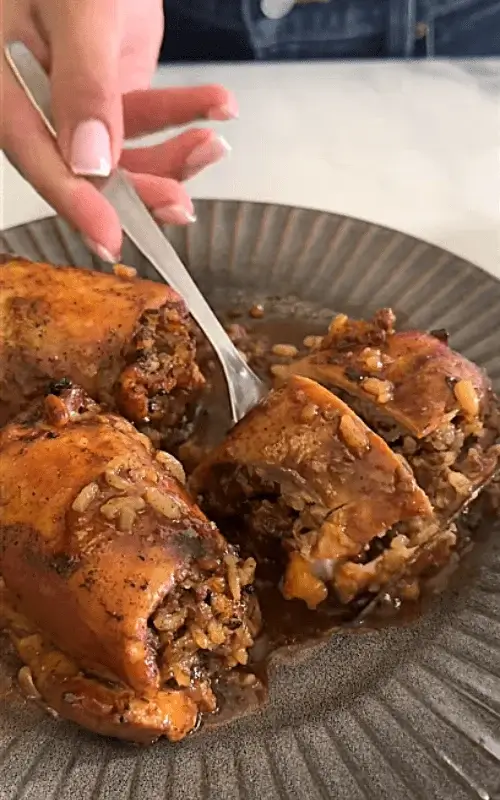
Rice Stuffed Chicken Thighs
Watch the Full Step-by-Step
INGREDIENTS
- 3¼ pounds/1.5 kilograms boneless chicken thighs
Filling:
- 1½ cups round rice
- 5 medium onions, finely chopped
- 2 tablespoons olive oil
- 1.1 pound/500 grams ground beef
- ¼ cup date syrup
- ¼ cup pomegranate molasses
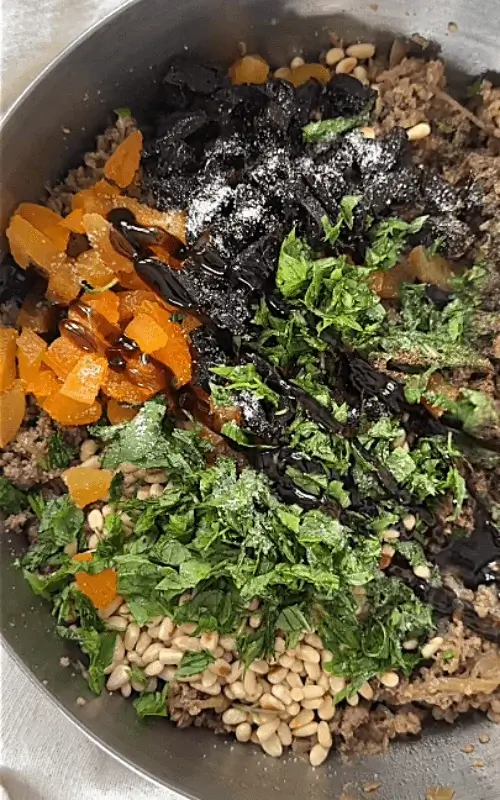
- ½ cup dried prunes, chopped
- ½ cup dried apricots, chopped
- ⅓ cup pine nuts
- 1 cup fresh mint, finely chopped
- 1 tablespoon salt
- 1½ teaspoons baharat
- 1 teaspoon ground cinnamon
- ½ teaspoon black pepper
Sauce:
- 2½ cups water
- 2 tablespoons tomato paste
- ¼ cup pomegranate molasses
- 2 tablespoons date syrup
- 2 teaspoons salt
- 1 teaspoon baharat
- ¾ teaspoon ground cinnamon

INSTRUCTIONS
- Bring a medium pot of salted water to a boil. Add the rice and cook until partially tender, about 10 minutes. Drain well and set aside.
- Heat a large skillet over medium heat. Add the pine nuts and toast, stirring frequently, until golden, 2 to 3 minutes. Transfer to a plate.
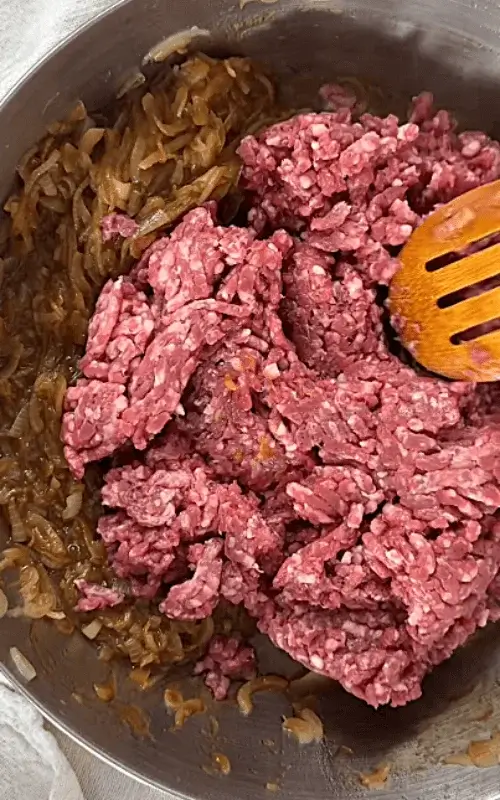
- Add the olive oil and onions to the skillet and cook, stirring occasionally, until deeply golden and softened, 12 to 15 minutes. Stir in the date syrup, then add the ground beef and cook, breaking it up with a spoon, until browned and cooked through.
- Stir in the prunes, apricots, toasted pine nuts, mint, pomegranate molasses, cooked rice, salt, baharat, cinnamon, and black pepper. Cook until the mixture is fragrant and evenly combined, about 2 minutes. Remove from the heat and let cool slightly.
- Heat the oven to 350°F/180°C.
- Arrange the chicken thighs smooth-side down on a work surface. Spoon about 2 tablespoons filling onto the lower edge of each thigh and roll tightly. Arrange seam-side down in a 9-by-13-inch baking dish.
- In a medium bowl, whisk together the water, tomato paste, pomegranate molasses, date syrup, salt, baharat, and cinnamon. Pour the sauce evenly over the chicken. Cover tightly with parchment paper and aluminum foil.
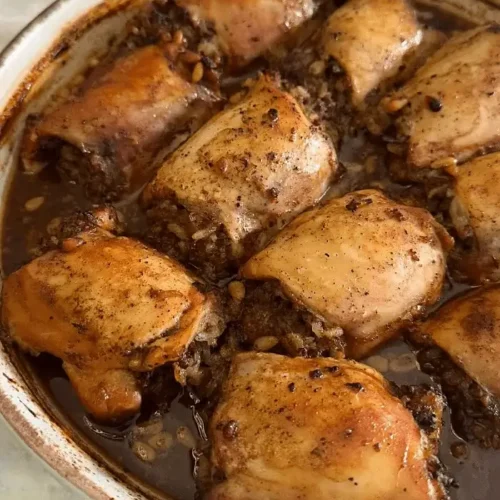
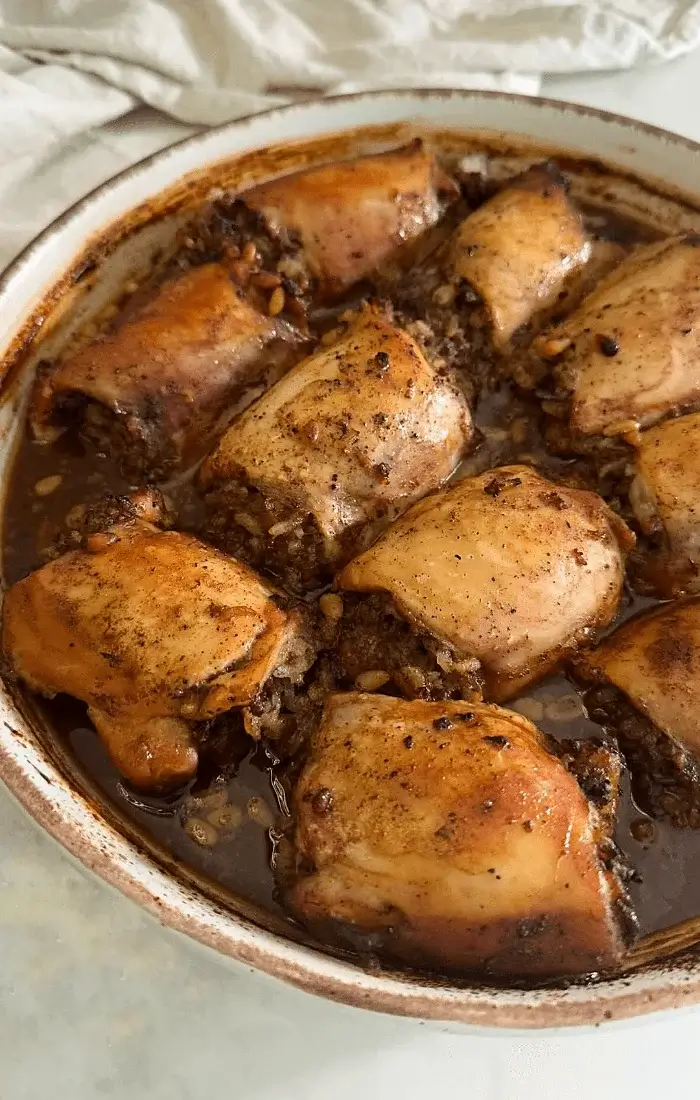
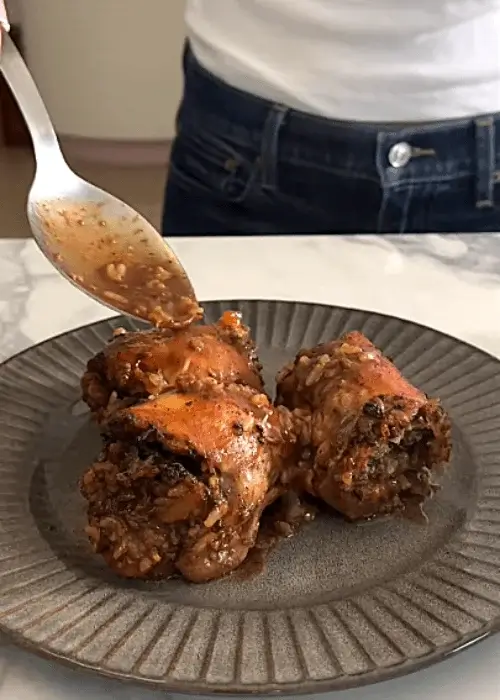
- Bake until the chicken is very tender and the rice filling is fully cooked, about 1½ hours. Remove the foil and parchment and continue baking until the tops are lightly caramelized and the sauce has reduced slightly, 20 to 25 minutes more. Serve hot with spoonfuls of the sauce.
FAQ
What is the best type of rice for rice stuffed chicken?
The best rice for rice stuffed chicken is short-grain or medium-grain rice because it stays tender and slightly sticky after baking, helping the filling hold together inside the chicken thighs. Long-grain varieties such as basmati or jasmine tend to separate more during cooking, which can make the filling looser and less cohesive.
Since the rice continues cooking inside the chicken during baking, partially boiling it beforehand is essential to ensure the grains finish cooking evenly without absorbing too much liquid from the sauce.
Round rice also absorbs the flavors of the beef, onions, spices, and pomegranate molasses more effectively than firmer varieties. Arborio rice can work in a similar way due to its starch content, though it creates a creamier texture. Avoid instant or parboiled rice because they can become mushy during the long baking time.
How long can rice stuffed chicken be stored in the refrigerator?
Rice stuffed chicken can typically be stored in the refrigerator for up to 3 to 4 days when kept in an airtight container. Proper cooling is important; the dish should be brought to room temperature before refrigerating to prevent excess condensation, which can affect both the rice texture and the sauce consistency. Storing the chicken with its sauce is essential because the rice filling continues to absorb moisture even after cooking, and the sauce helps prevent it from drying out.
For food safety, rice stuffed chicken should be refrigerated within two hours of baking. When reheating, it should reach an internal temperature of 165°F/75°C to ensure it is fully safe to eat. Over time, the flavors often deepen as the spices, date syrup, and pomegranate molasses continue to meld. However, the rice may become slightly softer with each day of storage, which is expected due to continued moisture absorption.
How do you keep rice stuffed chicken thighs from falling apart?
To keep rice stuffed chicken thighs intact during cooking, it is important to roll the thighs tightly and place them seam-side down in the baking dish. Boneless chicken thighs naturally hold their shape better than chicken breasts because they contain more fat and connective tissue, making them more flexible and less likely to split during baking. Avoid overfilling the chicken, since too much filling can force the rolls open as the rice expands slightly during cooking.
Packing the chicken snugly together in the baking dish also helps stabilize the rolls while they bake. Covering the dish tightly with parchment paper and foil traps steam, which gently cooks the chicken and helps it hold its structure. If necessary, kitchen twine or toothpicks can be used for extra support, though properly rolled thighs often do not require them. Letting the rice stuffed chicken rest for several minutes after baking also helps the filling settle before serving.
How do you prevent rice from becoming dry?
Preventing dryness in rice stuffed chicken depends on controlling moisture at multiple stages. First, the rice must be par-cooked correctly so it can absorb sauce during baking without becoming tough. Second, the filling should include enough fat and moisture from beef, onions, syrups, and dried fruit to keep the rice hydrated.
During baking, the covered environment is critical. The parchment paper and foil trap steam, allowing the rice to cook gently inside the chicken. The sauce poured over the top also seeps into the filling, ensuring consistent moisture distribution. Finally, letting the rice stuffed chicken rest after baking allows juices to redistribute, preventing dry pockets and ensuring the rice remains soft and flavorful throughout.
What flavors pair best with rice stuffed chicken?
Rice stuffed chicken pairs especially well with sweet, tangy, and warm spice-driven flavors. Ingredients such as pomegranate molasses, date syrup, cinnamon, baharat, dried apricots, and prunes create a balance between savory richness and subtle sweetness. Fresh herbs like mint add brightness that cuts through the richness of the beef and chicken, while toasted pine nuts contribute texture and nuttiness.
For side dishes, rice stuffed chicken works well with simple vegetable preparations that do not compete with the complex filling. Roasted carrots, cauliflower, green beans, or a cucumber yogurt salad provide freshness and contrast. Flatbreads, herbed rice, or bulgur are also common accompaniments in Middle Eastern-style meals. Acidic garnishes such as lemon wedges, pickled onions, or extra pomegranate molasses can brighten the finished dish.
What type of pan is best for baking rice stuffed chicken?
A heavy ceramic or glass baking dish is ideal for rice stuffed chicken because it distributes heat evenly and retains moisture well during long baking. A standard 9-by-13-inch dish is typically used, as it allows the chicken thighs to sit snugly together, which helps them hold their shape and prevents them from unraveling during cooking.
Metal pans can also be used, but they tend to conduct heat more aggressively, which may cause faster evaporation of the sauce. Since rice stuffed chicken relies on a moist environment for the rice to finish cooking properly, maintaining stable humidity under foil is important. A tightly sealed combination of parchment paper and foil helps trap steam, ensuring both the chicken and rice cook evenly without drying out.

Can rice stuffed chicken be frozen after baking?
Rice stuffed chicken freezes very well after baking, especially because chicken thighs retain moisture better than leaner cuts during freezing and reheating. Allow the dish to cool completely before transferring the chicken and sauce into airtight containers or freezer-safe bags. Including some sauce with the chicken helps prevent the filling from drying out during reheating.
For best texture, thaw rice stuffed chicken overnight in the refrigerator before reheating. Warm it covered in a 325°F/165°C oven until fully heated through, spooning additional sauce over the top if needed. The rice filling may absorb more liquid after freezing, so adding a small amount of chicken stock or water during reheating can restore moisture. While the dish can remain frozen for up to three months, the texture of fresh herbs like mint may soften slightly after thawing.
What mistakes should be avoided when making rice stuffed chicken?
One of the most common mistakes when preparing rice stuffed chicken is overcooking or fully cooking the rice before stuffing. The rice should only be partially cooked so it can finish absorbing liquid in the oven without turning mushy. Another frequent issue is overfilling the chicken thighs, which causes the rolls to split open during baking as the rice expands and the filling softens.
Not properly browning the onions is another key mistake because they form the flavor base of the filling. If undercooked, the rice stuffed chicken can taste flat and overly sweet from the syrups without enough savory depth. Skipping the resting step after cooking can also lead to a loose filling, as the rice needs a few minutes to settle and absorb remaining juices before serving.
Why is the rice only partially cooked before making rice stuffed chicken?
Par-cooking the rice is essential in rice stuffed chicken because it ensures the grains finish cooking inside the chicken without becoming mushy. Rice continues to absorb liquid from both the filling and the sauce during baking, so starting with fully cooked rice would lead to an overly soft or broken texture. Cooking it for about 10 minutes softens the exterior while leaving enough structure for it to absorb flavor during the oven stage.
This method also allows the rice stuffed chicken filling to maintain a balanced consistency when mixed with beef, onions, dried fruit, and spices. The partially cooked rice acts like a sponge, soaking up pomegranate molasses, date syrup, and rendered beef juices without disintegrating.
How do you know when rice stuffed chicken is fully cooked?
Rice stuffed chicken is fully cooked when the internal temperature of the chicken reaches at least 165°F/74°C and the rice inside is tender with no hard core. Because the chicken is tightly rolled and packed in a sauce, visual cues like browning alone are not enough to confirm doneness. The long baking time of about 1½ hours, followed by an uncovered finish, ensures that both the meat and rice cook evenly.
Another indicator is the consistency of the sauce. When rice stuffed chicken is done, the sauce should slightly thicken and cling to the chicken rather than remaining watery. The chicken should also feel tender when pierced, and the filling should hold together without releasing excess liquid. Allowing the dish to rest for a few minutes after baking helps redistribute moisture and stabilizes both the meat and rice filling before serving.