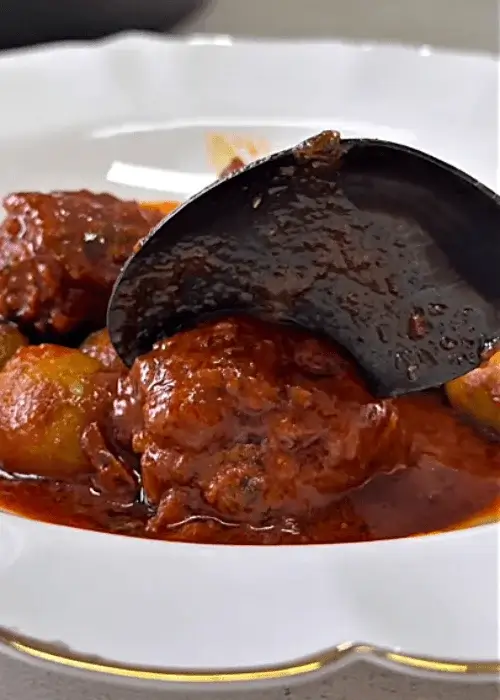
Middle Eastern Meatballs in Red Sauce with Olives
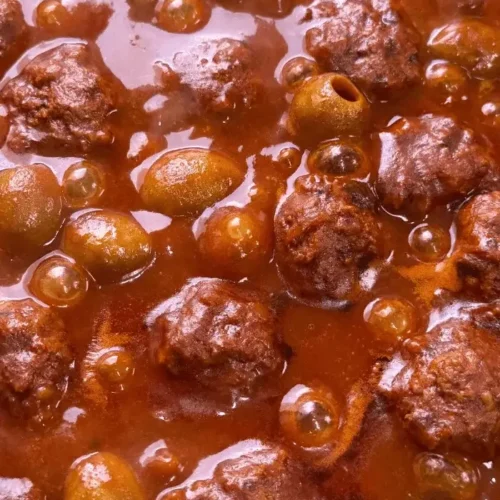
Watch the Full Step-by-Step
- Large mixing bowl
- Small pot
INGREDIENTS
- 2.2 pounds/1 kilogram ground beef, chuck with fat
- 1 bunch fresh parsley, finely chopped
- 1 medium onion, grated
- 1 tablespoon paprika
- 1 tablespoon salt
- 1 teaspoon ras el hanout
- 3 tablespoons breadcrumbs
- 3 tablespoons olive oil
- 2.2 pounds/1 kilogram green pitted olives
- 1 lemon slice
Sauce:
- 3 tablespoons tomato paste
- 8 garlic cloves, thinly sliced
- 3 tablespoons paprika
- 1 tablespoon salt
- 3 cups water
- ½ bunch fresh parsley, chopped

INSTRUCTIONS
- Place olives in a pot with a lemon slice and cover with water. Bring to a boil and simmer for 1½ hours, changing the water every 30 minutes. Drain.
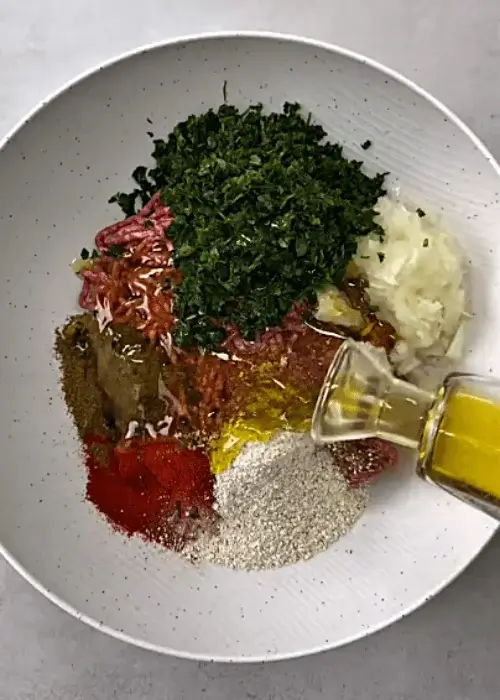
- In a large bowl, combine beef, parsley, onion, paprika, salt, ras el hanout, matzo meal, and olive oil. Mix until just combined. Form into medium meatballs.
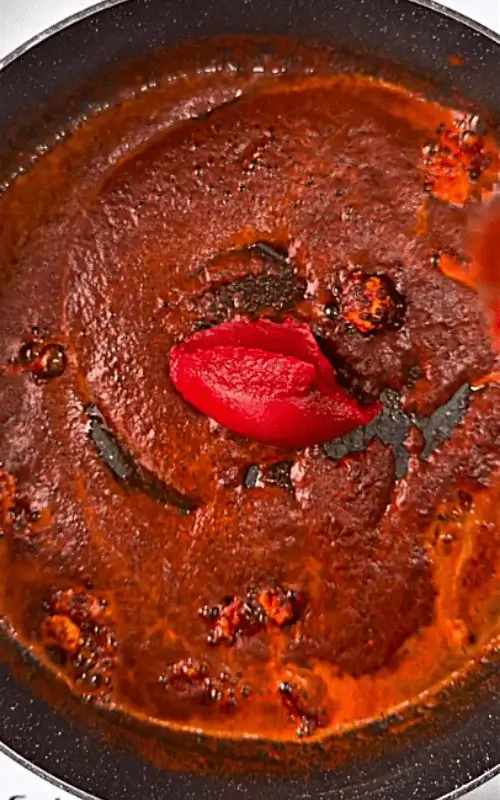
- Heat olive oil in a wide heavy pot over medium heat. Add garlic and paprika and cook until fragrant, about 2 minutes. Stir in tomato paste and cook 1 minute more.
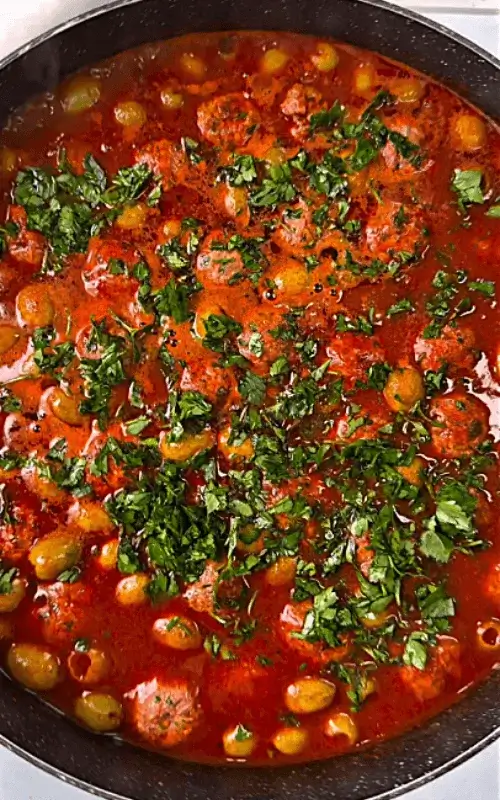
- Add water and olives. Bring to a simmer.
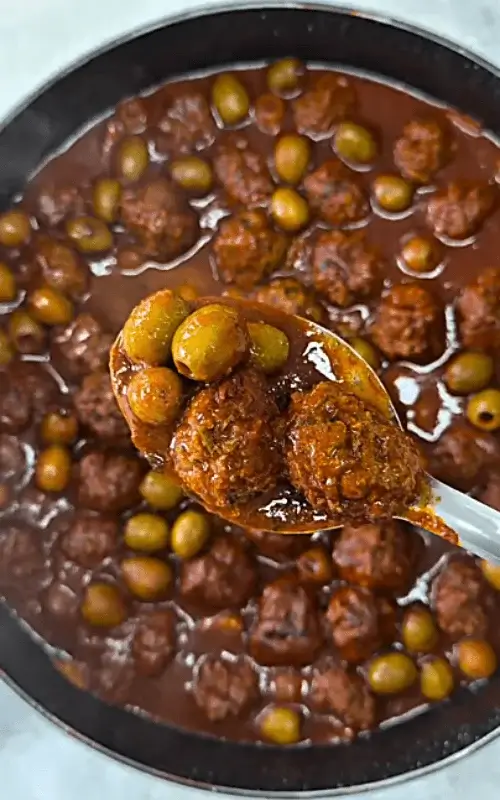
- Add meatballs in a single layer. Add water as needed to come halfway up the meatballs. Cover partially and simmer until sauce thickens and meatballs are cooked through, 30 to 40 minutes.
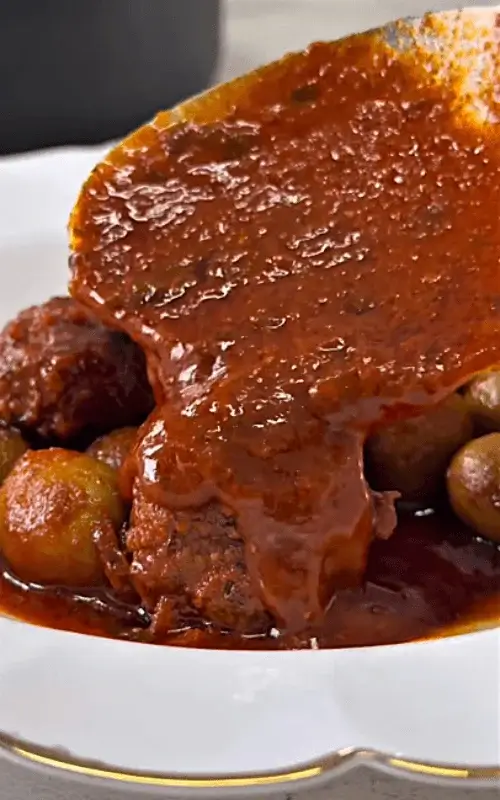
- Finish with parsley and serve warm.
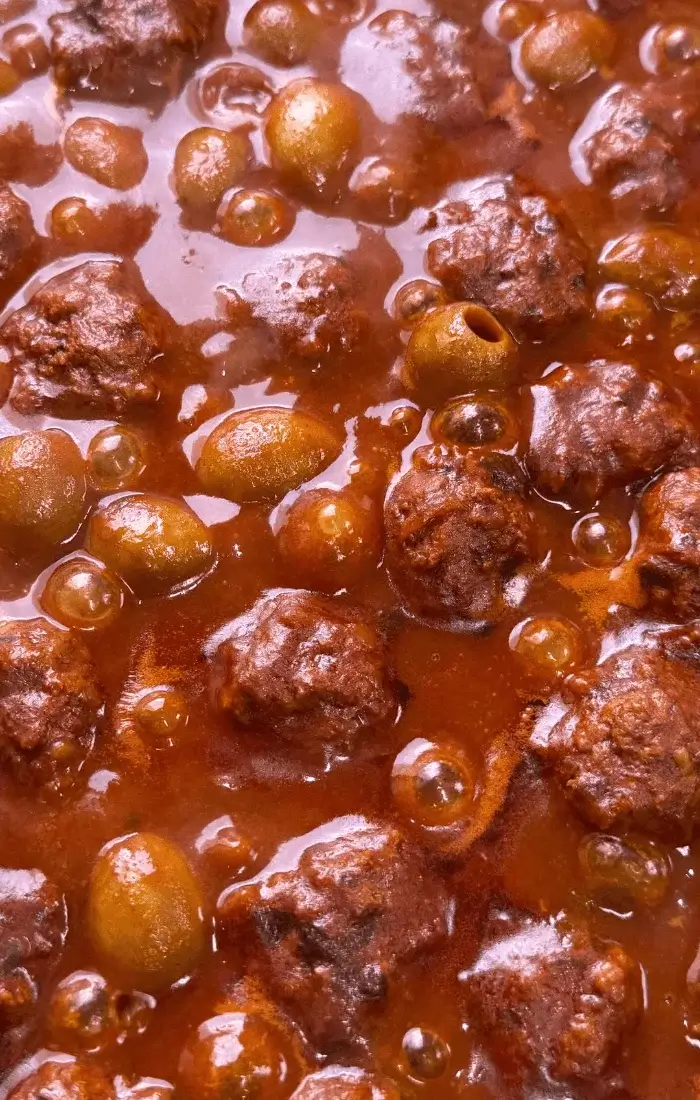
FAQ
What type of beef is best for meatballs in red sauce?
For meatballs in red sauce, the best beef is ground chuck with a moderate fat content, typically around 80/20 lean to fat ratio. This balance is important because fat contributes both flavor and moisture, preventing the meatballs from becoming dense or dry during the long simmering process. Leaner cuts such as sirloin can be used, but they often produce a firmer, less juicy texture unless additional fat or moisture is incorporated.
Chuck works well because its connective tissue breaks down gently during cooking, improving tenderness. In meatballs in red sauce, especially this Middle Eastern-style version, the beef also needs enough structure to hold together during simmering without disintegrating, making chuck the most reliable option for both flavor and stability.
Why do you boil olives before cooking meatballs in red sauce?
oiling olives before adding them to meatballs in red sauce serves primarily to reduce excess saltiness and soften their firm texture. Green olives are typically cured in brine, which can make them overly salty or slightly bitter if used directly in a stew.
By boiling and changing the water several times, the intensity of the brine is gradually reduced, resulting in a more balanced flavor profile that integrates into the sauce instead of overpowering it. This process also improves the texture, allowing the olives to absorb the flavors of garlic, paprika, and tomato paste during simmering.
What causes meatballs to become tough?
Meatballs become tough in meatballs in red sauce primarily due to overmixing the meat or overcooking during simmering. Overmixing compresses the protein structure, leading to a dense, rubbery texture instead of a tender bite. Using too little fat or binder can also cause dryness, especially if lean meat is used.
Cooking at too high a temperature can tighten the proteins too quickly, forcing moisture out of the meatballs. Simmering gently is essential to maintain tenderness. Additionally, skipping ingredients like onion or olive oil reduces moisture content, increasing the risk of toughness.
How do you keep meatballs from falling apart?
To keep meatballs from falling apart in meatballs in red sauce, the key is achieving the correct balance of binders, fat, and mixing technique. The matzo meal acts as a structural binder, absorbing moisture and helping the meat proteins hold together. It is important not to overmix the beef, as excessive handling breaks down protein strands too much, resulting in a fragile texture.
The mixture should be combined just until ingredients are evenly distributed. Chilling the formed meatballs briefly before cooking can also help them set. During cooking, they should be added gently into a simmering sauce rather than a rolling boil, which would disrupt their structure. Maintaining a controlled simmer ensures the meatballs firm up gradually while absorbing flavor from the sauce.
How do you know when the meatballs are fully cooked?
Meatballs in red sauce are fully cooked when they reach an internal temperature of about 160°F to 165°F and are firm to the touch but still tender. Visually, they should no longer appear pink in the center, and the juices should run clear when cut open.
The simmering time of 30 to 40 minutes in the sauce typically ensures doneness, but size and heat consistency can affect timing. The sauce itself should also have thickened slightly, indicating proper reduction and flavor development. Overcooking should be avoided, as it can cause the meatballs to become dense.
Can you freeze meatballs in red sauce after cooking?
Meatballs in red sauce freeze very well because the sauce helps protect the meat from drying out during long storage. Once fully cooked and cooled, the meatballs and sauce should be transferred to airtight containers or freezer bags, ideally portioned for easier reheating.
Freezing them together allows the flavors to continue developing slightly as they thaw, especially the paprika, garlic, and tomato base. When reheating, it is best to thaw them overnight in the refrigerator and then warm them gently over low heat to maintain texture. Rapid reheating can cause the meatballs to break apart.
What size should meatballs be?
For meatballs in red sauce, medium-sized meatballs are generally ideal, typically around 1.5 to 2 inches in diameter. This size allows the exterior to hold together during simmering while ensuring the interior cooks evenly without drying out.
If meatballs are too small, they can overcook quickly and break apart in the sauce, especially during longer simmering times. If they are too large, the outside may become overly firm before the center is fully cooked. Consistency in sizing is important because it ensures even cooking across the batch.
Should meatballs be browned?
Browning meatballs before adding them to the sauce is optional but can significantly deepen flavor. Searing creates a Maillard reaction on the surface of the meat, producing caramelized notes that enhance the overall richness of the sauce.
In this recipe, however, the meatballs are simmered directly in the sauce, which results in a softer, more tender texture and allows them to absorb more liquid and seasoning. Skipping browning also keeps the process simpler and reduces added fat in the pan. If browning is used, it should be done quickly over medium-high heat to avoid overcooking the exterior before simmering.
How do you prevent a watery sauce?
Preventing a watery sauce in meatballs in red sauce depends on controlling moisture input and encouraging gradual reduction. Starting with the correct ratio of water to tomato paste is important, as too much liquid will dilute flavor and delay thickening. Simmering uncovered or partially covered allows steam to escape, which naturally concentrates the sauce.
The meatballs themselves also contribute structure as they release proteins and fats that help emulsify the liquid. Cooking at too high a heat can cause uneven evaporation, so a steady simmer is preferred. If needed, the sauce can be reduced further after removing the meatballs briefly, then recombined for a thicker final consistency in meatballs in red sauce.
Can lamb be used instead of beef in meatballs in red sauce?
Lamb can be used instead of beef in meatballs in red sauce and will produce a richer, more aromatic flavor profile. Ground lamb typically contains more fat and has a distinct taste that pairs well with spices like ras el hanout, paprika, and garlic. Because lamb is naturally fattier, it may produce a slightly looser mixture, so careful balancing with matzo meal or another binder is important.
The cooking method remains the same, but lamb may cook slightly faster depending on fat content and meat density. The final dish tends to have a more pronounced Mediterranean character when lamb is used, making it a strong alternative for those who prefer deeper, gamier flavors in meatballs in red sauce.
What is the best pot for cooking meatballs in red sauce?
A wide, heavy pot or Dutch oven is ideal for meatballs in red sauce because it allows even heat distribution and enough surface area to prevent overcrowding. Cast iron or enameled cast iron works particularly well due to its ability to maintain a steady simmer without hot spots, which reduces the risk of meatballs breaking apart.
A wide base also ensures the sauce reduces properly instead of steaming, which is important for developing flavor and thickness. The pot should be deep enough to partially submerge the meatballs while still allowing gentle movement of liquid around them. Using the right vessel directly impacts both texture and consistency in meatballs in red sauce.