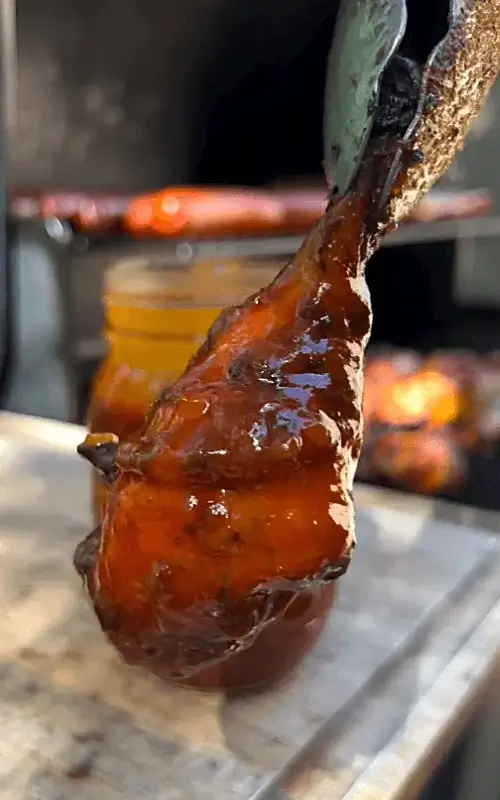
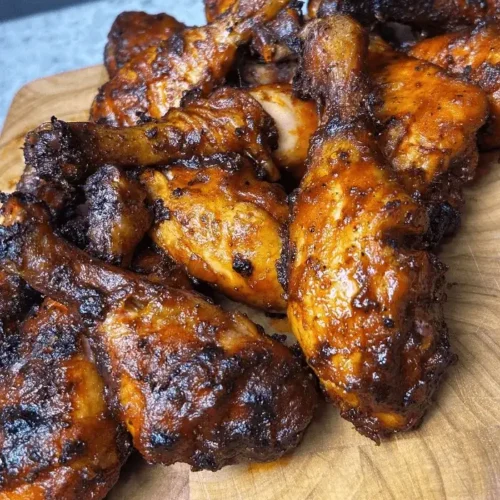
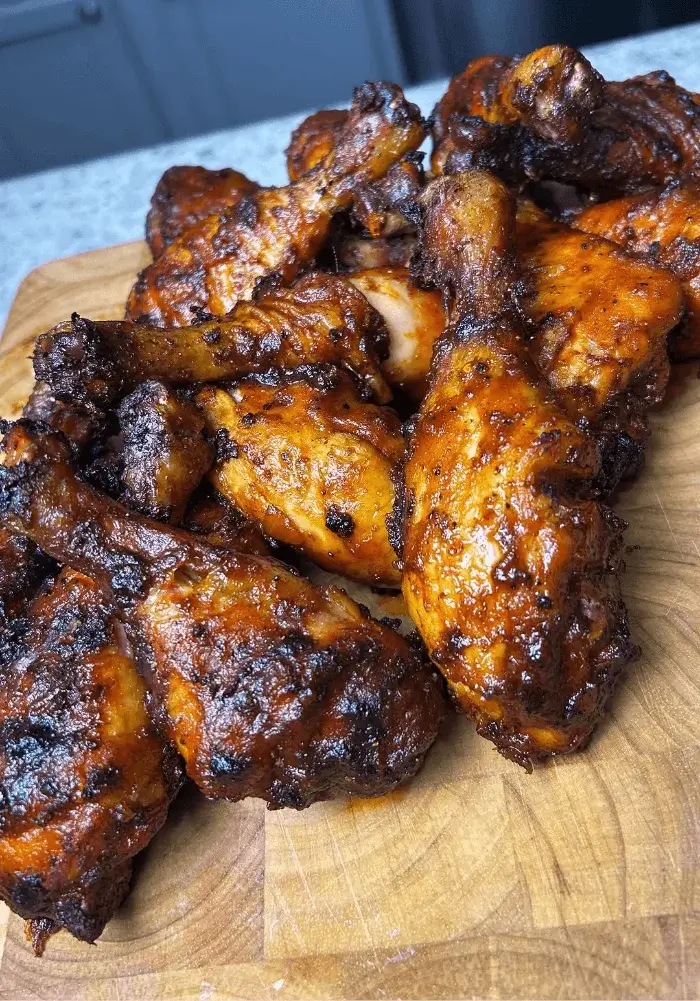
Spicy Chicken Legs with Habanero Barbecue Glaze
Watch the Full Step-by-Step
- Large mixing bowl
- Basting brush
- Thermometer
INGREDIENTS
- 3 pounds/1.4 kilograms chicken legs
- 2 teaspoons salt
- 1 teaspoon black pepper
- 1 teaspoon smoked paprika
- 1 teaspoon onion powder
- 1 teaspoon garlic powder
- ¼ cup habanero hot sauce
- 1 cup barbecue sauce
- 2 tablespoons habanero hot sauce

INSTRUCTIONS
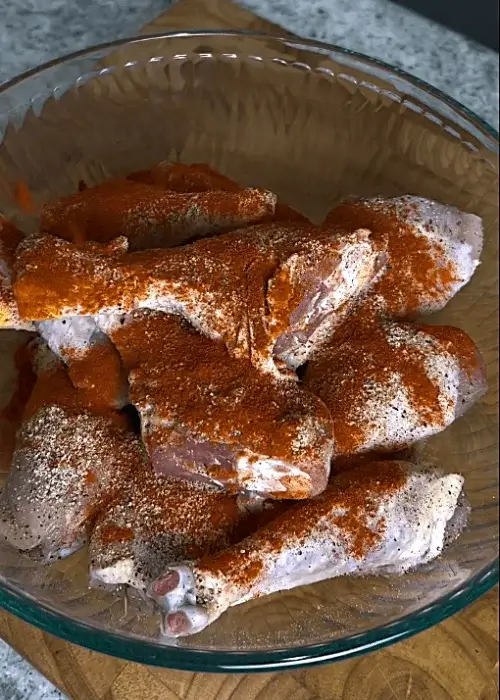
- Pat the chicken dry with paper towels. In a large bowl, season with salt, pepper, smoked paprika, onion powder and garlic powder. Add ¼ cup habanero hot sauce and toss until evenly coated.
- Prepare a grill for two-zone cooking and heat to 350°F/180°C. If using charcoal, bank the coals to one side to create direct and indirect heat zones.
- Place chicken on the cooler side of the grill. Cover and cook, turning occasionally, until lightly smoked and beginning to brown, 10 to 15 minutes.
- Brush with remaining 2 tablespoons of habanero hot sauce. Continue cooking over indirect heat for 5 minutes more.
- Move chicken over direct heat. Grill, turning frequently, until charred in spots and the thickest part reaches 175°F/80°C, about 10 minutes.
- Transfer chicken to a bowl, add barbecue sauce and toss to coat. Return to grill and cook, turning once, until glossy and caramelized, 2 to 3 minutes. Serve immediately.
FAQ
What is the best way to grill spicy chicken legs without drying them out?
The best way to grill spicy chicken legs without drying them out is to use a two-zone grilling setup and control heat exposure in stages. Starting the spicy chicken legs on the indirect heat side allows them to cook through gently while absorbing smoke flavor without direct flame drying out the surface. Maintaining a grill temperature around 350°F/180°C helps render fat slowly while keeping the interior juicy.
Turning the chicken occasionally ensures even cooking and prevents one side from overheating. Only after the internal temperature begins to rise should the chicken be moved over direct heat for a short finishing sear. This method balances moisture retention with proper browning, which is critical for chicken legs since dark meat can handle higher final temperatures but still benefits from controlled cooking early in the process.
How do you get crispy skin on spicy chicken legs on the grill?
Crispy skin on spicy chicken legs depends on moisture management, heat staging, and proper finishing technique. The skin must be thoroughly dried before seasoning, since excess surface moisture prevents crisping. Cooking first on indirect heat renders fat under the skin gradually, which improves texture without burning.
The key step is finishing over direct heat, where the skin is exposed to higher temperature for a short period, creating browning through caramelization and fat rendering. Frequent turning over direct heat prevents flare-ups from scorching the surface unevenly.
The final toss in barbecue sauce should happen only at the end, since applying sauce too early traps moisture and softens the skin. Allowing the sauce to caramelize briefly on the grill gives spicy chicken legs a sticky exterior without losing structural crispness.
What sides pair best with spicy chicken legs for a balanced meal?
Spicy chicken legs pair best with sides that balance heat, richness, and smoke with cooling or acidic contrast. Creamy starches like potato salad, coleslaw, or mashed potatoes help temper the heat from habanero while complementing the smoky barbecue glaze. Fresh salads with citrus-based vinaigrettes add brightness and cut through the richness of grilled meat.
Grilled vegetables such as corn, zucchini, or peppers mirror the smoky profile of the chicken without adding heaviness. Rice-based sides also work well, especially lightly seasoned rice or coconut rice, which absorbs excess sauce and spice. Bread-based sides like cornbread or dinner rolls provide a neutral base that balances intensity. For spicy chicken legs, the ideal plate includes at least one cooling element, one acidic element, and one starchy component to round out the heat and smoke profile.
What internal temperature should spicy chicken legs be cooked to?
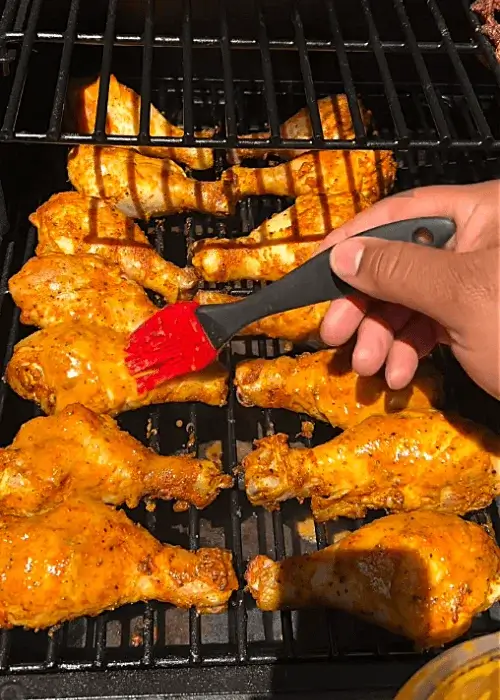
Spicy chicken legs are best cooked to an internal temperature of 175°F/80°C, which is higher than chicken breast because dark meat contains more connective tissue and fat. At this temperature, collagen breaks down more fully, resulting in a tender, juicy texture rather than a chewy or under-rendered bite. Using a thermometer inserted into the thickest part of the leg without touching bone ensures accuracy.
Cooking below 165°F/74°C may result in safe but less tender meat, while going slightly above 175°F/80°C up to around 180°F/82°C can still be acceptable for dark meat if moisture is preserved through proper grilling technique. The combination of indirect cooking and final searing helps reach this temperature evenly while maintaining the structure of spicy chicken legs without drying them out.
What causes chicken legs to stick to the grill and how can it be prevented?
Chicken legs tend to stick to the grill when the surface is too wet, the grill grates are not properly preheated, or the chicken is moved too early before a crust forms. The sugars in barbecue sauce also increase sticking risk if applied too early in cooking. To prevent sticking, the grill should be fully preheated so the grates are hot enough to sear the surface immediately.
Oil on the grates or lightly oiling the chicken surface can also reduce adhesion. Most importantly, the chicken should not be flipped too soon; it naturally releases from the grill once a crust forms. This is especially important for spicy chicken legs, where the seasoning and hot sauce create a slightly tacky surface that can bind to metal if disturbed too early. Allowing proper sear time is the key to clean release and good grill marks.
Can I use different sauces or adjust the heat level in spicy chicken legs?
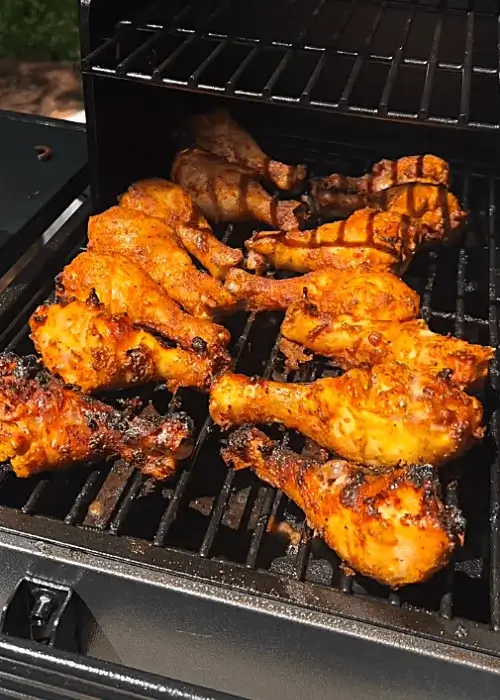
The habanero hot sauce provides a sharp, fruity heat, but it can be replaced or blended with milder hot sauces for a less intense spice level. Reducing the habanero portion and increasing barbecue sauce will mellow heat while preserving flavor depth.
For higher heat, additional hot sauce or chopped fresh chilies can be added to the seasoning stage, though care must be taken not to overwhelm the glaze balance. The barbecue sauce acts as a stabilizer, helping bind flavors and create caramelization on the grill. Adjusting sweetness, acidity, or smoke in the barbecue sauce can also shift the overall profile while keeping the structure of spicy chicken legs consistent.
What mistakes cause spicy chicken legs to turn out dry or tough?
The most common mistake with spicy chicken legs is applying high heat too early, which causes the exterior to overcook before the interior is done. Another frequent issue is skipping indirect heat, which forces constant exposure to flames and leads to moisture loss. Overcooking beyond the optimal internal temperature can also dry out the meat, even though chicken legs are more forgiving than white meat.
Applying barbecue sauce too early is another error, as sugar in the sauce burns quickly and creates a bitter crust instead of a glossy glaze. Not resting the chicken briefly after grilling can also result in juices running out too quickly when cut.
What is the purpose of using a two-zone grill setup for spicy chicken legs?
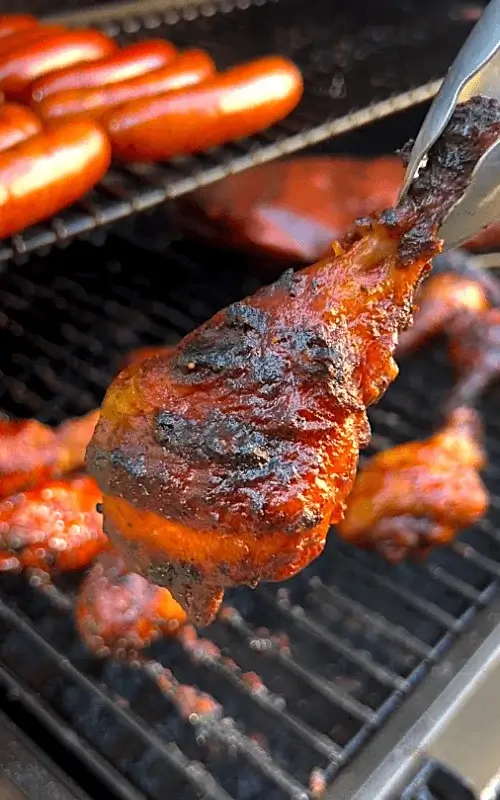
A two-zone grill setup is essential for controlling heat exposure and ensuring spicy chicken legs cook evenly without burning. One side of the grill is kept at direct high heat, while the other is cooler for indirect cooking. This allows the chicken to cook through gradually on the cooler side while smoke develops flavor and the fat begins to render.
If spicy chicken legs were placed directly over high heat from the start, the exterior would char too quickly while the interior would remain undercooked. The indirect zone prevents flare-ups from dripping fat and gives more control over timing. Once the internal temperature rises and the meat is mostly cooked, moving the chicken to the direct heat side creates browning and crisp texture. This staged approach is one of the most reliable methods for grilling dark meat like chicken legs.
What type of barbecue sauce works best for spicy chicken legs?
The best barbecue sauce for spicy chicken legs is one with balanced sweetness, moderate acidity, and enough thickness to cling to the surface during a short final grill. A tomato-based sauce with brown sugar, molasses, or honey provides the right structure for caramelization without becoming watery on heat. Too thin a sauce will slide off the chicken and burn on the grates, while overly sweet sauces can scorch quickly and turn bitter.
A slightly smoky profile pairs well with habanero heat because it rounds out the sharp spice and adds depth. Vinegar-forward sauces can also work, but they should be used carefully to avoid overpowering the spice profile. In this recipe, the barbecue sauce acts as a finishing glaze, not a cooking liquid, so it should be robust enough to withstand brief direct heat while still maintaining shine on spicy chicken legs.