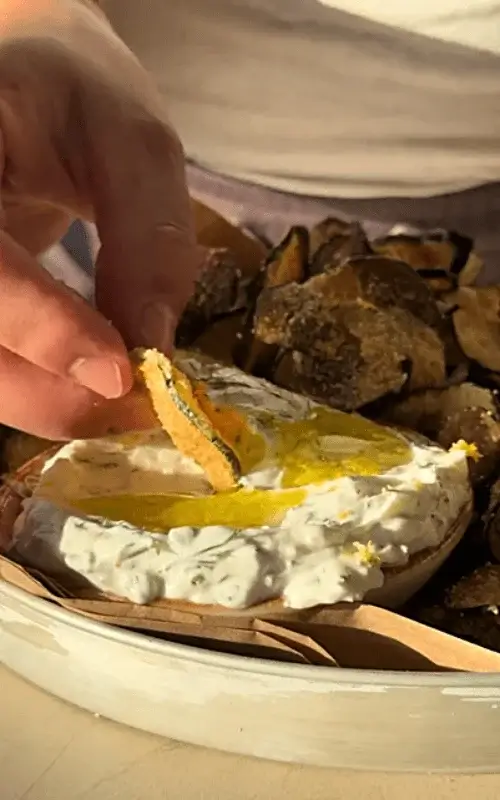
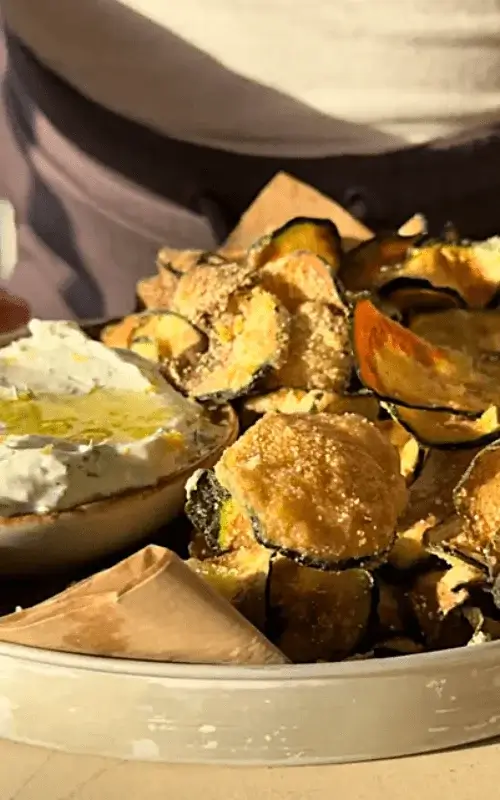
Crispy Zucchini Chips with Tzatziki
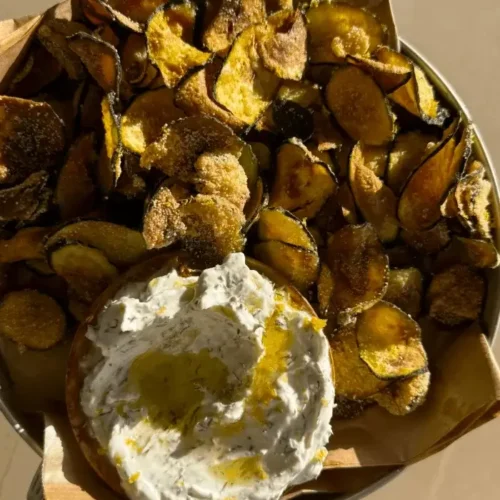
Watch the Full Step-by-Step
- Mandoline slicer
- Mixing bowls
- Box grater
- Large pot
INGREDIENTS
- 5 –6 medium zucchini
- 1 teaspoon salt, plus more for finishing
- ½ cup semolina
- ½ cup cornstarch
- 1 teaspoon baking powder
- Oil, for frying
- 1 teaspoon lemon zest
Tzatziki:
- 1 cup Greek yogurt
- ½ medium cucumber, grated and squeezed dry
- 1 garlic clove, finely grated
- 1 tablespoon lemon juice
- 1 tablespoon olive oil
- 1 tablespoon fresh dill, chopped
- ½ teaspoon salt

INSTRUCTIONS
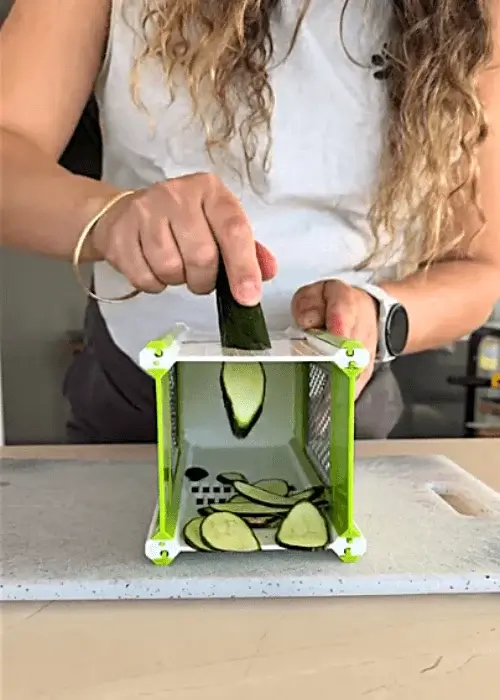
- Slice the zucchini very thinly, preferably with a mandoline, to create even slices that become crisp when fried.
- Place the zucchini in a bowl and sprinkle with salt. Let stand for 10 minutes, then pat dry thoroughly with paper towels.
- Combine the semolina, cornstarch, and baking powder in a bowl.
- Heat oil in a large pot over medium heat to 350°F/180°C.
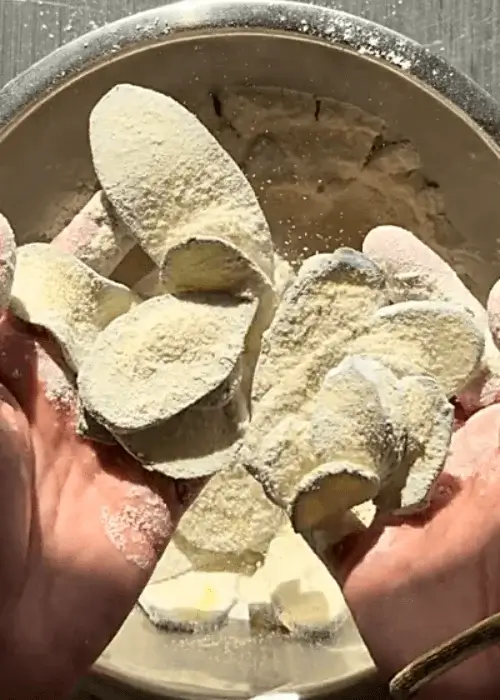
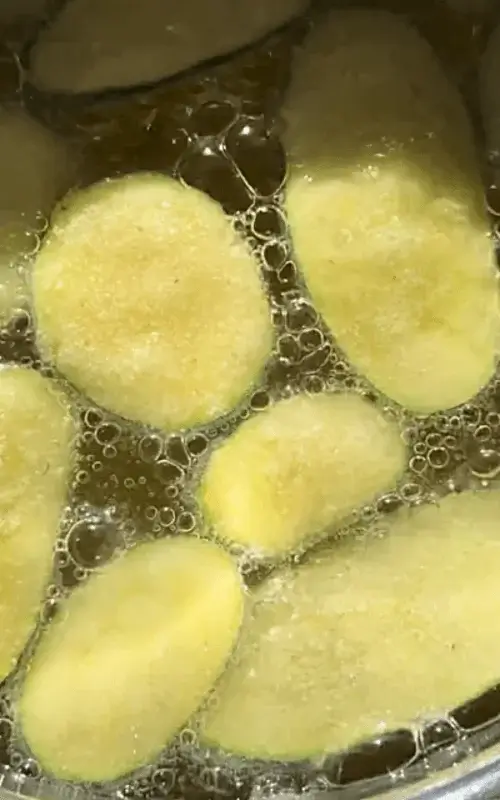
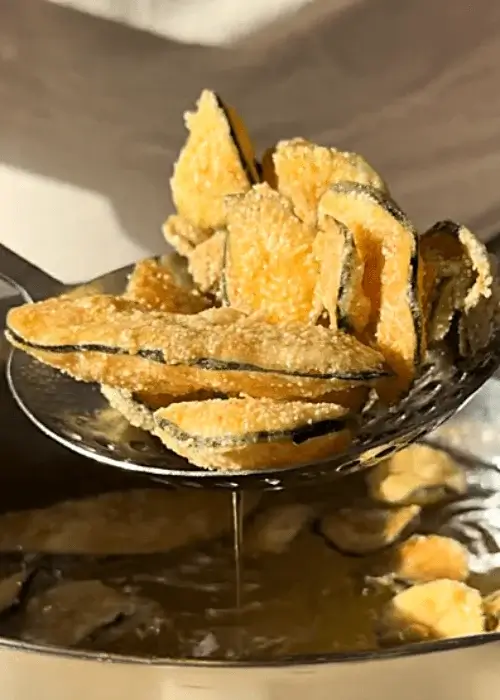
- Coat the zucchini slices in the semolina mixture, shaking off any excess. Fry in batches until golden and crisp, 2 to 3 minutes.
- Combine the yogurt, cucumber, garlic, lemon juice, olive oil, dill, and salt in a bowl. Stir until smooth. Chill until ready to serve.
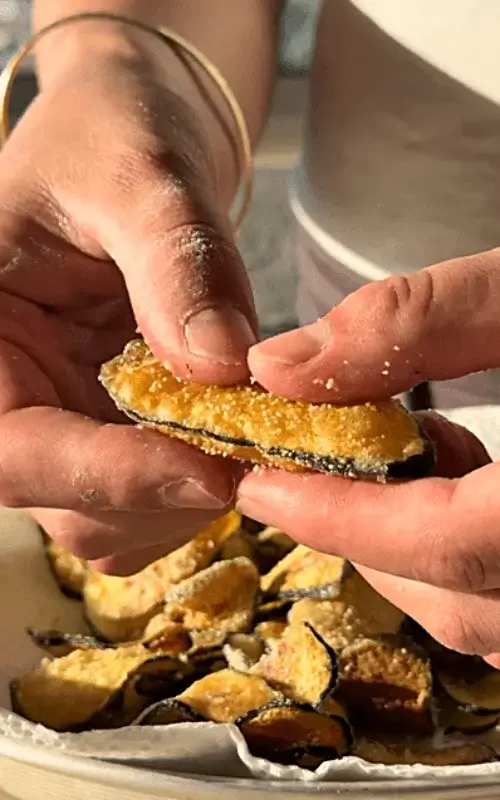
- Transfer to a paper towel-lined plate. Sprinkle with salt and lemon zest while warm.
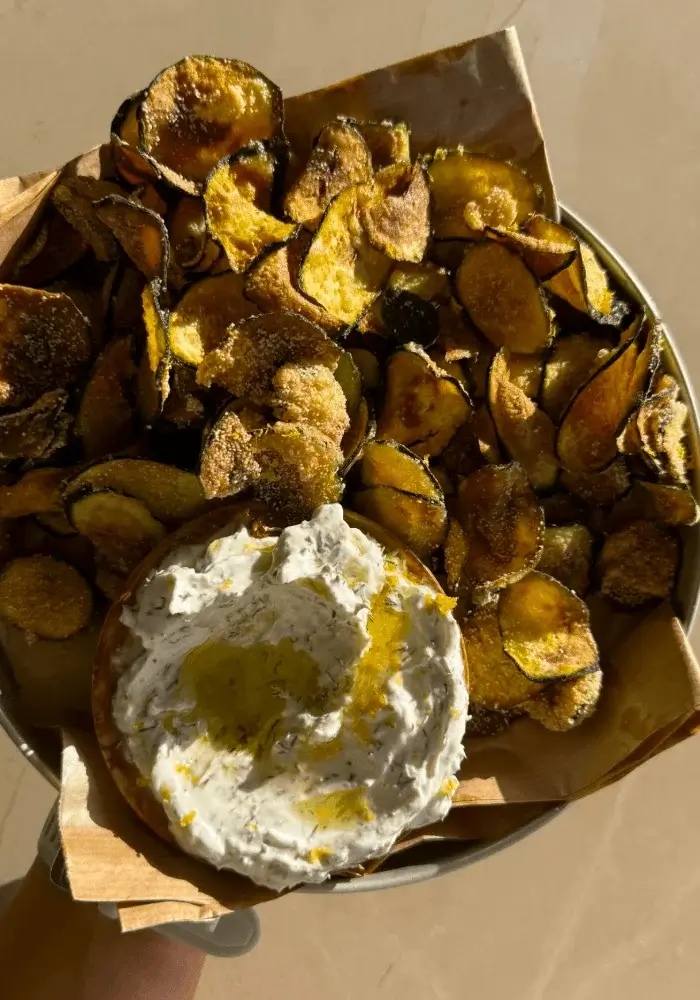
- Serve immediately with tzatziki.
FAQ
What makes crispy zucchini chips become extra crunchy?
For crispy zucchini chips to become crunchy, the most important step is removing excess moisture from the zucchini before frying. Zucchini naturally contains a high amount of water, and if that moisture remains, it can prevent the coating from crisping properly. Salting the sliced zucchini and letting it rest for about 10 minutes helps draw out some of the water. After resting, the slices should be patted very dry with paper towels before coating.
Using a thin, even slice is also important, which is why a mandoline works well for this recipe. The semolina and cornstarch coating creates a light crust that fries into a crisp texture. Maintaining the oil temperature around 350°F/180°C ensures the zucchini cooks quickly without absorbing too much oil. Frying in batches also prevents the oil temperature from dropping, which helps create better crispy zucchini chips every time.
Can I make these zucchini chips gluten-free?
Cornstarch is naturally gluten-free, so it already fits within a gluten-free version of the recipe. To replace semolina, rice flour or a gluten-free all-purpose flour blend can be used to maintain a light, crisp coating.
The key is maintaining a balance between a light starch and a slightly textured component that helps the coating adhere and crisp during frying. Rice flour provides a similar light crunch, while gluten-free blends can mimic a more traditional coating. As long as the zucchini is properly dried and fried at the correct temperature, the gluten-free version of crispy zucchini chips can still achieve a crisp, golden texture.
How should I store leftover crispy zucchini chips?
Crispy zucchini chips are best eaten immediately because their texture changes as they sit. The moisture from the zucchini slowly softens the coating, especially when stored in a sealed container. If you have leftovers, allow them to cool completely before storing them in an airtight container lined with paper towels to absorb excess moisture.
To bring back some crispness, reheat the zucchini chips in an oven or air fryer rather than a microwave. A moderate heat setting helps remove moisture and refresh the coating. Avoid storing them with the tzatziki because the sauce will soften the chips quickly. Keep the tzatziki refrigerated separately and serve it alongside the reheated chips.
What oil is best for frying crispy zucchini chips?
Neutral oils with a high smoke point work best for crispy zucchini chips because they allow the coating to crisp without adding strong flavor. Common choices include canola oil, vegetable oil, sunflower oil, and peanut oil. These oils can maintain stable heat around 350°F/180°C, which is ideal for achieving a golden, crisp exterior.
Olive oil is generally not recommended for deep frying at high temperatures because it has a lower smoke point and can become unstable, although light olive oil can sometimes be used in shallow frying. The key is choosing an oil that heats evenly and does not break down quickly under heat. A stable oil helps ensure the semolina and cornstarch coating crisps properly without burning or becoming greasy.
What can I serve with crispy zucchini chips besides tzatziki?
Crispy zucchini chips pair well with many dips and sauces besides tzatziki. Their mild flavor and crunchy coating work especially well with fresh, creamy, or slightly acidic accompaniments. A garlic yogurt sauce, tahini sauce, lemon herb dip, or whipped feta spread can all complement the zucchini without overpowering it.
They can also be served as part of a Mediterranean-style appetizer platter with olives, roasted vegetables, cheeses, and fresh herbs. A tomato-based dip or spicy pepper sauce adds contrast to the delicate zucchini flavor. Since crispy zucchini chips have a light seasoning of salt and lemon zest, they are flexible enough to match many different flavors. The semolina and cornstarch coating gives them a neutral crunch that works with both creamy and bold sauces.
Can I freeze these zucchini chips?
It is possible, but they will not have exactly the same texture as freshly fried chips. Freezing introduces moisture, which can soften the coating over time. For the best results, allow the chips to cool completely before freezing and store them in a single layer or with parchment between layers to prevent sticking. When you’re ready to serve, reheat them in an oven or air fryer rather than microwaving. High dry heat helps remove some moisture and improves the texture.
Can I bake crispy zucchini chips instead of frying them?
Crispy zucchini chips can be baked, but the texture will be slightly different from the fried version. Frying creates a quick, high-heat environment that gives the coating a more puffed and crunchy texture. Baking relies on dry heat, so the zucchini may need more time to lose moisture and become crisp.
To bake them, arrange the coated zucchini slices in a single layer on a lined baking sheet and lightly brush or spray them with oil. Bake at a high temperature until golden and crisp, flipping halfway through. Make sure the slices are not overlapping, because trapped steam can soften the coating.
How long do crispy zucchini chips stay crunchy after frying?
Crispy zucchini chips are at their best immediately after frying, while the coating is still dry and crunchy. As they sit, the natural moisture from the zucchini slowly moves into the coating and softens the texture. This is normal because zucchini contains a lot of water.
To maintain as much crispness as possible, serve them soon after cooking and avoid covering them tightly while they are still hot. Steam trapped in a container can soften the coating quickly. If needed, leftover chips can be reheated in an oven or air fryer to restore some crunch.
Can I make the zucchini chips less salty?
Salt is used both to draw out moisture and to season the final dish, so reducing it slightly will still allow the zucchini to release water during the resting stage. The key is balancing flavor after frying rather than relying only on the initial salting step.
You can reduce the salt used before resting the zucchini and adjust seasoning at the end by lightly sprinkling salt over the finished chips. This method gives more control over flavor intensity. The tzatziki also contributes saltiness, so overall seasoning should be considered across the whole dish.
Why do you salt the zucchini?
Salting the zucchini helps remove excess water that naturally collects inside the vegetable. Zucchini has a high moisture content, and that water can interfere with creating a crisp coating during frying. When salt is added to the sliced zucchini, it draws moisture to the surface, allowing it to be removed before the coating process.
After the zucchini rests with salt, it is important to pat it dry thoroughly with paper towels. Skipping this step can result in a softer texture because the coating absorbs moisture instead of becoming crisp. This preparation also helps the semolina and cornstarch mixture stick more evenly to the slices. Properly dried zucchini fries faster and develops a lighter, crunchier exterior while keeping the inside tender.
Why are my zucchini chips not getting golden?
If your zucchini chips are not turning golden, there are several possible reasons. One common issue is excess moisture left in the zucchini before coating. Water can steam the zucchini instead of allowing the coating to fry and brown properly. Thoroughly drying the slices after salting helps the coating crisp and develop color.
Another factor is the oil temperature. If the oil is below the recommended temperature, the zucchini may cook slowly and absorb oil without browning. If too many slices are added at once, the oil temperature drops and prevents proper frying. The semolina and cornstarch coating should become lightly golden within a few minutes when the oil is hot enough. Fresh oil and proper batch sizes also help achieve a crisp, golden finish.
What type of zucchini works best for crispy zucchini chips?
Smaller zucchini are usually the best choice for crispy zucchini chips because they contain less water and have a firmer texture. Small zucchini also tend to have thinner skin, fewer seeds, and a more delicate flavor, making them ideal for slicing thinly and frying. Medium zucchini also work well as long as they are fresh and firm.
When choosing zucchini, look for ones that feel heavy for their size and have smooth, firm skin. Avoid zucchini that feel soft or have wrinkled skin because they may contain more moisture. The most important factor is not only the size but also creating evenly thin slices. A mandoline helps produce consistent pieces that cook at the same rate, allowing every slice to become crisp and golden.
Can I use an air fryer to make the chips?
Yes, although the texture will be slightly different from the fried version. Traditional frying creates a fast, even crust because the zucchini is surrounded by hot oil, while an air fryer uses circulating hot air. The result can still be crunchy, especially when the zucchini slices are prepared properly.
To get the best texture, slice the zucchini evenly, salt it briefly, and remove as much moisture as possible before coating. Arrange the slices in a single layer so the air can circulate around each piece. Lightly spray or brush the coated zucchini with oil before cooking. Avoid overcrowding the basket because trapped moisture can prevent crisping.
Why does this recipe use semolina and cornstarch together?
The combination of semolina and cornstarch creates the light, crisp coating that makes these crispy zucchini chips unique. Semolina adds a slightly coarse texture that helps create crunch, while cornstarch produces a delicate, crisp finish when exposed to hot oil. Together, they create a coating that is lighter than a traditional flour-based breading.
Cornstarch also helps reduce heaviness because it contains less gluten-forming protein than regular flour. This allows the coating to stay crisp rather than becoming chewy. The baking powder adds a small amount of lift, helping the coating become slightly airy as it fries. The result is a thin, crunchy exterior that complements the tender zucchini inside.
How do I keep crispy zucchini chips from becoming oily?
It is important to fry them at the correct temperature and avoid adding too many slices to the oil at once. Oil that is not hot enough allows the zucchini to absorb more oil before the coating has time to crisp. Maintaining a temperature around 350°F/180°C helps the exterior cook quickly and creates a protective crust.
After frying, remove the zucchini immediately and place it on paper towels to absorb excess oil. A slotted spoon or spider strainer helps drain the chips before they reach the plate. Frying in small batches also keeps the oil temperature stable.