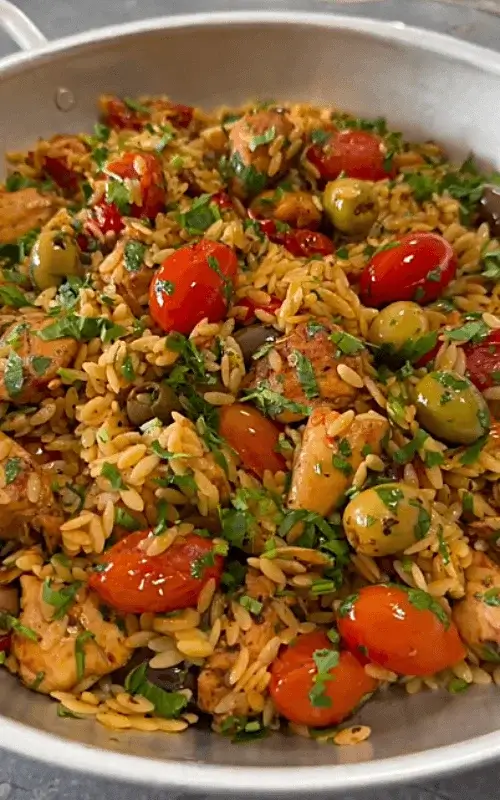
Easy Mediterranean Orzo Chicken Recipe
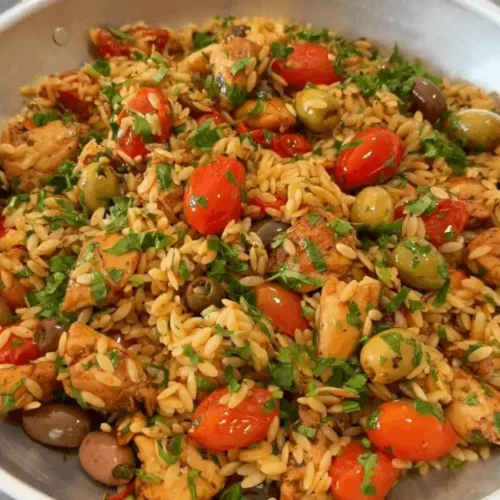
Watch the Full Step-by-Step
- Large pot
- Colander
- Large skillet
INGREDIENTS
Chicken:
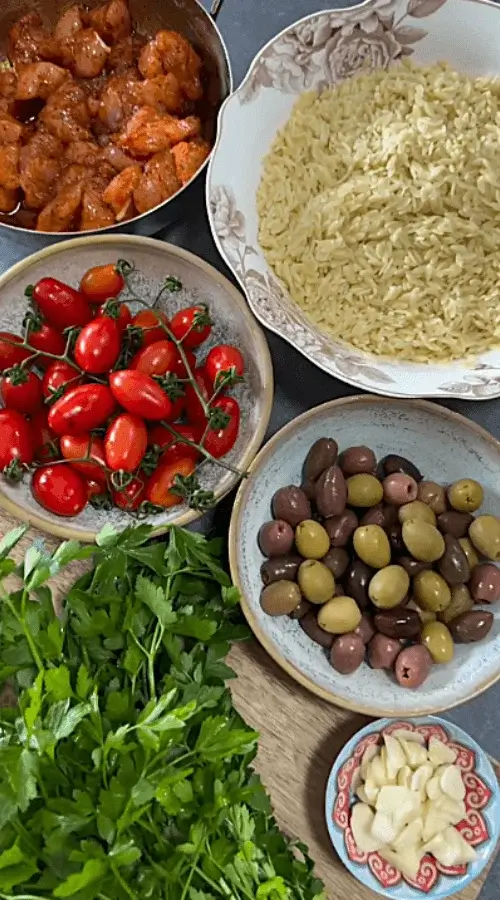
- 10.5 ounces/300 grams chicken breast, cubed
- 10.5 ounces/300 grams cherry tomatoes
- 7 ounces/200 grams pitted olives
- 4 garlic cloves, finely sliced
- ¼ cup fresh parsley, chopped
- 2 tablespoons olive oil
- 1 teaspoon paprika
- 1 teaspoon salt
- ½ teaspoon black pepper
- 1 teaspoon dried oregano
- 1 tablespoon date syrup
Orzo:
- 1 cup dry orzo
- 5 tablespoons olive oil
- 1 teaspoon paprika
- 1 teaspoon salt
- ½ teaspoon black pepper
- 1 teaspoon dried oregano

INSTRUCTIONS
- Bring a large pot of generously salted water to a boil. Add the orzo and cook for 4 minutes, until just beginning to soften. Drain well and toss with a drizzle of olive oil to prevent sticking.
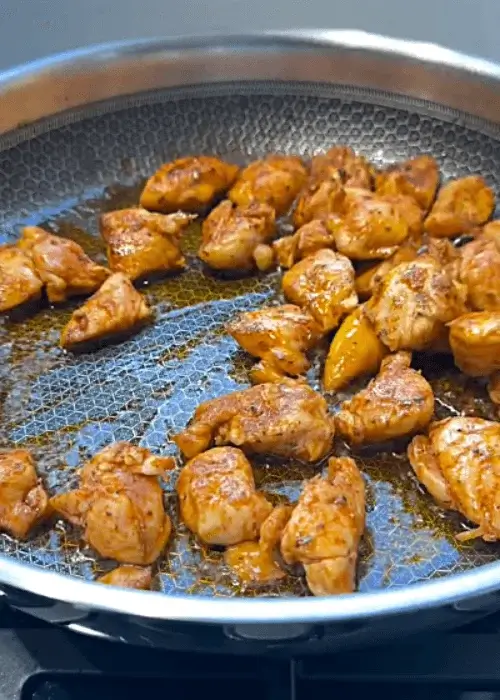
- Meanwhile, heat a large skillet over medium-high. Add a drizzle of olive oil, then the chicken. Cook, turning occasionally, until browned on all sides, 5 to 6 minutes.
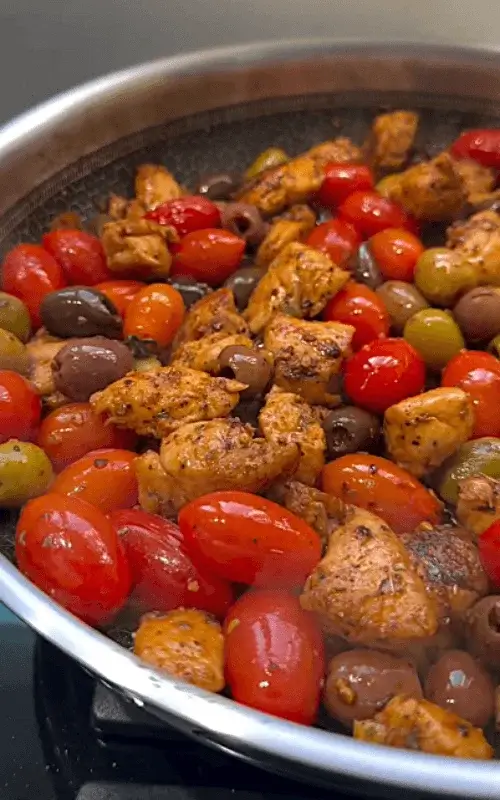
- Add the garlic, tomatoes, and olives. Cook, stirring occasionally, until the tomatoes begin to soften and release their juices, 3 to 4 minutes.
- Stir in the paprika, salt, pepper, oregano, and date syrup until the chicken is evenly coated.
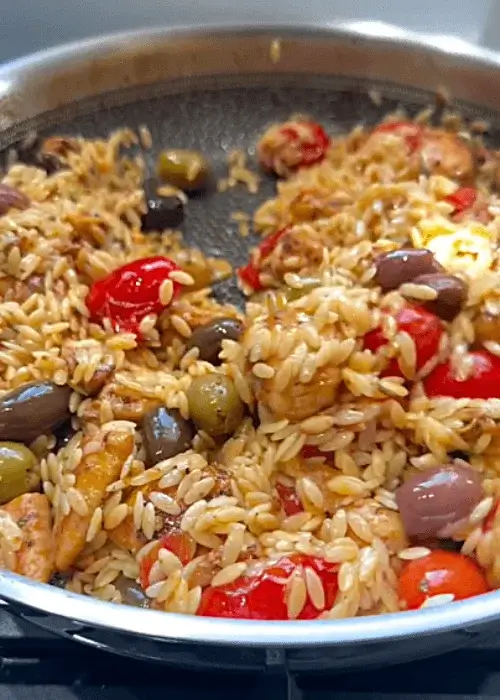
- Add the cooked orzo, olive oil, sweet paprika, salt, pepper, and oregano. Toss until the orzo is evenly coated and cook, stirring frequently, until everything is hot and well combined, about 3 minutes.
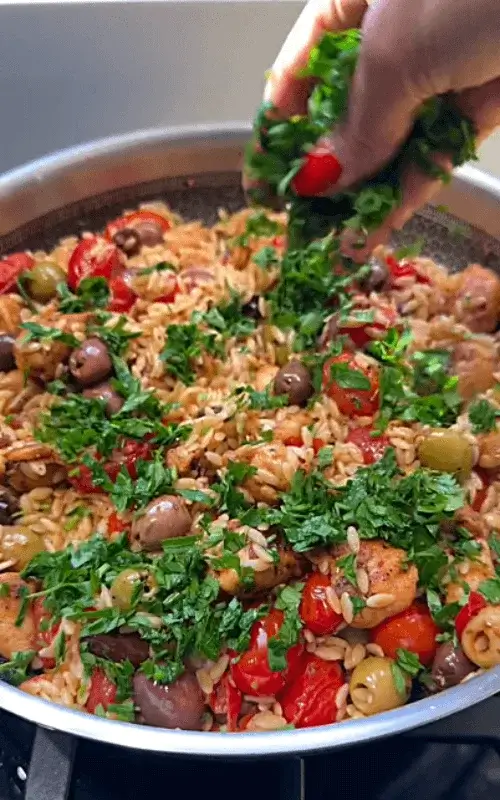
- Remove from the heat, fold in the parsley, and serve immediately.
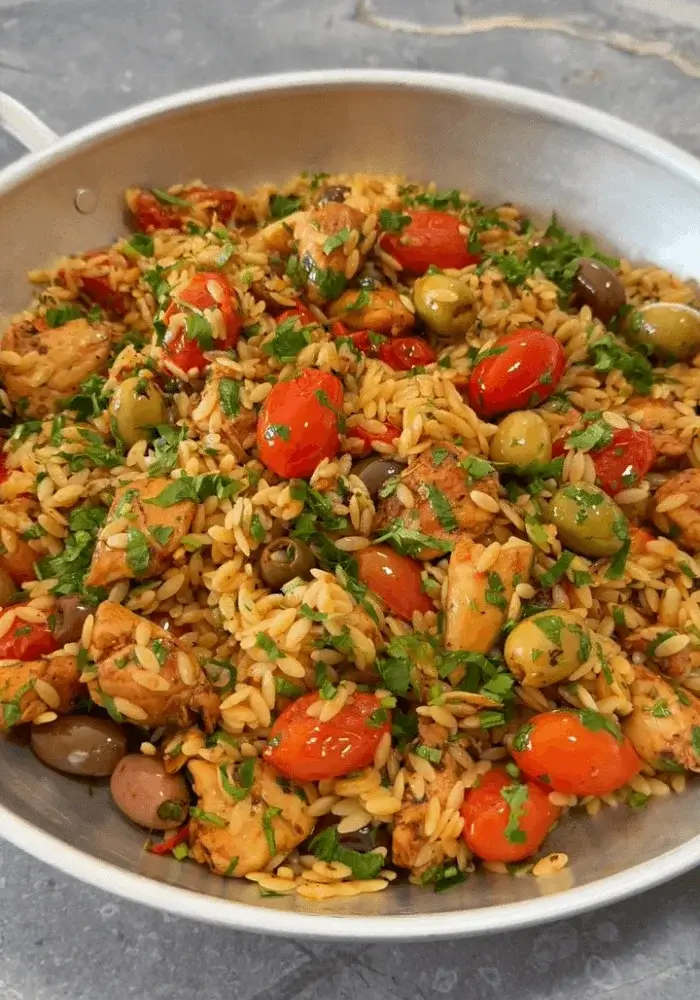
FAQ
What type of orzo works best for this Mediterranean orzo chicken recipe?
Traditional dry orzo is the best choice for this Mediterranean orzo chicken recipe because it cooks quickly, absorbs flavors well, and maintains its shape during the final cooking step. Standard semolina orzo is widely available in most grocery stores and creates a tender yet slightly chewy texture that complements the chicken and vegetables.
Whole wheat orzo can also be used if you prefer extra fiber, though it may require a slightly longer cooking time and have a firmer bite. Avoid instant or pre-cooked orzo, as it can become mushy when tossed with the remaining ingredients. Cooking the orzo only until it is partially tender before adding it to the skillet allows it to finish cooking with the tomatoes, olives, and seasonings, resulting in a better texture and a more flavorful finished dish.
How do I know when the chicken is fully cooked?
The safest and most accurate way to determine doneness is by using an instant-read thermometer. In this Mediterranean orzo chicken recipe, the chicken should reach an internal temperature of 165°F/74°C before serving. Visually, the chicken should be browned on the outside and completely opaque in the center, with no pink remaining.
Because the chicken is cut into small cubes, it cooks relatively quickly, usually within 5 to 6 minutes over medium-high heat. Be careful not to overcook it, as chicken breast can dry out. Once the chicken is cooked through, continue with the remaining ingredients promptly so it stays moist throughout the final cooking stage.
Can I substitute another protein in this Mediterranean orzo chicken recipe?
Absolutely. While chicken breast keeps this Mediterranean orzo chicken recipe lean and quick to prepare, several proteins work equally well. Boneless, skinless chicken thighs provide more richness and remain juicy even if slightly overcooked. Turkey breast is another lean option with a similar cooking time. Shrimp can be substituted for a seafood variation, though it should only be cooked for a few minutes to avoid becoming rubbery.
Cubed salmon also pairs well with the tomatoes and olives, but should be added toward the end of cooking to prevent it from breaking apart. For a vegetarian version, chickpeas or canned white beans offer protein while maintaining the Mediterranean flavor profile. Cooking times should always be adjusted based on the protein you choose.
Can I make this Mediterranean orzo chicken recipe gluten-free?
You can adapt this Mediterranean orzo chicken recipe by replacing traditional wheat-based orzo with a gluten-free version made from corn, rice, or legumes. Follow the cooking instructions on the package, as gluten-free pasta often requires different cooking times than regular orzo. Be careful not to overcook it, since some gluten-free varieties soften more quickly.
The remaining ingredients in the recipe are naturally gluten-free, but always check labels on packaged products such as olives, spices, and date syrup if you are preparing the meal for someone with celiac disease or severe gluten sensitivity. The finished dish will have a slightly different texture but will retain the same Mediterranean flavors.
Do I need to cook the orzo before adding it to the skillet?
Yes. In this Mediterranean orzo chicken recipe, the orzo is intentionally boiled for about 4 minutes before being added to the skillet. This partial cooking ensures the pasta softens evenly without absorbing too much moisture from the tomatoes and chicken. Draining the orzo well and tossing it with a little olive oil prevents the small pasta pieces from sticking together while the chicken finishes cooking.
Adding fully uncooked orzo directly to the skillet would require significantly more liquid and a longer cooking time, changing both the texture and consistency of the dish. By partially cooking the orzo first, the final skillet cooking simply allows it to absorb the seasonings while finishing to the ideal tenderness.
How do I keep the orzo from becoming sticky?
Orzo can become sticky because it releases starch while cooking, but a few simple steps help prevent this. In this Mediterranean orzo chicken recipe, the orzo is cooked only until partially tender, then drained immediately. Tossing it with a small drizzle of olive oil prevents the pasta from clumping while the chicken cooks.
Avoid overcooking the orzo in the boiling water, since it will continue cooking in the skillet. Stirring the pasta into the chicken mixture only after the seasonings have been added helps distribute the oil evenly, keeping each piece coated rather than stuck together. Serving the dish immediately after cooking also helps maintain the ideal texture.
Can I freeze leftovers?
Yes, this meal freezes well for convenient future meals. Allow the finished dish to cool completely before dividing it into freezer-safe containers or resealable freezer bags. Freeze for up to 3 months for the best quality. Thaw overnight in the refrigerator before reheating in a skillet or microwave.
Because pasta naturally absorbs moisture during storage, adding a small splash of water or chicken broth while reheating helps restore the original texture. The tomatoes may become slightly softer after freezing, but the overall flavor remains excellent. If you plan to freeze the meal, consider adding the fresh parsley after reheating instead of before freezing to preserve its color and fresh taste.
Can I add more vegetables to this Mediterranean orzo chicken recipe?
This Mediterranean orzo chicken recipe is very flexible and works well with additional vegetables. Baby spinach can be stirred in during the final minute of cooking until just wilted. Chopped zucchini, bell peppers, mushrooms, or artichoke hearts also complement the Mediterranean flavors and add extra texture and nutrition.
If using firmer vegetables like zucchini or peppers, sauté them with the tomatoes so they have time to soften before the orzo is added. Avoid overcrowding the skillet, as too many vegetables may release excess moisture and dilute the flavors.
What can I serve with this Mediterranean orzo chicken?
A crisp green salad with lemon vinaigrette adds freshness and balances the richness of the olive oil. Warm pita bread or crusty artisan bread is perfect for soaking up the flavorful juices left in the skillet. Roasted vegetables such as zucchini, eggplant, asparagus, or broccoli complement the Mediterranean flavors without overpowering the meal.
A spoonful of plain Greek yogurt or tzatziki adds a cool, creamy contrast, while crumbled feta cheese provides a salty finish. For entertaining, serve the dish alongside hummus, cucumber salad, or marinated vegetables to create a complete Mediterranean-inspired dinner with minimal additional preparation.
What olives are best for this Mediterranean orzo chicken recipe?
The best olives for this Mediterranean orzo chicken recipe depend on the flavor profile you enjoy. Kalamata olives are one of the most popular choices because they have a rich, fruity flavor that complements tomatoes and oregano. Castelvetrano olives are milder and buttery, making them ideal if you prefer less saltiness.
Black olives offer a softer, more familiar flavor, while green olives add a brighter, slightly tangy bite. Whichever variety you choose, pitted olives are the most convenient and safest for serving. If the olives are heavily brined, consider rinsing them briefly before adding them to the skillet to reduce excess salt and keep the dish balanced.
Can I use chicken thighs in this Mediterranean orzo chicken recipe?
Boneless, skinless chicken thighs are an excellent substitute in this Mediterranean orzo chicken recipe. Chicken thighs contain more fat than chicken breast, making them naturally juicier and more forgiving if cooked a little longer. Cut the thighs into evenly sized pieces so they cook at the same rate, and brown them well before adding the vegetables.
Proper browning creates flavorful bits on the bottom of the skillet that enrich the entire dish. Keep in mind that thighs may release more juices while cooking, which can slightly increase the amount of liquid in the pan. Simply continue cooking until the excess moisture reduces and the flavors become concentrated before adding the cooked orzo.
Can I use canned tomatoes instead of fresh cherry tomatoes?
Fresh cherry tomatoes are recommended because they soften without completely breaking down, adding bursts of sweetness throughout the dish. However, canned diced tomatoes can be used if fresh tomatoes are unavailable. If using canned tomatoes in this Mediterranean orzo chicken recipe, drain most of the liquid before adding them to prevent the skillet from becoming too watery.
Fire-roasted canned tomatoes also work well and provide a slightly smoky flavor. Since canned tomatoes are generally more acidic than fresh ones, you may find that the date syrup becomes even more important for balancing the overall flavor. Simmer the mixture for a few extra minutes if necessary to reduce any excess liquid before adding the orzo.