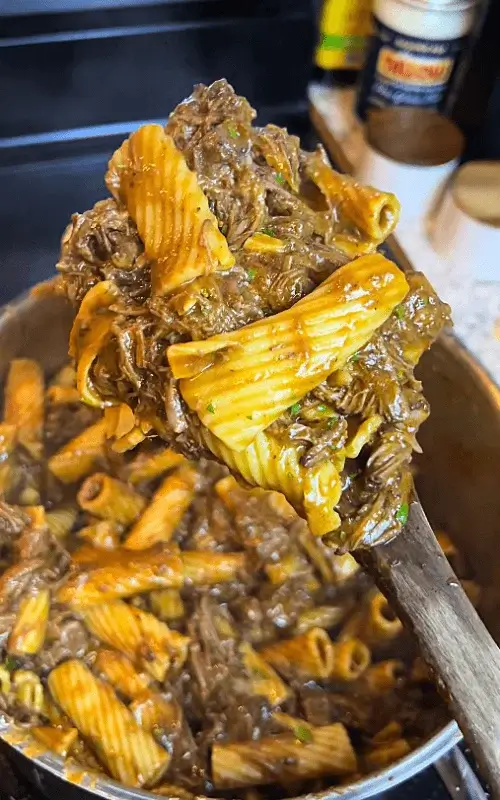
Wine-Braised Beef Rigatoni with Grated Parmesan
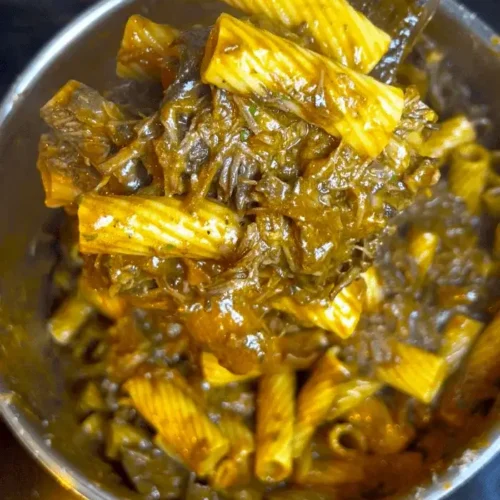
Watch the Full Step-by-Step
- Large pot
- Large skillet
- Immersion blender
- Chef's knife
INGREDIENTS
- 3 pounds/1.4 kilograms boneless beef chuck roast, cut into 3-inch/7.5-centimeter pieces
- Salt, to taste
- Black pepper, to taste
- 2 tablespoons oil
- 1 large yellow onion, finely diced
- 2 medium carrots, finely diced
- 2 celery stalks, finely diced
- 1 tablespoon tomato paste
- 5 garlic cloves, thinly sliced
- 2 cups dry red wine
- 4 cups/960 milliliters beef broth
- 2 rosemary sprigs
- 4 thyme sprigs
- 2 bay leaves
- 1 pound/450 grams rigatoni
- ½ cup reserved pasta water, plus more as needed
- 3.5 ounces/100 grams finely grated Parmesan, plus more for serving
- ¼ cup fresh parsley, finely chopped

INSTRUCTIONS
- Heat the oven to 300°F/150°C.
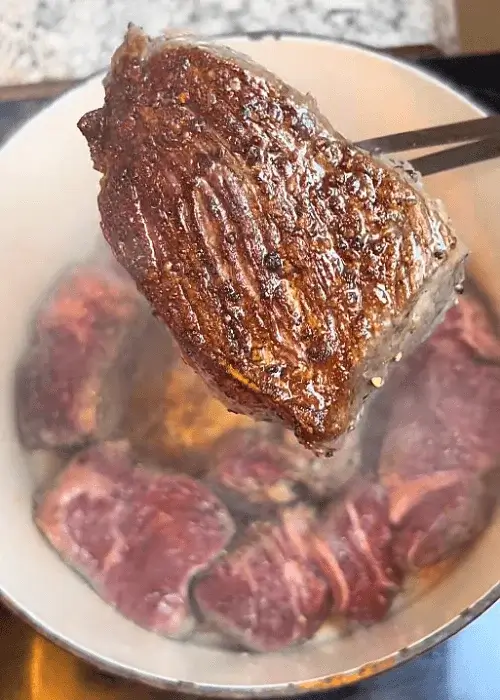
- Season the beef generously with salt and pepper. Heat the oil in a large Dutch oven over medium-high heat. Working in batches, sear the beef until deeply browned, 3 to 4 minutes per side. Transfer to a plate.
- Add the onion, carrots and celery and cook until softened and lightly browned, 6 to 8 minutes. Add the tomato paste and cook for 1 minute. Add the garlic and cook for 30 seconds.
- Add the wine, scraping up any browned bits. Simmer until reduced by half, 8 to 10 minutes.
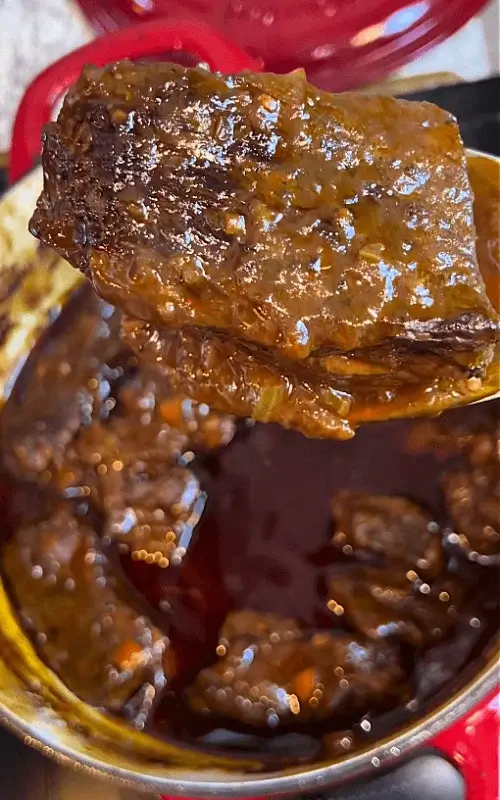
- Add the beef broth, rosemary, thyme and bay leaves. Return the beef and its juices to the pot. Place a piece of parchment directly over the surface, cover and transfer to the oven. Braise until the beef is very tender, 3½ to 4 hours.
- About 20 minutes before the beef is done, cook the rigatoni in generously salted water until just shy of al dente. Reserve ½ cup/120 milliliters pasta water, then drain.
- Transfer the beef to a plate and shred. Discard the herbs and bay leaves. Purée the braising liquid with an immersion blender, then strain through a fine-mesh sieve.
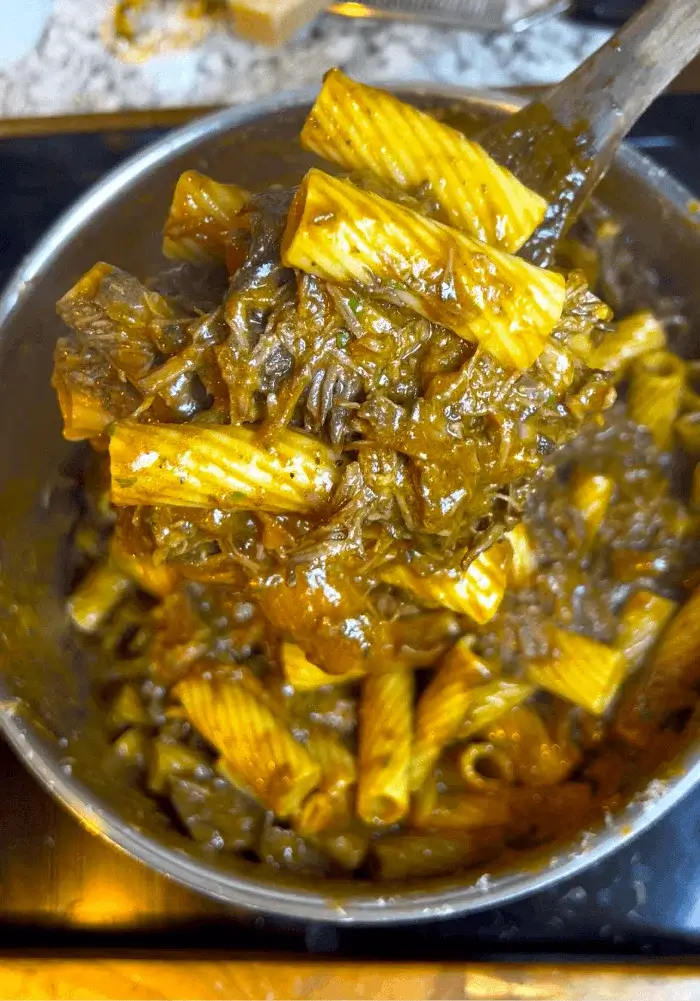
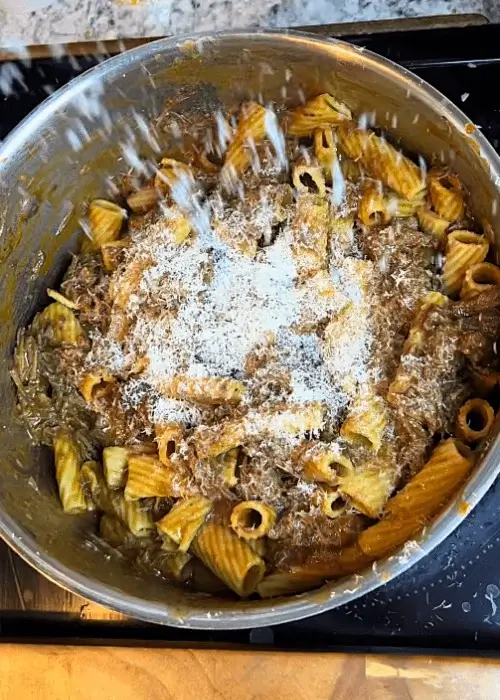
- Return the sauce to the pot. Add the pasta and shredded beef, tossing with the reserved pasta water until glossy and well coated.
- Remove from the heat and stir in the Parmesan and parsley. Season with salt and pepper and serve with additional Parmesan.
FAQ
What cut of beef is best for braised beef rigatoni?
Boneless beef chuck roast is the best cut for braised beef rigatoni because it contains enough connective tissue and fat to remain moist during a long braise. As the chuck cooks slowly at 300°F/150°C, its collagen gradually breaks down into gelatin, producing beef that becomes tender enough to shred while enriching the braising liquid. A well-marbled chuck roast also contributes additional flavor and body to the sauce.
Avoid very lean cuts such as eye of round or top round, which can become dry and stringy during a several-hour braise. Beef short ribs can work as an alternative, but they are usually more expensive and contain bones that make the cooking process less straightforward. For this recipe, choose a chuck roast with visible marbling and cut it into manageable pieces before searing.
How can you make the sauce for braised beef rigatoni thicker?
The sauce for braised beef rigatoni can be thickened naturally by reducing it after the braising liquid has been blended and strained. Return the strained sauce to the Dutch oven or a saucepan and simmer it uncovered over medium-low heat until it reaches the desired consistency. Stir occasionally to prevent the bottom from scorching. Because the sauce contains concentrated beef juices, wine and vegetables, reduction intensifies both its flavor and texture.
Avoid adding large amounts of flour or cornstarch, which can make the sauce heavy and mask the concentrated flavor developed during the braise. Pasta water should be added only after the sauce has reached a concentrated consistency because its starch will slightly thicken the finished mixture while helping the sauce adhere to the rigatoni. The ideal sauce should be thick enough to coat the pasta while remaining fluid and glossy.
Why do you need to sear the beef before braising it?
Searing the beef before braising develops the browned flavors that give braised beef rigatoni its deep, savory character. When the surface of the beef makes firm contact with a hot Dutch oven, the Maillard reaction creates hundreds of flavorful compounds and produces a dark crust. The browned bits left on the bottom of the pot, known as fond, are particularly valuable because they dissolve into the wine and beef broth as the sauce cooks.
Searing also prevents the meat from simply steaming when it first enters the pot. The goal is not to cook the chuck roast through during this step; it is to develop substantial browning on the exterior. Work in batches if necessary, leaving space between the pieces so moisture can evaporate and the beef can brown rather than steam.
Can braised beef rigatoni be frozen?
Yes, braised beef rigatoni can be frozen, although the best texture comes from freezing the beef and sauce separately from the pasta. Cooked rigatoni can become softer after freezing and reheating because it continues absorbing moisture during storage. For the best result, prepare the braised beef and sauce, cool them completely, and transfer them to airtight freezer-safe containers. Freeze for up to 3 months for the best quality.
Thaw overnight in the refrigerator before reheating. Warm the beef and sauce gently in a saucepan, adding a small amount of beef broth or water if the sauce has thickened. Cook fresh rigatoni separately and combine it with the reheated sauce. If you need to freeze the entire finished dish, slightly undercook the pasta before combining it with the sauce. Cool it quickly, portion it into airtight containers and reheat gently to minimize the loss of texture.
How do you get the deepest flavor from braised beef rigatoni?
Deep flavor in braised beef rigatoni comes from developing each layer of the dish rather than relying on the long cooking time alone. Start by thoroughly drying and generously browning the chuck roast in batches. The dark fond left in the Dutch oven should remain intact because it becomes part of the sauce. Cook the mirepoix until softened and lightly browned, then cook the tomato paste until its raw flavor disappears.
Reduce the red wine by about half before adding the beef broth so its flavor becomes concentrated. The long braise then allows the beef, vegetables, herbs and liquid to meld. Finally, puréeing and straining the braising liquid creates a concentrated, smooth sauce. Finishing the pasta in that sauce, rather than simply spooning sauce over cooked noodles, allows the rigatoni to absorb the beef and wine flavors more thoroughly.
Can I make braised beef rigatoni without red wine?
Yes, you can make braised beef rigatoni without red wine, although the finished sauce will have a somewhat different flavor. Red wine contributes acidity, fruitiness and concentrated savory notes while helping loosen the browned fond from the bottom of the Dutch oven. If you do not want to use wine, replace the 2 cups of red wine with additional beef broth, preferably reduced-sodium broth so you can control the salt.
Because broth does not provide the same acidity as wine, adding a small amount of balsamic vinegar or red wine vinegar near the end can help balance the richness. Add the vinegar gradually and taste before adding more. Another option is to use alcohol-free red wine designed for cooking. Regardless of the substitution, reduce the liquid appropriately so the final sauce remains concentrated rather than watery.
What type of pasta works best for braised beef rigatoni?
Rigatoni is particularly well suited to braised beef rigatoni because its large, tubular shape can hold pieces of shredded beef and plenty of rich sauce. The ridged exterior, known as rigate, also provides additional surface area for the sauce to cling to. This makes rigatoni more effective for a thick meat sauce than very thin pasta shapes such as angel hair.
Ziti, mezzi rigatoni or paccheri can also work if rigatoni is unavailable, although their size and cooking times may differ. Cook the pasta until just shy of al dente before combining it with the sauce. The pasta will continue cooking as it is tossed with the hot sauce and beef. Avoid overcooking it in the initial water, because the final mixing stage should finish the pasta while allowing it to absorb some of the concentrated braising sauce.
Can you use an immersion blender directly in the Dutch oven?
Yes, an immersion blender can be used directly in the Dutch oven once the beef and whole aromatics have been removed. For braised beef rigatoni, this is a convenient way to purée the cooked onion, carrot, celery, garlic and braising liquid into a smooth sauce. Make sure the immersion blender is fully submerged before turning it on to reduce splattering. Blend until the vegetables are thoroughly incorporated and the liquid is relatively smooth.
After blending, strain the sauce through a fine-mesh sieve to remove fibrous pieces and produce a more refined texture. Allowing the liquid to cool slightly before blending can also make the process easier and safer. If your Dutch oven has a delicate interior coating, follow the manufacturer’s instructions regarding immersion blenders, since metal blades may scratch some surfaces.
How do you know when the beef is fully braised?
The beef is ready when it is extremely tender and can be pulled apart easily with a fork. For braised beef rigatoni, tenderness is more important than reaching a specific internal temperature because chuck roast contains connective tissue that needs prolonged cooking to break down. After approximately 3½ to 4 hours at 300°F/150°C, test a large piece by inserting a fork into the center and gently twisting. The fork should enter with little resistance, and the meat should separate easily when pulled.
If the beef still feels firm or chewy, continue braising and check it again after 20 to 30 minutes. Keeping the pot covered helps retain moisture, while the parchment placed directly over the surface helps limit evaporation. Avoid judging doneness solely by appearance; properly braised chuck should feel soft and yielding rather than merely cooked through.
Why is pasta water important in braised beef rigatoni?
Reserved pasta water helps bring the sauce and rigatoni together into a cohesive, glossy dish. Pasta water contains starch released from the noodles during cooking, and that starch helps the braising sauce cling to the rigatoni rather than pooling at the bottom of the pot. In braised beef rigatoni, the concentrated beef sauce can become quite thick after straining, so adding pasta water allows you to adjust its consistency without diluting the flavor too aggressively.
Cook the rigatoni in generously salted water and reserve the pasta water before draining. Add it gradually while tossing the pasta, beef and sauce together. You may not need the entire amount. The finished sauce should coat the pasta evenly and remain loose enough to stay glossy rather than becoming thick, dry or pasty.
What red wine should you use for braised beef rigatoni?
A dry, full-bodied red wine works best for braised beef rigatoni because it provides enough acidity and flavor to stand up to the richness of the chuck roast. Cabernet Sauvignon, Merlot, Malbec, Syrah and many dry red blends are suitable choices. You do not need an expensive bottle; a wine that you enjoy drinking is generally appropriate for cooking. Avoid sweet wines unless the recipe specifically calls for them, because residual sugar can become concentrated as the wine reduces.
Very heavily oaked wines can also contribute strong flavors that may dominate the sauce. The wine should be dry and reasonably balanced rather than highly acidic or extremely tannic. Since the recipe uses 2 cups of wine, choosing a drinkable bottle gives you the option of serving the same wine alongside the finished braised beef rigatoni.