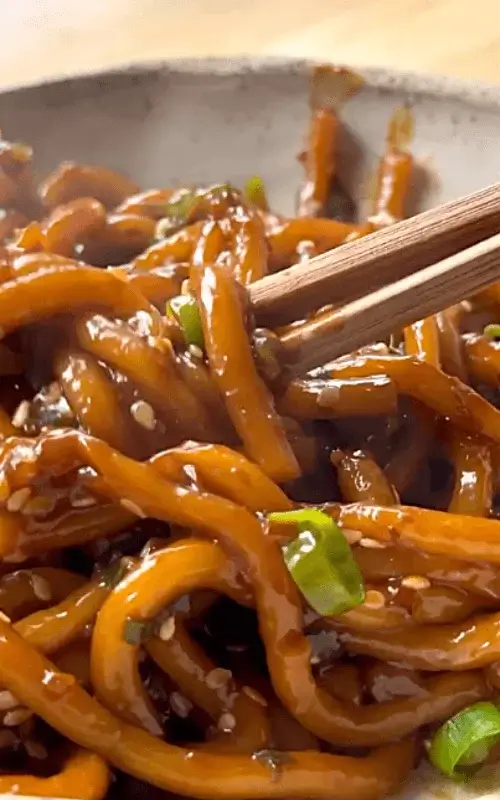
Easy Cooked Udon Noodles with Spicy Soy Sauce
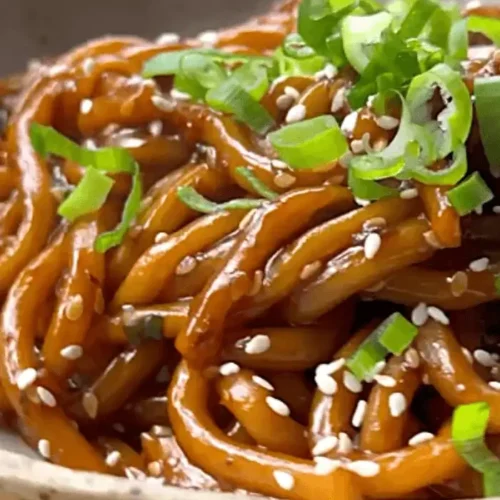
Watch the Full Step-by-Step
- Small pot
- Small skillet
- Colander
INGREDIENTS
- 3.5 ounces/100 grams precooked udon noodles
- 1 green onion, thinly sliced
- 1 teaspoon sesame seeds
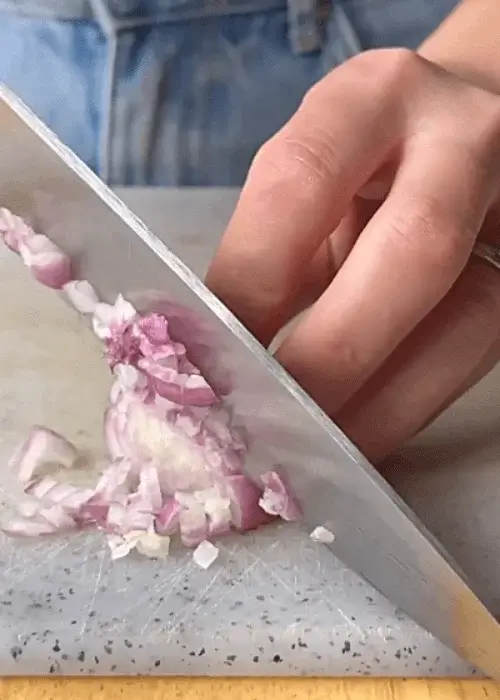
- ½ shallot, very finely diced
- ½ garlic clove, very finely diced
- ⅓ teaspoon freshly grated ginger
- 1 tablespoon light soy sauce
- 1 tablespoon dark soy sauce
- 1 teaspoon sriracha
- ½ teaspoon honey
- 1 teaspoon sesame oil
- ½ teaspoon chili oil, optional

INSTRUCTIONS
- Bring a small pot of water to a boil. Add the precooked udon noodles and warm for 1 minute, or according to the package instructions. Drain well.
- Meanwhile, heat the sesame oil in a small skillet over medium-low heat. Add the shallot and cook, stirring, until softened, about 1 minute.
- Add the garlic and ginger and cook until fragrant, about 30 seconds. Stir in the light and dark soy sauces, sriracha, and honey. Cook, stirring, until the sauce is glossy and slightly thickened, about 1 minute.
- Add the warmed noodles and toss until thoroughly coated. Stir in the sesame seeds and green onion.
- Divide among bowls and finish with a drizzle of chili oil, if desired.
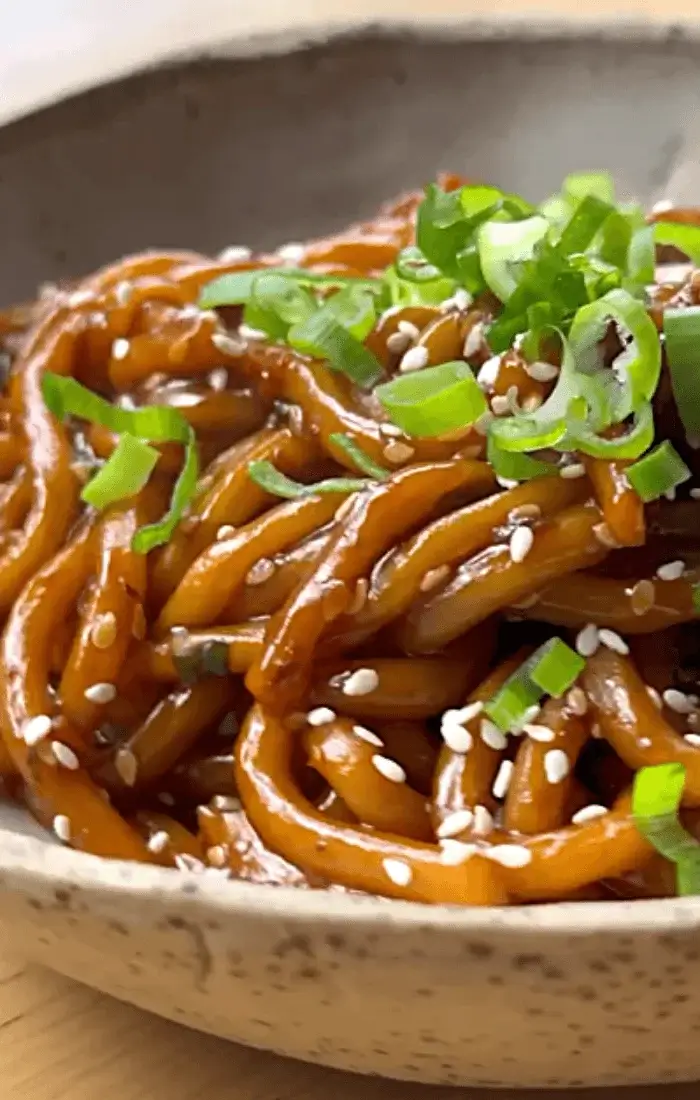
FAQ
Can I use fresh udon noodles instead of precooked udon noodles?
Fresh udon is typically softer and more delicate than vacuum-packed precooked udon, so it generally requires only brief heating in boiling water. Follow the instructions on the package rather than automatically using the one-minute warming time specified in this recipe. Once the noodles are heated through, drain them thoroughly before adding them to the sauce.
Excess water can dilute the soy-based sauce and make it harder for the noodles to become evenly coated. Avoid overcooking fresh udon because prolonged boiling can make the noodles overly soft and gummy. The finished noodles should remain pleasantly chewy and retain their characteristic thick, springy texture.
Why are my cooked udon noodles sticky?
Cooked udon noodles can become sticky for several reasons, including overcooking, insufficient draining, or allowing the noodles to sit together for too long after heating. Precooked udon noodles are already cooked, so they generally need only brief warming. In this recipe, one minute in boiling water is enough to loosen and heat them, unless the package instructions specify otherwise. After warming, drain the noodles thoroughly before adding them to the sauce.
Excess water can make the surface of the noodles more gummy and can also dilute the sauce. Tossing the noodles immediately with the spicy soy sauce helps keep them separated and evenly coated. If you are preparing cooked udon noodles ahead of time, cool and store them promptly rather than leaving them warm in a container. Gentle reheating is also important because repeated or prolonged heating can negatively affect the noodles’ texture.
How do you keep cooked udon noodles from becoming mushy?
The key to preventing cooked udon noodles from becoming mushy is to avoid overcooking them and to follow the preparation instructions for the specific type of udon you are using. Precooked udon noodles generally need only brief warming rather than full cooking. In this recipe, one minute in boiling water is enough to heat them through. Once warmed, drain them well and add them directly to the prepared sauce.
Leaving udon in hot water for too long allows the noodles to absorb excess water and soften excessively. It is also important not to let the noodles sit in hot water after they are ready. If you are preparing cooked udon noodles in advance, drain them immediately and cool them quickly rather than leaving them in the cooking water. Tossing them with the sauce promptly also helps preserve their texture.
Can I make cooked udon noodles gluten-free?
Traditional udon noodles are made from wheat flour, so they are not gluten-free. Use noodles specifically labeled gluten-free and check the ingredient list carefully. The soy sauce also requires attention because conventional soy sauce commonly contains wheat. Substitute it with a gluten-free tamari or another certified gluten-free soy sauce, adjusting the amount according to its saltiness.
Check the labels on the sriracha, chili oil, and other packaged condiments as well, because formulations can vary. If cross-contact with gluten is a concern, use clean cookware and utensils that have not been contaminated with wheat products. With certified gluten-free noodles and condiments, the same basic sauce and preparation method can be used.
What can I use instead of shallot in cooked udon noodles?
If you do not have a shallot, you can substitute a small amount of finely diced yellow onion, white onion, or a mild green onion. The purpose of the shallot in this recipe is to provide a lightly sweet, aromatic base for the spicy soy sauce. Because the shallot is finely diced and cooks quickly, a larger onion substitute should be chopped very finely to achieve a similar cooking time and texture.
You can also use the white portion of a green onion, reserving the green portion for finishing the dish. Cook the substitute over medium-low heat until softened before adding the garlic and ginger. Avoid browning it heavily, since the sauce is intended to have a clean, savory flavor rather than a deeply caramelized onion flavor. The substitution will not significantly change the preparation of the cooked udon noodles.
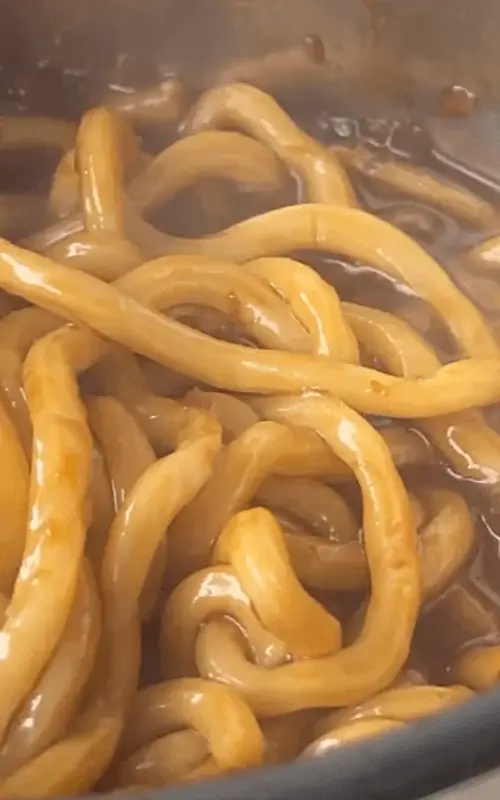
What can I add to cooked udon noodles to make them a complete meal?
To turn cooked udon noodles into a more substantial meal, add a source of protein and one or more vegetables. Cooked chicken, sliced beef, shrimp, tofu, or a fried or soft-boiled egg all pair well with the spicy soy sauce. Vegetables such as bok choy, broccoli, mushrooms, shredded carrots, bell peppers, spinach, or snap peas can add texture, color, fiber, and nutrients.
For the best results, cook firmer vegetables before preparing the sauce and add quick-cooking ingredients toward the end. Keep the additions relatively small so the sauce can still coat the noodles evenly. You can also add roasted peanuts, cashews, or extra sesame seeds for crunch. If adding a large amount of protein or vegetables, you may need to increase the sauce proportionally so the cooked udon noodles do not become dry or underseasoned.
Can I reheat cooked udon noodles without making them dry?
The easiest method is to place refrigerated noodles in boiling water for a short time, just until they loosen and become hot, then drain them thoroughly. You can also reheat them in a skillet over low to medium-low heat with a small splash of water. If the noodles were already coated in sauce, cover the skillet briefly to trap steam and help loosen them.
Avoid prolonged high-heat cooking, which can cause the noodles to become tough or overly soft depending on how much moisture is present. If the sauce has thickened in the refrigerator, adding a small amount of water while reheating can restore a smoother consistency. The goal is to heat the cooked udon noodles through without cooking them again for an extended period.
Can I use regular soy sauce instead of light and dark soy sauce?
Yes, regular soy sauce can be used if you do not have separate light and dark soy sauces. The original recipe uses both varieties to create a balance of seasoning, color, and depth, while regular soy sauce generally provides a more straightforward salty, savory flavor. If using only regular soy sauce, begin with a smaller amount than the combined quantity of the two soy sauces and taste the sauce before adding the noodles.
Soy sauce varies considerably in saltiness between brands, so the exact amount needed depends on the product. You may also find that the finished sauce is lighter in color than the original. The other ingredients, including sriracha, honey, sesame oil, garlic, ginger, and shallot, will continue to provide complexity. Once the sauce tastes balanced, add the cooked udon noodles and toss thoroughly so the seasoning is distributed evenly.
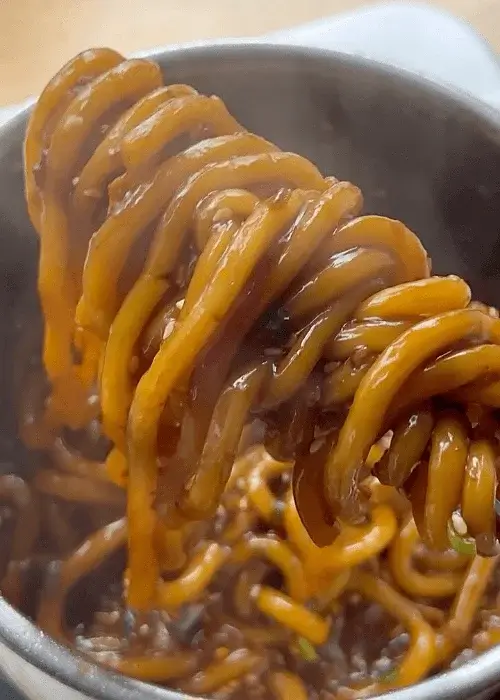
What protein goes best with cooked udon noodles and spicy soy sauce?
Several proteins pair well with the savory, spicy and slightly sweet sauce used for these cooked udon noodles. Shrimp is particularly suitable because it cooks quickly and complements soy, ginger and sesame flavors. Thinly sliced chicken, beef, pork, or firm tofu can also be added. Eggs are another simple option; a fried egg, soft-boiled egg, or scrambled egg adds protein without requiring a separate complicated preparation.
For chicken, beef, or pork, cook the protein completely before adding the noodles and sauce. Shrimp should be cooked until opaque and firm. Tofu benefits from being browned first so it develops a crisp exterior before being tossed with the noodles. Keep the protein pieces relatively small so they distribute evenly throughout the dish rather than overwhelming the cooked udon noodles.
How do I make the sauce for cooked udon noodles thicker?
The sauce for cooked udon noodles becomes thicker primarily through brief cooking, which allows some of its moisture to evaporate while the honey contributes body and gloss. In this recipe, the light soy sauce, dark soy sauce, sriracha and honey are cooked together over medium-low heat for about one minute. If the sauce still seems too thin, continue cooking it briefly while stirring until it becomes glossy and slightly reduced.
Avoid using high heat because the honey can caramelize or burn quickly. It is also important to drain the noodles well before adding them. Excess water clinging to the noodles can thin the sauce and prevent it from adhering properly. Do not add a large amount of cornstarch unless you specifically want a thicker, more gravy-like sauce, because the original recipe is intended to have a light, glossy coating rather than a heavy sauce.
Why does the sauce not stick to my cooked udon noodles?
If the sauce does not stick to cooked udon noodles, excess water is usually one of the first things to check. The noodles should be drained thoroughly after warming because water left on their surface can dilute the sauce and prevent it from clinging properly. The sauce itself should also be cooked briefly until glossy and slightly thickened before the noodles are added. If the sauce is still very watery, continue cooking it over medium-low heat for a short time to reduce some of the liquid.
Avoid adding the noodles before the sauce has reached the desired consistency. Once the cooked udon noodles are added, toss them continuously until the sauce coats their surface. The natural starch on udon noodles also helps the sauce adhere. Avoid rinsing the noodles after warming unless the package specifically instructs you to do so, because rinsing can remove surface starch and make coating more difficult.