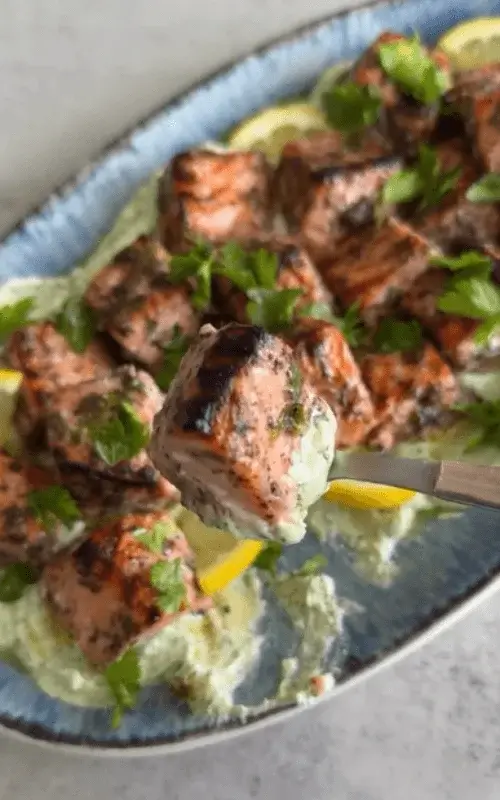
Mediterranean Salmon with Herb Feta
Watch the Full Step-by-Step
- Large bowl
- Baking sheet
- Food processor
INGREDIENTS
- 1.5 pounds/680 grams skinless salmon fillets, cubed
- ¼ cup olive oil
- 2 tablespoons fresh lemon juice
- ¼ cup fresh parsley, finely chopped
- 1 tablespoon fresh dill, finely chopped
- 1 tablespoon honey
- 1 tablespoon ground sumac
- 1 teaspoon garlic powder
- ½ teaspoon salt
- ½ teaspoon black pepper
- 4 ounces/115 grams feta cheese
- 2 tablespoons Greek yogurt
- 2 tablespoons olive oil
- ½ cup mixed fresh herbs, such as parsley, cilantro and dill
- 2 tablespoons fresh lemon juice
- Pinch of salt

INSTRUCTIONS
- Heat the oven to 425°F/220°C.
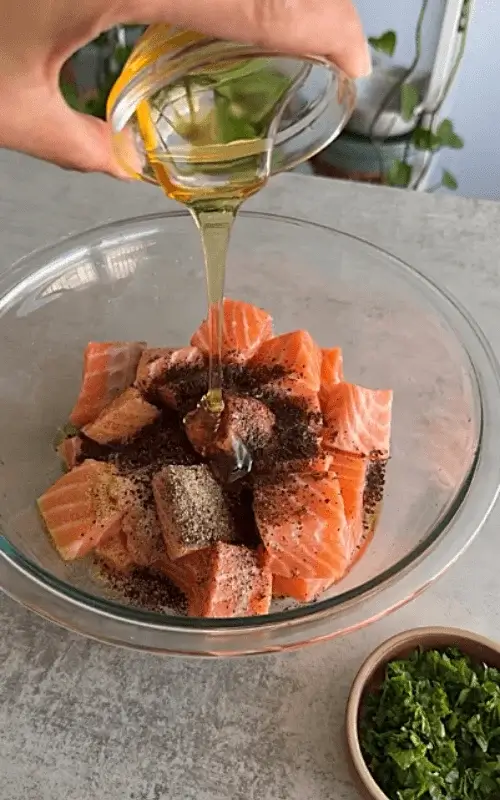
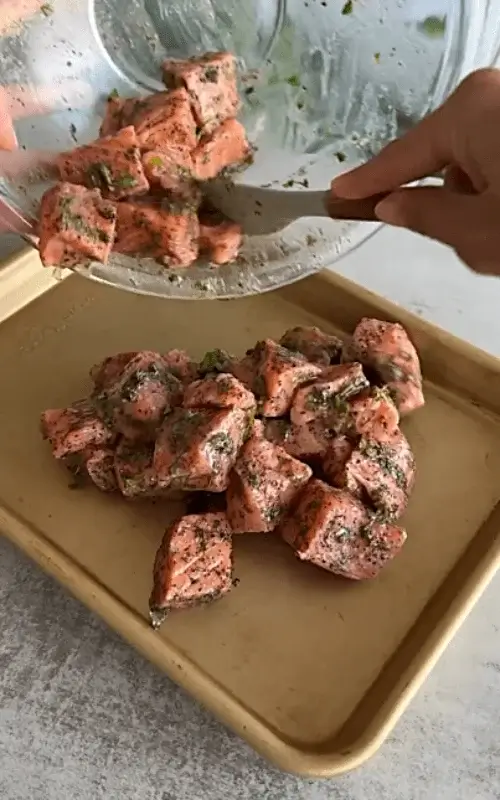
- In a large bowl, toss the salmon with the olive oil, lemon juice, parsley, dill, honey, sumac, garlic powder, salt and pepper until evenly coated.
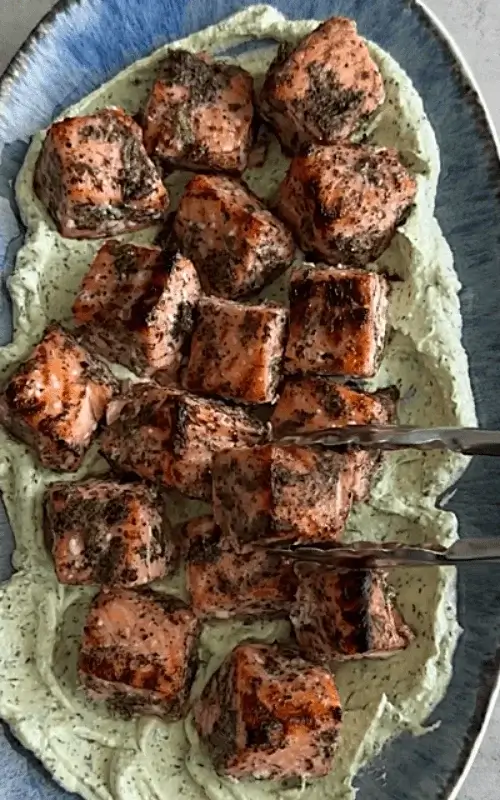
- Arrange the salmon in a single layer on a parchment-lined baking sheet. Roast until just cooked through and lightly browned, 10 to 12 minutes. Broil for 1 to 2 minutes for deeper color.
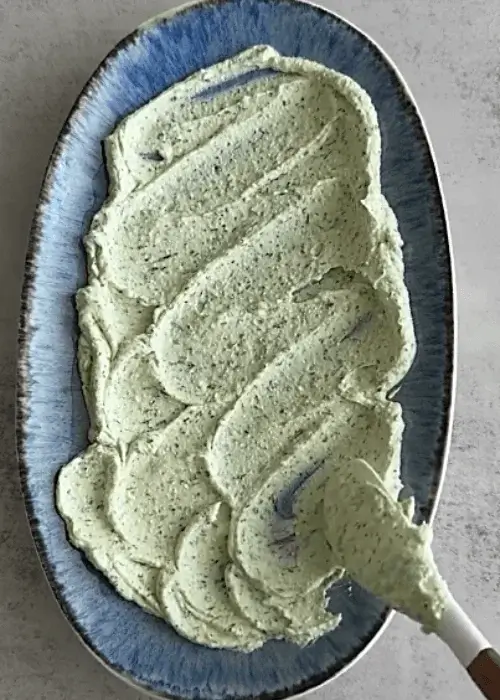
- Meanwhile, combine the feta, Greek yogurt, olive oil, herbs, lemon juice and salt in a food processor. Process until smooth and creamy.
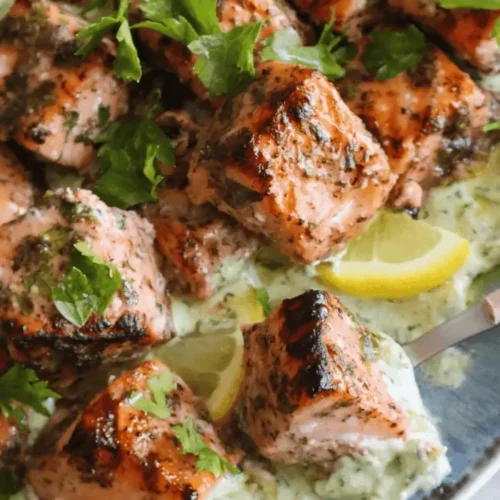
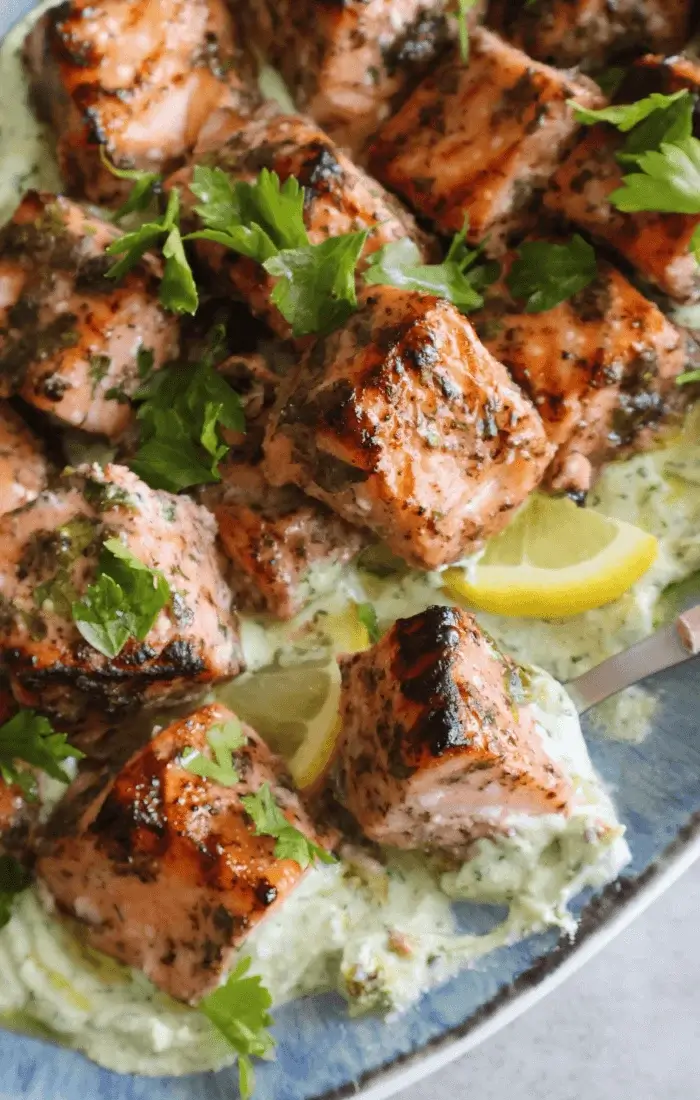
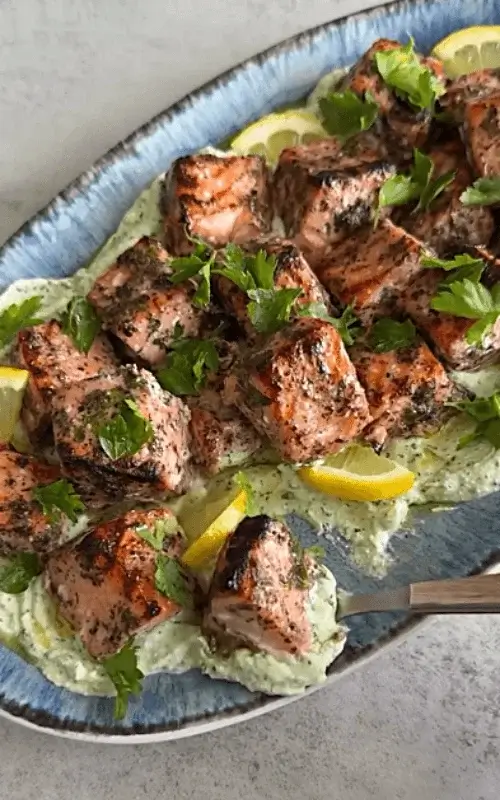
- Spread the whipped feta over a serving platter and top with the warm salmon. Garnish with fresh herbs and serve immediately.
FAQ
Can you use frozen salmon for this Mediterranean salmon recipe?
Yes, frozen salmon can be used for Mediterranean salmon, but it should be completely thawed before cutting and seasoning. Thaw the salmon overnight in the refrigerator for the most consistent results. Once thawed, pat it thoroughly dry with paper towels to remove excess moisture. This is particularly important because wet salmon will steam rather than roast and may not develop the lightly browned exterior called for in the recipe.
Remove any pin bones and cut the fillets into evenly sized cubes so they cook at the same rate. Avoid thawing salmon at room temperature, as this can allow the outer portion to remain in an unsafe temperature range while the center is still frozen. After thawing and drying, prepare the salmon according to the recipe. Cooking time may vary slightly depending on the size of the cubes.
What can you serve with Mediterranean salmon and whipped feta?
Mediterranean salmon with whipped feta can be served with sides that complement the lemon, herbs, sumac and creamy feta without competing with them. A simple salad of tomatoes, cucumbers, red onion and fresh herbs works particularly well. Roasted vegetables such as zucchini, bell peppers, eggplant or cauliflower are also suitable.
For a more substantial meal, serve the salmon with cooked couscous, quinoa, bulgur or rice, which can absorb some of the olive oil and juices from the salmon and feta. Warm pita or flatbread is another practical option, particularly if the salmon is served as part of a shared meal. Roasted potatoes can also work, especially when seasoned simply with olive oil, lemon and herbs.
How do you know when the Mediterranean salmon bites are fully cooked?
Mediterranean salmon bites are fully cooked when the thickest pieces reach 145°F/63°C internally, which is the USDA-recommended safe minimum temperature for fish. The most reliable method is to check a piece in the center with an instant-read thermometer, inserting the probe into the thickest part without touching the baking sheet. Visually, cooked salmon should change from translucent and raw-looking to opaque in the center and should separate easily into flakes when gently pressed with a fork.
Because the salmon is cut into small cubes, it cooks much faster than a whole fillet, so checking early is important. The recipe calls for 10 to 12 minutes at 425°F/220°C, but actual cooking time can vary with cube size and the thickness of the salmon. Broiling at the end should be brief because it can quickly overcook the smaller pieces.
How do I keep the whipped feta from becoming too thick?
Whipped feta can become thick because feta itself has a relatively firm, crumbly texture, particularly when it is cold. Using Greek yogurt and olive oil helps create a smoother consistency, but the amount of liquid needed can vary depending on the feta. If the mixture is too thick after blending, add a small amount of Greek yogurt or olive oil and process again until it reaches a smooth, spreadable consistency. Avoid adding a large amount of liquid at once because the whipped feta can quickly become loose.
Letting the feta sit at room temperature for a short time before blending can also make it easier to process. If the finished whipped feta thickens after refrigeration, stir it thoroughly before serving. A small splash of lemon juice can loosen it while also increasing its acidity. For this Mediterranean salmon recipe, the ideal texture is thick enough to hold the salmon on top but soft enough to spread easily across a serving platter.
Can I make this Mediterranean salmon in an air fryer?
Yes, Mediterranean salmon can be prepared in an air fryer, although the cooking time will be shorter than in the oven. Cut the salmon into evenly sized cubes and toss them with the olive oil, lemon juice, parsley, dill, honey, sumac, garlic powder, salt and pepper as directed. Preheat the air fryer to about 400°F/200°C, then arrange the salmon in a single layer in the basket, leaving space between the pieces so hot air can circulate.
Cook for approximately 6 to 9 minutes, depending on the size of the cubes and the specific air fryer, shaking or turning the pieces halfway through. The salmon should be opaque and cooked through in the center. For food safety, check that the thickest piece reaches 145°F/63°C. Because honey can caramelize quickly at high heat, check the salmon toward the end of cooking to prevent excessive browning.
What is the best way to cut salmon into even-sized bites?
For evenly cooked salmon bites, begin with a skinless, boneless fillet and pat it dry with paper towels. Use a sharp chef’s knife and cut the fillet into strips approximately 1 inch/2.5 centimeters wide, then cut across the strips to create similarly sized cubes. Keeping the pieces close in size is important because small cubes will cook faster than larger ones. If the salmon is very soft, place it in the refrigerator for 10 to 15 minutes before cutting; slightly chilled fish is easier to handle and produces cleaner cuts.
Remove any visible pin bones with clean tweezers before cutting. Do not cut the salmon into extremely small pieces because they can dry out quickly during roasting. Once cut, toss the pieces gently with the seasoning mixture so the cubes remain intact. Consistent pieces will help the Mediterranean salmon cook evenly and make the finished dish more attractive.
What type of salmon is best for this Mediterranean salmon recipe?
Skinless salmon fillets are the most convenient choice for Mediterranean salmon bites because they can be cut directly into evenly sized cubes without requiring additional preparation. Atlantic salmon is widely available and has a relatively high fat content, which helps keep the small pieces moist during roasting. Sockeye salmon can also be used and has a firmer texture and more pronounced flavor, but because it is generally leaner, it can become dry more quickly if overcooked.
Coho salmon is another suitable option with a moderately lean texture. Fresh or previously frozen salmon can both work as long as frozen salmon is fully thawed and thoroughly dried before seasoning. When purchasing salmon, look for fillets with firm flesh, a fresh smell and consistent thickness. Removing the skin and pin bones before cutting makes the preparation easier and produces more uniform salmon bites.
Can I use salmon with the skin on for this recipe?
Yes, salmon with the skin on can be used, but the skin should be removed before cutting the fish into cubes for this particular recipe. Skinless salmon allows the seasoning to coat more of the surface area and makes the finished bites easier to eat. To remove the skin, place the fillet skin-side down on a cutting board and use a sharp, flexible knife to separate the flesh from the skin while holding the skin firmly.
You can also ask the fish counter to remove the skin before purchasing. If you prefer to leave the skin on, roasting the salmon as a whole fillet and cutting it afterward is more practical, but that changes the cooking method and presentation of the recipe. Removing the skin also makes it easier to check the salmon for pin bones before cutting it into evenly sized pieces.
How can I prevent the salmon from becoming dry?
The best way to prevent the salmon from becoming dry is to avoid overcooking them. Salmon cubes cook quickly because they have a relatively high surface area compared with their volume. Cut the pieces as evenly as possible so smaller pieces do not finish significantly earlier than larger ones. The olive oil in the marinade also helps coat the salmon and contributes moisture and richness.
Roast the salmon at 425°F/220°C and begin checking it around the 10-minute mark rather than automatically extending the cooking time. The pieces should be opaque and just cooked through, with a moist center. If using a thermometer, remove the salmon when the thickest pieces reach 145°F/63°C for food safety. The optional broiling step should be very brief because the intense heat can dry small pieces quickly. Using salmon with some natural fat, such as Atlantic salmon, can also help maintain a tender texture.
Can I make whipped feta without a food processor?
Yes, whipped feta can be made without a food processor, although the texture may be slightly less smooth. For the closest result, use a high-powered blender and blend the feta, Greek yogurt, olive oil, fresh herbs, lemon juice and salt until creamy. If you do not have either appliance, place the feta in a bowl and mash it thoroughly with a fork. Add the Greek yogurt and olive oil gradually, stirring vigorously until the mixture becomes as smooth as possible.
Finely chop the herbs before adding them so they distribute evenly throughout the feta. A small amount of additional Greek yogurt or olive oil can help loosen the mixture if it is too thick. The result will have a more rustic texture rather than the completely smooth consistency produced by a food processor. This does not affect the flavor, and the herb feta will still provide a creamy, tangy base for the Mediterranean salmon.