Chocolate Brownie Cookies with Chocolate-Hazelnut Filling
Watch the Full Step-by-Step
- Baking sheet
- Small saucepan
- Piping bags
- Kitchen scale
INGREDIENTS
- 5.3 ounces/150 grams dark chocolate, finely chopped
- 1.8 ounces/50 grams milk chocolate, finely chopped
- 3.5 ounces/100 grams unsalted butter
- 2 large eggs
- ½ cup/100 grams granulated sugar
- ¾ cup/100 grams all-purpose flour
- ¼ cup/25 grams unsweetened cocoa powder
- ½ teaspoon baking powder
- Pinch of salt
- Chocolate-hazelnut spread, for filling

INSTRUCTIONS
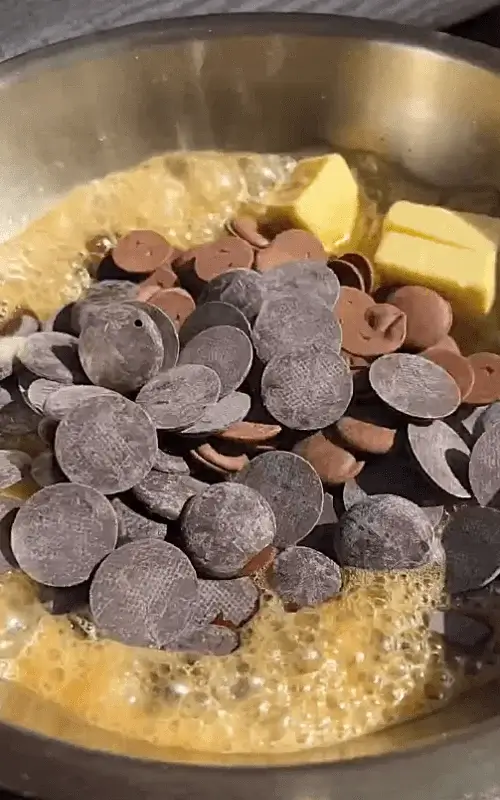
- Melt the dark chocolate, milk chocolate and butter in a microwave in 20-second intervals, stirring after each, or in a small saucepan over low heat. Stir until smooth.
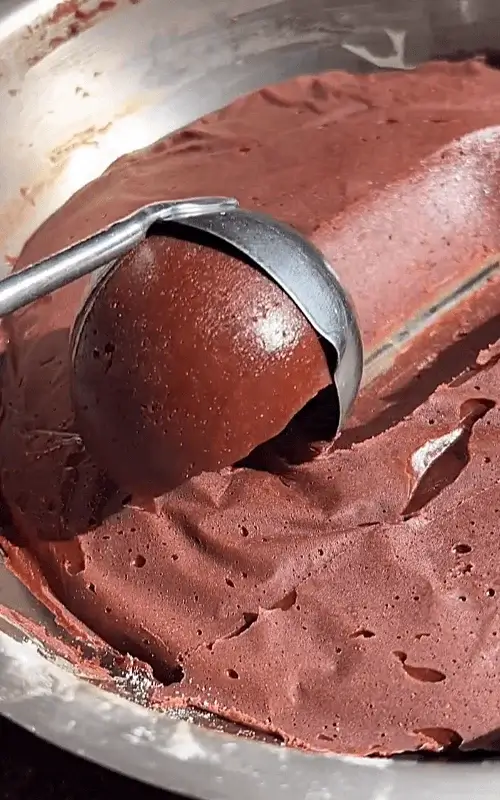
- Whisk the eggs and sugar in a large bowl until smooth and well combined. Gradually whisk in the melted chocolate mixture.
- Add the flour, cocoa powder, baking powder and salt. Stir just until no dry streaks remain. Refrigerate the dough for 30 minutes.
- Heat the oven to 350°F/180°C. Line a baking sheet with parchment paper.
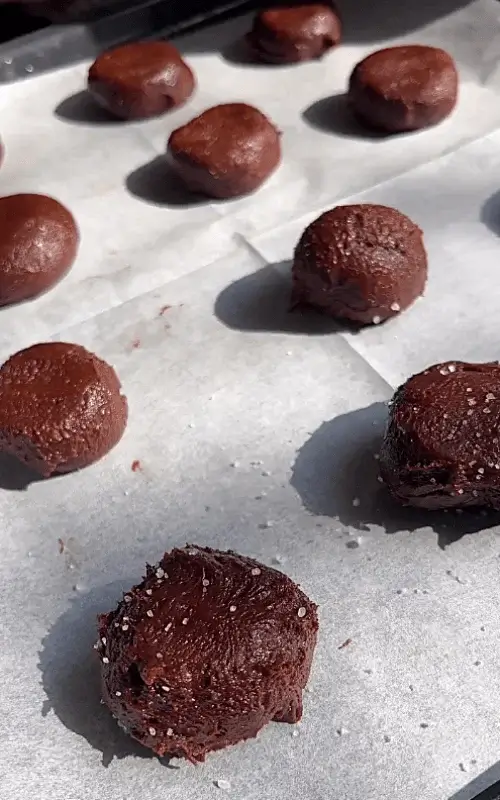
- Scoop the dough into 12 to 14 portions and roll into balls. Arrange on the prepared baking sheet, leaving about 2 inches/5 centimeters between them.
- Sprinkle lightly with flaky sea salt.
- Bake until the cookies are cracked on top and set around the edges but still very soft in the centers, about 10 minutes.
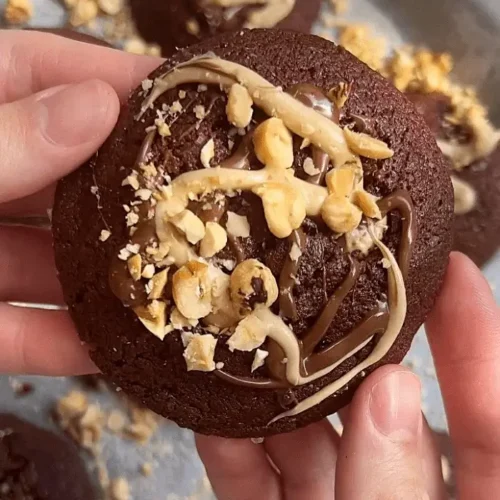
- While the cookies are hot, pipe chocolate-hazelnut spread into the centers. Serve warm or let cool until just set.
FAQ
How do you keep chocolate brownie cookies soft and fudgy?
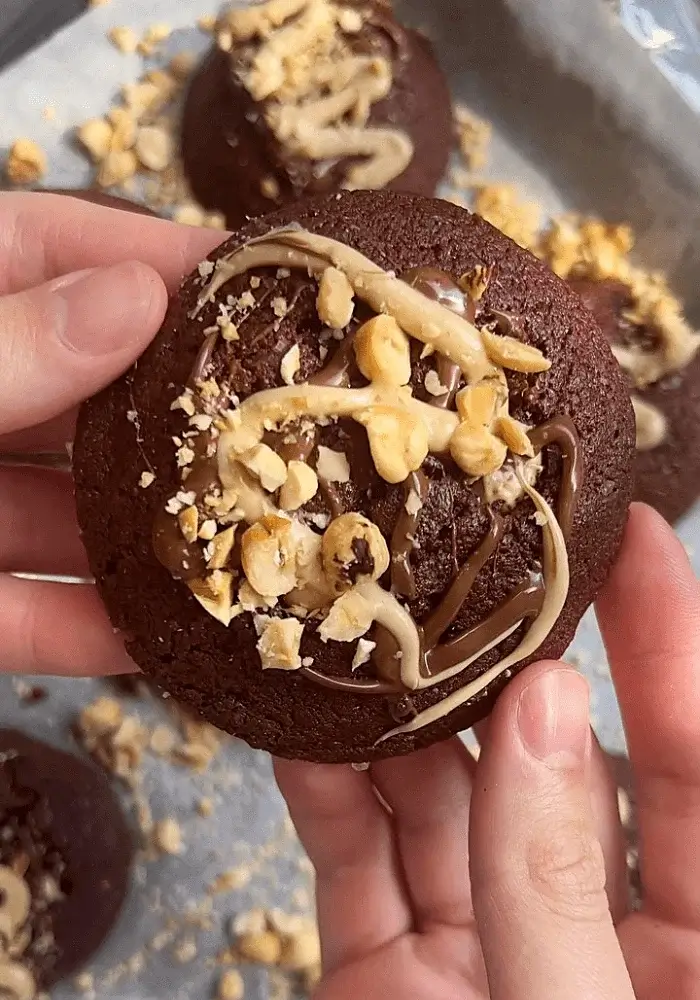
The key to soft and fudgy chocolate brownie cookies is controlling the baking time. This recipe specifically calls for baking the cookies for about 10 minutes, until the tops are cracked and the edges are set while the centers remain very soft. The cookies continue cooking from residual heat after they are removed from the oven, so waiting until the centers look fully baked can result in a drier texture.
Using both melted chocolate and cocoa powder also contributes to the dense chocolate structure. Measuring the flour accurately is important because too much flour can make the cookies firm and cakey. Allowing the dough to chill for 30 minutes helps the cookies hold their shape while baking without requiring additional flour.
Can these chocolate brownie cookies be made with Dutch-process cocoa powder?
Dutch-process cocoa powder can generally be used in chocolate brownie cookies, but it may slightly alter the flavor and color. Dutch-process cocoa is treated to reduce its natural acidity, giving it a smoother, less acidic taste and a darker color. The recipe uses baking powder rather than baking soda, so the substitution does not create the same type of acid-base dependency that would occur in some cookie recipes containing baking soda.
For the most predictable result, use an unsweetened cocoa powder with a similar texture and measure it by weight. The flavor will depend on the cocoa brand and percentage of cocoa solids. Dutch-process cocoa can produce especially dark, rich-looking chocolate brownie cookies, while natural cocoa generally provides a somewhat more pronounced cocoa character.
How should I store the chocolate brownie cookies?
Chocolate brownie cookies should be stored in an airtight container once they have cooled completely. Keeping air exposure low helps prevent the cookies from drying out and preserves their soft, fudgy texture. At room temperature, they can be kept for several days when properly sealed. Place parchment paper between layers if the chocolate-hazelnut filling makes the cookies stick together. Avoid storing them uncovered because the exposed centers can lose moisture quickly.
Refrigeration is not generally necessary for short-term storage and may make the chocolate and butter-based texture noticeably firmer. If storing the cookies for a longer period, freezing is preferable. Once thawed at room temperature, the cookies should regain much of their original texture, although freshly baked chocolate brownie cookies will always have the most delicate edges and soft centers.
Can you freeze chocolate brownie cookies?
Yes, chocolate brownie cookies can be frozen after baking. Allow the cookies to cool completely before freezing so condensation does not form inside the storage container. Arrange them in a single layer first if you want to prevent the soft filling from being damaged, then transfer them to an airtight freezer-safe container or bag. Use parchment paper between layers when stacking them.
Thaw the cookies at room temperature while keeping them covered to minimize moisture loss. The texture may be slightly less delicate than when freshly baked, but the fudgy center should remain intact when the cookies are properly packaged. You can also freeze the unbaked dough after portioning it into balls, although the baking time may need to be adjusted. Chilling or freezing the dough changes its temperature, so bake until the edges are set and the centers remain soft.
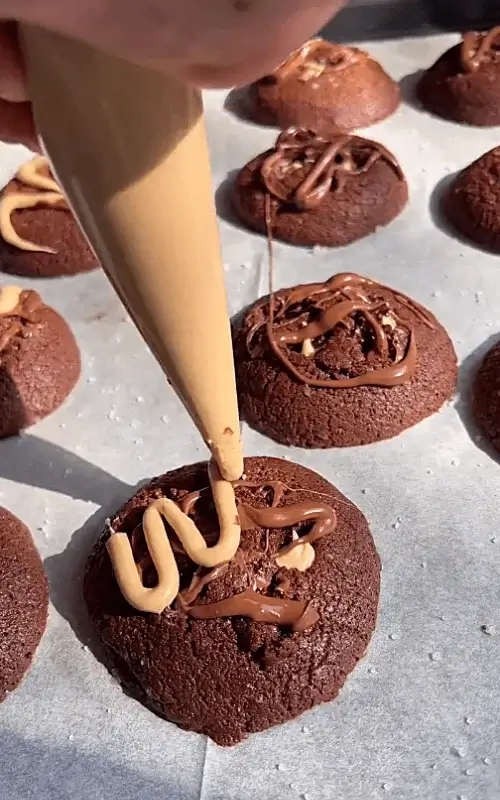
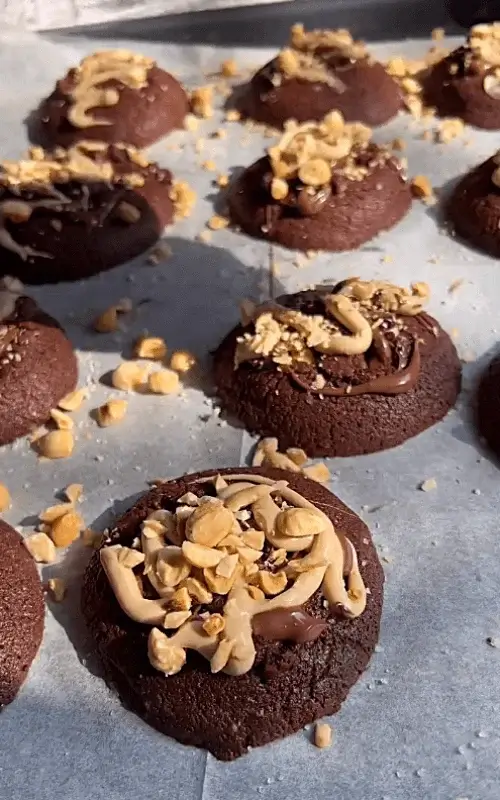
Can you use peanut butter instead of chocolate-hazelnut spread?
The filling is added after baking, so changing it does not alter the cookie dough itself. Choose a smooth peanut butter that can be piped through a piping bag. Natural peanut butter may require thorough stirring because its oil can separate during storage, while conventional creamy peanut butter generally has a more consistent texture.
If the peanut butter is too thick to pipe, let it come to room temperature before filling the cookies. Avoid adding a large amount because excessive filling can make the cookies difficult to handle. The combination of fudgy chocolate and peanut butter creates a stronger salty-sweet contrast than the original chocolate-hazelnut filling.
Can chocolate brownie cookies be made without a piping bag?
A small resealable plastic bag can be used instead by spooning the chocolate-hazelnut spread into one corner, pressing out excess air and cutting a very small opening. The filling can then be piped directly into the warm center of each cookie.
Another option is to use a small spoon to place a small amount of spread onto each cookie, although this will not create the same neat filled center. The important point is to add the filling while the cookies are still warm, when their centers are soft enough to accommodate it. Avoid cutting a large opening in the bag because too much filling can make the cookies difficult to handle and may cause the spread to overflow.
What type of chocolate is best for chocolate brownie cookies?
A good-quality baking chocolate with a balanced cocoa percentage works well for chocolate brownie cookies. The recipe combines dark chocolate with milk chocolate, so the dark chocolate provides the main cocoa intensity while the milk chocolate contributes sweetness and creaminess. Chocolate intended for baking should melt smoothly without becoming grainy or separating. Chopped chocolate bars or baking chocolate can both work, provided the chocolate is measured by weight.
Very bitter, high-percentage dark chocolate will produce a less sweet cookie, while a lower-percentage dark chocolate will give a milder flavor. Since the recipe also contains unsweetened cocoa powder, the chocolate should complement rather than overpower the cocoa. Avoid chocolate containing large nuts, wafers or other inclusions because they can interfere with creating a smooth melted mixture.
How can you tell when chocolate brownie cookies are properly baked?
Properly baked chocolate brownie cookies should have visibly cracked tops, set edges and very soft centers. The centers should not look completely raw or liquid, but they should remain noticeably softer than the edges when the cookies are removed from the oven. The recipe calls for approximately 10 minutes at 350°F/180°C, but actual baking time can vary slightly depending on the oven, baking sheet and size of the dough portions.
Avoid relying only on a rigid baking time. The visual texture is more useful: the edges should look established while the middle remains soft. The cookies will continue cooking from residual heat after leaving the oven, so they should not be baked until completely firm. Allowing them to cool on the baking sheet also gives the structure time to stabilize without sacrificing the fudgy center.