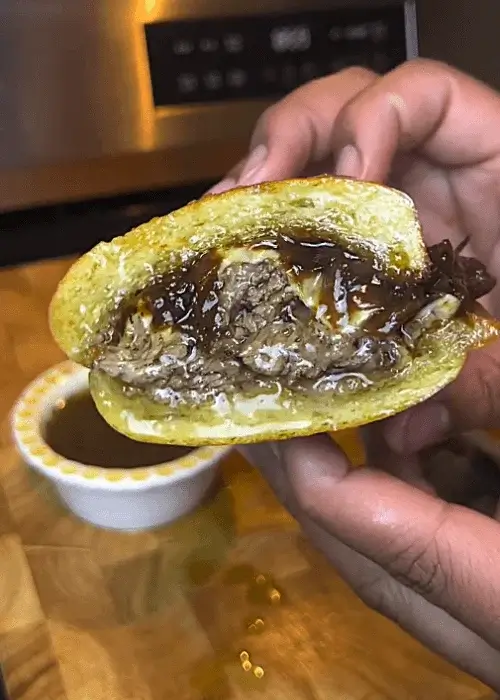
French Onion Dip Sandwich Recipe
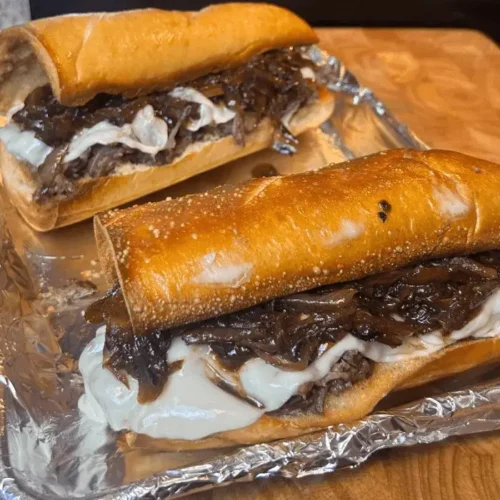
Watch the Full Step-by-Step
- Chef's knife
INGREDIENTS
- 3 pounds/1.4 kilograms boneless beef chuck roast, trimmed
- 2 teaspoons salt
- 1 teaspoon black pepper
- 2 tablespoons beef tallow or oil
- 2 large yellow onions, thinly sliced
- 1 garlic bulb, halved crosswise
- 3 rosemary sprigs
- 1 teaspoon dried thyme
- 4 cups/960 milliliters chicken broth
- 2 tablespoons Worcestershire sauce
- 3 large yellow onions, thinly sliced
- 4 tablespoons unsalted butter
- 1 tablespoon olive oil
- ½ teaspoon salt
- 1 teaspoon sugar, optional
- 6 hoagie rolls or French rolls, split
- 12 slices provolone cheese
- Unsalted butter, for toasting

INSTRUCTIONS
- Heat the oven to 315°F/160°C.
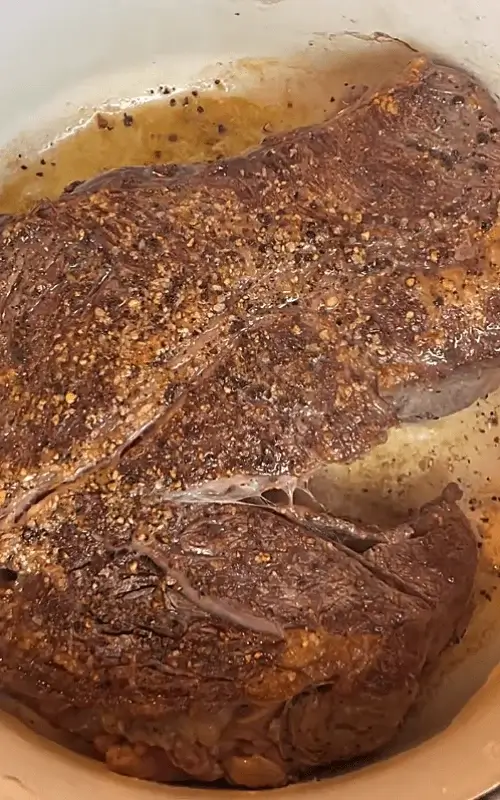
- Season the chuck roast generously with salt and pepper. Heat the beef tallow in a large Dutch oven over medium-high heat. Add the roast and sear until deeply browned on all sides, 3 to 4 minutes per side. Transfer to a plate.
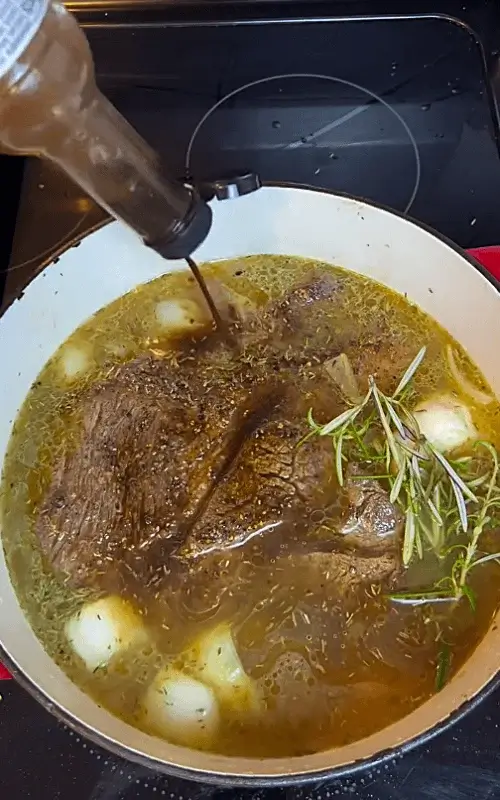
- Add the onions to the pot and cook, stirring occasionally, until softened and lightly browned, about 8 minutes. Return the roast to the pot and add the garlic, rosemary and thyme.
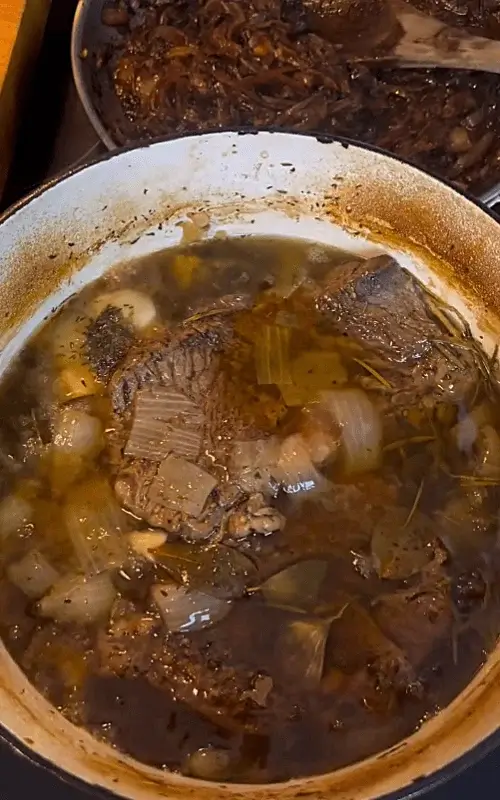
- Pour in the chicken broth and Worcestershire sauce and bring to a simmer. Place a piece of parchment paper directly over the surface of the liquid. Cover the pot and transfer to the oven. Braise until the beef is very tender and pulls apart easily with a fork, about 3 hours.
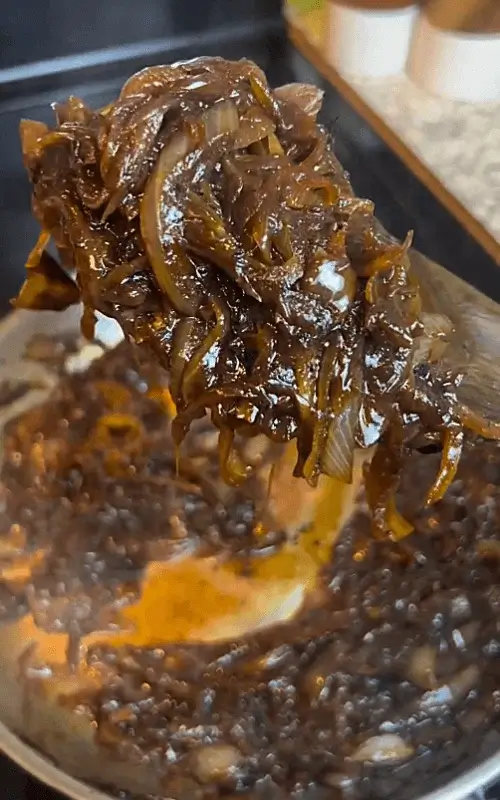
- Meanwhile, make the caramelized onions. Melt the butter with the olive oil in a large skillet over medium-low heat. Add the onions and salt and cook, stirring occasionally, until deeply golden and soft, 40 to 50 minutes. Add a splash of water if the onions begin to stick. Stir in the sugar, if using, during the final few minutes.
- Transfer the beef to a cutting board and let cool slightly. Strain the braising liquid through a fine-mesh strainer into a saucepan. Skim the fat from the surface and keep the au jus warm.
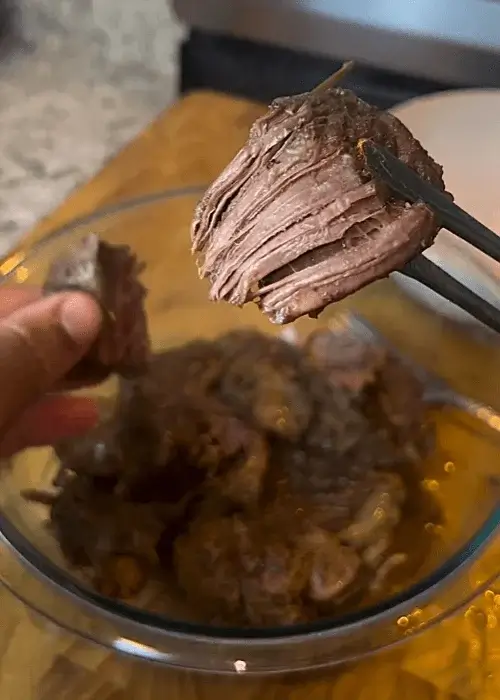
- Shred the beef into large pieces, discarding any excess fat and connective tissue.
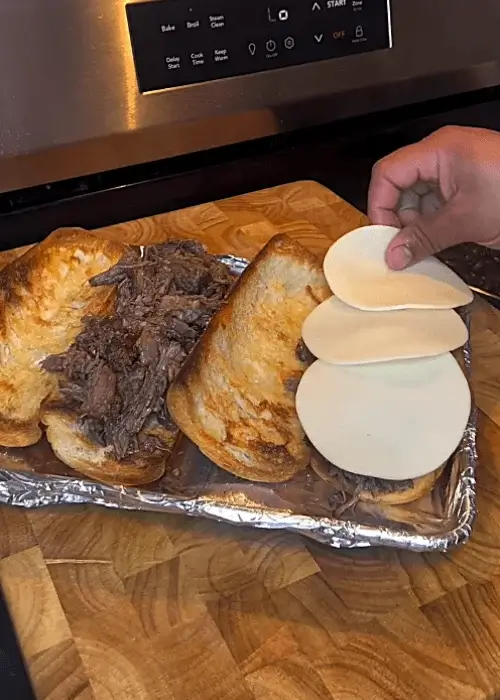
- Heat the broiler. Lightly butter the cut sides of the rolls and place them cut-side up on a baking sheet. Broil until lightly toasted, 1 to 2 minutes.
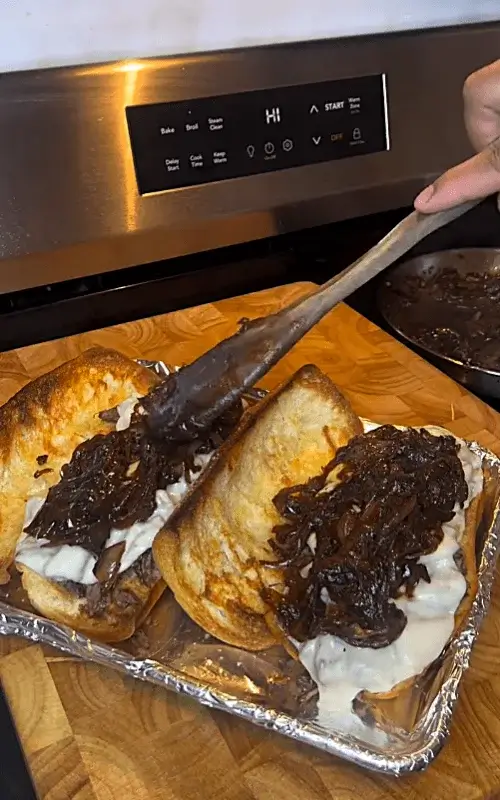
- Divide the beef among the rolls and top with the provolone. Broil until the cheese is melted and bubbling, 1 to 2 minutes.
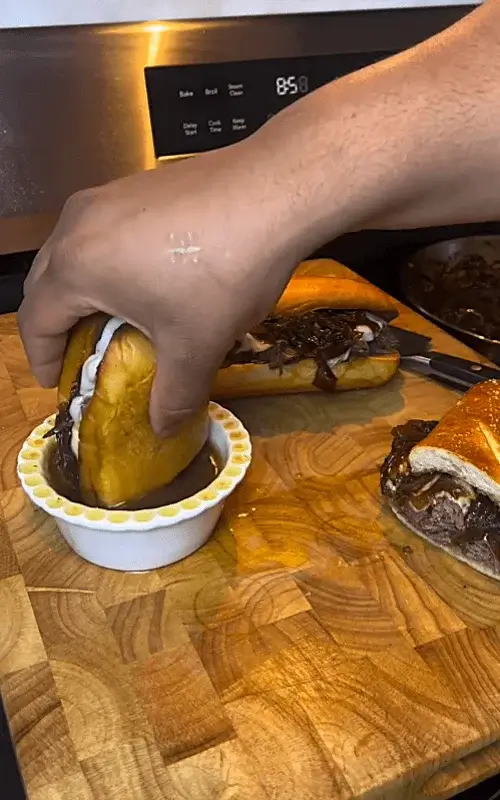
- Top with the caramelized onions and serve with the warm au jus for dipping.
FAQ
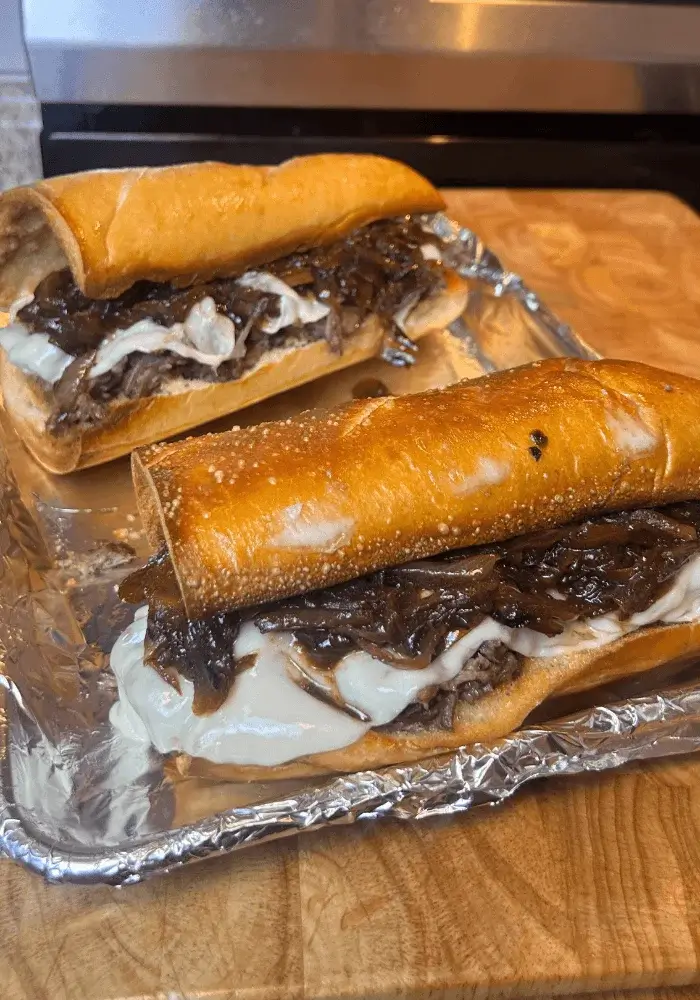
What is a French onion dip sandwich?
A French onion dip sandwich combines tender, shredded beef with caramelized onions, melted cheese and a savory dipping liquid made from the beef’s braising juices. It is closely related to a traditional French dip sandwich, but the addition of deeply caramelized onions gives it a stronger sweet-savory onion flavor. In this French onion dip sandwich recipe, chuck roast is slowly braised with onions, garlic, rosemary, thyme, chicken broth and Worcestershire sauce until it becomes tender enough to shred.
The cooking liquid is strained and served as au jus alongside the sandwich for dipping. Provolone provides a mild, slightly tangy flavor and melts well over the hot beef. The rolls are lightly toasted before assembly, which adds structure and helps them hold the meat and onions without immediately becoming soft. The combination of rich beef, sweet onions, melted cheese and concentrated au jus creates the defining flavor and texture of the sandwich.
What cut of beef is best for a French onion dip sandwich recipe?
Boneless beef chuck roast is one of the best cuts for a French onion dip sandwich recipe because it contains enough connective tissue and fat to remain moist during a long braise. Chuck comes from the shoulder and is naturally tougher than cuts intended for quick cooking. Slow cooking breaks down its collagen into gelatin, creating beef that becomes tender and easy to shred. A well-marbled chuck roast also contributes flavor and body to the braising liquid.
For this recipe, a 3-pound/1.4-kilogram boneless chuck roast provides enough meat for six sandwiches while allowing the roast to remain substantial during the three-hour braise. Brisket or boneless short ribs can also be braised successfully, but they have different fat levels and textures and may require adjustments to cooking time. Lean cuts such as sirloin or eye of round are less suitable because they contain less connective tissue and can become dry before reaching the shreddable stage.
Can I use a different cut of beef instead of chuck roast?
Yes, but the replacement should be a cut suited to long, moist cooking. Brisket is one of the most practical alternatives because it contains substantial connective tissue and develops a tender texture during a slow braise. Boneless short ribs are another option and provide particularly rich flavor because of their higher fat content. Beef shoulder or blade roast can also work well because they have characteristics similar to chuck roast.
Lean cuts such as sirloin, top round or eye of round are less appropriate for this French onion dip sandwich recipe because they do not contain enough connective tissue to benefit from a three-hour braise in the same way. If using a different cut, judge doneness by texture rather than relying only on the stated cooking time. The beef is ready when a fork slides into it easily and the meat separates with little resistance.
What type of bread is best for a French onion dip sandwich recipe?
Hoagie rolls or French rolls are well suited to a French onion dip sandwich recipe because they provide enough structure to hold shredded beef, caramelized onions and melted cheese while still being easy to bite through. A roll with a moderately crisp exterior and soft interior works particularly well. Toasting the cut sides under the broiler strengthens the bread and adds a lightly crisp texture that contrasts with the tender beef.
Very soft sandwich bread is less suitable because it can become saturated quickly when filled with beef and onions or dipped into au jus. Extremely crusty bread can also be difficult to eat once filled. The important characteristics are sufficient width for the filling, a sturdy crumb and a roll that can be lightly toasted without becoming excessively hard. Hoagie rolls, French rolls and similar elongated sandwich rolls can all work.
What cheese works best for a French onion dip sandwich?
Provolone is an excellent choice because it melts smoothly and has enough flavor to complement the beef and caramelized onions without overwhelming them. Its mild tanginess balances the richness of the chuck roast and beef tallow while its melting properties help bind the filling together. In this French onion dip sandwich recipe, two slices of provolone are placed over each portion of shredded beef and melted under the broiler until bubbling.
Mild or sharp provolone can be used depending on the desired intensity. Mozzarella can provide a very mild, stretchy result, while Swiss or Gruyère can add a stronger nutty flavor that works particularly well with caramelized onions. However, these alternatives change the flavor profile of the recipe. Avoid cheeses that remain relatively firm when heated if the goal is a cohesive melted topping.
How do I keep the sandwich from becoming soggy?
The best way to prevent a French onion dip sandwich from becoming soggy is to toast the inside of the rolls and keep the au jus separate until serving. In this French onion dip sandwich recipe, the cut sides of the rolls are lightly buttered and broiled for 1 to 2 minutes before the beef is added. This creates a firmer surface that can withstand some moisture from the filling. The shredded beef should also be well drained rather than transferred to the bread with a large amount of braising liquid.
The au jus is served separately for dipping instead of being poured directly over the sandwich. Caramelized onions should be cooked until their excess moisture has evaporated and they have developed a thick, soft texture. Assemble the sandwiches shortly before serving, particularly if they will be dipped heavily. Using a sturdy hoagie or French roll rather than soft sliced bread also helps the sandwich retain its structure throughout the meal.
Can I use red onions instead of yellow onions?
Yes, red onions can technically be used, but yellow onions are better suited to the flavor profile of this French onion dip sandwich recipe. Yellow onions have a balanced combination of sweetness and savory flavor and become deeply golden and mellow when slowly cooked. Red onions can also caramelize, but they tend to have a more pronounced flavor and can produce a slightly different color and sweetness after prolonged cooking.
White onions are another possible substitute and generally have a sharper flavor that becomes milder during cooking. If using red onions for the caramelized portion, follow the same slow-cooking method and judge them by texture and color rather than relying strictly on the stated time. The onions should become soft and deeply golden.
Can I freeze the shredded beef and au jus?
The shredded beef and au jus can both be frozen, and they generally retain good quality when properly stored. For this French onion dip sandwich recipe, cool the cooked beef and strained au jus before transferring them to airtight freezer-safe containers. Store them separately so the liquid can be reheated independently and the bread can be prepared fresh. Remove as much excess air as practical from freezer containers or bags to reduce freezer burn.
Thaw the beef and au jus in the refrigerator before reheating. Warm the beef gently with some of the au jus to help maintain moisture, and heat the remaining au jus separately. The caramelized onions can also be frozen, although their texture may become slightly softer after thawing. The rolls and provolone should be prepared fresh rather than frozen as part of the assembled sandwich. Assemble and broil the sandwiches only after the beef, au jus and onions have been thoroughly reheated.
Can I make this French onion dip sandwich recipe in a slow cooker?
Yes, the beef can be adapted for a slow cooker, although the original method uses a Dutch oven and a 315°F/157°C oven. For a slow-cooker version, sear the chuck roast in beef tallow or oil first, then transfer it to the slow cooker with the onions, garlic, rosemary, thyme, chicken broth and Worcestershire sauce. Cook on low until the beef is fork-tender and easily shreddable, generally about 7 to 9 hours depending on the slow cooker and size of the roast.
Avoid adding excessive liquid because slow cookers lose less moisture than an oven-based braise. The caramelized onions should still be made separately in a skillet because slow-cooking onions does not produce the same concentrated, deeply browned result. Once the beef is tender, strain the cooking liquid, skim the fat and keep the au jus warm.
Can I make the caramelized onions without sugar?
Yes, the sugar is optional in this French onion dip sandwich recipe and is not necessary for properly caramelized onions. Yellow onions contain natural sugars that become concentrated as their moisture slowly evaporates during cooking. Cooking them over medium-low heat for 40 to 50 minutes allows those sugars to develop gradually, producing the deep golden color and sweet, savory flavor needed for the sandwich.
The optional teaspoon of granulated sugar can help encourage sweetness and browning, particularly if the onions are less naturally sweet, but it should not replace proper cooking time. Using high heat to caramelize onions quickly can cause the outside to burn while the interior remains insufficiently softened. If the onions begin sticking to the skillet, adding a small splash of water and continuing over moderate heat can loosen the browned bits and prevent burning.
What can I serve with a French onion dip sandwich?
A French onion dip sandwich is rich and substantial, so side dishes with acidity, freshness or crisp texture provide a useful contrast. A simple green salad with a sharp vinaigrette can cut through the richness of the beef, cheese and caramelized onions. Pickles or other vinegar-forward vegetables also work well because their acidity balances the sweetness of the onions and the richness of the meat. A light cabbage slaw can provide crunch without making the meal excessively heavy.
Potato-based sides, such as roasted potatoes or fries, are traditional companions for hearty sandwiches but create a considerably richer meal. Since this French onion dip sandwich recipe already includes au jus for dipping, a side with a fresh or acidic profile can create better overall balance. If serving the sandwiches as part of a larger meal, keep the sides relatively simple so they do not compete with the slow-braised beef, melted provolone, caramelized onions and savory dipping liquid.
How should I shred chuck roast for a French dip sandwich?
Chuck roast should be shredded into large, irregular pieces rather than finely pulled into very small strands. After braising, the meat should separate easily with a fork, indicating that the connective tissue has broken down sufficiently. For this French onion dip sandwich recipe, transfer the roast to a cutting board and allow it to cool slightly before shredding. Use two forks or your hands if the temperature is comfortable, pulling the meat apart along its natural grain and separating it into bite-size pieces.
Remove large pieces of fat and tough connective tissue as you work. Avoid shredding the beef too finely because small strands can create a dense filling and may fall out of the sandwich more easily. Larger pieces retain moisture and provide a better contrast with the soft caramelized onions and melted provolone. If the beef resists shredding, return it to the braising liquid and continue cooking until it becomes fork-tender.
How can I tell when the chuck roast is done?
The chuck roast is done when it is tender enough to pull apart easily with a fork. Time is useful as a guideline, but texture is the more reliable indicator for this French onion dip sandwich recipe. The recipe calls for approximately 3 hours at 315°F/157°C, but individual roasts can vary based on their size, shape, connective tissue and starting temperature. A roast that remains firm or difficult to separate after three hours needs additional braising.
Keeping the Dutch oven covered and maintaining the specified oven temperature helps create consistent conditions. The meat should not be judged by whether it reaches the texture of a steak; chuck roast is transformed through prolonged cooking and should become soft and shreddable. If the roast is tender but still contains large pockets of firm connective tissue, continue cooking until those areas soften. Once finished, transfer the beef to a cutting board and allow it to cool slightly before shredding and removing excess fat.