Crispy Turkish Cheese Borek Recipe with Fresh Spinach
Watch the Full Step-by-Step
- Large mixing bowl
- Kitchen scale
- Deep baking dish
- Baking sheet
- Pastry brush
INGREDIENTS
- 8 cups/1 kilogram pizza flour or bread flour
- 1 tablespoon granulated sugar
- 2⅓ cups plus 2 tablespoons/560 milliliters lukewarm water
- ¼ cup olive oil
- ¼ cup white vinegar
- 1 tablespoon salt
- Canola or olive oil, for soaking the dough
- 1 large egg, beaten, for brushing
- 2 tablespoons sesame seeds
Filling:
- 18 ounces/500 grams feta cheese, crumbled
- 5.3 ounces/150 grams low-moisture mozzarella, shredded
- 1 large egg
- 7 ounces/200 grams spinach, roughly chopped
- 1 teaspoon black pepper

INSTRUCTIONS
- Heat the oven to 425°F/220°C.
- In the bowl of a stand mixer fitted with the dough hook, combine the flour, sugar, water, olive oil, and salt. Mix on low speed until the dough comes together. Add the vinegar and knead on medium speed until the dough is smooth, supple, and elastic, 8 to 10 minutes.
- Transfer the dough to a lightly oiled bowl, cover, and let rest at room temperature for 1 hour.
- Divide the dough into 16 equal pieces, about 3½ to 4 ounces/100 to 110 grams each. Arrange the dough balls in a deep dish, turning each to coat completely in canola or olive oil. Cover and refrigerate for at least 6 hours or overnight.
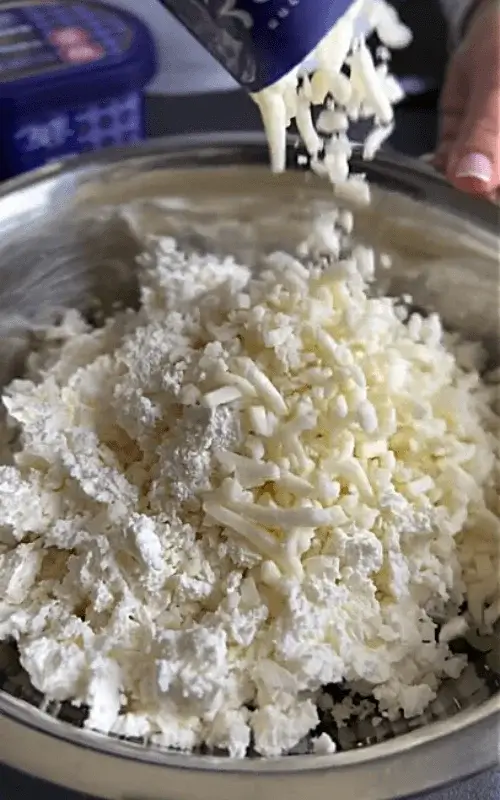
- Meanwhile, make the filling. In a large bowl, combine the feta, mozzarella, egg, spinach, and black pepper until evenly mixed. Taste before adding any salt, as the feta is typically salty enough.
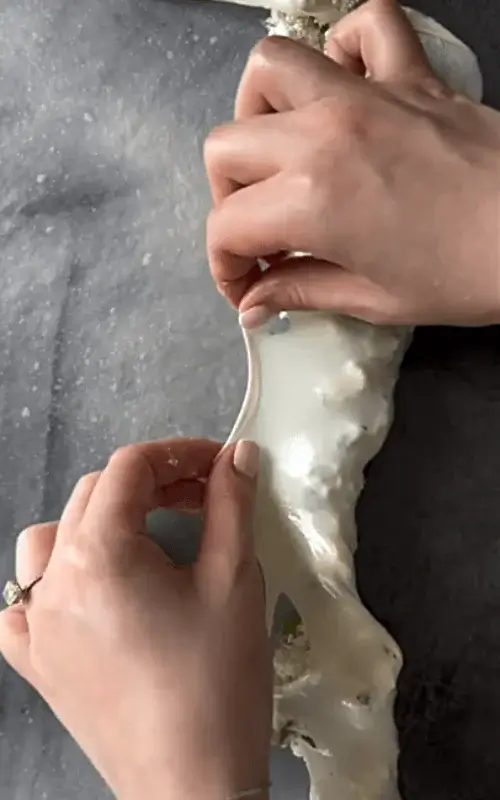
- Working with one dough ball at a time, place it on a lightly oiled work surface and gently stretch it with your hands until the dough is paper-thin and nearly transparent.
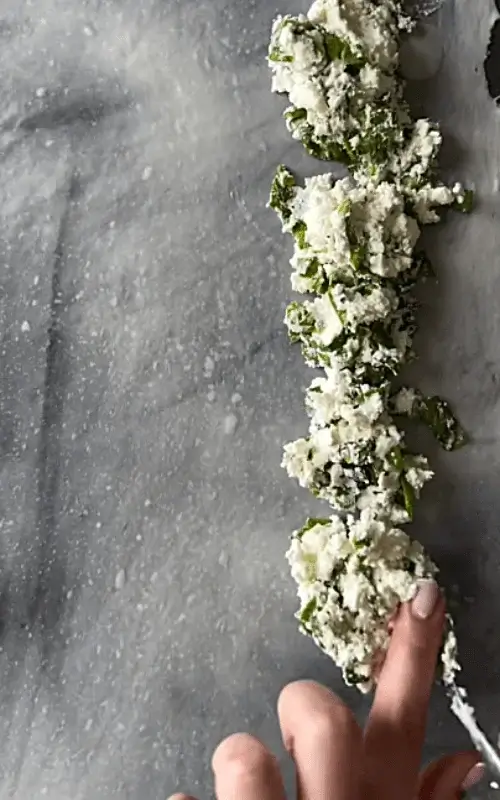
- Spoon about ⅔ cup of the filling along one edge of the dough. Roll tightly to enclose the filling, then shape into a spiral or leave as a long roll.
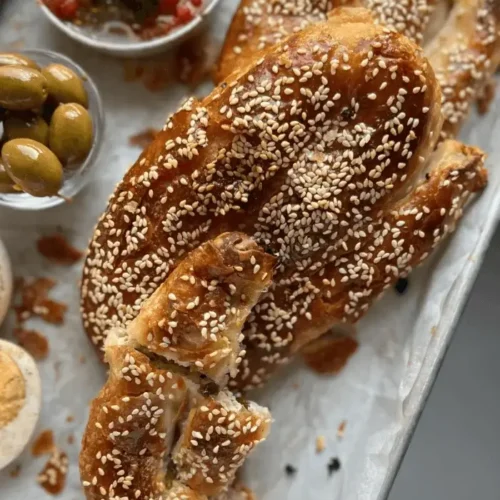
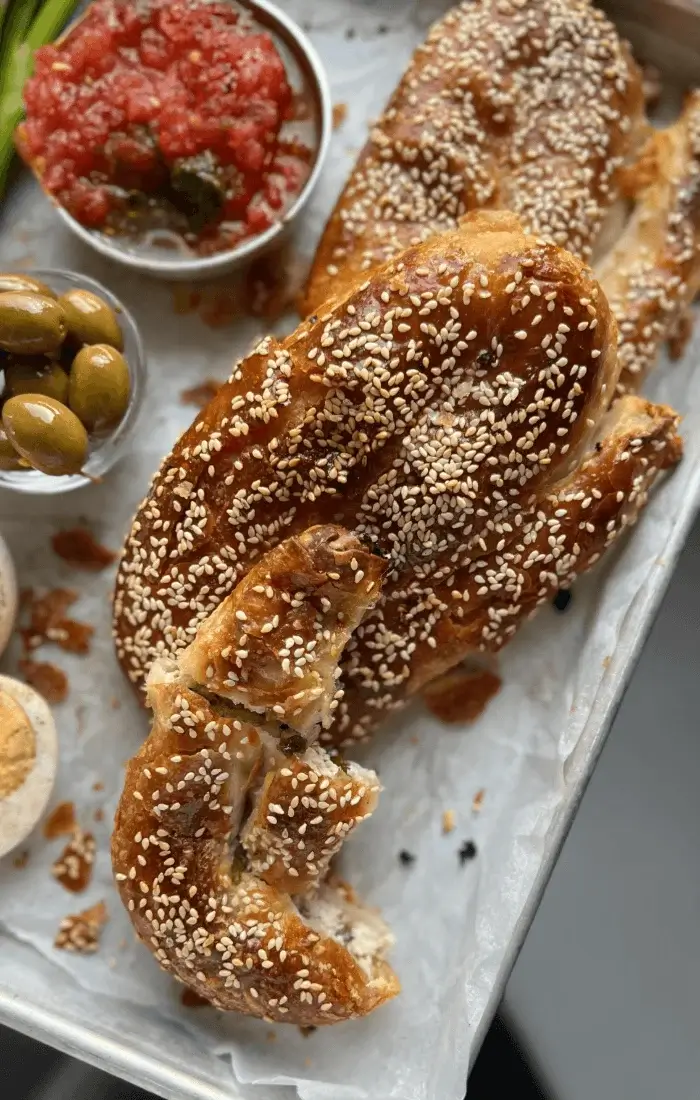
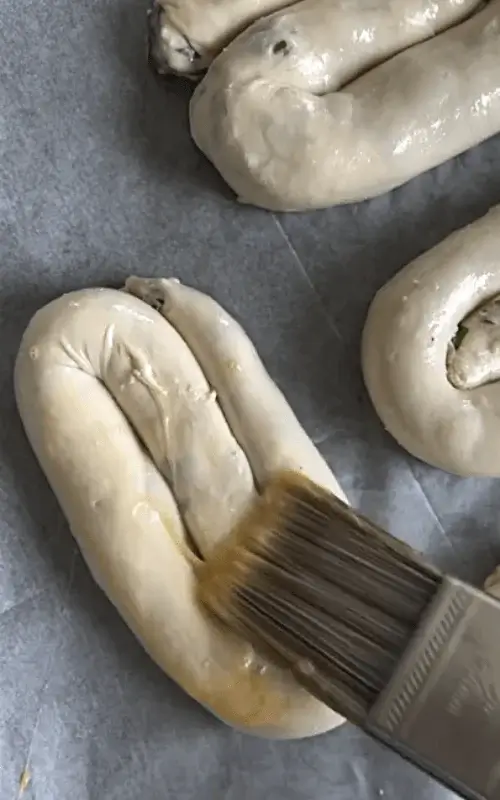
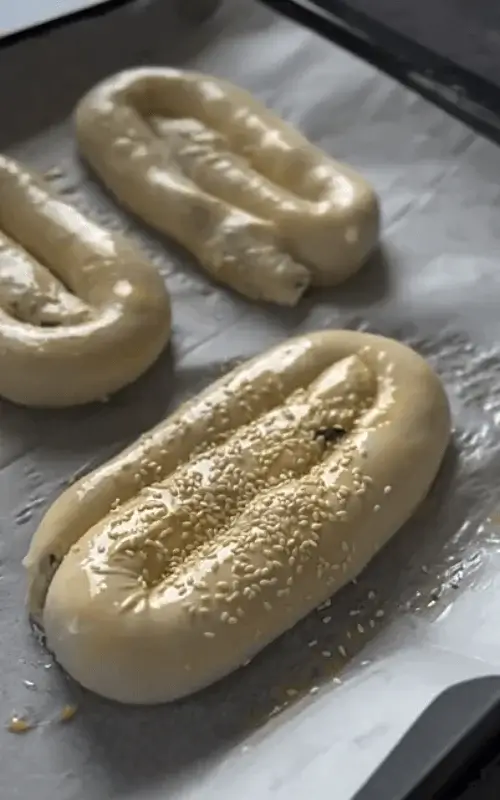
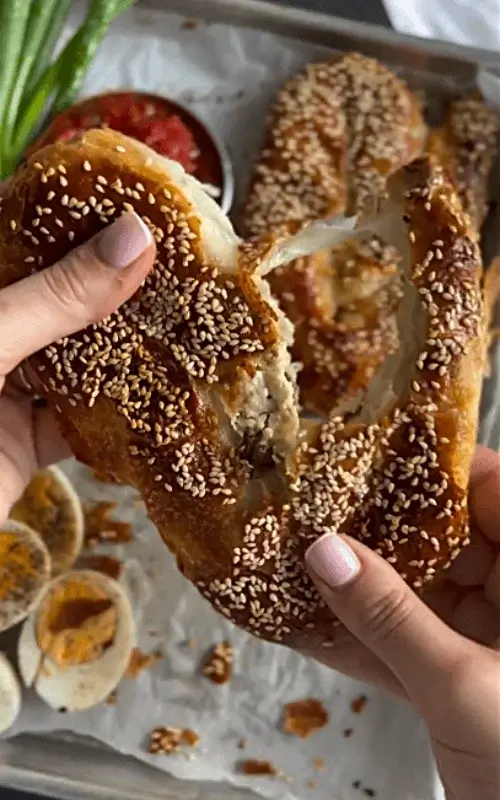
- Arrange the boreks on a parchment-lined baking sheet, leaving a little space between them. Brush with the beaten egg and sprinkle with the sesame seeds.
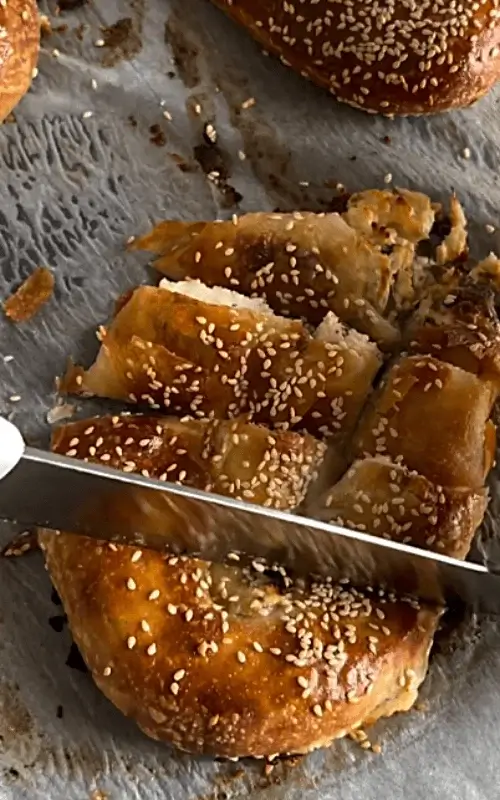
- Bake until deeply golden and crisp, 25 to 35 minutes, rotating the pan halfway through if needed. The bottoms should be evenly browned and crisp.
- Let cool for 5 minutes before serving warm.
FAQ
What type of cheese is best for Turkish cheese borek recipe?
The best cheese for a Turkish cheese borek recipe is a cheese that provides saltiness, creaminess, and enough moisture to create a flavorful filling without making the pastry soggy. Feta cheese is one of the most common choices because it has a firm texture, tangy flavor, and salty profile that works well with spinach and herbs. In this recipe, feta is combined with low-moisture mozzarella, which adds a mild flavor and a stretchy texture that balances the sharper feta.
Traditional Turkish borek fillings often use regional white cheeses similar to feta, including sheep’s milk cheeses, but feta is widely available and works well as a substitute. It is important to avoid very wet cheeses because excess moisture can leak into the dough during baking and prevent the borek from becoming crisp. If using a particularly salty feta, tasting the filling before adding additional salt is recommended. The cheese mixture should be flavorful on its own because the dough provides a neutral, crisp base.

Can you make this Turkish cheese borek recipe ahead of time?
Yes, a Turkish cheese borek recipe can be prepared ahead of time, which makes it a practical option for holidays, gatherings, and brunch. The dough actually benefits from resting in the refrigerator because the gluten relaxes, making it easier to stretch and shape. In this recipe, the prepared dough balls are coated with oil and refrigerated for at least 6 hours or overnight before assembly. This resting period improves the texture and makes the dough more flexible.
The assembled boreks can also be prepared several hours before baking and kept covered in the refrigerator until ready to cook. For longer storage, unbaked boreks can be frozen on a baking sheet until firm, then transferred to an airtight container. They can be baked directly from frozen, though the baking time may need to be increased. Fully baked boreks are best served fresh because the crust is crispest shortly after baking, but leftovers can be reheated in the oven to restore some of the texture.
Why does Turkish borek dough need to rest before shaping?
Resting the dough is an important step in a Turkish cheese borek recipe because it allows the gluten network formed during kneading to relax. Gluten gives dough its elasticity and structure, but freshly kneaded dough is often tight and resistant to stretching. If the dough is stretched immediately, it may shrink back or tear instead of forming the thin sheet needed for borek.
The resting process improves the dough’s extensibility, allowing it to be stretched much thinner without breaking. In this recipe, the dough is first rested at room temperature and then refrigerated after being divided into individual portions.
The long refrigeration period gives the flour time to fully hydrate and creates a smoother, more workable dough. This technique is especially important for hand-stretched borek because the goal is a very thin dough layer that becomes crisp and delicate during baking while still holding the cheese and spinach filling.
How do you get Turkish cheese borek dough thin and crispy?
To achieve thin and crispy dough in a Turkish cheese borek recipe, the dough needs proper kneading, resting, and careful stretching. Kneading develops the gluten structure, while resting allows the dough to become flexible enough to stretch without tearing. Using a high-protein flour, such as pizza flour or bread flour, also helps create a strong dough that can be stretched very thin.
The dough should be stretched gradually with your hands on a lightly oiled surface until it becomes almost transparent. Avoid using too much pressure, which can create holes or uneven thickness. A thin dough layer is essential because thick dough will remain chewy rather than crisp. Baking at a high temperature, as used in this recipe, helps the exterior brown quickly while creating a flaky texture. Brushing the boreks with egg before baking also contributes to a golden surface and appealing finish.
Can you freeze Turkish cheese borek?
Freezing unbaked boreks usually gives the best results because the dough maintains its fresh texture and can bake into a crisp crust. To freeze, arrange the assembled boreks on a tray and freeze until firm, then transfer them to an airtight container or freezer bag. Bake directly from frozen, adding extra time as needed.
Baked boreks can also be frozen, although the texture may be slightly less crisp after thawing. To reheat, place them in a preheated oven rather than a microwave because dry heat helps restore the flaky exterior. Proper storage is important to prevent freezer odors and moisture absorption. When stored correctly, frozen boreks can maintain good quality for several weeks.
Can I prepare the dough for Turkish cheese borek recipe the night before?
Yes, preparing the dough the night before is one of the best ways to improve a Turkish cheese borek recipe. The dough benefits from a long resting period because the gluten structure relaxes and the flour has more time to fully absorb the liquid. This creates a smoother, more flexible dough that is easier to stretch thin without tearing.
After kneading the dough, it can be divided into portions, coated with oil, covered, and refrigerated overnight as described in this recipe. The next day, the dough will be softer and easier to work with. Preparing the dough ahead also makes the baking process more convenient because the most time-consuming step is already complete.
Before shaping, allow the dough portions to sit briefly at room temperature if they feel too firm from refrigeration. This technique is commonly used in traditional bread and pastry preparation because slow resting improves both texture and handling.
Why is vinegar added to the dough in Turkish cheese borek recipe?
Vinegar is added to the dough in a Turkish cheese borek recipe because it helps create a tender texture and contributes to a lighter, flakier pastry. The acidity in vinegar slightly affects gluten development, which can make the dough easier to stretch and less likely to become overly tough after baking. This is especially useful for borek because the dough needs enough strength to be stretched thin while remaining delicate.
The vinegar does not give the finished pastry a noticeable sour flavor because the amount used is balanced throughout the dough. Combined with proper kneading, resting, and the use of oil, vinegar helps create the characteristic texture of homemade borek: crisp on the outside, tender inside, and strong enough to hold the filling. While some traditional recipes use different methods to achieve similar results, adding vinegar is a common technique for improving the texture of many homemade pastry doughs.
Can I use store-bought phyllo dough for a Turkish cheese borek recipe?
Yes, store-bought phyllo dough can be used for a Turkish cheese borek recipe, especially when you want a faster version with less preparation time. Phyllo dough creates a very thin and crisp pastry, but the texture will be different from a traditional borek made with homemade dough. Homemade borek dough is slightly more elastic and chewy while still becoming crisp after baking, whereas phyllo produces many delicate, paper-thin layers.
When using phyllo dough, it is important to keep the sheets covered with a slightly damp kitchen towel while assembling the borek because phyllo dries quickly and can crack. Each layer should be brushed lightly with olive oil or melted butter to help create separation and crispness. The filling should not be overly wet because excess moisture can soften the phyllo layers.
What should Turkish cheese borek be served with?
It is commonly enjoyed for breakfast alongside tea, fresh vegetables, olives, and yogurt-based dishes. The salty cheese filling pairs especially well with refreshing sides that balance the richness of the pastry.
For brunch or gatherings, borek can be served with a simple salad, sliced tomatoes, cucumbers, or a yogurt sauce with herbs. It is also a popular addition to holiday tables because it can be prepared ahead and served warm or at room temperature. Turkish tea is one of the most traditional pairings because its bitterness complements the buttery, savory flavors of the pastry.
How do you prevent Turkish cheese borek from becoming soggy?
Controlling moisture in both the filling and the dough is essential. The cheese filling should not contain excess liquid because moisture released during baking can soften the pastry. Using crumbled feta and low-moisture mozzarella, as in this recipe, helps maintain the right balance of flavor and texture.
Fresh spinach should be roughly chopped and not overly wet. If the spinach releases a lot of moisture, it can be lightly squeezed before adding it to the filling. Another important step is baking the borek at a high temperature so the exterior cooks quickly and develops a crisp crust. Avoid covering freshly baked borek immediately after removing it from the oven because trapped steam can soften the crust. Allowing it to cool slightly uncovered helps preserve the flaky texture.
How do you shape Turkish borek into the traditional spiral shape?
To shape Turkish borek into a spiral, the dough must first be stretched into a very thin sheet. After adding the filling along one edge, the dough is rolled tightly into a long cylinder. The cylinder is then gently coiled around itself to create a round spiral shape. This method creates layers of dough and filling throughout the pastry.
The dough should be handled gently during shaping because stretching too aggressively can cause tears. Working on a lightly oiled surface helps prevent sticking and makes the dough easier to move. While the spiral shape is traditional, Turkish borek can also be shaped into long rolls, triangles, or layered trays depending on the region and recipe.
What flour is best for making Turkish cheese borek recipe?
Pizza flour or bread flour works well because the higher protein content helps the dough develop strength, making it easier to stretch thin without tearing. This is especially important for traditional hand-stretched borek dough.
All-purpose flour can also be used, but the dough may be slightly less elastic and may require more careful handling when stretching. The flour should be properly measured because too much flour can create a stiff dough that is difficult to stretch. Allowing the dough to rest after kneading is just as important as choosing the right flour because it gives the gluten time to relax. A combination of strong flour, proper hydration, kneading, and resting creates the flexible dough needed for a successful homemade borek.
Can I use frozen spinach instead of fresh?
Yes, frozen spinach can be used in a Turkish cheese borek recipe, but it needs to be prepared properly before adding it to the filling. Frozen spinach contains more water than fresh spinach, and excess moisture can make the borek filling watery and prevent the dough from becoming crisp. Thaw the spinach completely and squeeze out as much liquid as possible before mixing it with the cheese.
Fresh spinach provides a brighter flavor and slightly firmer texture, which is why it is used in this recipe. However, frozen spinach is a practical alternative and works well when fresh spinach is unavailable. The amount can be substituted by weight, using approximately the same amount of drained frozen spinach as fresh spinach.