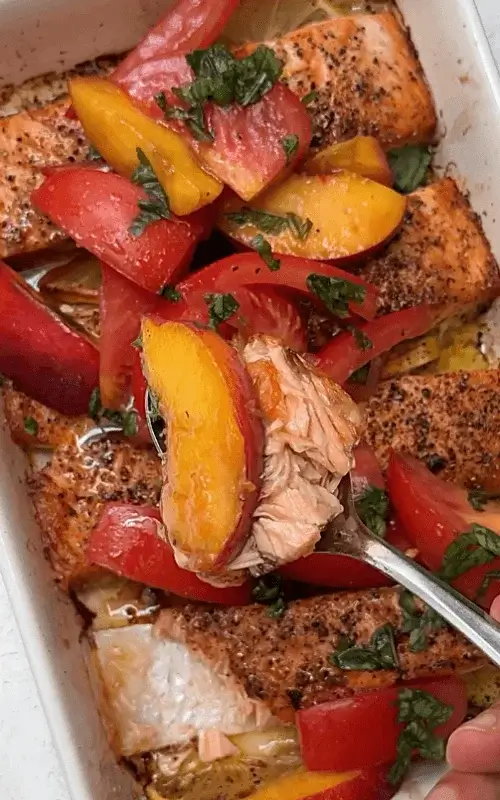
Baked Lemon Pepper Salmon with Peach Tomato Salad
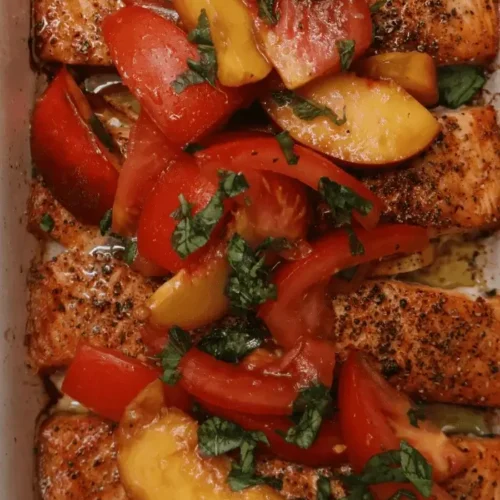
Watch the Full Step-by-Step
- Baking sheet
- Large mixing bowl
- Chef's knife
- Fine grater
INGREDIENTS
- 4 salmon fillets, 4 ounces/115 grams each
- 2 tablespoons olive oil
- Juice of 1 lemon
- 1 tablespoon lemon zest
- ½ teaspoon salt
- 1 teaspoon black pepper
Salad:
- 2 ripe yellow peaches, sliced
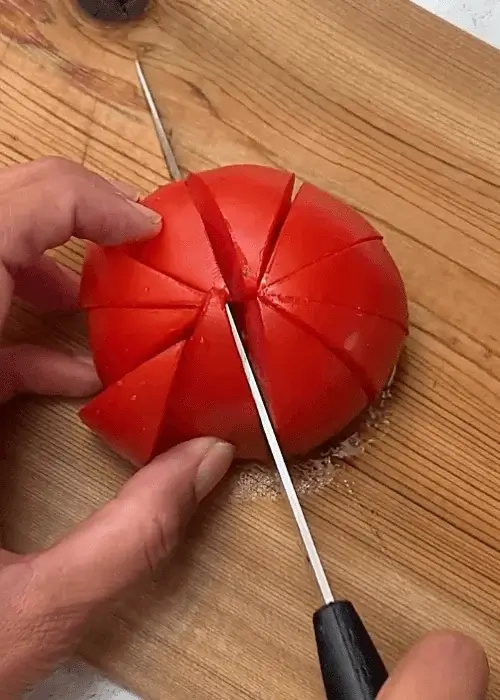
- 3 medium vine-ripened or Roma tomatoes, cut into wedges
- ¼ cup olive oil
- ¼ cup fresh basil, chopped
- Juice of ½ lemon
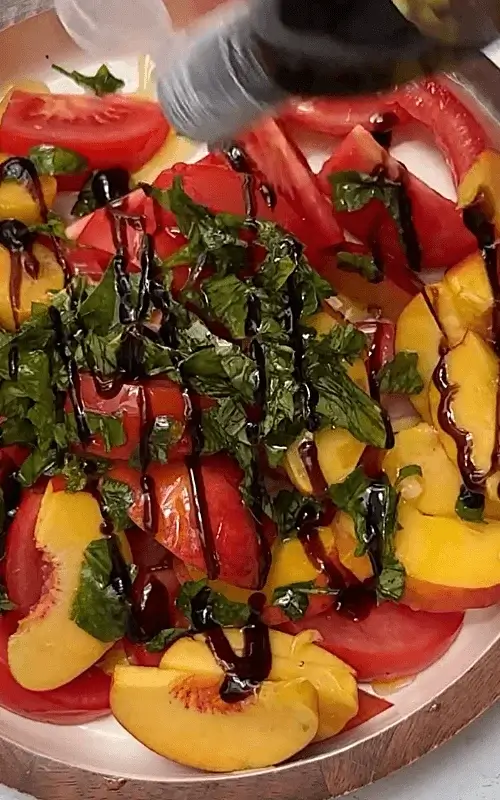
- 2 tablespoons balsamic glaze
- Salt, to taste

INSTRUCTIONS
- Heat the oven to 400°F/200°C.
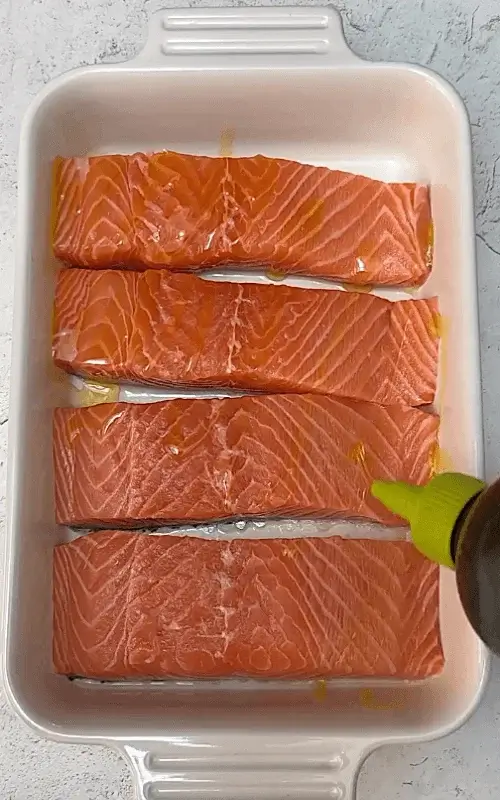
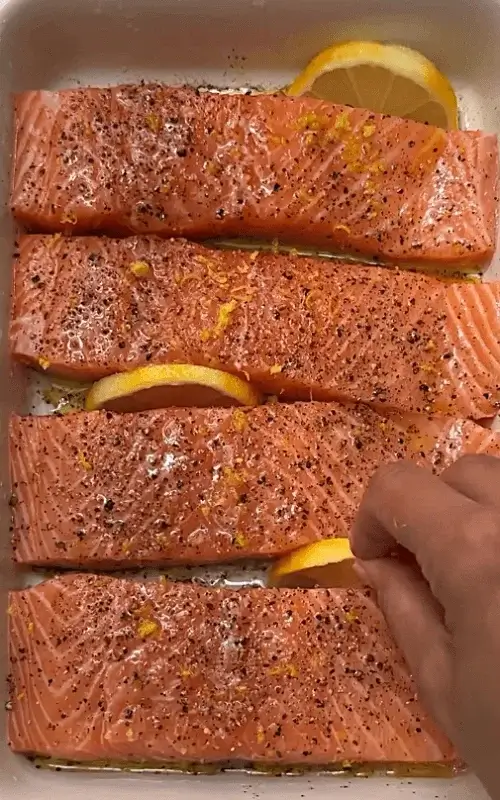
- Arrange the salmon on a parchment-lined baking sheet. Drizzle with the olive oil and lemon juice, then sprinkle with the lemon zest, salt, and pepper.
- Roast until the salmon is opaque and flakes easily with a fork, 10 minutes for thinner fillets or 12 to 15 minutes for thicker ones. If desired, broil for 1 minute to lightly brown the surface.
- Meanwhile, combine the peaches, tomatoes, basil, olive oil, lemon juice, balsamic glaze, and a pinch of salt in a large bowl. Toss gently to coat.
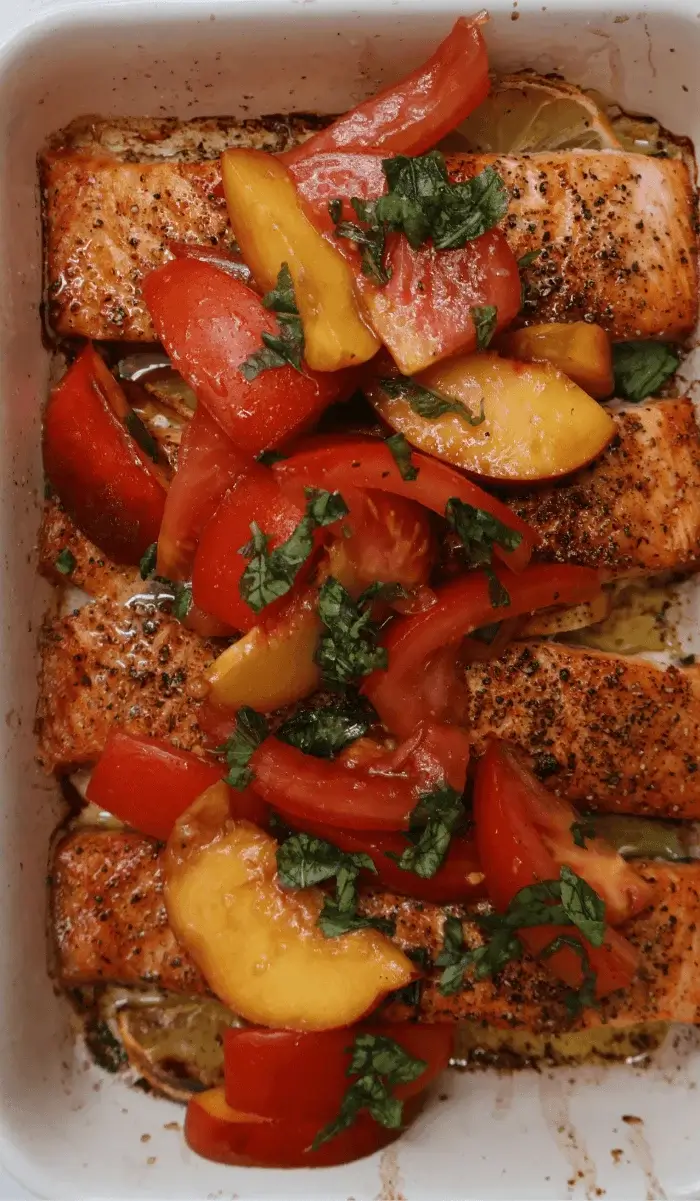
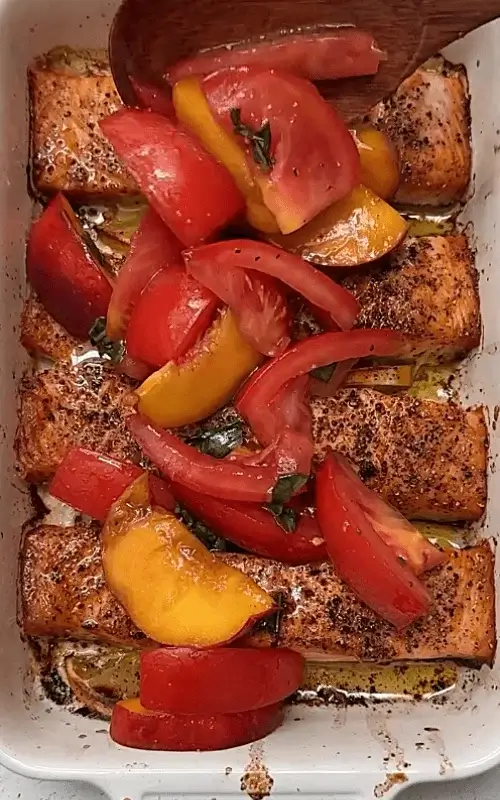
- Serve the salmon warm with the peach tomato salad alongside or spooned over the top.
FAQ
What type of salmon is best for baked lemon pepper salmon?
Baked lemon pepper salmon works well with several types of salmon, but Atlantic and King salmon are often the best choices because of their higher fat content. The extra fat helps the fish stay moist during roasting while complementing the bright flavors of lemon and black pepper. Sockeye salmon is another excellent option if you prefer a firmer texture and richer color, although it cooks more quickly because it is leaner.
Coho salmon offers a balanced middle ground with moderate fat and a delicate flavor. Regardless of the variety, choose fillets that are similar in thickness so they cook evenly. Fresh salmon should have firm flesh, a mild ocean scent, and vibrant color without dry edges or discoloration. If using frozen salmon, thaw it completely in the refrigerator and pat it dry before seasoning to help the oil and lemon adhere properly.
How do I know when the salmon is fully cooked?
The flesh should change from translucent to opaque and separate easily into moist flakes when gently pressed with a fork. For the most accurate result, use an instant-read thermometer inserted into the thickest part of the fillet. Salmon is considered safely cooked at 145°F (63°C), although many cooks prefer removing it from the oven around 125 to 130°F (52 to 54°C) and allowing carryover cooking to finish the job for a juicier texture.
Thin fillets may cook in about 10 minutes, while thicker pieces often require 12 to 15 minutes. Watching the fish closely during the final few minutes helps prevent overcooking, which can dry out even high-quality salmon.
Can I meal prep baked lemon pepper salmon?
Yes, baked lemon pepper salmon is an excellent option for meal prep. Bake the salmon as directed, let it cool slightly, and refrigerate it in airtight containers. For the best quality, store the peach tomato salad separately and prepare it fresh or dress it just before eating.
Keeping the salad separate prevents the fruit and tomatoes from releasing excess liquid that could affect the texture of the salmon. The cooked salmon can be enjoyed warm or cold and pairs well with rice, quinoa, roasted vegetables, or leafy greens throughout the week. It is best consumed within 2 days to maintain its flavor and texture.
Can I prepare the peach tomato salad ahead of time?
The peach tomato salad can be partially prepared ahead of time, but it tastes freshest when assembled shortly before serving. You can slice the peaches, tomatoes, and basil a few hours in advance and refrigerate them separately in airtight containers. Wait to add the olive oil, lemon juice, balsamic glaze, and salt until just before serving.
Salt draws moisture from both peaches and tomatoes, which can make the salad watery if it sits too long. Tossing everything together at the last minute keeps the fruit firm, the tomatoes fresh, and the basil vibrant. This approach also preserves the bright flavors that pair so well with baked lemon pepper salmon. If transporting the salad, pack the dressing separately and combine everything immediately before serving.
Should I remove the salmon from the refrigerator before baking?
Allowing the salmon to sit at room temperature for about 15 to 20 minutes before baking can help it cook more evenly. Very cold fish placed directly into a hot oven may cook unevenly, with the outside finishing before the center reaches the proper temperature. Keep the salmon covered while it rests, and do not leave it out for longer than necessary.
During this time, you can prepare the baking sheet and the salad ingredients. Once the salmon has lost some of its chill, season it and bake as directed. This simple step can help produce more consistent results when making baked lemon pepper salmon, especially with thicker fillets.
How do I keep baked lemon pepper salmon from drying out?
The main reason salmon dries out is overcooking, so the most important step is to watch the fillets closely near the end of baking. Thin salmon fillets can be done in about 10 minutes, while thicker pieces usually need 12 to 15 minutes, depending on the oven and the exact thickness.
Starting with salmon that is close to the same size helps it cook evenly. It also helps to coat the fish with olive oil before baking, since that adds moisture and protects the surface from drying too quickly. Lemon juice adds flavor, but it should not sit on the fish too long before baking because acid can slightly change the texture. Remove the salmon when it flakes easily and still looks moist in the center.
Is it better to bake salmon covered or uncovered?
Baked lemon pepper salmon is best cooked uncovered. Leaving the salmon exposed to the dry heat of the oven allows the surface to roast gently while the inside remains moist and flaky. Covering the fish with foil traps steam, which can soften the exterior and prevent any light browning from developing.
Because salmon cooks quickly, it does not usually need the extra moisture created by covering it. If the fillets are especially thick, you can loosely tent them with foil during the final few minutes only if they begin browning before the centers are cooked. Finishing the salmon with a brief minute under the broiler creates an attractive lightly browned surface without drying out the fish.
What mistakes should I avoid when making baked lemon pepper salmon?
The most common mistakes with baked lemon pepper salmon are overcooking, under-seasoning, and using uneven fillets. Salmon cooks quickly, so even a few extra minutes in the oven can make it dry and less tender. Another mistake is not drying the fish before seasoning, since excess moisture can prevent the oil and seasoning from coating the surface evenly.
Using too much lemon juice too early can also make the texture softer than intended. For the salad, avoid slicing the peaches too far ahead of time and do not salt the mixture too early, or it may become watery. It is also important to taste the salad before serving, since ripe peaches and tomatoes vary in sweetness and acidity.
Can I use other types of fish instead of salmon?
Yes, this recipe adapts well to several firm fish varieties if salmon is unavailable. Trout is the closest substitute because it has a similar richness and cooks in nearly the same amount of time. Arctic char also works well and has a mild flavor that pairs nicely with lemon and black pepper.
Halibut, cod, and sea bass can be used, although they are leaner and may require slightly less cooking time to prevent drying out. Regardless of the fish you choose, look for fillets of similar thickness so they cook evenly. The peach tomato salad complements many mild fish, making this recipe versatile while preserving the fresh flavors that make baked lemon pepper salmon so appealing.
Can I substitute another fruit for the peaches?
Yes, several fruits pair well with baked lemon pepper salmon if peaches are unavailable or out of season. Nectarines are the closest substitute because they have a similar sweetness and texture while holding their shape well in salads. Plums add a slightly tart flavor that balances the richness of the salmon, while apricots provide a sweeter, more delicate alternative when ripe.
Mango can also be used for a tropical variation, although it creates a noticeably sweeter salad. Whichever fruit you choose, select ripe but firm pieces so they do not become mushy when tossed with the dressing. Fresh seasonal fruit generally delivers the best flavor and texture for this recipe.
Why does my salmon have white liquid on top after baking?
The white substance that sometimes appears on baked lemon pepper salmon is called albumin, a naturally occurring protein found in the fish. As the salmon cooks, the protein coagulates and is pushed to the surface. Albumin is completely safe to eat and does not indicate that the salmon has gone bad.
While it cannot always be prevented, it is less noticeable when the salmon is cooked gently and not overbaked. Using moderate oven temperatures, avoiding excessive cooking time, and allowing the salmon to come closer to room temperature before baking may help reduce the amount that appears. Even if some albumin is visible, the salmon will still taste delicious and remain perfectly safe to serve.