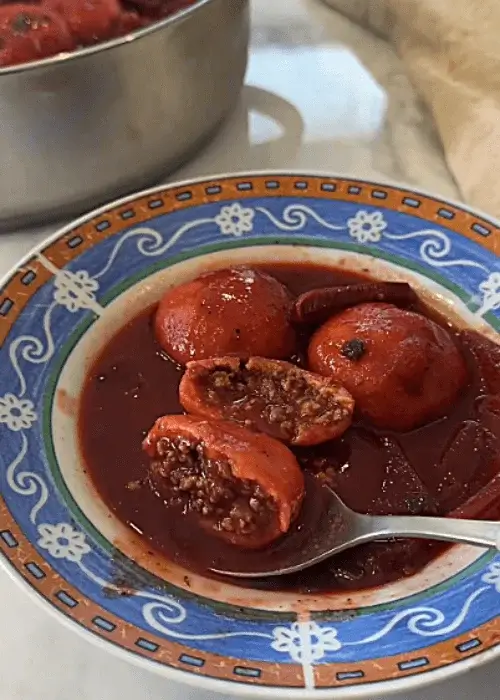
Authentic Beet Kubbeh Soup Recipe
Watch the Full Step-by-Step
- Medium mixing bowl
- Rolling Pin
INGREDIENTS
Dough:
- 2 cups/340 grams semolina
- 1 teaspoon salt
- 3 tablespoons olive oil
- ¾ cup warm water
Filling:
- 1 medium onion, finely chopped
- 1 tablespoon olive oil
- 1 pound/450 grams ground beef
- 1 teaspoon paprika
- ½ teaspoon salt
- ½ teaspoon baharat
- 1 teaspoon granulated garlic
Soup:
- 2 medium onions, thinly sliced
- 2 tablespoons olive oil
- 2 medium beets, peeled and diced
- 2 celery stalks, diced
- 1½ tablespoons tomato paste
- 1 teaspoon sweet paprika
- 1 teaspoon citric acid
- ½ tablespoon sugar
- 1 teaspoon baharat
- ½ teaspoon black pepper
- 4 cups water
- Juice of ½ lemon

INSTRUCTIONS
- Heat the olive oil in a skillet over medium heat. Add the onion and cook until softened and lightly golden, about 8 minutes. Add the beef, paprika, salt, baharat, and granulated garlic. Cook, breaking up the meat, until browned and the liquid has evaporated, about 10 minutes. Transfer to a fine-mesh strainer to drain completely, then refrigerate until chilled.
- In a medium bowl, combine the semolina and salt. Add the olive oil and warm water gradually, mixing and kneading until a soft, slightly sticky dough forms, about 3 minutes. Cover and refrigerate for 20 minutes.
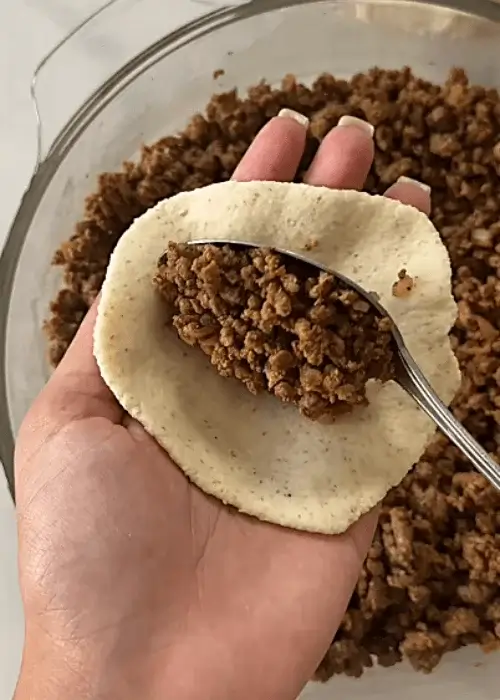
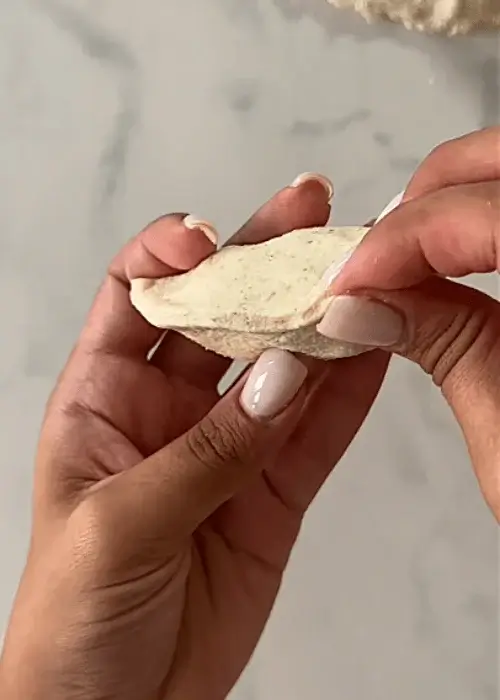
- Divide the dough into 20 portions. Roll each piece into a thin round. Place 1 tablespoon filling in the center and press lightly to compact. Fold the dough around the filling and seal tightly, trimming excess dough if needed. Roll gently into smooth balls. Transfer to a parchment-lined tray and freeze while preparing the soup.
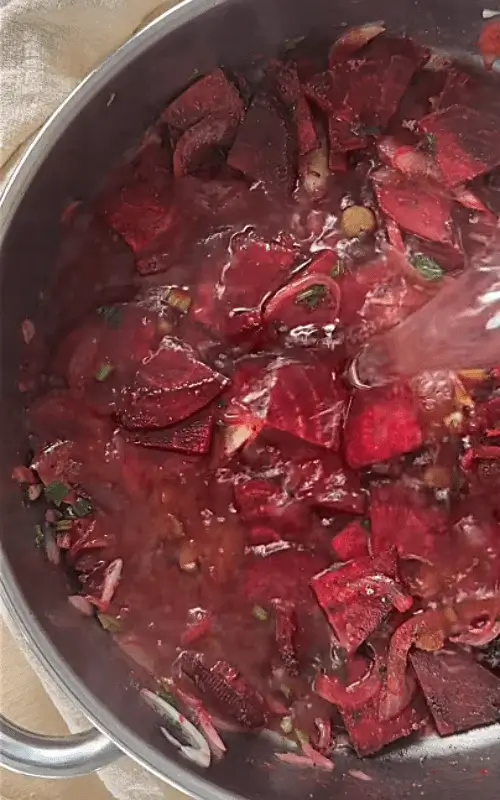
- Heat the olive oil in a large wide pot over medium heat. Add the onions and cook until softened, about 8 minutes. Stir in the beets and celery and cook for 5 minutes. Add the tomato paste, paprika, citric acid, sugar, baharat, and black pepper and cook until fragrant, about 2 minutes.
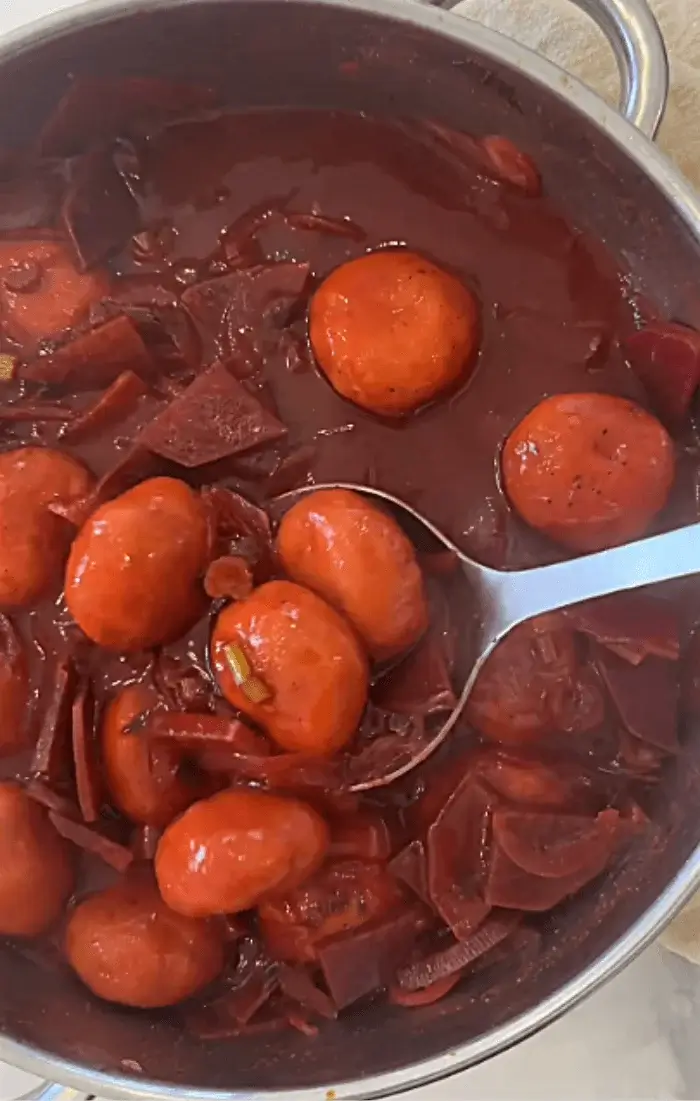
- Pour in the water and bring to a boil. Cover partially and simmer until the beets are tender, 25 to 30 minutes. Taste and adjust seasoning.
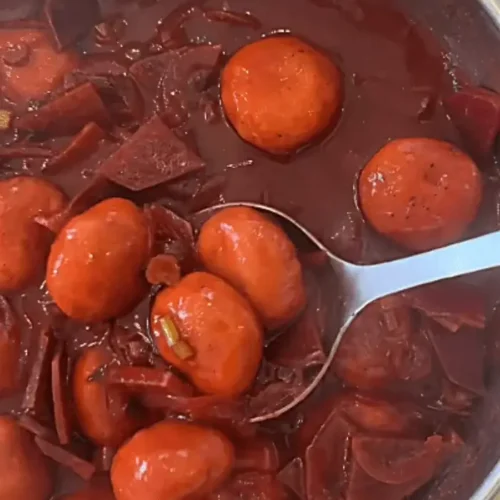
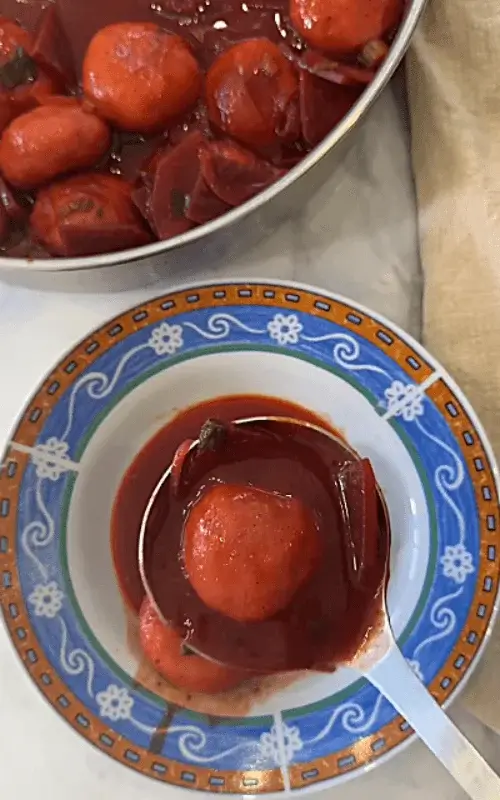
- Reduce the heat to low and gently add the kubbeh. Simmer uncovered until the dumplings are tender and cooked through, about 35 minutes. Stir in the lemon juice and serve hot.
FAQ
What makes beet kubbeh soup different from other Middle Eastern soups?
Beet kubbeh soup stands out because it combines a sour, earthy beet broth with semolina dumplings filled with seasoned ground meat. Unlike lentil-based or tomato-based Middle Eastern soups, this kubbeh soup recipe relies heavily on beets for both color and depth of flavor, creating a naturally sweet and tangy profile.
The dumplings add texture and protein, turning the soup into a complete meal rather than a light starter. The balance of citric acid or lemon juice against the sweetness of the beets is also essential, giving it a signature sharpness. This style of soup is especially associated with Iraqi Jewish cuisine, where slow-simmered broths and stuffed dumplings are central to traditional cooking techniques.
How do you know when kubbeh are fully cooked?
In a kubbeh soup recipe, doneness is determined by both texture and timing rather than visual cues alone. Fully cooked kubbeh will feel slightly firm but not hard when gently pressed with a spoon in the simmering broth. The semolina shell becomes tender and loses any raw, grainy texture, while still maintaining enough structure to hold the filling.
Cooking time is typically around 30 to 40 minutes at a gentle simmer, depending on size and whether the dumplings were frozen. If cut open, the filling should be fully browned and juicy, with no raw or pink areas remaining. It is important not to rush this stage with high heat, as that risks bursting the dumplings before the interior is cooked through. A consistent low simmer ensures even heat penetration throughout each kubbeh.
Can you prepare kubbeh soup recipe components ahead of time?
Yes, this kubbeh soup recipe is well suited for advance preparation, which is one of its biggest practical advantages. The beef filling can be fully cooked, drained, and refrigerated for up to two days, which also improves its texture and flavor. The semolina dough can be mixed, rested, and kept chilled for several hours before shaping.
Once assembled, the kubbeh dumplings can be frozen on a tray and then transferred to a sealed container, allowing them to be cooked directly from frozen in the soup. The beet broth base can also be made a day ahead and reheated before adding the dumplings. This staged preparation improves efficiency and also helps deepen the flavor of the final dish.
What proteins can replace beef in kubbeh soup recipe filling?
A kubbeh soup recipe can be adapted with several alternative proteins depending on dietary preference. Ground lamb is the closest traditional substitute, offering a richer and slightly fattier profile that enhances the broth’s depth. Ground chicken or turkey can also be used for a lighter version, though they require more seasoning to compensate for their milder flavor.
Some modern variations use a mix of beef and lamb for balanced fat content and complexity. Plant-based alternatives such as finely chopped mushrooms, lentils, or textured vegetable protein can replicate the texture of the filling while maintaining structure inside the semolina shell. Regardless of protein choice, proper seasoning with baharat, garlic, and salt is essential to preserve the savory contrast that defines kubbeh soup recipe character.
How do you prevent kubbeh dumplings from falling apart in the soup?
In a properly executed kubbeh soup recipe, structural integrity depends on dough hydration, sealing technique, and temperature control. The semolina dough must be slightly sticky but elastic, allowing it to stretch without tearing when enclosing the filling. Overly wet dough will break during simmering, while dry dough will crack.
Each dumpling must be tightly sealed with no air pockets, because trapped air expands during cooking and can rupture the shell. Freezing the assembled kubbeh before cooking is critical, as it firms the structure and reduces immediate breakdown in the broth. The soup should also be kept at a gentle simmer rather than a rolling boil, since vigorous boiling can cause the dumplings to disintegrate.
Why does kubbeh soup sometimes turn cloudy or dark?
Cloudiness in a kubbeh soup usually comes from overcooking the dumplings at too high a temperature or breaking of the semolina shells during simmering. When kubbeh are boiled aggressively, starch from the semolina leaks into the broth, making it murky. Another cause is not properly draining the meat filling, which releases excess fat and proteins into the soup.
Over-reducing beets for too long can also deepen the color to an almost muddy tone instead of a clear red. To maintain a clean appearance, the soup should be kept at a gentle simmer, not a rolling boil, and kubbeh should be added only after the broth is stable and seasoned. Proper skimming during the vegetable simmer stage can also help maintain clarity and visual appeal.
What is the role of beets in kubbeh soup recipe flavor and texture?
In a kubbeh soup recipe, beets are the foundational ingredient that defines both flavor and appearance. They provide natural sweetness that balances the acidity from lemon juice or citric acid, creating a layered sweet-sour broth. When simmered, beets release pigments and sugars that deepen the soup’s color into a rich red, which is visually characteristic of this dish.
Texture-wise, cooked beets soften and partially break down, slightly thickening the broth without the need for flour or starch. Combined with celery and onions, they create an aromatic vegetable base that supports the richness of the meat-filled dumplings. Without beets, the dish would lose its signature identity and become closer to a standard meat dumpling soup.
Can kubbeh soup recipe be made without citric acid?
Yes, a kubbeh soup recipe can be made without citric acid, but the acidity still needs to be replaced to maintain balance. Citric acid is traditionally used to sharpen the beet broth and cut through the richness of the meat-filled dumplings. Without it, the soup can taste overly sweet or flat due to the natural sugars in beets.
A direct substitute is fresh lemon juice or lime juice, which should be added at the end of cooking to preserve brightness. Some cooks also use tamarind paste in small amounts for a deeper, slightly earthy sourness. The key is to maintain a clear sweet-sour balance, which is essential to the identity of kubbeh soup recipe flavor structure. Omitting acidity entirely will result in a heavier, less dynamic broth.

What type of semolina is best for a kubbeh soup recipe?
For a kubbeh soup recipe, the best semolina is fine or medium-grind durum wheat semolina. Fine semolina produces a smoother, more elastic dough that is easier to roll thin and seal around the filling, which helps prevent cracking during simmering. Medium semolina can also work, but it creates a slightly more rustic texture and may require a bit more hydration.
Coarse semolina is generally not recommended because it produces a gritty, fragile dough that does not bind well. The key is hydration control: the dough should feel soft, slightly sticky, and pliable after resting, allowing it to stretch without tearing. Resting the dough for at least 20 minutes is essential, as it allows the semolina to fully absorb moisture and develop structure.
What is the best way to shape kubbeh for a kubbeh soup recipe?
In a kubbeh soup recipe, shaping is one of the most important steps because it directly affects how well the dumplings hold together during cooking. The dough should be divided into equal portions to ensure even cooking times. Each piece is rolled thin enough to remain pliable but not so thin that it tears under the weight of the filling.
The filling should be compacted lightly before sealing to remove air pockets, which can expand and cause ruptures in the soup. Sealing must be tight, with edges fully pinched and smoothed so no seams remain open. Rolling the final dumpling between the palms creates a uniform surface that resists breaking during simmering. Consistency in size also matters, since uneven kubbeh will cook at different rates and may lead to some breaking apart while others remain undercooked.
Why do you freeze kubbeh before adding them to the soup?
Freezing is a stabilizing step in a kubbeh soup recipe that ensures the dumplings maintain their shape during cooking. Once assembled, kubbeh contain a raw meat filling and a delicate semolina shell that can soften quickly in hot liquid. Freezing firms both the filling and the outer dough, reducing the risk of rupture when they first hit the simmering broth.
It also helps the dough set fully around the filling, eliminating weak seams that could open during cooking. When frozen kubbeh are added to hot soup, they gradually thaw and cook evenly from the outside in, which preserves their structure. Skipping this step often results in broken dumplings and cloudy broth, especially if the soup is boiling too aggressively.
What is the ideal consistency of the broth in this kubbeh soup recipe?
In a well-balanced kubbeh soup recipe, the broth should be slightly thickened but still fluid enough to coat a spoon lightly. It is not meant to be as thin as a clear stock nor as thick as a stew. The beets naturally contribute body as they soften and release starch-like sugars, while tomato paste adds viscosity and depth.
Proper simmering reduces excess water and concentrates flavor without over-reducing. If the soup becomes too thick, a small amount of hot water can be added to adjust consistency. If too thin, it can be simmered uncovered for a short time before adding the kubbeh. The final texture should feel silky, with a balanced suspension of vegetable pieces and dumplings.
What makes kubbeh soup recipe different from kubbeh served in other ways?
A kubbeh soup recipe differs significantly from fried or baked kubbeh because it is designed as a fully submerged dumpling soup rather than a dry or crispy preparation. In soup form, the semolina shell is cooked gently in liquid, resulting in a soft, tender exterior that absorbs the flavor of the broth.
This contrasts with fried kubbeh, where the shell becomes crisp and textured due to oil exposure, or baked versions where the structure is firmer and less hydrated. The soup version also integrates the filling and dough with a strongly flavored beet-based broth, making it a cohesive one-pot dish. The balance of sweet beets, sour acidity, and savory meat is unique to the soup format and defines the kubbeh soup recipe identity across Iraqi and Levantine culinary traditions.