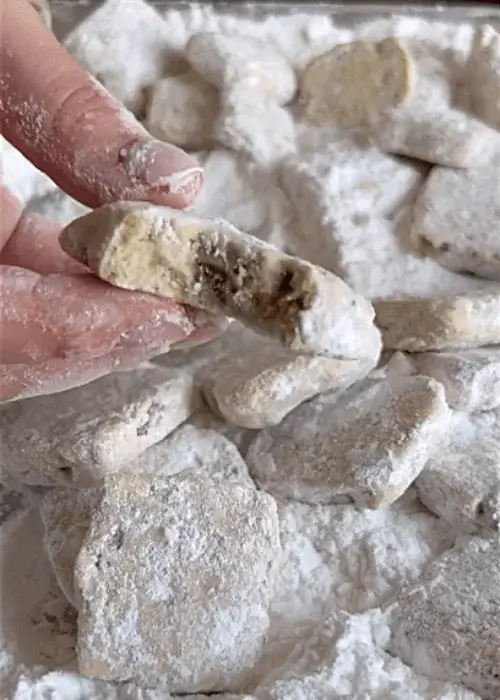
Buttery Pecan Snowball Cookies
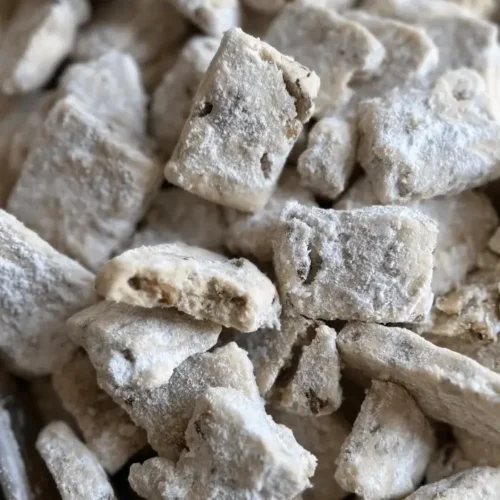
Watch the Full Step-by-Step
- Large mixing bowl
- Kitchen scale
- Rubber spatula
- Rolling Pin
- Wire rack
- Baking sheet
INGREDIENTS
- 2 cups/280 grams all-purpose flour
- 1 cup/230 grams unsalted butter, softened
- 1 cup/100 grams powdered sugar
- 1½ cups/200 grams pecans, coarsely chopped
- 1 teaspoon vanilla extract
- Pinch of fine sea salt
- 1¾ cups powdered sugar, for coating

INSTRUCTIONS
- Heat the oven to 350°F/180°C. Line a baking sheet with parchment paper.
- In a large bowl, mix the flour, butter, powdered sugar, pecans, vanilla extract, and salt until a soft, cohesive dough forms. Transfer to the freezer for 10 minutes to firm slightly.
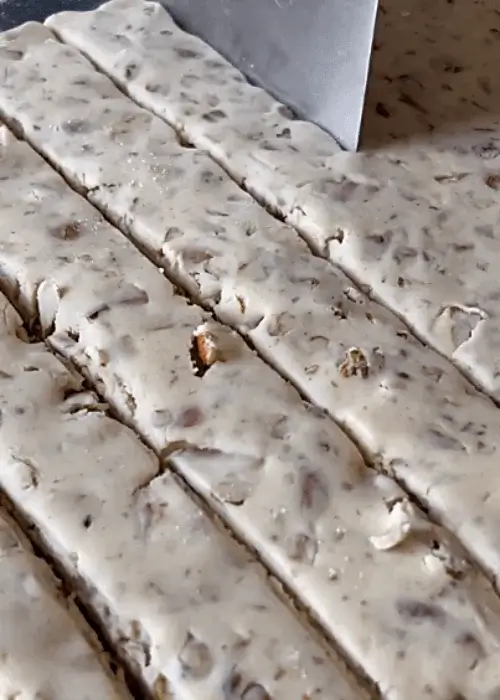
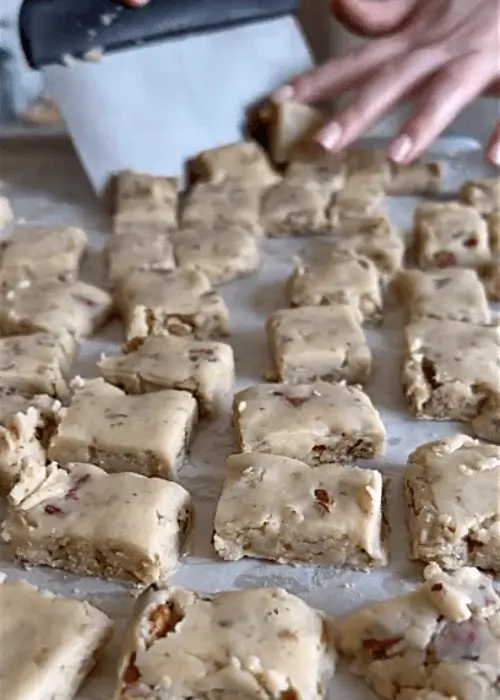
- Lightly flour a work surface and roll the dough into a thick rectangle about ¾-inch thick. Cut into small cubes and arrange on the prepared baking sheet, spacing slightly apart.
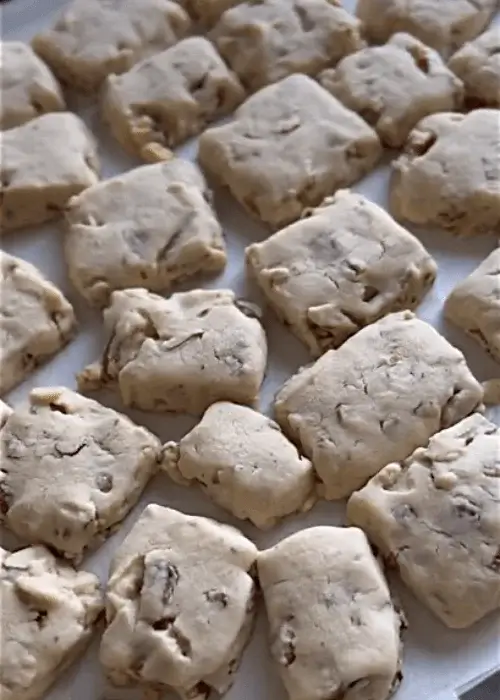
- Bake until the cookies are set and pale, 14 to 15 minutes. They should not brown. Let cool on the baking sheet for 20 minutes.
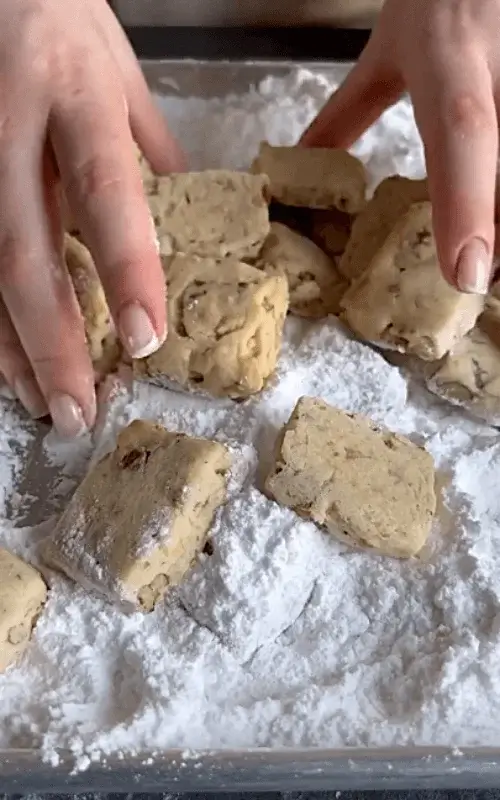
- Place the powdered sugar in a deep bowl. Gently coat the cookies while still slightly warm, then transfer to a wire rack or tray and let cool completely.
- Store in an airtight container at room temperature for up to 1 week.
FAQ
Why are pecan snowball cookies rolled in powdered sugar twice?
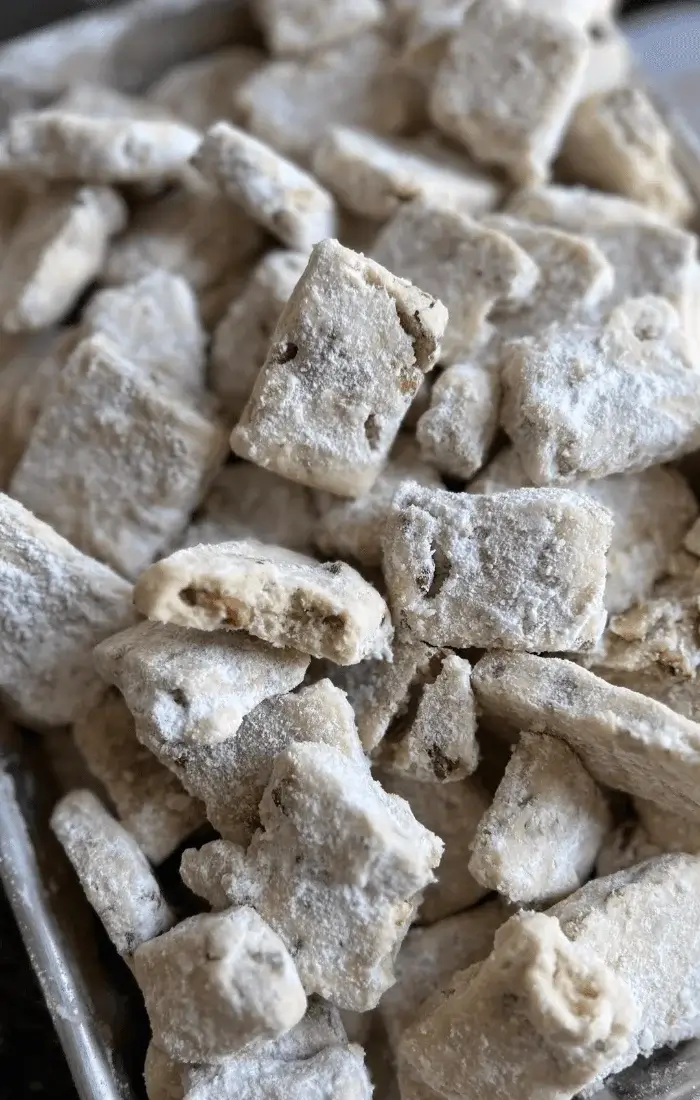
Rolling pecan snowball cookies in powdered sugar twice creates the classic snowy coating while improving both texture and appearance. The first coating is typically done while the cookies are still slightly warm. At this stage, the residual heat melts part of the powdered sugar into the surface, allowing it to adhere properly instead of falling off. This initial layer also creates a slightly moist exterior that helps the second coating stick more evenly later.
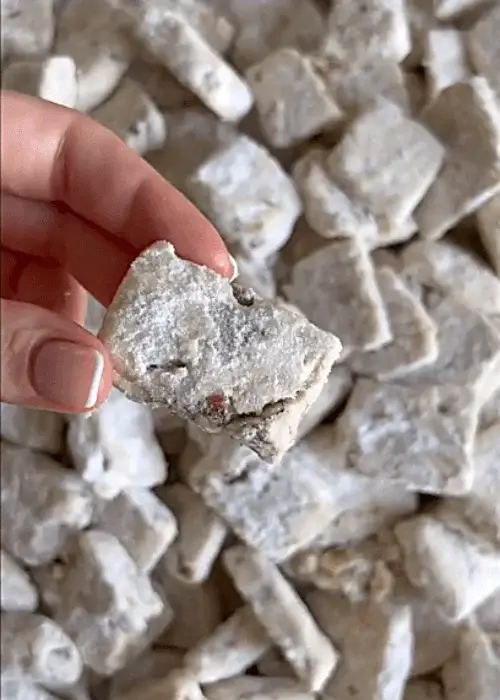
The second coating is applied after the pecan snowball cookies have cooled completely. This final dusting gives the cookies their bright white finish and soft powdery texture associated with traditional snowball cookies. Skipping the second coating often results in dull-looking cookies with uneven coverage. Powdered sugar also balances the rich butter and nut flavor by adding a light sweetness without making the cookies overly sugary.
Why did my cookies spread too much in the oven?
Pecan snowball cookies usually maintain a compact shape, so excessive spreading is often caused by dough temperature or ingredient balance. One of the most common causes is overly warm butter. If the butter becomes too soft or partially melted before mixing, the dough loses structure and spreads rapidly once baked. Chilling the dough before baking helps solidify the fat and prevents this issue.
Another reason pecan snowball cookies may spread is inaccurate flour measurement. Too little flour reduces stability and causes the cookies to flatten. Using a kitchen scale provides more consistent results than measuring cups alone. Overworked dough can also contribute by warming the butter excessively during mixing. In some ovens, low baking temperatures may prevent the cookies from setting quickly enough, allowing the butter to melt before the structure forms.
Can I make gluten-free pecan snowball cookies?
Gluten-free pecan snowball cookies can be made successfully using a high-quality gluten-free flour blend designed for baking. Since traditional snowball cookies already have a delicate, crumbly texture, they adapt relatively well to gluten-free formulas compared to chewier cookie styles that rely heavily on gluten structure. A flour blend containing rice flour, potato starch, and xanthan gum typically produces the best results.
When preparing gluten-free pecan snowball cookies, chilling the dough becomes especially important because gluten-free doughs can be softer and more fragile. Measuring flour accurately also matters because gluten-free blends absorb moisture differently than wheat flour.
Some gluten-free versions may spread slightly more or develop a more delicate texture, but the buttery flavor and powdered sugar coating remain very similar to the original recipe. Allowing the cookies to cool fully before handling helps prevent breakage, since gluten-free baked goods tend to firm as they cool.
Can I freeze pecan snowball cookies after baking?
Pecan snowball cookies freeze extremely well both before and after baking, making them ideal for holiday preparation or long-term storage. Once baked and fully cooled, place the cookies in airtight containers with parchment paper between layers to prevent sticking and protect the powdered sugar coating. Properly stored, they can remain frozen for up to 2 months without major texture loss.
When thawing pecan snowball cookies, let them come to room temperature gradually inside the container to minimize condensation. Excess moisture can dissolve the powdered sugar and create a sticky surface. Many bakers refresh the appearance by adding a light second dusting of powdered sugar after thawing. Freezing also works well for unbaked dough. Frozen dough can be transferred directly to the oven with only a slight increase in baking time.
Why do pecan snowball cookies stay pale after baking?
Pecan snowball cookies are meant to remain pale because their delicate texture depends on limited browning. Unlike cookies designed for crisp edges or caramelized flavor, these cookies rely on a soft, buttery crumb that stays tender when baked lightly. Excess browning can dry out the dough and create a firmer texture that loses the traditional melt-in-your-mouth quality.
The high butter content and powdered sugar in pecan snowball cookies also contribute to their lighter appearance. Powdered sugar caramelizes differently than granulated sugar and does not encourage the same deep golden color. Bakers should focus on visual cues such as slightly firm edges and a set structure rather than waiting for visible browning. Removing the cookies at the correct stage prevents dryness and keeps the centers delicate.
What type of pecans work best for these cookies?
Raw pecans are generally the best option for pecan snowball cookies because they provide a naturally sweet, buttery flavor that complements the delicate texture of the dough. Fresh pecans with good oil content contribute richness without making the cookies greasy. Coarsely chopping the pecans creates better texture distribution and prevents the dough from becoming overly dense or sandy.
Avoid heavily salted or flavored pecans, since additional seasonings can overpower the subtle flavor profile of pecan snowball cookies. While finely ground nuts create a smoother texture, larger pieces add better contrast and more noticeable pecan flavor. Some bakers prefer lightly toasted pecans for deeper nuttiness, but over-toasting can dry them out and introduce bitterness. Freshness matters significantly because pecans contain natural oils that can become rancid over time.
Can I use salted butter in pecan snowball cookies?
Salted butter can be used in pecan snowball cookies, but it slightly changes the flavor balance and overall control of the recipe. Unsalted butter is generally preferred because it allows you to regulate the salt level precisely, especially in delicate butter-forward cookies where even small flavor shifts become noticeable. Different butter brands also contain varying amounts of salt, making consistency more difficult when using salted butter.
f using salted butter in pecan snowball cookies, reduce or eliminate the added salt in the recipe to prevent the cookies from tasting overly salty. The buttery flavor should remain soft and balanced rather than savory. Salted butter may slightly enhance the sweetness of the powdered sugar coating, but too much salt can compete with the subtle pecan flavor. Texture-wise, the cookies will remain similar as long as the butter is softened properly and not melted.
How do you keep pecan snowball cookies soft and tender?
The signature texture of pecan snowball cookies comes from a careful balance of butter, flour, and handling technique. Softness begins with properly creamed butter that is softened but not melted. Overmixing the dough can develop excess gluten, leading to tougher cookies instead of the delicate, melt-in-your-mouth texture these cookies are known for.
Accurate flour measurement is also essential. Too much flour creates dry and crumbly pecan snowball cookies, while too little causes spreading. Using powdered sugar instead of granulated sugar contributes to tenderness because powdered sugar contains cornstarch, which softens the dough structure. Baking time is equally important. These cookies should remain pale and should not brown deeply in the oven. Overbaking dries out the butter-rich dough very quickly.
Can I use toasted pecans in pecan snowball cookies?
Toasted pecans can add a deeper, richer flavor to pecan snowball cookies when used carefully. Toasting intensifies the natural oils in the nuts and creates a more pronounced nutty aroma that pairs well with buttery dough and powdered sugar. Light toasting is usually preferred because it enhances flavor without overwhelming the delicate structure of the cookies.
To toast pecans properly for pecan snowball cookies, bake them at a moderate temperature until fragrant but not darkened excessively. Over-toasted pecans can introduce bitterness and dryness, which may affect the final cookie texture. It is also important to let the pecans cool completely before mixing them into the dough. Warm nuts can soften the butter prematurely and make the dough greasy or difficult to handle.
Can I make pecan snowball cookies without a stand mixer?
Pecan snowball cookies can easily be made without a stand mixer because the dough is relatively simple and forgiving. A large mixing bowl and sturdy spatula or wooden spoon are usually enough to combine the ingredients effectively. Since the dough contains softened butter, mixing by hand works well as long as the butter is properly softened beforehand.
When making pecan snowball cookies manually, it is important to mix only until the dough becomes cohesive. Overmixing by hand can still warm the butter too much and affect the final texture. Some bakers prefer using a hand mixer for convenience, but it is not necessary for successful results.
Because the dough is dense and rich, avoid aggressive whisking techniques that incorporate too much air. Minimal mixing helps preserve the tender texture that defines snowball cookies. Chilling the dough briefly after mixing also makes it easier to shape or roll, especially when working without electric equipment.
Why are my pecan snowball cookies dry or crumbly?
Dry or crumbly pecan snowball cookies are usually caused by too much flour, overbaking, or insufficient fat distribution in the dough. Measuring flour incorrectly is one of the most common problems. Scooping directly with the measuring cup compacts the flour and can add significantly more than intended. Weighing ingredients with a kitchen scale provides the most accurate results.
Overbaking also removes too much moisture from pecan snowball cookies. These cookies should remain pale and only lightly set when removed from the oven. They continue firming as they cool on the baking sheet. Another issue can occur if the butter is too cold and fails to incorporate evenly into the dough, leaving dry pockets throughout the mixture. Chopped pecans that are excessively fine may also absorb more moisture and contribute to a drier texture.
Do pecan snowball cookies need to be refrigerated?
Pecan snowball cookies do not usually require refrigeration because their low moisture content and high butter-to-flour ratio help them remain stable at room temperature. Storing them in an airtight container at cool room temperature is generally the best method for preserving texture and flavor. Refrigeration can sometimes dry out baked goods unnecessarily, especially delicate butter cookies.
However, in very warm or humid climates, refrigeration may help preserve the powdered sugar coating and prevent the cookies from becoming too soft. If refrigerated, pecan snowball cookies should be brought back to room temperature before serving for the best texture. Cold temperatures can temporarily harden the butter and dull the flavor. The dough itself can also be refrigerated before baking to improve handling and reduce spreading during baking.