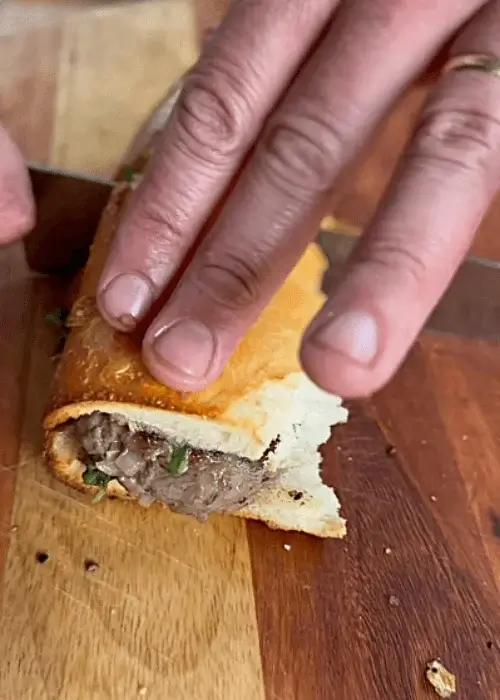
Kebab Sandwich with Roasted Marrow Spread
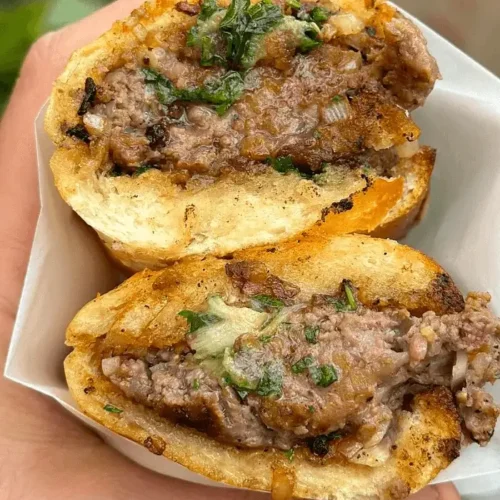
Watch the Full Step-by-Step
- Mixing bowls
- Chef's knife
INGREDIENTS
- 1 baguette, halved lengthwise
Marrow spread:
- 1.5 pounds/680 grams beef marrow bones
- 1 whole garlic head
- 2 tablespoons olive oil
- 1 teaspoon salt
- ½ teaspoon black pepper
- 4 thyme sprigs
- 1 green hot chile
- ½ cup fresh parsley, finely chopped
Kebabs:
- 1.1 pounds/500 grams ground beef, chuck or short rib
- 1 medium onion, finely minced
- 1 teaspoon salt
- ½ teaspoon black pepper

INSTRUCTIONS
- Heat the oven to 350°F/180°C.
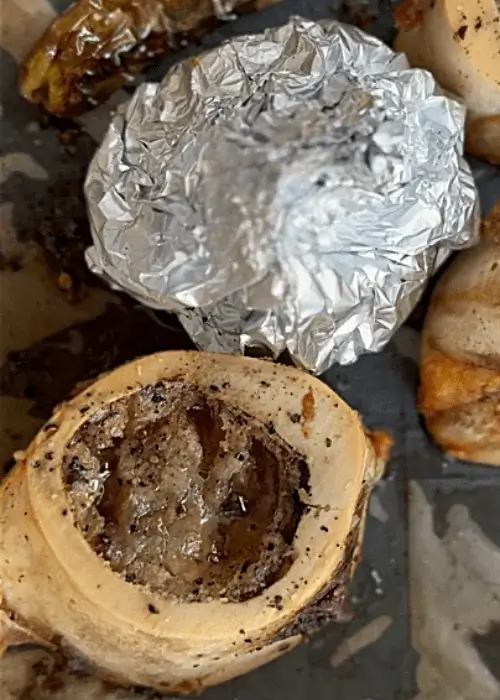
- Arrange marrow bones, garlic wrapped in foil, and green chile on a sheet pan. Drizzle with olive oil and season with salt, pepper, and thyme. Roast until the marrow is soft and the garlic is deeply caramelized, about 45 minutes.
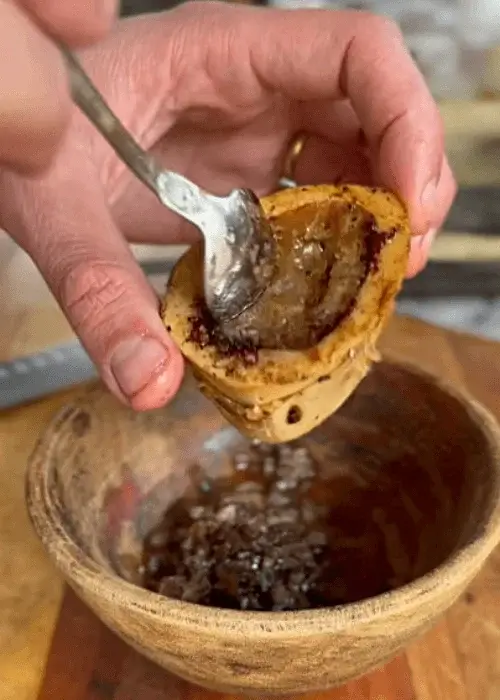
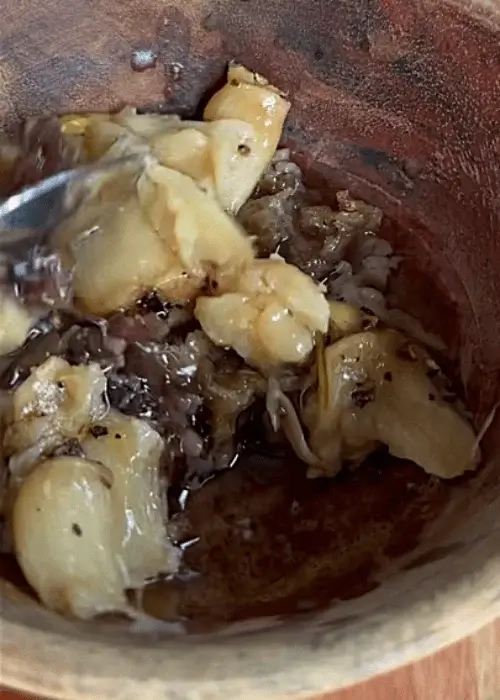
- Scoop marrow into a bowl. Squeeze garlic cloves into the same bowl. Peel and finely chop the chile. Add parsley and mash everything into a coarse, spreadable paste. Season to taste.
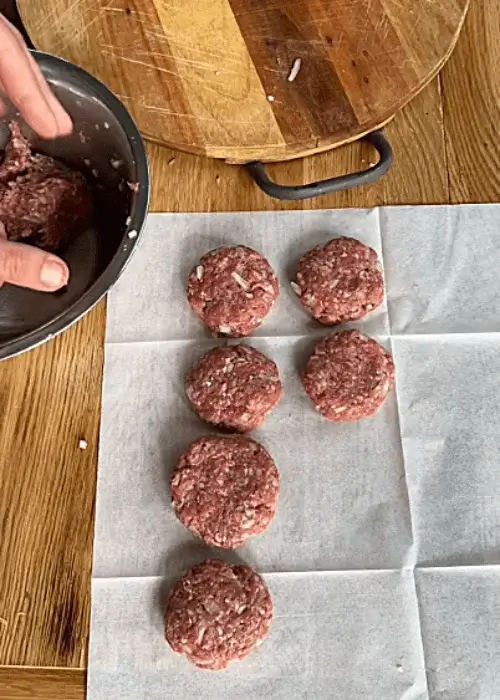
- Mix ground beef, onion, salt, and pepper until just combined. Form into small kebab patties.
- Heat a skillet over medium-high heat. Sear kebabs until browned and cooked through, 2 to 3 minutes per side.
- Place baguette halves cut-side down on the same sheet pan. Toast in the oven until crisp, about 2 minutes.
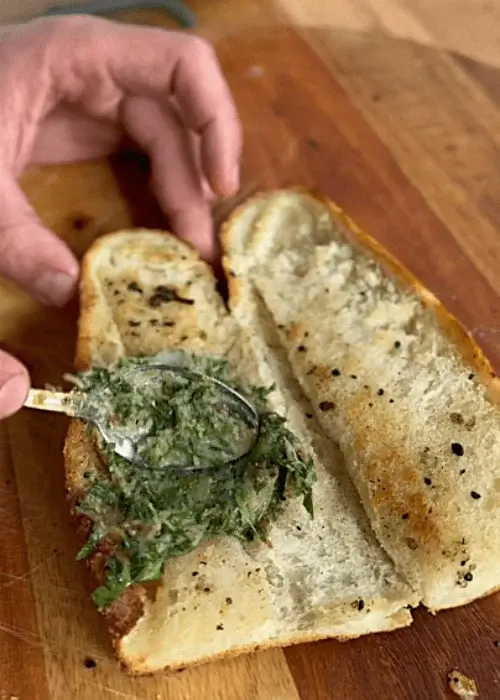
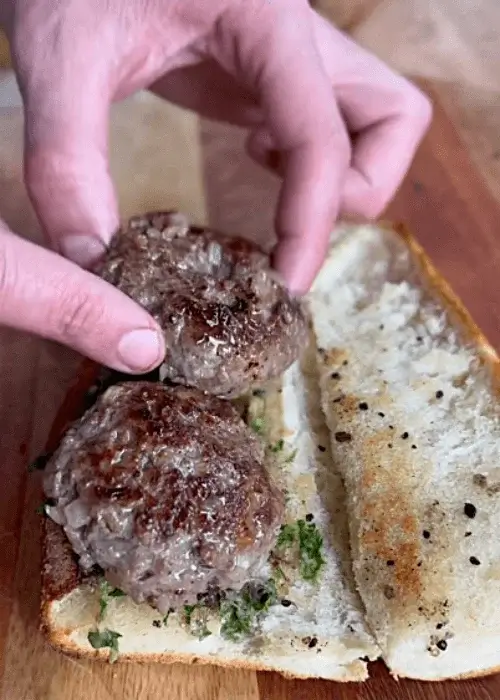
- Spread marrow mixture generously on both cut sides of the baguette. Add kebabs, close, press lightly, and serve immediately.
FAQ
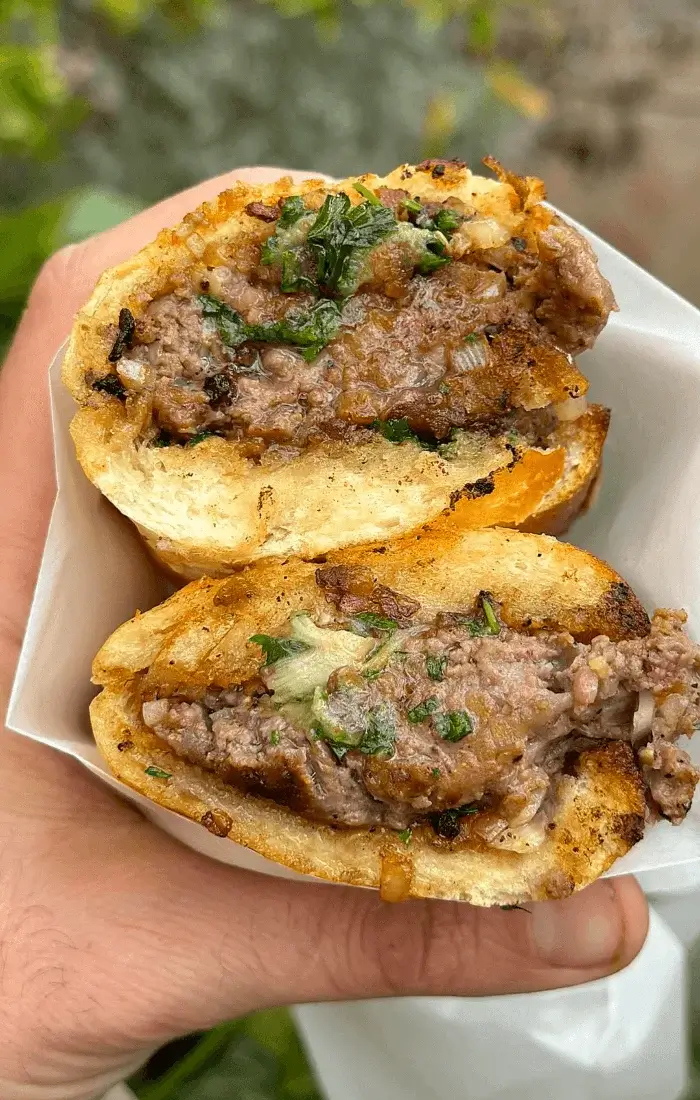
What makes this kebab sandwich so rich and flavorful?
This kebab sandwich is rich because it combines multiple high-fat, high-umami components that reinforce each other. Beef marrow is almost entirely composed of fat and collagen derivatives, which melt into a silky, savory paste when roasted. This creates a base that coats the palate and carries flavor extremely efficiently.
When combined with garlic that has been roasted until sweet and jammy, plus fresh parsley and green chile, the spread gains balance through sweetness, heat, and herbal freshness. The kebabs add Maillard browning from searing, which introduces deeper roasted meat notes and textural contrast. Finally, the baguette absorbs rendered fat while still maintaining a crisp crust, which prevents the sandwich from becoming soggy while maximizing flavor delivery in each bite of the kebab sandwich.
Can I prepare components of the kebab sandwich ahead of time?
Yes, most components of a kebab sandwich can be prepared in advance, which actually improves workflow and sometimes flavor development. The roasted marrow and garlic spread can be made up to two days ahead and stored in an airtight container in the refrigerator. As it chills, the fat solidifies, which helps flavors concentrate; it should be brought back to room temperature or gently warmed before spreading so it regains a soft, spreadable consistency.
Kebabs can also be formed several hours ahead and kept covered in the refrigerator, allowing the salt to distribute evenly through the meat, improving texture and seasoning consistency. The baguette, however, should always be toasted just before assembly to preserve its structural contrast. When assembling a kebab sandwich, timing is important so that warm components meet fresh, crisp bread.
What is the best way to layer a kebab sandwich to prevent sogginess?
Layering is one of the most important structural decisions in a kebab sandwich, especially when using a high-fat element like roasted marrow spread. The correct order controls how fat and moisture migrate through the bread over time. The ideal approach is to spread a thin base layer of marrow directly onto the toasted baguette so it immediately bonds with the crust, forming a partial fat barrier.
The kebabs should then be placed on top so their seared exterior contacts the spread rather than exposing raw interior juices directly to the bread. Any additional parsley or chile should be distributed within the spread rather than added in large wet clusters, which can accelerate moisture breakdown. Pressing the sandwich lightly at the end helps unify layers without compressing air pockets.
What is the best type of ground beef for a kebab sandwich?
The best ground beef is one with moderate to high fat content, ideally around 15 to 20 percent fat. Cuts like chuck or short rib are preferred because they provide both fat for juiciness and connective tissue that helps the patties hold together during high-heat searing. Lean beef tends to produce dry, crumbly kebabs that lack the juicy interior needed to balance the richness of the marrow spread.
The fat also plays an important role in flavor transfer, especially when paired with roasted marrow, which is itself extremely fatty. Proper mixing is important but should be minimal to avoid toughening the proteins; overworking the meat results in dense kebabs. In a kebab sandwich, the texture contrast between juicy kebabs and crisp baguette is essential, so meat selection directly affects the final eating experience.
Is resting the kebabs important?
Yes, resting kebabs is important in a kebab sandwich because it stabilizes internal juices and improves texture consistency. During cooking, heat drives moisture toward the center of the meat. If the kebabs are cut or assembled immediately, those juices will escape into the bread, increasing sogginess and reducing structural integrity.
A short rest of 3 to 5 minutes allows muscle fibers to relax and reabsorb some of the liquid, distributing moisture more evenly throughout the patty. This results in a juicier bite that remains contained rather than leaking. In a kebab sandwich, this step is especially important because the marrow spread already introduces significant fat, so controlling water-based moisture becomes critical to balance overall texture.
How do I prevent the kebab sandwich from becoming too greasy?
Preventing a kebab sandwich from becoming overly greasy requires managing both fat distribution and bread structure. Marrow is naturally high in fat, so the spread should be used in a controlled layer rather than overloaded. One effective technique is to mash the roasted marrow with garlic and herbs thoroughly so it emulsifies slightly, which helps it spread more evenly instead of pooling.
Toasting the baguette is also critical, as a dry, crisp crumb acts as a barrier that slows fat absorption and maintains structural integrity. Additionally, allowing kebabs to rest briefly after searing helps excess surface fat redistribute instead of immediately soaking into the bread. You can also lightly scrape excess rendered fat from the sheet pan before toasting the baguette.
What makes the kebab sandwich texture hold up despite the high fat content?
A kebab sandwich holds its structure despite the heavy marrow fat because each component is engineered to manage moisture and fat migration. The baguette provides a low-hydration crumb with a firm crust, which slows absorption and prevents immediate saturation. Marrow fat, while rich, solidifies slightly as it cools from roasting temperature, meaning it behaves more like a spreadable emulsion than liquid oil. This reduces runoff compared to pure rendered fats.
The kebabs also contribute structure through coagulated proteins formed during searing, which act as a semi-firm matrix that resists compression. Onion moisture inside the kebab is bound within protein strands rather than free liquid, which further stabilizes the filling. In a kebab sandwich, the interaction between fat absorption, protein structure, and bread porosity determines whether the final product stays cohesive or collapses into a soggy mass.
Can I make a lighter version of the kebab sandwich without losing flavor?
A lighter version of a kebab sandwich can be achieved by adjusting fat sources and increasing aromatics rather than eliminating key components entirely. The most effective change is reducing the amount of marrow spread and extending it with more parsley, garlic, and roasted chile to maintain volume while lowering fat density.
Using leaner ground beef such as 90 to 10 will reduce overall richness, though it may require careful cooking to avoid dryness; adding finely grated onion helps retain moisture. You can also lightly brush the baguette instead of fully spreading both sides. Another strategy is increasing acidity, such as adding a squeeze of lemon or vinegar-based pickles, which cuts through perceived heaviness.
What is the ideal cooking temperature for kebabs?
The ideal cooking temperature for kebabs in a kebab sandwich depends on achieving a strong sear without overcooking the interior. On a skillet, medium-high heat is typically around 375°F to 400°F surface temperature, which is sufficient to trigger rapid Maillard browning while keeping cooking times short. At this range, small kebab patties cook in roughly 2 to 3 minutes per side, allowing the exterior to form a crust before internal moisture fully escapes.
If the heat is too low, the kebabs will steam and lose structure; if too high, the exterior will burn before the center cooks. In a kebab sandwich, this balance is critical because the kebabs must remain juicy enough to contrast with the dense marrow spread but firm enough to hold shape inside the baguette. Resting briefly after cooking also stabilizes internal juices.
Why is a baguette used instead of other breads for a kebab sandwich?
A baguette is used in a kebab sandwich because its structure provides the necessary balance between crust strength and interior absorbency. The crust develops a rigid, toasted shell that resists collapsing under the weight of fatty marrow spread and hot kebabs, while the interior crumb remains open enough to soak up rendered fat without turning mushy immediately.
This duality is critical when working with high-fat spreads like roasted marrow, which would overwhelm softer breads such as brioche or pita. The baguette also offers a neutral wheat flavor that does not compete with the beef and garlic but instead acts as a structural carrier. When briefly toasted, it gains additional dehydration, improving its ability to hold moisture strategically.
Why do kebabs need onion in a kebab sandwich mixture?
Onion plays a structural and chemical role in kebabs used for a kebab sandwich. Finely minced onion releases moisture during cooking, which helps keep ground beef from drying out under high heat. It also contributes natural sugars that caramelize on the surface, enhancing browning and flavor complexity through Maillard reactions.
On a textural level, onion introduces small pockets of softness that break up the density of the meat, preventing the kebab from feeling compact or rubbery. When mixed properly, it distributes moisture evenly throughout the protein matrix. In a kebab sandwich, this is important because the kebabs must remain juicy enough to balance the heavy marrow spread without collapsing or becoming mushy. The onion also adds aromatic sharpness that contrasts with the fatty richness of the marrow, creating a more complete flavor profile.
What mistakes should be avoided when making a kebab sandwich?
One major mistake when making a kebab sandwich with marrow spread is overheating or over-roasting the marrow bones, which can cause the fat to separate too aggressively and develop a greasy or slightly metallic flavor. Another common issue is under-toasting the baguette, which leads to rapid structural failure once the fatty spread is applied.
Overmixing the ground beef is also problematic because it activates myosin proteins too strongly, resulting in dense, rubbery kebabs instead of tender, juicy ones. Additionally, failing to season in layers—only seasoning the meat or only seasoning the spread—creates imbalance. The kebab sandwich depends on distributed seasoning across fat, protein, and bread. Finally, assembling too early causes heat and moisture migration that softens the crust prematurely, so timing matters as much as ingredient quality.
What side dishes pair well with a kebab sandwich like this?
A kebab sandwich with roasted marrow spread is extremely rich, so side dishes should focus on acidity, freshness, and textural contrast. Pickled vegetables such as cucumbers, turnips, or red onions are ideal because their acidity cuts through fat and resets the palate between bites. Fresh herb salads with parsley, mint, and lemon juice also work well, providing brightness that mirrors the parsley in the spread but in a lighter format.
Tomato-based salads with olive oil and vinegar offer juiciness and mild acidity that balance the density of the sandwich. For starch-based sides, something light like roasted potatoes with minimal oil can complement without adding excess richness. The goal when serving a kebab sandwich is not to compete with its intensity but to provide contrast that prevents palate fatigue while maintaining overall cohesion of the meal.