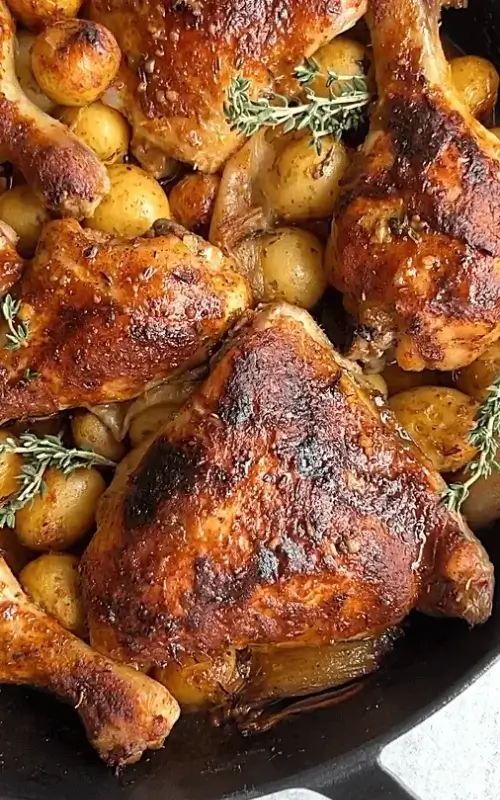
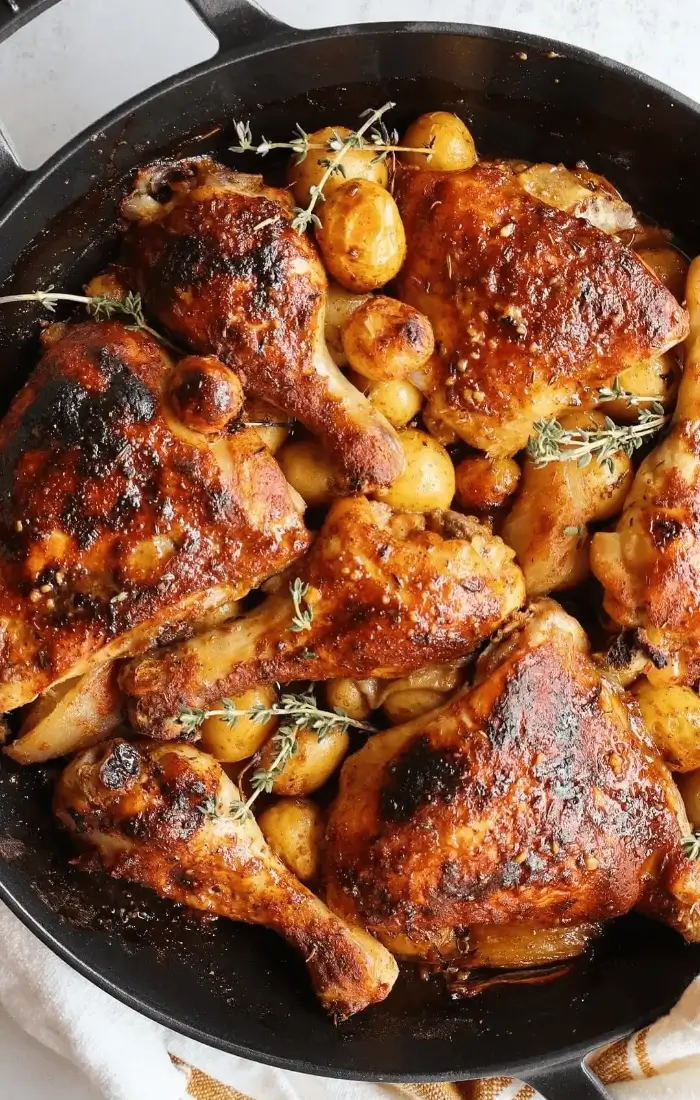
One Pan Chicken with Potatoes and Shallots
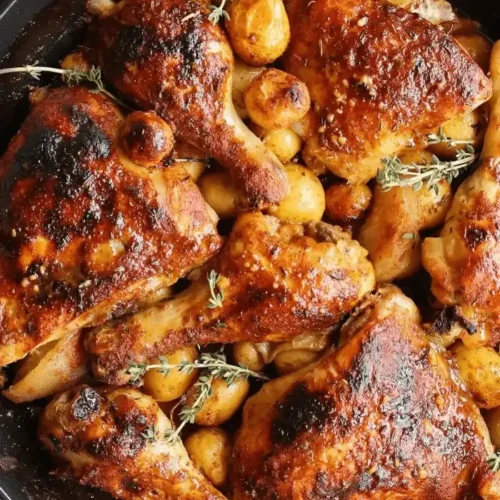
Watch the Full Step-by-Step
- Cast iron pot
INGREDIENTS
- 2.2 pounds/1 kilograms bone-in chicken pieces
- 1 pound/454 grams baby yellow potatoes
- 4 shallots, halved lengthwise
- 1½ teaspoons paprika
- 1 teaspoon Italian seasoning
- ½ teaspoon salt
- ½ teaspoon black pepper
- 3 tablespoons olive oil
- Fresh thyme or rosemary, for serving
Honey Dijon marinade:
- ¼ cup Dijon mustard
- ¼ cup water or vegetable/chicken broth
- 2 tablespoons honey
- ¼ teaspoon paprika
- Salt and black pepper, to taste

INSTRUCTIONS
- Heat the oven to 375°F/190°C.
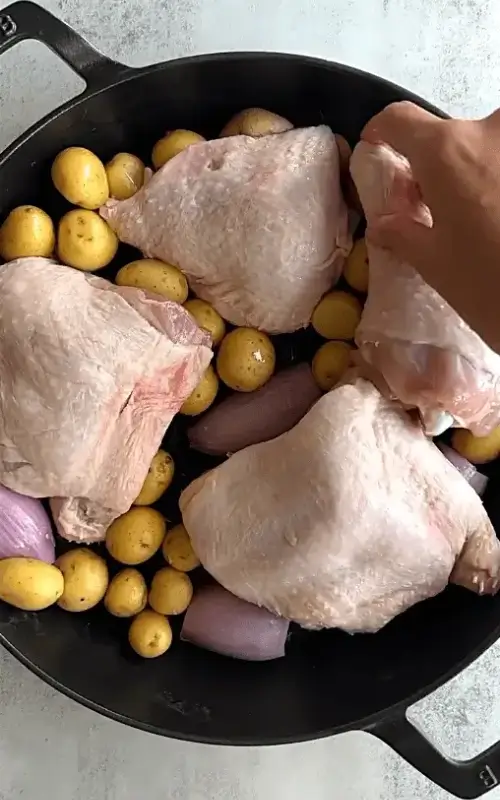
- Put the potatoes and shallots in a large oven-safe skillet, braiser, or baking dish. Toss with 1 tbsp of the olive oil and a pinch of salt.
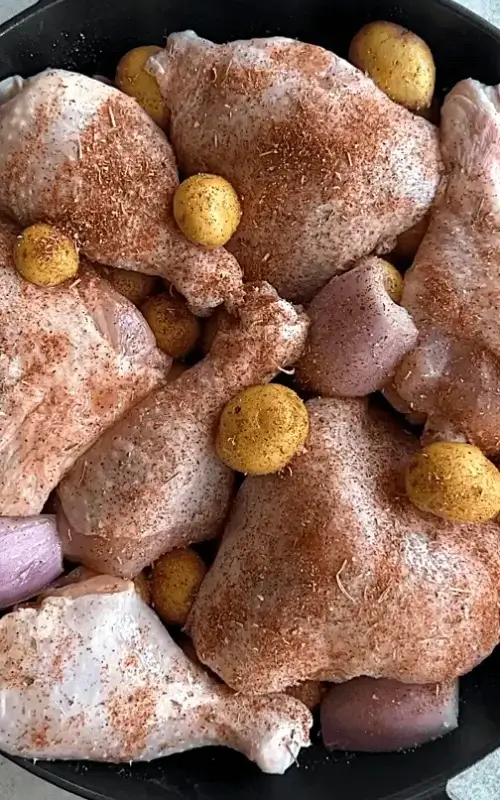
- Arrange the chicken over the vegetables. Drizzle with the remaining olive oil.
- In a small bowl, mix the paprika, Italian seasoning, salt, and black pepper. Season the chicken evenly.
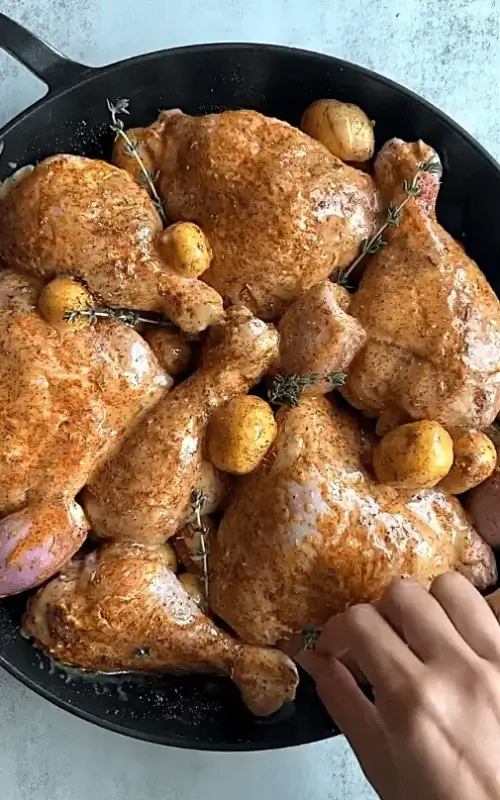
- Whisk the mustard, water or broth, honey, paprika, and a little salt and pepper. Pour over the chicken and vegetables. Add thyme or rosemary.
- Cover and bake for 1 hour.
- Uncover, spoon the pan juices over the chicken, and raise the oven temperature to 400°F/200°C. Bake 30 to 35 minutes more, until the chicken is browned and cooked through.
- Serve with extra herbs.
FAQ
Can I use boneless chicken instead of bone-in for one pan chicken?
You can use boneless chicken in one pan chicken, but it changes both the cooking time and the final texture significantly. Bone-in chicken retains more moisture during long oven cooking because the bone slows heat transfer and helps protect the surrounding meat from drying out. If you switch to boneless thighs or breasts, you will need to reduce the total bake time by roughly 20–30 minutes depending on thickness, especially during the uncovered stage.
Boneless chicken also lacks the same built-in flavor depth that bones contribute, so the dish may taste slightly less rich unless you compensate by seasoning more aggressively or reducing the sauce slightly for concentration. If using chicken breasts, there is also a higher risk of dryness because they cook faster than thighs. Thighs are generally more forgiving. In one pan chicken, boneless cuts still work, but monitoring internal temperature closely (around 165°F/74°C) is essential to prevent overcooking.
How do I know when the chicken is fully cooked in one pan chicken?
The most reliable way to know when one pan chicken is fully cooked is by using a meat thermometer rather than relying solely on visual cues. Chicken is safely cooked when the internal temperature reaches 165°F (74°C) in the thickest part of the meat, avoiding contact with bone. Bone-in pieces can sometimes appear slightly pink near the bone even when fully cooked, so temperature is more accurate than color alone.
The juices should also run clear when the chicken is pierced, though this is a secondary indicator. During the final uncovered baking stage, the chicken should develop a deep golden-brown exterior, especially on the skin if present. If you are cooking different cuts in the same pan, breasts may reach temperature before thighs, so checking each piece individually is important. In one pan chicken, consistent doneness comes from even sizing and careful monitoring during the last 15–20 minutes of baking.
How do I make sure the chicken skin gets crispy in one pan chicken?
Getting crispy skin in one pan chicken depends on controlling moisture and managing heat correctly during the final stage of cooking. The key step is uncovering the dish and increasing the oven temperature to 400°F/200°C as instructed, which helps evaporate surface moisture and encourages browning through the Maillard reaction. However, if the chicken is sitting in too much liquid or sauce, the skin will struggle to crisp properly.
To improve results, you can lightly pat the chicken skin dry before seasoning and ensure excess marinade does not pool on top of the skin. Positioning the chicken skin-side up and allowing air circulation in the oven also matters. If needed, you can briefly broil the dish for 2–4 minutes at the end, but watch closely to avoid burning the honey in the Dijon mixture. In one pan chicken, crispiness is mostly about reducing surface moisture and giving high enough heat at the end.
Can I add vegetables to one pan chicken without affecting cooking time?
Yes, you can add additional vegetables to one pan chicken, but it does affect cooking time and texture depending on what you choose. Hard vegetables like carrots, parsnips, or sweet potatoes work best because they can withstand the long roasting time without turning mushy. These should be cut into similar sizes as the potatoes to ensure even cooking.
Softer vegetables like zucchini, bell peppers, or cherry tomatoes should be added later in the cooking process, typically during the uncovered baking stage, otherwise they will over-soften and release too much moisture. Overcrowding the pan can also reduce browning and create steaming instead of roasting, which impacts flavor development.
The key principle in one pan chicken is maintaining enough airflow and surface exposure so ingredients roast rather than stew. If you add too many vegetables, you may also need a slightly larger pan to avoid layering too deeply.
Can I prepare one pan chicken ahead of time and bake it later?
Yes, one pan chicken can be prepared ahead of time, but there are a few important handling rules to maintain quality and food safety. You can fully assemble the dish up to the point of baking, including seasoning the chicken, coating the vegetables, and adding the Dijon marinade. After assembly, cover it tightly and refrigerate for up to 12–24 hours.
This actually allows the chicken to absorb more flavor from the marinade and seasoning. However, baking straight from the fridge will increase cooking time slightly and may reduce even browning, so it is best to let the dish sit at room temperature for 20–30 minutes before placing it in the oven. Avoid pre-baking and reheating, as that will overcook the chicken and make the potatoes mushy.
Can I make the sauce thicker or more like a glaze instead of a thin pan juice?
Yes, you can transform the sauce in one pan chicken from a thin pan juice into a thicker glaze, but it requires either reduction or slight recipe adjustment. The easiest method is to remove the chicken and vegetables once fully cooked, then pour the remaining pan liquid into a small saucepan and simmer it over medium heat until it reduces and thickens naturally. This concentrates the Dijon, honey, and chicken juices into a more syrupy consistency.
Another method is to increase the Dijon mustard slightly or reduce the added water or broth in the marinade from the start, which creates a naturally thicker base. You can also whisk in a small slurry of cornstarch and water (about 1 teaspoon cornstarch to 1 tablespoon water) during the final simmer if you want a faster thickening effect. In one pan chicken, a glaze-style sauce will cling more to the chicken and potatoes, giving a more intense, sticky finish.
What can I substitute for Dijon mustard in the marinade?
If you need to replace Dijon mustard in one pan chicken, the best substitutes depend on whether you want to preserve tanginess, heat, or texture. Whole grain mustard is the closest match and maintains a similar flavor profile with added texture. Yellow mustard can also be used, but it is milder, slightly more acidic, and less complex, so you may want to increase seasoning or add a bit more honey to balance it.
For a non-mustard alternative, a combination of mayonnaise and lemon juice can mimic creaminess and acidity, though it changes the flavor direction significantly. Another option is Greek yogurt mixed with a small amount of vinegar or lemon juice, which keeps tang but adds body. Regardless of substitution, Dijon in one pan chicken is doing both emulsifying and flavor-building work, so replacements should maintain acidity and mild sharpness for best results.
Why are the potatoes sometimes undercooked or too firm in one pan chicken?
Undercooked potatoes in one pan chicken usually come down to size, placement, or insufficient heat exposure. Baby potatoes that are cut unevenly or left too large will cook slower than the chicken, especially in a dish where liquid and steam are present. Another common issue is crowding the pan, which prevents proper roasting and causes more steaming than browning.
If potatoes are positioned under or tightly around the chicken, they may not get enough direct oven heat during the initial covered phase. The covered baking step traps moisture, which is good for tenderizing chicken but can slow potato softening if pieces are too large. To fix this, ensure potatoes are halved evenly and placed in a single layer with some exposure to the top heat during the uncovered stage.