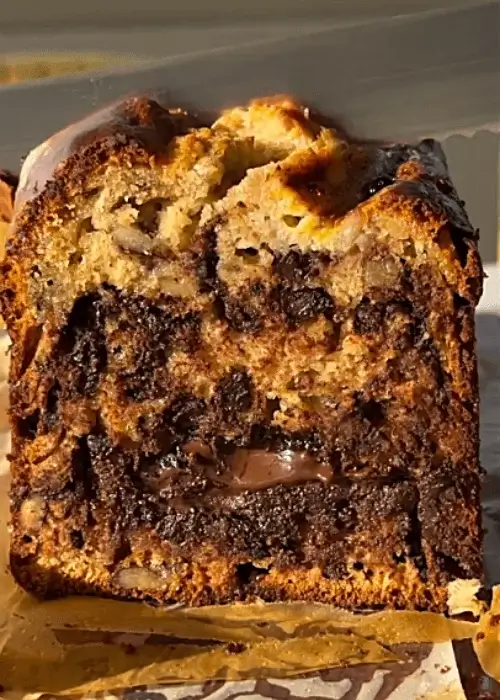
Double Chocolate Banana Bread
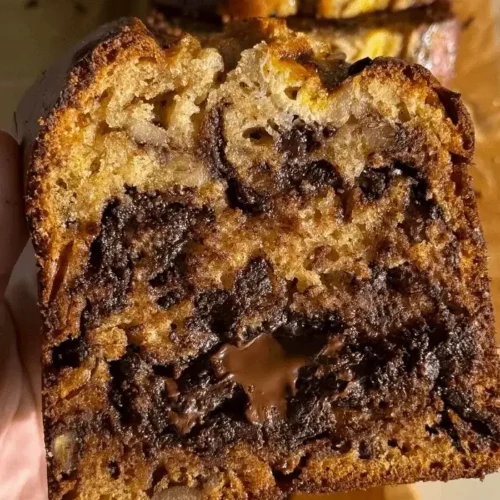
Watch the Full Step-by-Step
- Loaf pan (9×5-inch / 23×13 cm)
- Mixing bowls
- Kitchen scale
- Wire rack
INGREDIENTS
- 4 large ripe bananas, mashed
- 2 large eggs
- ⅔ cup/140 grams sugar
- 7 tablespoons/100 grams olive oil
- 1 teaspoon vanilla extract
- 2¼ cups/270 grams all-purpose flour
- 1 teaspoon baking powder
- ½ teaspoon baking powder, additional
- ½ teaspoon baking soda
- 3.5 oz/100 grams dark chocolate chips
- 3.5 oz/100 grams white chocolate chips
- 1 cup/100 grams walnuts, chopped
- 1 banana, halved (for topping)

INSTRUCTIONS
- Heat oven to 350°F/175°C. Line a loaf pan with parchment paper.
- Mash bananas in a large bowl. Whisk in eggs, sugar, olive oil, and vanilla until smooth.
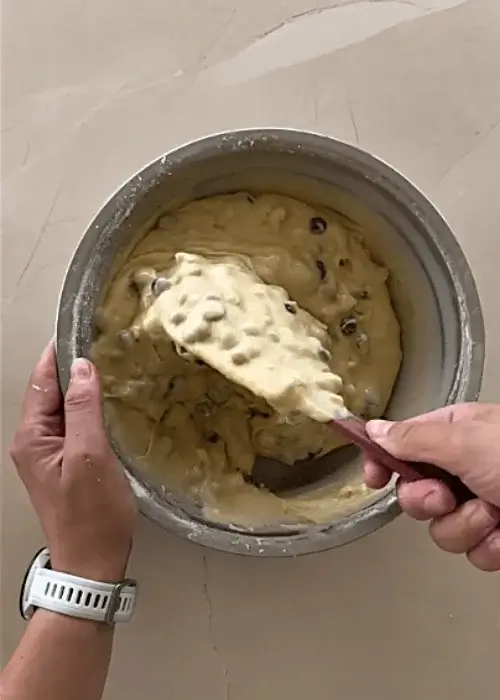
- Add flour, baking powder, baking soda, and remaining baking powder. Stir until just combined. Fold in dark chocolate, white chocolate, and walnuts.
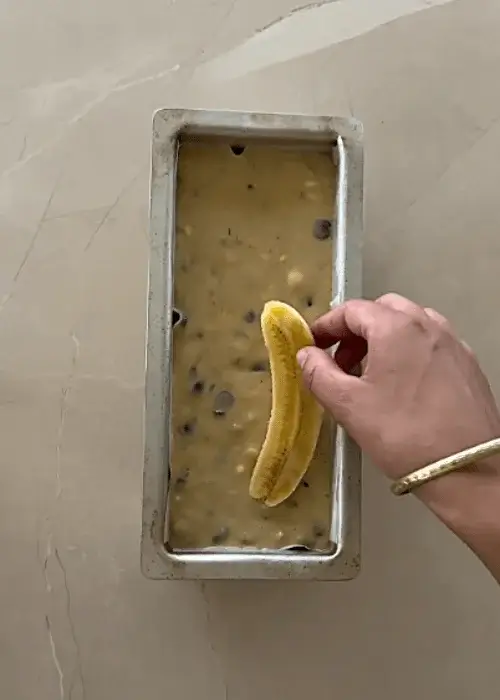
- Pour batter into the prepared pan. Arrange banana halves on top.
- Bake until golden and a tester comes out clean, 40 to 45 minutes. Cool completely before slicing.
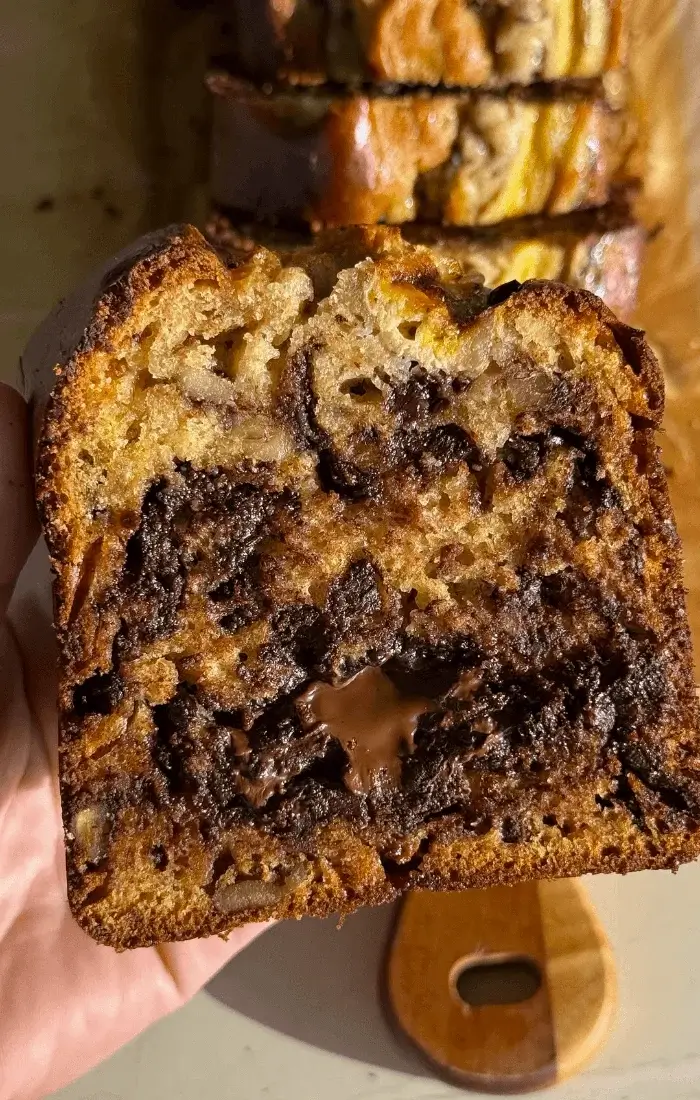
FAQ
Why is my double chocolate banana bread dense or gummy?
A dense or gummy texture in double chocolate banana bread usually comes from a combination of overmixing, incorrect flour measurement, or underbaking. When flour is overworked after being added to the wet ingredients, gluten develops too much structure, which leads to a tight, heavy crumb instead of a tender loaf. In a recipe like double chocolate banana bread, it is important to stir only until the flour disappears and no dry streaks remain.
Another common issue is using too much mashed banana or inaccurate measuring of flour, especially if it is scooped directly from the bag instead of weighed. Underbaking is also a major cause; the center may look set but still contain excess moisture. Always test with a skewer in the center and ensure it comes out clean or with only a few moist crumbs.
Can I substitute olive oil in double chocolate banana bread?
Olive oil in double chocolate banana bread contributes moisture, richness, and a slightly fruity background flavor that complements chocolate and banana. However, it can be substituted depending on dietary preference or pantry availability. Neutral oils such as canola, vegetable, or sunflower oil can replace olive oil in a 1:1 ratio without affecting structure, though the flavor will become more neutral and less complex.
Melted coconut oil can also be used, but it may introduce a subtle coconut flavor and will solidify slightly when cooled, which can change the perceived texture. Melted butter is another option, but it produces a slightly denser crumb and a more cake-like flavor profile. When substituting, it is important to keep the total fat quantity the same, as fat is responsible for moisture and tenderness in double chocolate banana bread. Avoid reducing oil content, as that will lead to dryness and a crumbly texture rather than a soft, cohesive loaf.
Why does double chocolate banana bread turn out dry?
Dry double chocolate banana bread is usually the result of incorrect flour-to-liquid balance, overbaking, or insufficient fat content. The most common issue is overmeasuring flour, which often happens when it is scooped directly from the bag instead of being weighed or spooned and leveled. Even an extra 20–30 grams of flour can noticeably dry out the crumb. Overbaking is another major factor; leaving the loaf in the oven too long evaporates moisture from both bananas and oil, resulting in a tight, crumbly texture.
In double chocolate banana bread, chocolate does not add moisture, so the bananas and oil are the primary contributors, and both must be accurately measured. Oven temperature also plays a role—if it runs hot, the exterior sets too quickly while moisture is driven out from the center. To maintain moisture, the loaf should be removed as soon as a tester shows moist crumbs, not a fully dry stick.
How do I store and freeze double chocolate banana bread?
Proper storage is essential to maintain moisture and texture in double chocolate banana bread. At room temperature, it should be kept in an airtight container or tightly wrapped in plastic wrap once fully cooled. It will stay fresh for about 2 to 3 days depending on humidity levels. For longer storage, refrigeration can extend shelf life to about a week, but it may slightly firm the crumb, so allowing it to come back to room temperature before serving is recommended.
Freezing is the best long-term method for preserving double chocolate banana bread. Slice the loaf first, then wrap individual slices tightly in plastic wrap and place them in a freezer-safe bag or container. This prevents freezer burn and allows single portions to be thawed as needed. It can be frozen for up to 2 to 3 months. To serve, thaw at room temperature or warm briefly in a low oven or toaster oven to restore softness and enhance the chocolate aroma.
Can I reduce sugar without affecting texture?
Sugar in double chocolate banana bread does more than add sweetness; it also affects moisture retention, browning, and tenderness. Reducing sugar is possible, but it must be done carefully to avoid changing the structure of the loaf. A moderate reduction of about 10–25 percent typically has minimal impact on texture, especially since ripe bananas and chocolate already contribute sweetness.
However, reducing sugar too much can result in a drier crumb and a paler crust because sugar caramelization plays a key role in color development. It can also slightly reduce tenderness, as sugar interferes with gluten formation. If reducing sugar, it is often helpful to slightly increase mashed banana or oil to maintain moisture balance in double chocolate banana bread. Artificial sweeteners can replace sugar in some cases, but they do not replicate caramelization, so the crust and flavor depth will differ.
How ripe should bananas be for double chocolate banana bread?
Bananas used in double chocolate banana bread should be very ripe, ideally heavily speckled or almost fully brown on the peel. At this stage, the starches in the banana have converted into natural sugars, which improves sweetness and overall flavor without needing to increase added sugar. Overripe bananas also mash more easily, creating a smoother batter that integrates evenly with the other ingredients.
Using underripe bananas will result in a less sweet, more starchy flavor and can affect the moisture balance, leading to a drier or less aromatic loaf. In professional baking applications, bananas that are soft enough to collapse under gentle pressure are considered optimal because they provide both flavor intensity and structural moisture.
How do I know when double chocolate banana bread is fully baked?
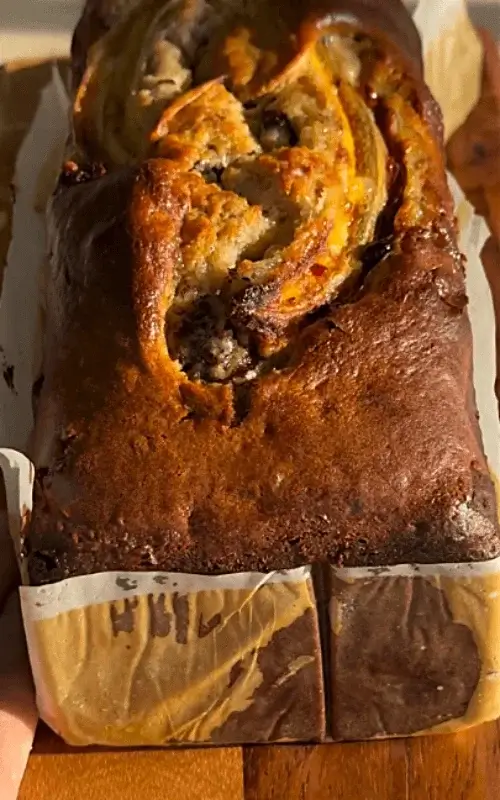
Determining doneness in double chocolate banana bread requires both visual and internal testing because the loaf contains moisture-rich bananas and melted chocolate, which can make the center appear underbaked even when it is set. The top should be evenly golden brown and slightly cracked, with firm edges pulling away from the pan. A toothpick or skewer inserted into the center should come out clean or with a few moist crumbs, but not wet batter.
Because melted chocolate can coat the tester, it is important to test multiple spots. The internal temperature should reach approximately 200–205°F (93–96°C) for a fully baked quick bread. If the loaf is removed too early, the center may collapse or become gummy as it cools. Allowing it to cool fully in the pan or on a rack is also part of the final setting process, as residual heat continues to firm the structure.
Why did my double chocolate banana bread sink in the middle after baking?
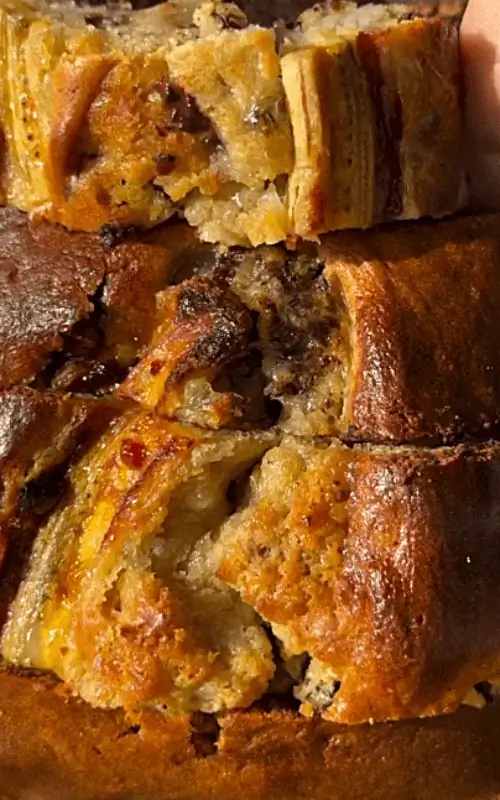
A sunken center usually indicates structural failure during or immediately after baking. The most common cause is underbaking, where the outer edges set while the center remains too wet to support itself once removed from the oven. Even if the top looks browned, the interior may not have reached full doneness, especially in dense batters like double chocolate banana bread that contain mashed bananas, chocolate, and nuts.
Another frequent cause is excess leavening or imbalance between baking powder and baking soda, which can cause the loaf to rise rapidly and then collapse as steam escapes. Opening the oven door too early can also lead to temperature shock and collapse. Finally, improper cooling—such as removing the loaf too soon from the pan—can prevent the structure from setting fully, leading to a sink in the center.
Can I make double chocolate banana bread without eggs?
Yes, double chocolate banana bread can be made without eggs, but substitutions must replicate both binding and moisture. Eggs in this recipe contribute structure, emulsification, and lift, so replacing them requires a combination that supports all three functions. Common substitutes include flaxseed “eggs” (1 tablespoon ground flaxseed mixed with 3 tablespoons water per egg), unsweetened applesauce, or mashed banana, although additional banana will intensify flavor and moisture.
Commercial egg replacers can also work well for more consistent results. When making egg-free double chocolate banana bread, the texture tends to be slightly denser and more fudgy, especially because of the chocolate content, which already adds weight. Baking time may also increase slightly because eggless batters set more slowly. It is important not to reduce the leavening agents, as they help compensate for the missing egg structure.