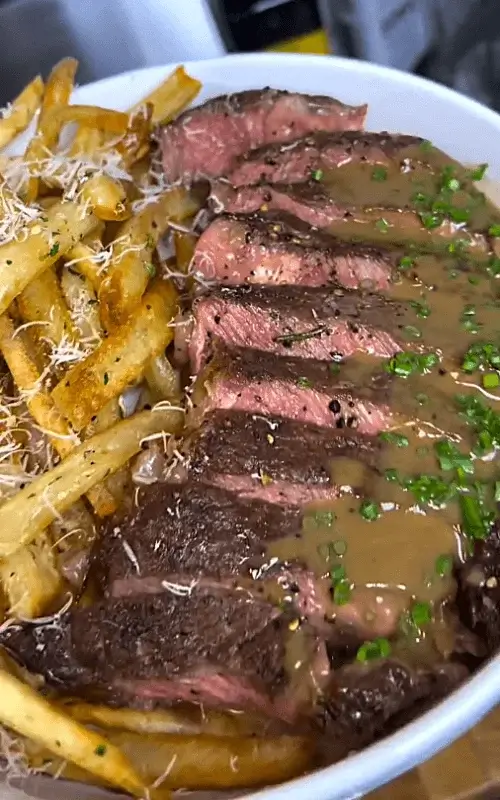
Pan Seared Ribeye Steak Recipe with Garlic Parmesan Fries
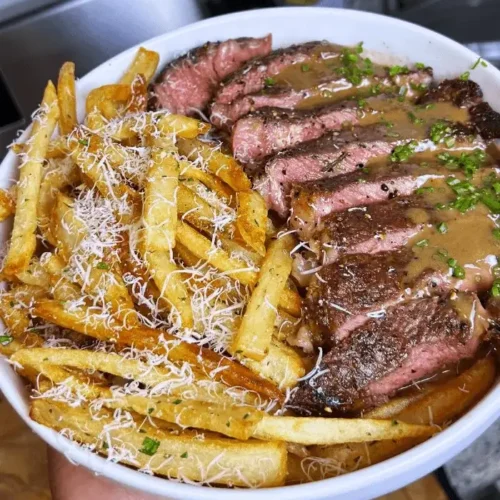
Watch the Full Step-by-Step
- Chef's knife
- Large bowl
- Large pot
- Stainless-steel skillet
- Fine grater
INGREDIENTS
- 2 pounds/900 grams russet potatoes, peeled and cut into fries
- 2 quarts/1.9 liters cold water
- 1 tablespoon salt, plus more to season
- 4 cups oil, for frying
- 2 cloves garlic, minced
- ¼ cup parsley, finely chopped
- ½ cup Parmesan, finely grated
- 24 ounces/680 grams ribeye steaks
- 1½ teaspoons salt
- 1 teaspoon black pepper
- 1 tablespoon oil
- 2 tablespoons unsalted butter
- 4 cloves garlic, smashed
- 2 rosemary sprigs
Peppercorn sauce:
- 1 shallot, minced
- 2 cloves garlic, minced
- 1 teaspoon cracked peppercorns
- ½ cup beef broth
- ¼ cup cognac
- ¾ cup/180 grams heavy cream
- 1 tablespoon chives, thinly sliced
- ¼ cup Parmesan, finely grated

INSTRUCTIONS
- Soak the potatoes in cold water for 30 minutes. Drain well and pat completely dry.
- Heat the oil to 300°F/150°C. Blanch the fries in batches until pale and just tender, about 5 minutes. Transfer to a rack and chill in the freezer until firm.
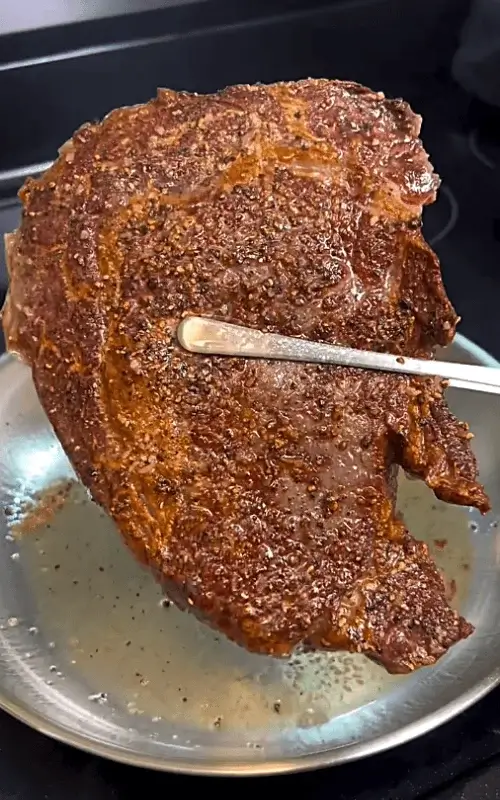
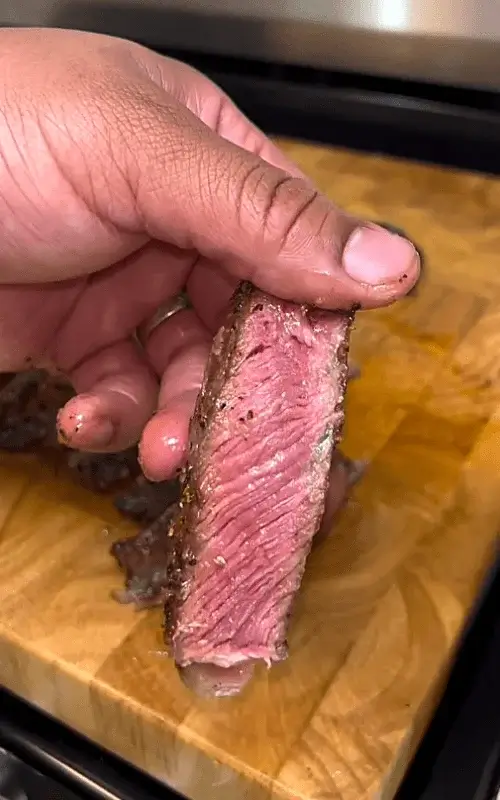
- Season the steaks with salt and pepper. Heat the oil in a stainless-steel skillet over medium-high until shimmering. Sear the steaks until well browned, about 3 minutes per side. Add the butter, garlic, and rosemary, then baste until the steaks reach medium-rare or medium. Transfer to a plate to rest.
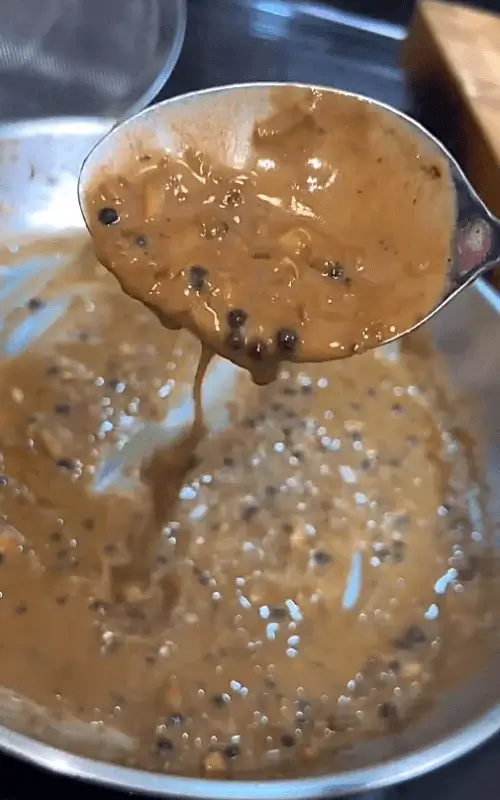
- In the same skillet, add the shallot, garlic, and peppercorns. Cook briefly until fragrant. Add the beef broth and cognac, scraping up browned bits. Stir in the cream and simmer until slightly thickened.
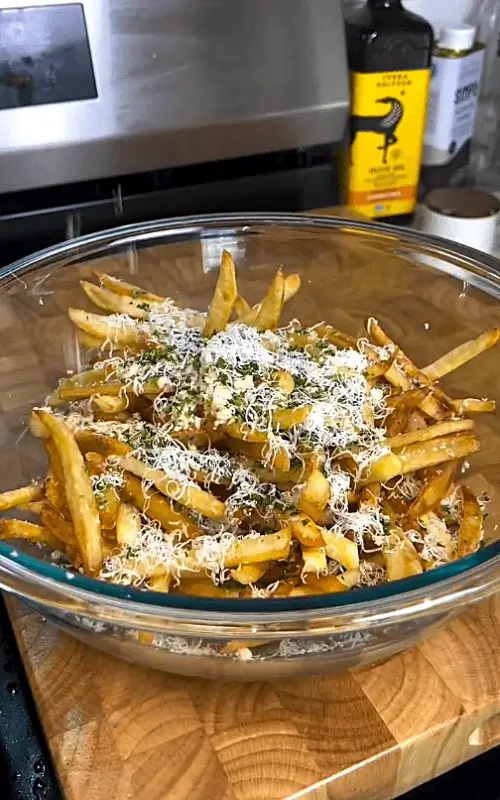
- Increase the oil temperature to 350°F/175°C. Fry the potatoes until crisp and deep golden, 3 to 4 minutes. Drain, season with salt, then toss with garlic, parsley, and Parmesan.
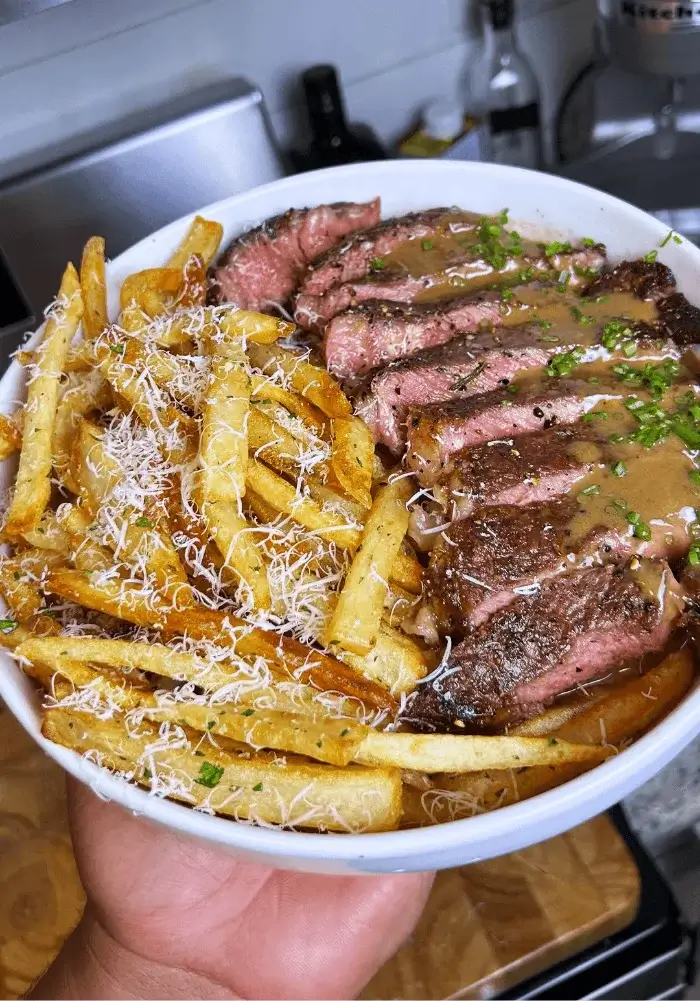
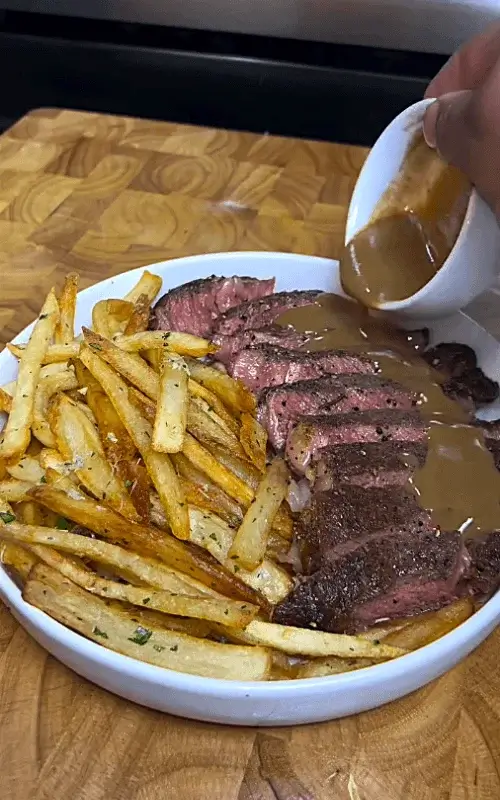
- Slice the steak and serve with the fries. Spoon the sauce over the steak and finish with chives.
FAQ
How do you get a perfect crust on a pan seared ribeye steak?
The steak must be thoroughly dried with paper towels before seasoning because moisture prevents browning and creates steam instead of searing. A stainless-steel or cast-iron pan should be preheated until it is properly hot, almost shimmering with oil, before the steak is added.
The steak should not be moved for the first few minutes, allowing the Maillard reaction to form a deep brown crust. Pressing the steak lightly into the pan ensures full contact with the surface. Fat like butter is added later to avoid burning during the initial sear. Proper crust development also requires patience and avoiding overcrowding the pan, which lowers temperature. These controlled steps are essential in achieving the signature texture of a pan seared ribeye steak.
What is the right internal temperature in a pan seared ribeye steak recipe?
Internal temperature is the most reliable indicator of doneness rather than time alone. For rare, aim for 120–125°F, which produces a very soft and cool red center. Medium-rare, the most common target for ribeye, is 130–135°F and yields a warm red center with optimal juiciness. Medium falls between 135–145°F with a firmer texture and slightly less moisture.
Ribeye is forgiving due to its fat content, but overcooking beyond 150°F significantly reduces tenderness and makes the fat feel heavy rather than silky. A thermometer should be inserted into the thickest part of the steak for accuracy. After cooking, resting the steak for 5–10 minutes is essential, as carryover cooking raises the temperature slightly while allowing juices to redistribute evenly throughout the meat.
Should you bring steak to room temperature?
Allowing the steak to sit out for 30 to 60 minutes reduces the temperature gradient between the exterior and interior, which helps promote more even cooking. A cold steak placed directly in a hot pan can overbrown externally before the center reaches the desired doneness.
However, the difference is not dramatic, and proper searing technique and temperature control are more important than timing alone. The steak should still be patted dry before seasoning regardless of temperature. Food safety also matters, so it should not be left out for excessive periods. In practice, tempering the steak slightly improves consistency, but a well-executed pan seared ribeye steak recipe will succeed even without full room-temperature resting if heat management is precise.
Why are fries blanched and double fried in a pan seared ribeye steak recipe?
Blanching and double frying potatoes in a pan seared ribeye steak recipe is a technique used to achieve maximum crispiness with a fluffy interior. The first fry at a lower temperature, typically around 300°F, gently cooks the potatoes through without browning them. This step gelatinizes the starch inside while drying the exterior.
After cooling and freezing, the second fry at a higher temperature around 350°F rapidly dehydrates the surface, creating a crisp, golden crust. This two-stage process prevents sogginess and ensures structural contrast between the crunchy exterior and soft interior. Freezing between steps further removes moisture and stabilizes the potato structure. Without this method, fries tend to be soft, oily, or unevenly cooked.
What is the best oil to use for a pan seared ribeye steak?
The best oil for a pan seared ribeye steak recipe is a neutral, high smoke point oil such as canola, grapeseed, avocado (refined), or vegetable oil. These oils can withstand the high heat required for proper searing, typically above 400°F, without breaking down or producing bitter flavors.
Olive oil is generally not ideal for the initial sear because its smoke point is lower and it can burn before the steak develops a proper crust, although a small amount of olive oil can be used for finishing or flavor layering. The purpose of oil in this context is not to flavor the steak heavily but to ensure even heat transfer between the pan and meat surface. Ribeye already provides its own fat, so the oil mainly functions as a heat conductor.
What substitutions can be made in the peppercorn sauce?
Cognac can be replaced with brandy, whiskey, or even omitted with a slight increase in beef broth for a non-alcoholic version. Heavy cream is essential for body, but in lighter variations, half-and-half can be used, though the sauce will be thinner. Cracked peppercorns can be adjusted in type, such as green or mixed peppercorns, to change flavor intensity.
Beef broth can also be substituted with veal stock for a richer base if available. Shallots and garlic are important aromatics and should not be removed unless necessary. While substitutions are possible, the balance of richness and sharpness is what defines the sauce in a pan seared ribeye steak recipe, so changes should be made carefully.
What causes steak to turn out tough?
Steak becomes tough in a pan seared ribeye steak recipe primarily due to overcooking, improper slicing, or insufficient resting. Although ribeye is naturally tender due to marbling, excessive heat breaks down muscle structure too far and forces moisture loss, resulting in a dry and chewy texture. Another common issue is not allowing the steak to rest after cooking, which causes juices to spill out when sliced instead of remaining within the meat fibers.
Cutting against the grain is also essential; slicing with the grain increases chewiness even in well-cooked steak. Additionally, using inconsistent heat or a pan that is not hot enough can prevent proper crust formation, which indirectly affects perceived tenderness. Even seasoning plays a role, as under-seasoned steak can taste dense and flat.
How do you keep fries crispy in a pan seared ribeye steak recipe?
Keeping fries crispy in a pan seared ribeye steak recipe depends on moisture control, temperature management, and timing. After the first blanching fry, it is essential to fully cool and dry the potatoes before freezing, as residual moisture will create steam during the final fry. The second fry must be done at a higher temperature, typically 350°F, to rapidly crisp the exterior before oil absorption occurs.
Immediately after frying, fries should be drained on a wire rack instead of paper towels to prevent trapped steam from softening the crust. Seasoning should be applied right after frying while the surface is still hot so it adheres properly. Holding fries in a warm oven can help maintain texture briefly, but prolonged resting causes inevitable softening.
How do you know when the fries are properly cooked?
During the first blanching stage, the fries will look pale and slightly softened but should not brown. This step is not about color but about internal cooking and starch structure development. In the second fry, the transformation is more visual and immediate; the fries should become crisp within minutes and develop an even golden-brown color.
Proper fries will feel firm on the outside and make a distinct crackling sound when shaken in the oil. After removal, they should remain crisp without collapsing or becoming oily. If fries are undercooked, they will feel soft and absorb excess oil; if overcooked, they become dark and brittle. The correct balance ensures texture contrast against the rich steak in a pan seared ribeye steak recipe.
What type of pan is best for a pan seared ribeye steak recipe?
For a pan seared ribeye steak recipe, a stainless-steel skillet or cast-iron pan is the most effective choice because both materials retain and distribute heat evenly. Cast iron is especially favored because it holds a high, stable temperature, which is critical for developing a deep crust on the steak without fluctuating heat during searing.
Stainless steel also performs well, particularly for building fond (the browned bits that form the base of the pan sauce), which is essential for the peppercorn sauce in this recipe. Nonstick pans are not suitable because they cannot reach or maintain the high temperatures required for proper browning, and they also inhibit fond formation. The pan size matters as well; the steak should lie flat without crowding to ensure even contact with the surface.
Why is resting the steak important?
Resting the steak is a critical step in a pan seared ribeye steak recipe because it allows the muscle fibers to relax and redistribute internal juices. When steak is exposed to high heat, the juices are forced toward the center due to contraction of proteins. If sliced immediately, those juices will spill out, resulting in a drier texture and loss of flavor.
Resting for 5 to 10 minutes stabilizes the internal temperature and allows moisture to reabsorb into the meat structure. Ribeye benefits particularly from resting due to its high fat content, which continues to render slightly during this period, enhancing juiciness. The steak should be placed on a plate or rack, loosely covered to prevent excessive heat loss.