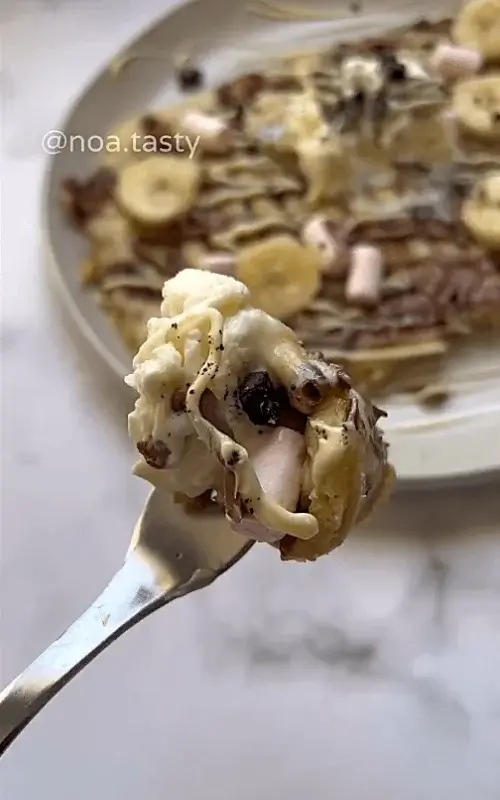
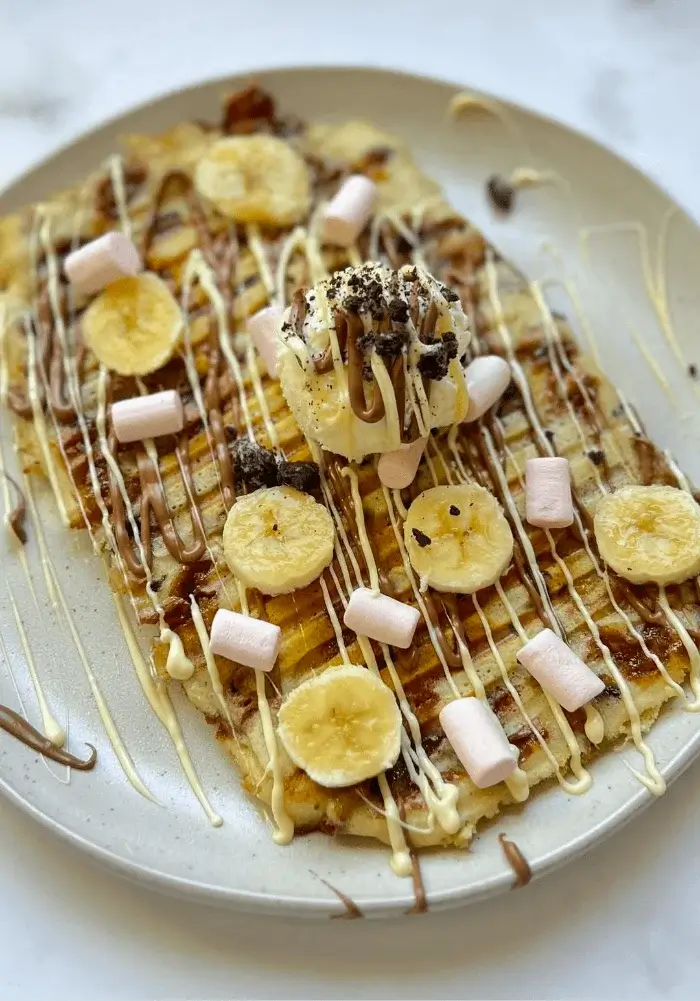
Panini Press Stuffed Pancakes
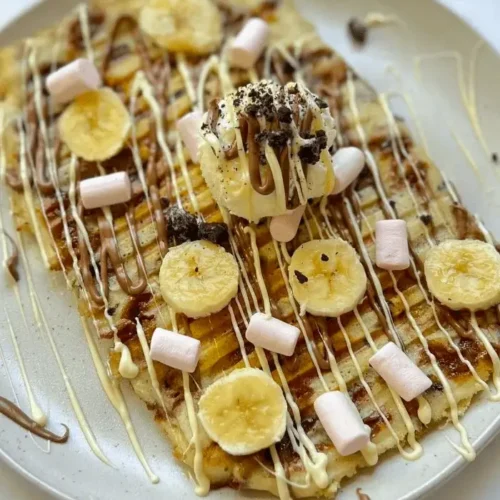
Watch the Full Step-by-Step
INGREDIENTS
- ¾ cup/95 grams all-purpose flour
- 1 teaspoon baking powder
- 2 tablespoons sugar
- Pinch of salt
- 1 tablespoon oil
- ½ cup/120 grams milk
- 1 teaspoon vanilla extract
- 1 large egg
- 1 tablespoon unsalted butter, for cooking
Toppings:
- Sliced banana
- Chopped strawberries
- Blueberries
- Chocolate pieces
- Mini marshmallows
- Crushed sandwich cookies
- Cookie butter
- Chocolate syrup

INSTRUCTIONS
- Whisk sugar, salt, vanilla, milk, and egg until smooth. Add flour and baking powder and stir just until a smooth batter forms.
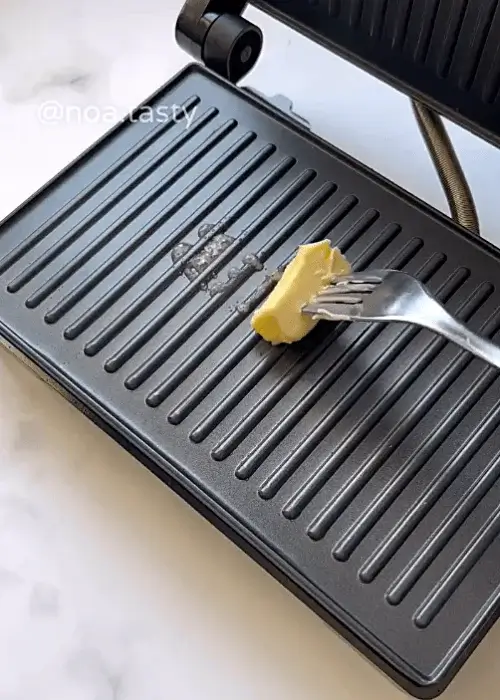
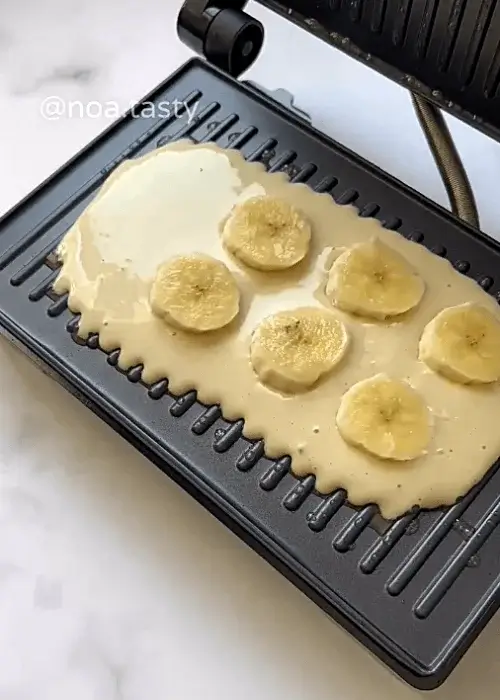
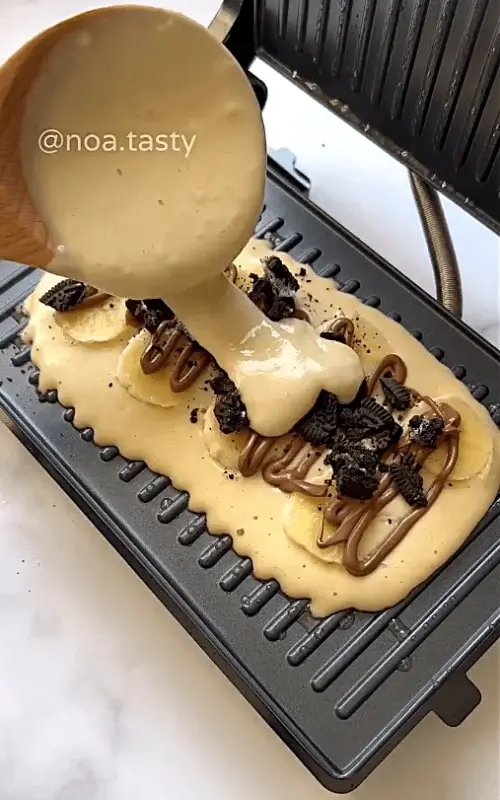
- Preheat a panini press and lightly butter the plates. Pour a thin layer of batter onto the bottom plate. Add a generous layer of filling, then cover with a small amount of additional batter to enclose.
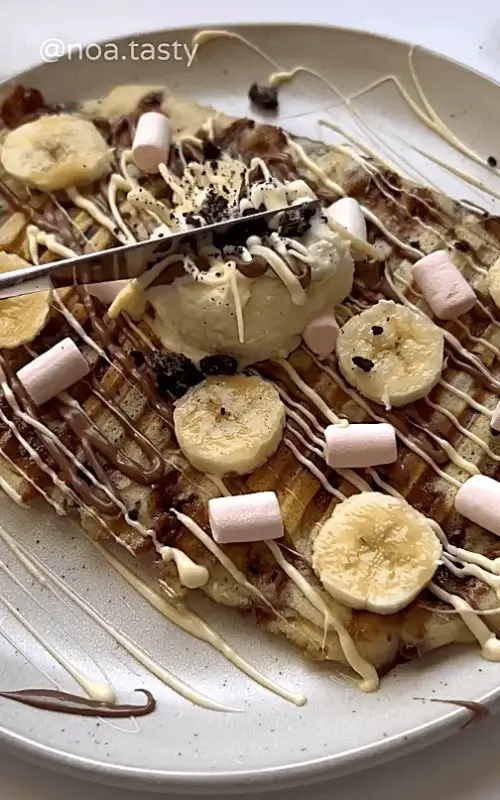
- Close the press and cook until golden and set, 3 to 5 minutes. Open carefully and transfer to a plate. Repeat with remaining batter and filling. Serve immediately.
FAQ
How do you prevent stuffed pancakes from leaking in a panini press?
Preventing leakage in stuffed pancakes made in a panini press comes down to batter control, layering technique, and heat management. The batter should be thick enough to coat the press surface without running excessively; if it is too thin, it will seep out the sides before setting. Always start with a thin base layer of batter, then add fillings in a controlled, even layer, leaving a small border around the edges. This helps create a natural seal once the top layer of batter is added.
Avoid overfilling, especially with high-moisture ingredients like strawberries or syrup-based toppings, because steam expansion during cooking increases pressure inside the press. Preheating the panini press is essential so the exterior of the stuffed pancakes sets quickly and locks in structure. Lightly buttering the plates also helps prevent sticking and tearing when opening. Cook for just 3–5 minutes so the exterior sets without forcing excess liquid out.
What fillings work best for stuffed pancakes in a panini press?
The best fillings for stuffed pancakes are those that balance moisture, meltability, and structure so they hold up under heat and pressure. Firm fruits like sliced bananas and chopped strawberries work well because they soften without releasing excessive liquid. Blueberries are also stable, but should be used in moderation to prevent bursting juices.
Chocolate pieces and cookie butter are ideal because they melt into a rich, cohesive filling that helps bind the interior rather than destabilize it. Mini marshmallows add sweetness and structure as they melt into a light, sticky layer. Crushed cookies provide texture and absorb moisture, improving stability. Avoid overly wet fillings like fresh syrup-heavy fruits or overly runny sauces inside the batter; instead, drizzle chocolate syrup after cooking.
How thick should the batter be for stuffed pancakes in a panini press?
The batter for stuffed pancakes should be moderately thick, similar to a classic pancake batter that slowly spreads but does not immediately run across the surface. If the batter is too thin, it will leak out of the panini press and fail to form a proper seal around the fillings. If it is too thick, it will not spread evenly and may leave dry pockets or uneven cooking.
The goal is a smooth, pourable consistency that holds its shape for a few seconds before leveling out. This ensures the stuffed pancakes cook into a cohesive structure with a soft interior and lightly crisp exterior. The flour-to-liquid ratio in the recipe is already calibrated for this balance, so adjustments should be minimal. If needed, a tablespoon of milk can loosen it slightly, or a teaspoon of flour can tighten it.
What is the best way to layer stuffed pancakes for a sealed center?
The best way to layer stuffed pancakes is to think in three controlled stages: base, filling, and seal. First, pour a thin, even layer of batter onto the preheated panini press. This layer should be wide enough to support the fillings but not so thick that it delays cooking.
Next, add fillings in a centered mound, leaving a clear border of batter around the edges. This border is critical because it allows the top layer of batter to fuse with the base when the press closes. Finally, spoon a small amount of batter over the fillings, just enough to cover them without overflowing. When the press is closed, the heat and pressure fuse these layers into a sealed pocket.
What is the ideal heat setting for making stuffed pancakes in a panini press?
The ideal heat setting for stuffed pancakes in a panini press is medium to medium-high, depending on the specific appliance. The goal is to achieve rapid surface browning while allowing the interior to cook through without burning the exterior. If the heat is too low, the batter spreads and steams instead of searing, resulting in pale, soft stuffed pancakes that may leak.
If the heat is too high, the outside can brown too quickly before the inside has set, leaving a raw center. Most modern panini presses do not display precise temperatures, so preheating for at least 3–5 minutes is essential to stabilize heat distribution. Once the batter is added, the press should maintain steady contact pressure without being forced closed. The 3–5 minute cook window in the recipe assumes consistent medium heat, which produces a golden crust and fully set interior without drying out the fillings.
Can stuffed pancakes be made without a panini press?
Yes, stuffed pancakes can be made without a panini press, but the texture and structure will differ slightly. A nonstick skillet or griddle can be used as an alternative, though it requires more manual control. Instead of pressure sealing, you would cook the pancakes in two stages: first, pour a base layer of batter and add fillings, then cover with a second layer of batter and carefully flip once the bottom is set.
This method relies on timing and heat control rather than compression. The absence of a press means the edges may be softer and less uniformly sealed, so thicker batter consistency is even more important. Cooking over medium-low heat helps ensure the inside cooks through without burning the exterior. While you lose the signature pressed texture of stuffed pancakes, you still achieve a layered, filled pancake with similar flavor profiles and indulgent fillings.