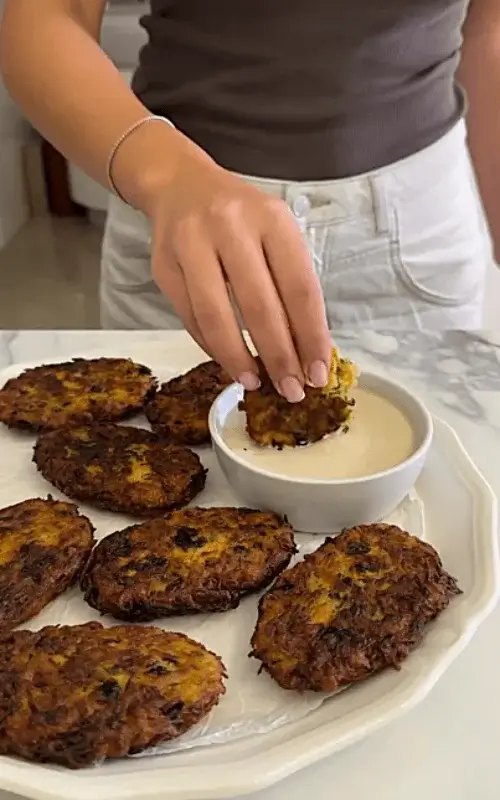
Crispy Vegetable Fritters with Tahini
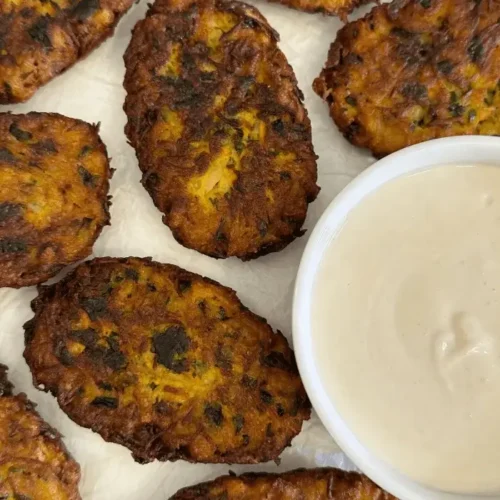
Watch the Full Step-by-Step
- Box grater
- Large mixing bowl
- Large skillet
INGREDIENTS
- 5 medium potatoes, peeled
- 1 medium onion, peeled
- 1 medium sweet potato, peeled
- 2 medium carrots, peeled
- ½ bunch cilantro
- 2 large eggs
- ½ cup all-purpose flour
- 1 teaspoon salt
- Black pepper, to taste
- 1 cup oil, for frying
Tahini:
- ½ cup raw tahini
- ¼ cup cold water
- 2 tablespoons fresh lemon juice
- 1 small garlic clove, finely grated
- ¼ teaspoon salt

INSTRUCTIONS
- Grate the potatoes and onion on the large holes of a box grater. Transfer to a fine-mesh strainer or clean kitchen towel and squeeze out as much liquid as possible.
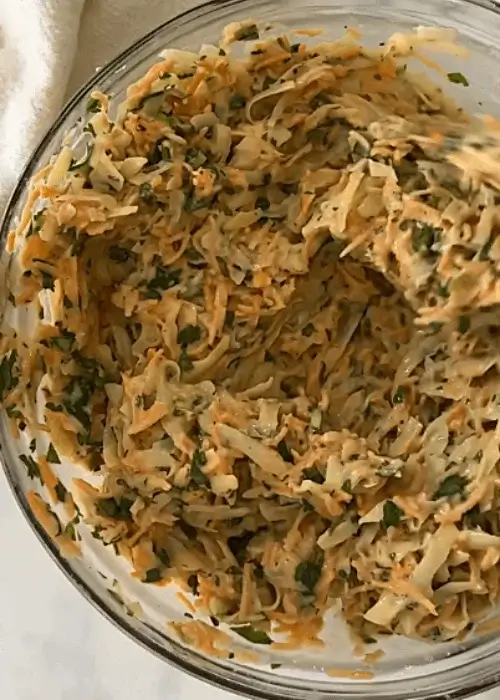
- Grate the sweet potato and carrots and finely chop the cilantro. Add to a large bowl with the eggs, flour, salt and pepper and mix until well combined.
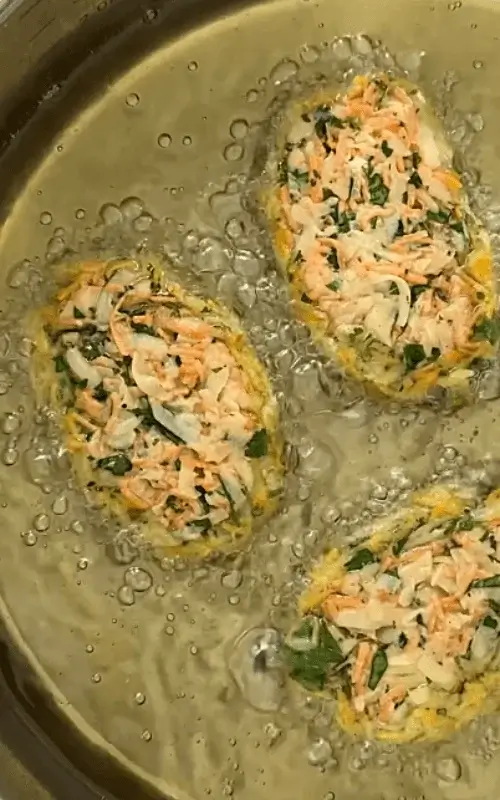
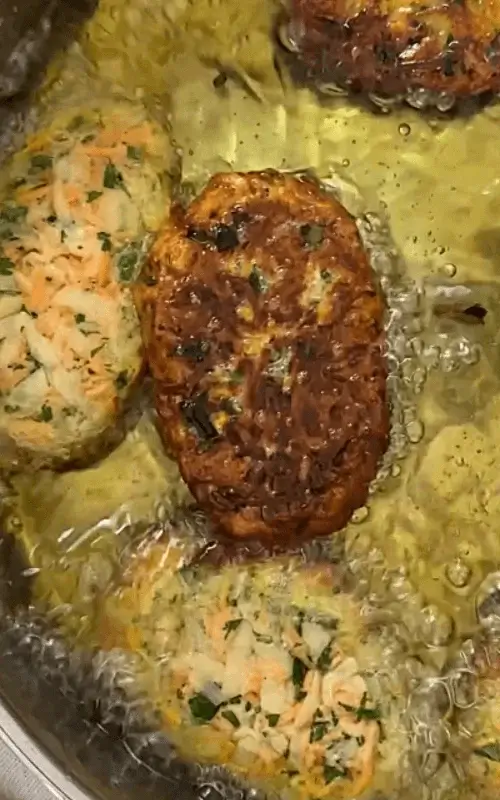
- Heat the oil in a large skillet over medium heat. Form the vegetable mixture into fritters, squeezing out any excess liquid as you shape them. Fry in batches until golden brown and crisp, about 2 minutes per side.
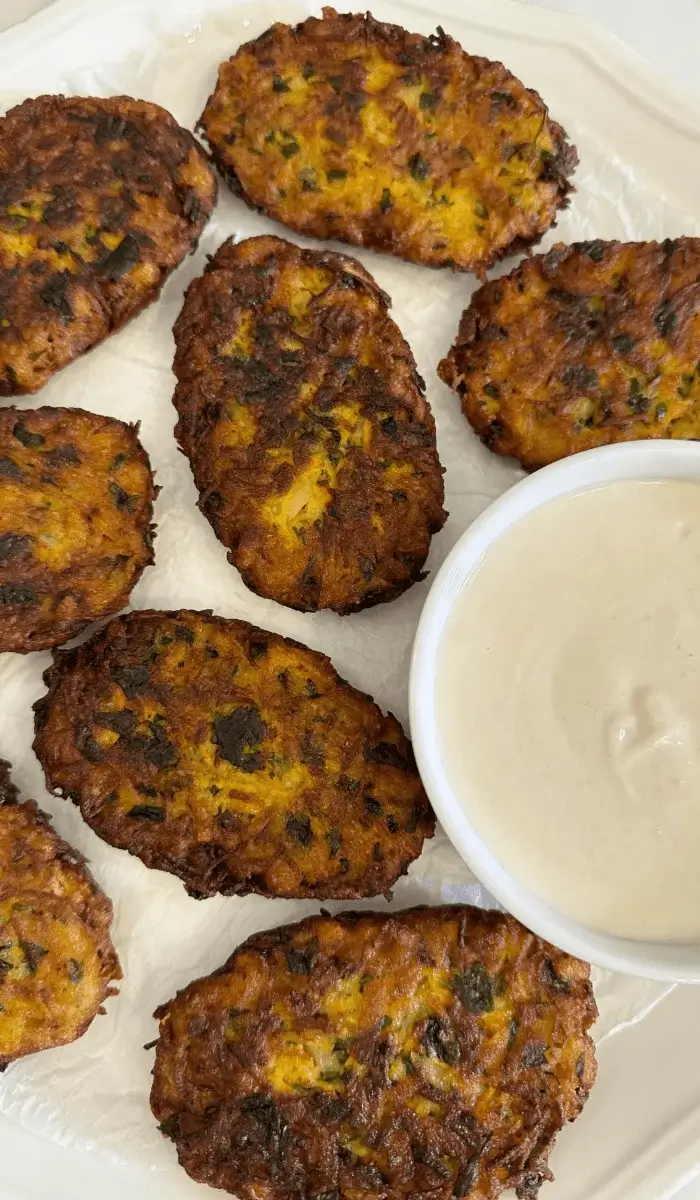
- Transfer the fritters to a paper towel-lined plate to drain.
- Make the tahini: Whisk the tahini, lemon juice, garlic and salt in a small bowl. Gradually whisk in the cold water until smooth and creamy. If the sauce is too thick, whisk in more water, 1 tablespoon at a time.
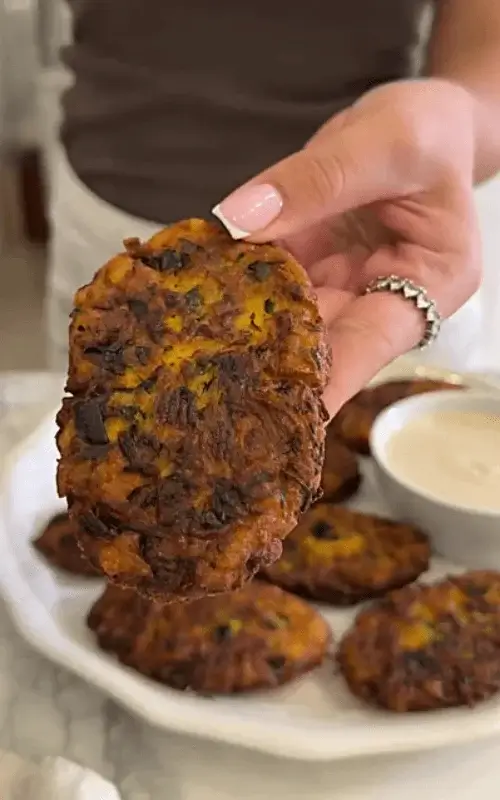
- Serve the fritters warm with the tahini sauce.
FAQ
What are the best potatoes for making vegetable fritters?
For vegetable fritters, medium starchy or all-purpose potatoes work well because they provide enough starch to help bind the grated vegetables while producing a crisp exterior when fried. Russet potatoes are particularly effective because their higher starch content helps the fritters hold together and brown well. Yukon Gold potatoes can also be used and produce a slightly creamier interior, although they contain more moisture.
The potatoes should be peeled and grated on the large holes of a box grater so they retain enough texture to form cohesive fritters. Most importantly, the grated potatoes and onion must be squeezed thoroughly to remove excess liquid before mixing with the other ingredients. Too much moisture can make the mixture loose, difficult to shape, and less likely to become crisp during frying.
Can you make vegetable fritters with gluten-free flour?
Yes, all-purpose flour can generally be replaced with a gluten-free flour blend to make vegetable fritters gluten-free, provided that all other ingredients and the frying environment are also suitable for the intended dietary requirements. A gluten-free all-purpose blend containing starches and a suitable binder usually works better than using a single flour such as almond or coconut flour, because those flours behave differently and can substantially change the texture.
Since different gluten-free blends absorb liquid differently, the mixture should be assessed after combining the vegetables, eggs, and flour. It should be cohesive enough to shape without being runny. Thoroughly squeezing the grated potatoes and onion remains essential. If the mixture seems unusually wet, a small additional amount of gluten-free flour may be necessary. Check the flour’s labeling if the fritters are being prepared for someone with celiac disease or a strict gluten-free requirement.
How do you keep vegetable fritters from falling apart?
The key to keeping vegetable fritters intact is controlling moisture and maintaining the correct balance between vegetables, eggs, and flour. Grated potatoes and onion should be squeezed thoroughly before being combined with the sweet potato, carrots, eggs, and flour. Excess water makes the mixture loose and prevents the flour and egg from binding the vegetables effectively.
When shaping each fritter, squeeze out any additional liquid rather than simply scooping the mixture directly into the pan. The oil should also be properly heated before frying; if it is too cool, the fritters can absorb oil and become soft before their exterior sets. Frying in batches prevents the pan from becoming overcrowded and keeps the oil temperature more stable. Handle the fritters gently when turning them, and wait until the first side is golden and firm before flipping.
Can you make vegetable fritters without eggs?
Yes, vegetable fritters can be made without eggs, but the recipe needs another ingredient to provide binding. Eggs help hold the grated vegetables and flour together while cooking, so simply removing them can make the mixture more fragile. Possible egg substitutes include a small amount of prepared flaxseed meal mixed with water, a starch slurry, or another suitable plant-based binder. The amount needed depends on the substitute and the moisture content of the vegetables.
Thoroughly squeezing the grated potatoes and onion becomes even more important in an egg-free version because excess moisture can make the mixture difficult to shape. Flour or starch can provide additional structure, but adding too much can make the fritters dense rather than tender. For the exact recipe provided here, the two eggs should be retained if you want the same texture and binding properties as the original version.
How do you remove excess liquid from vegetables for vegetable fritters?
For vegetable fritters, excess liquid is best removed from the grated potatoes and onion immediately after grating. Place them in a fine-mesh strainer or clean kitchen towel and squeeze firmly until as much liquid as possible has been extracted. A kitchen towel can be particularly effective because it allows you to gather the vegetables together and wring out the moisture more aggressively.
Sweet potatoes and carrots also contain water, so the finished mixture should be checked for excess moisture before shaping. In this recipe, the potatoes and onion are specifically squeezed first, while the vegetable mixture is squeezed again as each fritter is formed. This two-stage approach helps prevent watery batter and improves browning. Do not skip this step, because excess moisture is one of the main reasons vegetable fritters become soft, fragile, or difficult to crisp.
How thick should vegetable fritters be?
Vegetable fritters should be compact enough to hold together but not so thick that the outside browns before the center cooks. A relatively thin, even shape works well because it provides a larger surface area for browning while allowing heat to reach the middle quickly. The exact thickness is flexible, but the fritters should generally be shaped into evenly sized portions rather than thick balls.
When forming them, gently compress the vegetable mixture so the ingredients adhere without making the fritter excessively dense. Squeezing out excess liquid at this stage is also important because loose, wet mixtures are harder to shape and may spread or break apart during frying. Consistent thickness is more important than an exact measurement. If you make some vegetable fritters substantially thicker than others, they will require different cooking times and may brown unevenly.
Can you add other vegetables to vegetable fritters?
Yes, vegetable fritters are adaptable, but additional vegetables should be chosen and prepared with their moisture content in mind. Zucchini, for example, can work well but releases a significant amount of water and should be grated and squeezed very thoroughly before being added. Parsnips, sweet corn, finely shredded cabbage, and other firm vegetables can also be incorporated depending on the desired flavor and texture.
Avoid adding large amounts of watery vegetables without adjusting the mixture, because excess liquid can make the fritters difficult to shape and prevent them from becoming crisp. Vegetables should also be grated or chopped into similarly sized pieces so they cook evenly. If you substantially increase the total amount of vegetables, you may need to adjust the egg and flour proportions to maintain a cohesive mixture.
How do you keep vegetable fritters crispy?
To keep vegetable fritters crispy, moisture control and frying temperature are the two most important factors. Thoroughly squeeze the grated potatoes and onion before making the mixture, then squeeze out additional liquid while shaping each fritter. Heat the oil over medium heat before adding the fritters and avoid overcrowding the skillet, because too many fritters at once can lower the oil temperature.
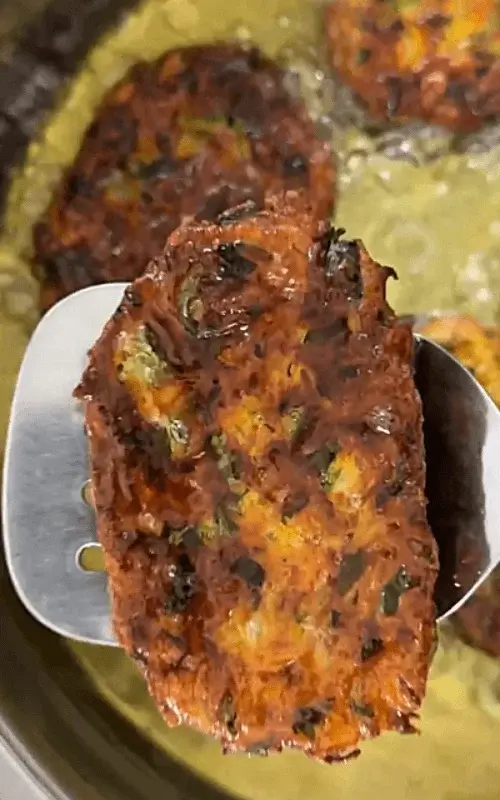
Fry the fritters in batches for about 2 minutes per side, or until both sides are golden brown and crisp. Once cooked, transfer them immediately to a paper towel-lined plate to remove excess surface oil. Do not stack hot fritters, because trapped steam softens the crust. If you are holding them before serving, place them in a single layer and keep them warm in a low oven. Reheating in an oven or air fryer also helps restore crispness.
Why do vegetable fritters become soggy?
Vegetable fritters can become soggy when the vegetable mixture contains too much moisture, the frying oil is not hot enough, or the cooked fritters are exposed to trapped steam. Potatoes and onions release substantial amounts of liquid after grating, which is why squeezing them thoroughly is an essential step in this recipe. Sweet potatoes and carrots also contribute moisture, so excess liquid should be squeezed out while shaping the fritters.
Oil that is too cool cannot quickly form a crisp exterior, allowing the fritters to absorb more oil. Overcrowding the skillet can cause the oil temperature to drop significantly. After frying, placing the fritters directly on paper towels helps remove excess oil, but they should not be stacked while hot because steam can soften their crust. Proper draining, frying temperature, and spacing all contribute to a crisp result.
What is the best way to shape vegetable fritters?
The best way to shape vegetable fritters is to use a portion of the mixture and gently compress it into a compact, relatively thin patty. Before shaping, make sure the grated potatoes and onion have been thoroughly squeezed. As you form each fritter, squeeze out any additional liquid that collects in your hands. This helps the ingredients bind and reduces the amount of moisture entering the hot oil.
Avoid making the fritters excessively thick because the outside can brown before the center is fully cooked. At the same time, do not press them so firmly that they become dense and heavy. Aim for an even shape and similar size for every fritter so they cook at approximately the same rate. If the mixture feels too wet to hold together, the first thing to check is whether the vegetables were adequately drained rather than immediately adding a large amount of additional flour.
What can you serve with vegetable fritters?
Vegetable fritters pair well with sauces that provide acidity and creaminess, and tahini sauce is especially suitable because its nutty flavor complements the potatoes, sweet potato, carrots, and cilantro. The tahini sauce in this recipe combines tahini with lemon juice, garlic, salt, and cold water, creating a creamy condiment with enough acidity to balance the fried fritters.
You can also serve vegetable fritters with yogurt-based sauces, garlic yogurt, sour cream, or a simple herb sauce. Fresh vegetables or a crisp salad can provide contrast to the fried texture, while pickled vegetables add acidity and crunch. For a more substantial meal, the fritters can be served alongside a green salad, roasted vegetables, or other vegetable-based dishes. Serve the fritters warm so their crisp exterior contrasts with the smooth tahini sauce.
Can you bake vegetable fritters instead of frying them?
Yes, vegetable fritters can be baked, although the texture will differ from traditionally fried fritters. Frying provides direct contact with hot oil, which rapidly creates a crisp, browned exterior. Baking uses dry heat and generally produces a lighter result with less surface oil, but the fritters may not become quite as crisp. To bake them, shape the vegetable mixture into evenly sized fritters and place them on a lightly greased baking sheet, leaving space between them.
A small amount of oil brushed or sprayed over the surface can improve browning. Bake in a fully preheated oven and turn the fritters partway through cooking so both sides brown evenly. Because ovens vary considerably, cooking time should be judged by appearance and texture rather than relying solely on a fixed time. Make sure the vegetable mixture is well drained before baking, since excess moisture is particularly noticeable when fritters are not fried.
How do you know when vegetable fritters are fully cooked?
Vegetable fritters are ready when their exterior is evenly golden brown and crisp and the fritter feels firm enough to handle without falling apart. For this recipe, frying takes approximately 2 minutes per side over medium heat, but appearance and texture are better indicators than time alone because fritter size and oil temperature can vary. The edges should look browned and set rather than pale or wet.
If the fritters are very thick, they may need additional cooking time at a moderate temperature so the center heats through without burning the exterior. Cutting into the first fritter can help you check the texture before continuing with the remaining batches. The interior should be cooked and cohesive rather than raw or excessively wet. Once cooked, transfer the vegetable fritters to a paper towel-lined plate so excess oil can drain before serving.
How do you store and reheat vegetable fritters?
Cooked vegetable fritters should be cooled completely before storage and then placed in an airtight container in the refrigerator. To reduce condensation, line the container with paper towels and avoid stacking the fritters tightly while they are still warm. Properly refrigerated cooked fritters are generally best consumed within several days. For reheating, an oven, toaster oven, or air fryer is preferable to a microwave because dry circulating heat helps restore the crisp exterior.
Reheat them in a single layer until heated through and crisp. A microwave will warm the fritters quickly but tends to soften their texture because the trapped steam cannot escape effectively. If using an oven, avoid covering the fritters during reheating, as covering them traps moisture. The tahini sauce should be stored separately in the refrigerator and stirred before serving; add a small amount of water if it thickens during storage.
Can you freeze vegetable fritters?
Yes, vegetable fritters can be frozen after cooking. Allow the fritters to cool completely, then arrange them in a single layer on a baking sheet and freeze until firm. Once frozen, transfer them to an airtight freezer container or freezer-safe bag, separating layers with parchment paper to prevent sticking. Freezing them individually first makes it easier to remove only the amount you need later. For the best texture, reheat frozen vegetable fritters directly in an oven, toaster oven, or air fryer rather than thawing them completely first.
The dry heat helps remove surface moisture and restores some crispness. Avoid microwaving them if maintaining a crisp exterior is important. The tahini sauce should be prepared and stored separately rather than frozen with the fritters, because its texture can change after freezing and thawing. Properly packaged fritters can generally be kept frozen for several weeks to a few months.