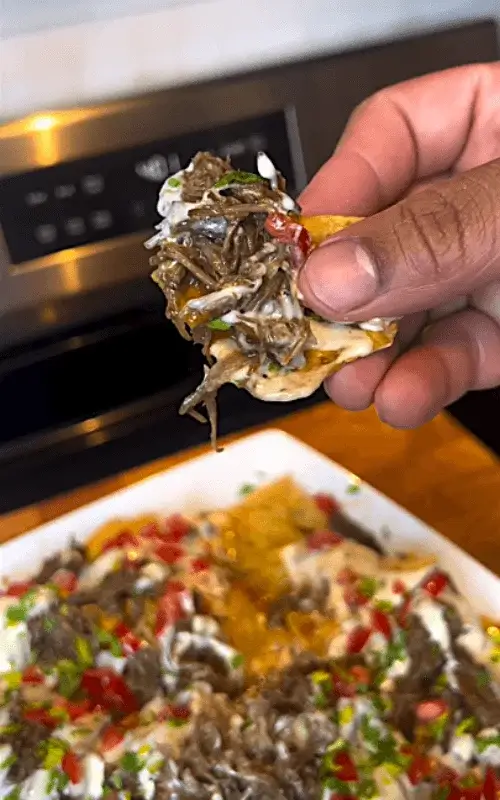
Loaded Shredded Beef Nachos
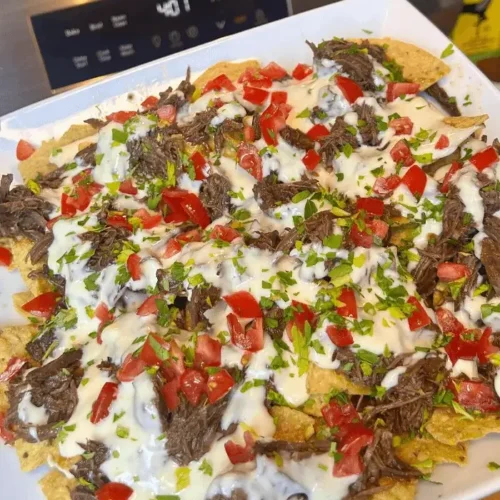
Watch the Full Step-by-Step
- Pressure cooker
- Small saucepan
- Blender
- Large platter
INGREDIENTS
- 2 pounds/900 grams beef chuck roast, cut into large chunks
- Salt and black pepper
- 2 tablespoons beef seasoning
- 1 tablespoon chili-lime adobo seasoning
- 1 tablespoon oil
- 2 tablespoons beef tallow
- 1 medium yellow onion, diced
- 4 garlic cloves, minced
- 3 to 4 dried chiles, stemmed and seeded
- 2 tablespoons tomato paste
- 1 cup beef broth
- ½ cup beer
- 12 ounces/340 grams queso blanco or American cheese, cubed
- ½ cup milk or heavy cream
- 12 ounces/340 grams tortilla chips
- ½ cup fresh cilantro, chopped
- 1 medium tomato, diced

INSTRUCTIONS
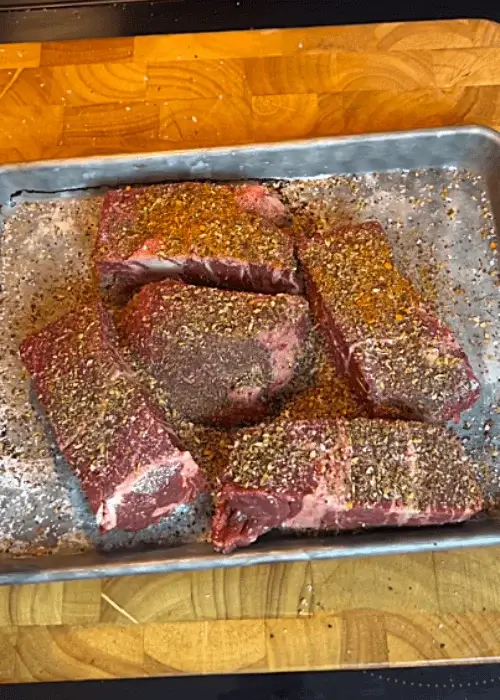
- Season the beef generously with salt, pepper, bison-and-beef seasoning and chili-lime adobo seasoning. Drizzle with the neutral oil and toss to coat.
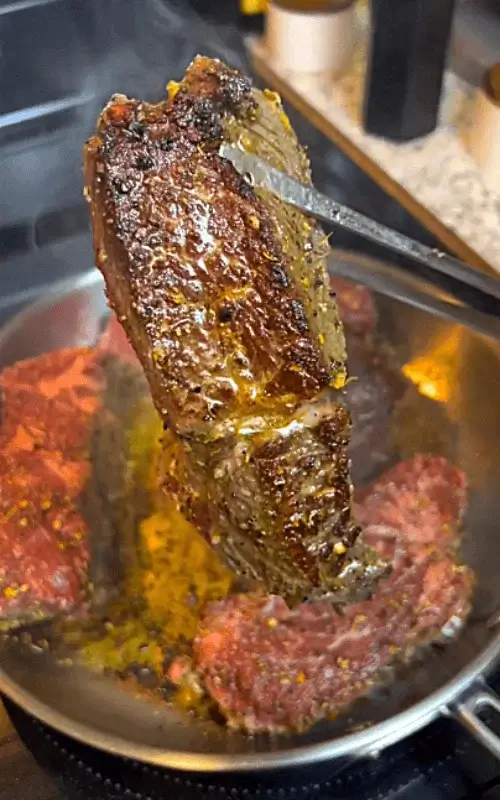
- Heat the beef tallow in a large skillet or pressure cooker over medium-high heat. Sear the beef in batches until browned on all sides, 2 to 3 minutes per side. Transfer to a plate.
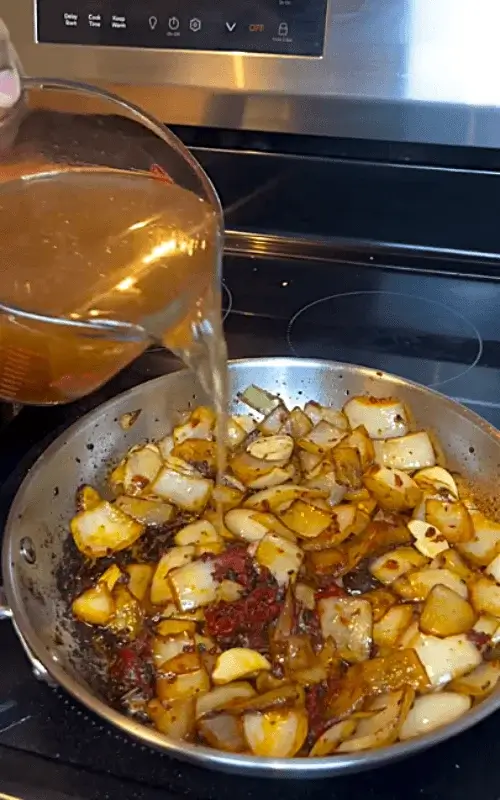
- Add the onion and garlic and cook until softened, about 3 minutes. Add the dried chiles and tomato paste and cook for 1 minute. Pour in the beef broth and beer, scraping up any browned bits from the bottom.
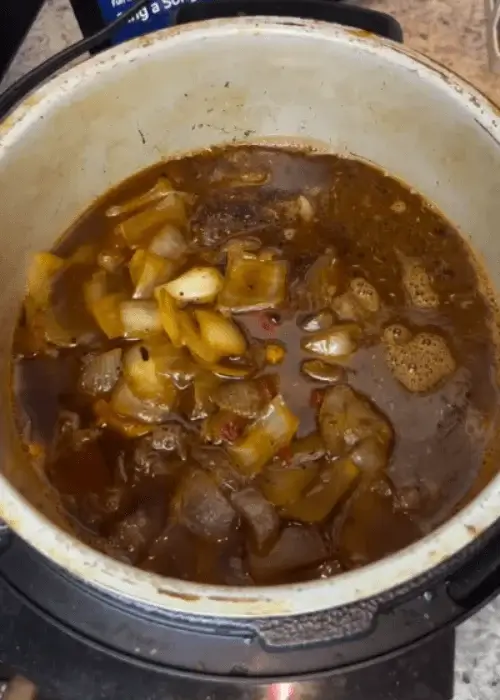
- Return the beef to the pot. Seal the pressure cooker and cook on high pressure for 45 minutes. Let the pressure release naturally for 10 minutes, then release any remaining pressure.
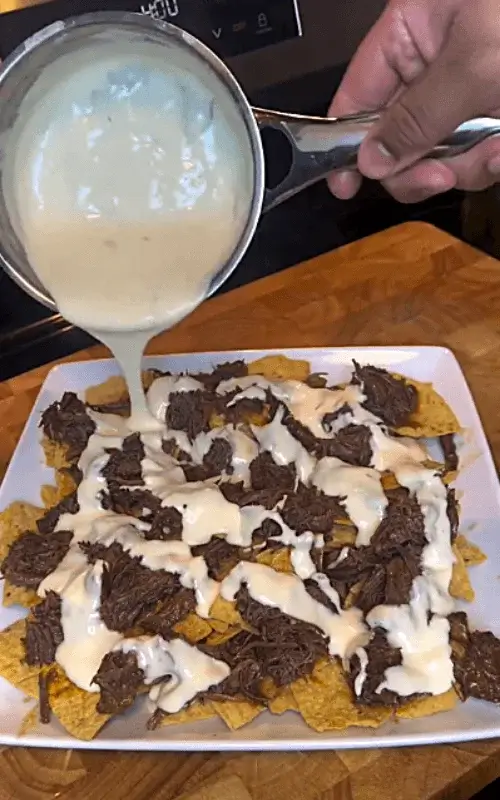
- Meanwhile, combine the queso and milk or cream in a small saucepan over low heat. Cook, stirring occasionally, until smooth and melted. Keep warm.
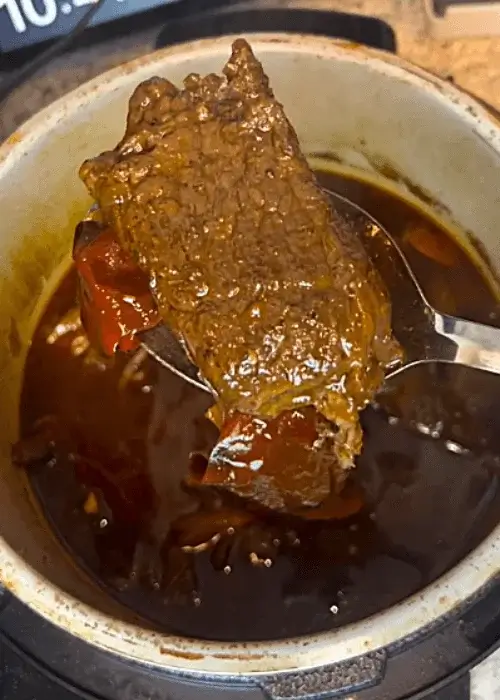
- Transfer the beef to a bowl. Carefully transfer the cooking liquid and chiles to a blender and blend until smooth. Strain through a fine-mesh sieve.
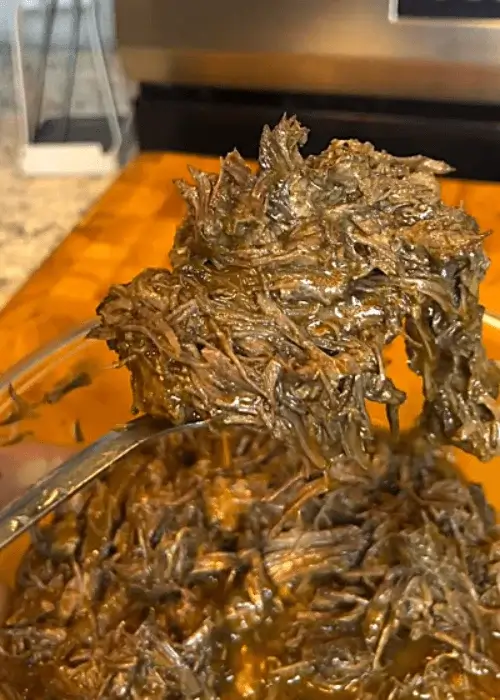
- Shred the beef and return it to the sauce, tossing to coat. Season with salt to taste.
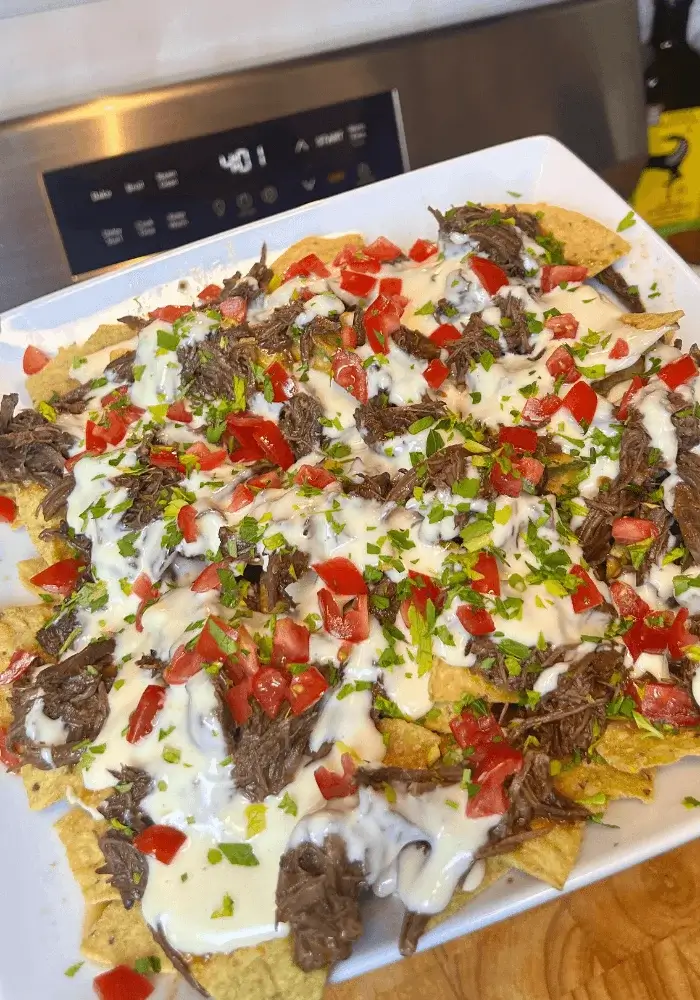
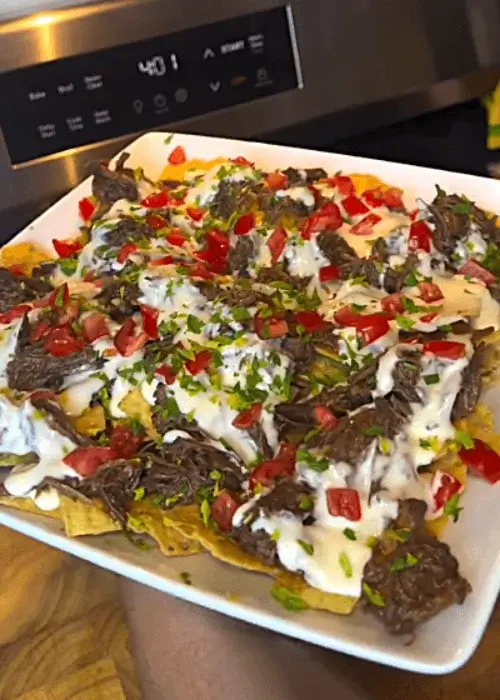
- Arrange the tortilla chips on a large platter. Spoon the shredded beef over the chips and drizzle with queso. Scatter the cilantro and tomato over the top. Serve immediately.
FAQ
What cut of beef is best for shredded beef nachos?
Beef chuck roast is one of the best cuts for shredded beef nachos because it contains enough connective tissue and fat to become tender during pressure cooking. Chuck comes from the shoulder, a well-exercised part of the animal, so it starts out relatively firm. During cooking, its collagen gradually breaks down into gelatin, producing beef that can be easily shredded while remaining moist and flavorful. The marbling also contributes richness to the finished meat and helps prevent it from becoming dry.
Choose a chuck roast with visible marbling and some surface fat, but trim away thick pieces of hard exterior fat. Cutting the roast into large chunks allows it to brown more evenly and creates more surface area for the seasoning and braising liquid to flavor the meat. Other cuts, such as beef brisket or beef short ribs, can also be used, but chuck is generally more practical because it provides a good balance of tenderness, flavor, and cost. Lean cuts such as round roast are less suitable because they can become dry and stringy under pressure.
Can you make shredded beef nachos without beer?
Yes. Beer can be replaced with additional beef broth if you prefer to make shredded beef nachos without alcohol. In this recipe, the beer contributes liquid and adds malty, slightly bitter and toasted flavors to the braising sauce, but it is not essential for making the beef tender. Replacing the ½ cup of beer with ½ cup of beef broth will maintain the overall liquid level required for pressure cooking.
For a more complex nonalcoholic sauce, you can use additional beef broth along with a small amount of Worcestershire sauce, which adds savory and acidic notes. Tomato paste and dried chiles already provide concentrated flavor, so the replacement does not need to contain many additional ingredients. If you use a highly concentrated or salted beef broth, taste the finished sauce before adding additional salt.
What type of cheese is best for beef nachos?
Queso blanco or American cheese works particularly well for beef nachos because both melt into a smooth, pourable sauce. American cheese contains emulsifying salts that help keep its fat and milk proteins combined as it melts, reducing the likelihood of a greasy or broken cheese sauce. Queso blanco can also provide a mild, creamy flavor that complements the seasoned beef without overpowering the dried chiles and other toppings.
For this shredded beef nachos recipe, the cheese is cubed and gently melted with milk or heavy cream. Low heat is important because excessive heat can cause cheese sauces to separate or become grainy. Stirring occasionally helps the cheese melt evenly. Other cheeses can be used, but their melting characteristics differ. Monterey Jack, Oaxaca and low-moisture mozzarella melt well, while aged cheddar can become oily or grainy if overheated.
How do you keep shredded beef nachos from becoming soggy?
The best way to prevent shredded beef nachos from becoming soggy is to assemble them immediately before serving and control how much liquid reaches the tortilla chips. The shredded beef should be well coated with its sauce but not excessively wet. Allowing excess braising liquid to drain before adding the meat to the chips helps preserve their texture.
Use sturdy, thick tortilla chips rather than very thin chips, which soften more quickly. Arrange the chips in a single layer on a large platter or baking sheet and distribute the beef evenly rather than concentrating it in one wet area. Add the queso shortly before serving and avoid allowing the assembled nachos to sit for an extended period. If preparing nachos for a group, you can keep the shredded beef and queso warm separately and assemble smaller batches as needed.
What toppings go well with shredded beef nachos?
Shredded beef nachos pair well with toppings that provide contrasting textures, acidity, freshness and heat. The recipe uses fresh cilantro and diced tomato, which add brightness to the rich beef and creamy queso. Other suitable toppings include sliced jalapeños, pickled jalapeños, diced red onion, scallions, avocado, guacamole, sour cream, Mexican crema, salsa and fresh lime juice.
Acidic toppings are particularly useful because they balance the richness of the beef, tallow and queso. Pickled jalapeños or pickled onions provide both acidity and heat, while lime juice adds a clean citrus note without adding much moisture. Guacamole or avocado contributes creaminess but should be added shortly before serving. For additional texture, thinly sliced radishes or finely shredded cabbage can provide crunch. When adding toppings to shredded beef nachos, avoid using excessive amounts of wet ingredients because they can soften the tortilla chips. Add wetter toppings in moderation and serve additional salsa or sour cream on the side.
How do you store and reheat leftover shredded beef nachos?
Fully assembled shredded beef nachos do not store particularly well because the tortilla chips absorb moisture from the beef, queso and fresh toppings. For the best leftovers, separate the components before refrigerating whenever possible. Store the shredded beef with its sauce in one airtight container and the queso separately. Remove fresh toppings such as tomato and cilantro and store them separately as well.
Reheat the beef gently in a saucepan or skillet until hot, adding a small amount of broth or water if the sauce has thickened. Warm the queso over low heat and stir until smooth. For the best texture, use fresh tortilla chips and assemble a new batch of shredded beef nachos after reheating the components. If already-assembled nachos are being reheated, an oven or toaster oven is preferable to a microwave because dry heat can restore some crispness to the chips. However, previously saturated chips will rarely become as crisp as freshly assembled nachos.
How spicy are shredded beef nachos made with dried chiles?
The level of heat in shredded beef nachos depends largely on the type and quantity of dried chiles used. Mild dried chiles, such as ancho chiles, contribute a deep, slightly sweet and smoky flavor with relatively little heat. Guajillo chiles are also moderately mild and provide fruity, earthy notes. Hotter varieties can substantially increase the heat, so the choice of chile should be based on the desired spice level.
Removing the stems and seeds generally reduces some of the heat, although most chile heat comes from the white membranes and surrounding tissue rather than the seeds themselves. For a milder version, use fewer chiles or choose mild varieties. For more heat, incorporate a hotter dried chile or add fresh jalapeño or another chile when cooking the onions and garlic. Because the chiles are blended into the braising liquid, their flavor becomes distributed throughout the beef rather than remaining concentrated in individual pieces.
Can you use a slow cooker instead of a pressure cooker for shredded beef nachos?
Yes. A slow cooker can be used to prepare the beef, although the cooking time will be considerably longer than with a pressure cooker. Searing the beef first is still recommended because it develops browned flavors before the meat enters the slow cooker.
After searing, cook the beef with the onion, garlic, dried chiles, tomato paste, beef broth and beer until it is very tender and easily pulls apart with a fork. Depending on the slow cooker and the size of the beef pieces, this generally takes about 7 to 9 hours on low or 4 to 5 hours on high. The exact time varies, so tenderness is a better indicator than the clock.
Once the beef is tender, remove it from the cooking liquid and shred it. Blend and strain the cooking liquid as directed, then return the beef to the sauce. For shredded beef nachos, avoid adding excessive liquid to the tortilla chips. Keep the meat and sauce together until serving, but drain off any excess liquid before assembling the nachos.
How do you know when the beef is done in the pressure cooker?
The most reliable indication that the beef is ready is its texture rather than the cooking time alone. Properly cooked beef chuck should be tender enough to separate easily when pressed or pulled with a fork. If the meat remains firm, chewy or difficult to shred, it needs additional cooking.
The beef should not simply be cooked until it reaches a particular internal temperature and then removed. Temperature indicates that the meat has been heated sufficiently, but tenderness depends on the breakdown of collagen and connective tissue. Chuck roast requires enough time under moist pressure cooking conditions for that connective tissue to convert into gelatin.
After the pressure has been released safely, test one of the larger pieces with two forks. If it pulls apart easily into strands, it is ready. If it resists, return it to the pressure cooker with some cooking liquid and continue cooking under pressure for another 10 to 15 minutes. Allow a short natural release afterward and test again.
Can you use fresh chiles instead of dried chiles?
Yes, although fresh chiles will produce a different flavor and texture. Dried chiles provide concentrated earthy, smoky and fruity flavors that develop during the braising process and become especially pronounced when blended into the sauce. Fresh chiles generally contribute brighter, greener flavors and more moisture.
If substituting fresh chiles in shredded beef nachos, jalapeños, Fresno chiles or similar varieties can be used depending on the desired heat level. The quantity should be adjusted according to the size and heat of the peppers. Fresh chiles do not need to be rehydrated, but they can be sautéed briefly with the onion and garlic before adding the tomato paste and cooking liquid.
For the closest flavor to the original recipe, dried chiles are preferable. They create a more concentrated sauce that pairs particularly well with the rich beef and creamy queso. If using fresh chiles, taste the finished sauce before seasoning because their heat and flavor can vary considerably between individual peppers.
What beer works best for shredded beef nachos?
A moderately flavored beer works well for the braising liquid because it adds depth without overwhelming the dried chiles and beef. A lager, amber ale or Mexican-style lager can provide a relatively clean flavor, while a darker beer such as a stout or porter will contribute stronger roasted and malty notes.
For shredded beef nachos, avoid choosing a beer that is extremely bitter unless you specifically want that characteristic in the sauce. The beer is reduced and concentrated during cooking, so pronounced bitterness can become more noticeable in the finished sauce. A beer you would comfortably drink is generally a reasonable choice for cooking.
The recipe uses only ½ cup of beer, so the beer does not need to dominate the sauce. Its primary role is to contribute additional flavor to the braising liquid while working with the beef broth, tomato paste and dried chiles. If you prefer not to use beer, the same quantity can be replaced with additional beef broth.