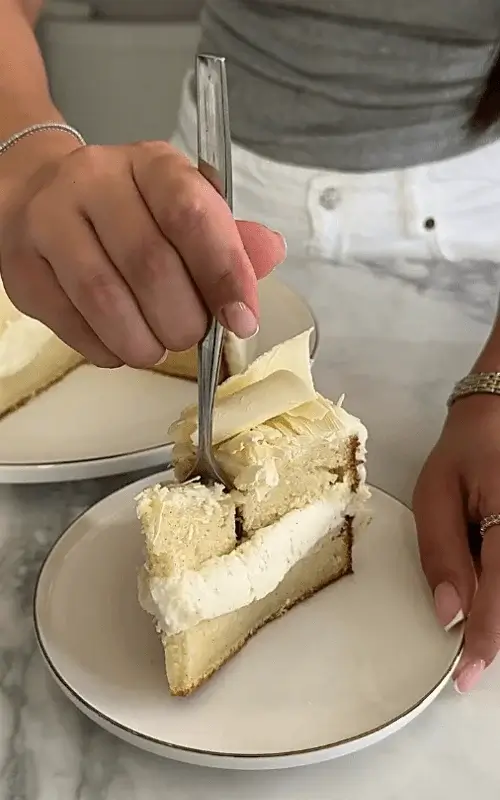
Buttercream Vanilla Layer Cake Recipe
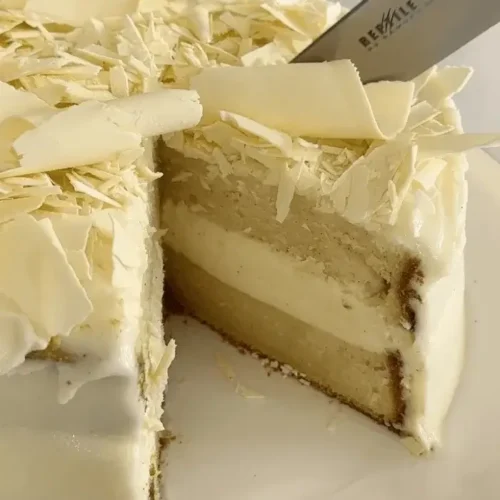
Watch the Full Step-by-Step
- 9-inch/22 cm round cake pan
- Mixing bowls
- Kitchen scale
- Wire rack
INGREDIENTS
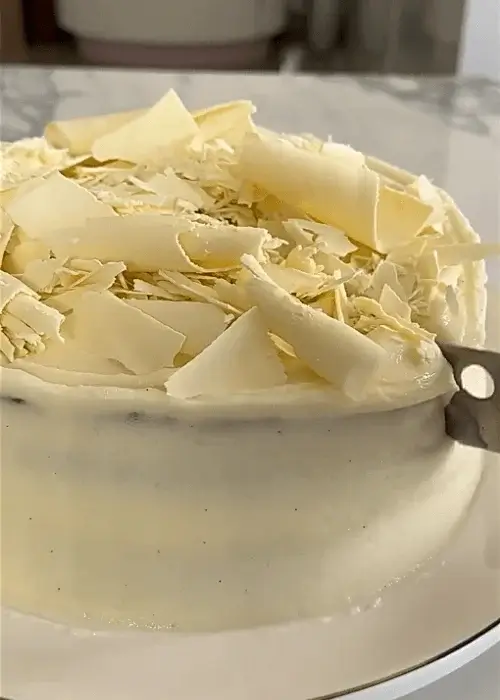
- White chocolate curls, for topping
Cake:
- 7 ounces/200 grams unsalted butter, softened
- ½ cup granulated sugar
- ¼ cup light brown sugar
- 1 teaspoon vanilla bean paste
- 6 large eggs
- ¾ cup plus 1 tablespoon/200 grams sour cream
- 1 cup/240 milliliters whole milk
- 2½ cups/350 grams self-rising flour
Filling:
- 1 cup/250 milliliters heavy cream
- 2 tablespoons powdered sugar
- 3 tablespoons instant vanilla pudding mix
Buttercream:
- 7 ounces/200 grams unsalted butter, softened
- 2 cups/240 grams powdered sugar
- 2 tablespoons instant vanilla pudding mix

INSTRUCTIONS
- Heat the oven to 340°F/170°C. Grease a 9-inch/22-centimeter round cake pan.
- In the bowl of a stand mixer fitted with the whisk attachment, beat the butter, granulated sugar, demerara sugar, and vanilla until pale and fluffy, about 5 minutes. Add the eggs, one at a time, beating well after each addition.
- Add the sour cream and milk and mix until combined. Add the flour and mix just until a smooth batter forms.
- Transfer the batter to the prepared pan and smooth the top. Bake until golden brown and a toothpick inserted into the center comes out with a few moist crumbs attached, 55 to 65 minutes.
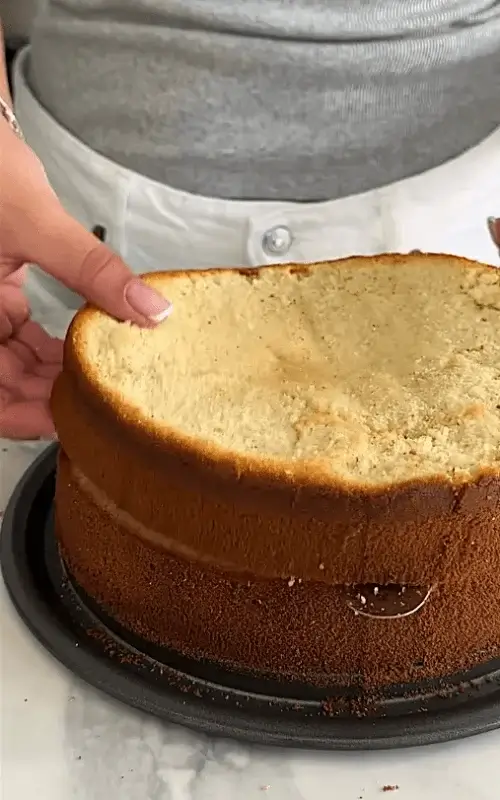
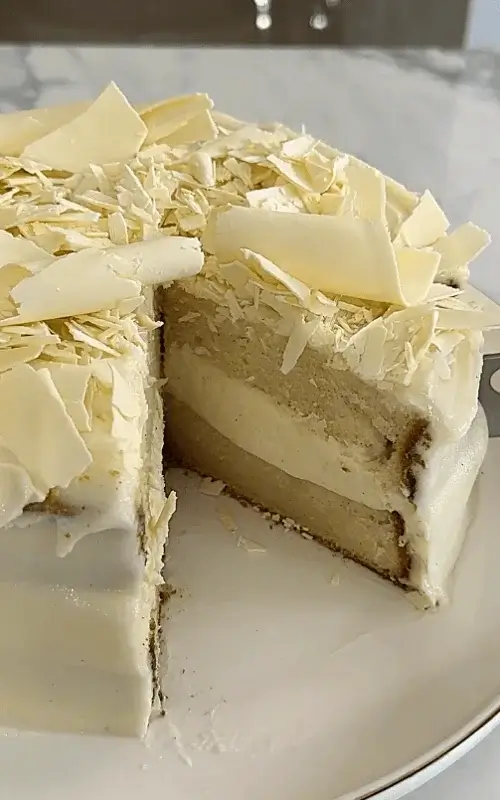
- Cool in the pan for 15 minutes, then transfer to a wire rack to cool completely. Slice the cake horizontally into 2 even layers.
- Meanwhile, make the filling: Beat the heavy cream and powdered sugar until soft peaks form. Add the pudding mix and beat until thick and spreadable.
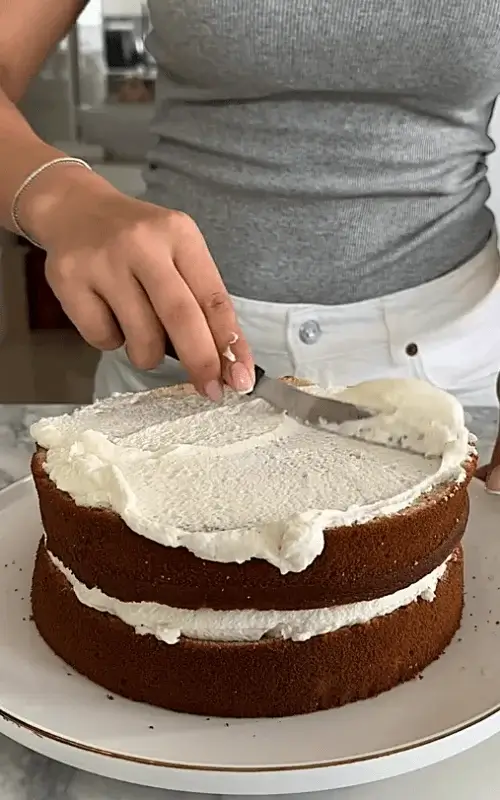
- Place one cake layer on a serving plate. Spread the filling evenly over the top, then cover with the second layer. Refrigerate for 30 minutes.
- Make the buttercream: In the bowl of a stand mixer fitted with the paddle attachment, beat the butter, powdered sugar, and pudding mix until light and smooth.
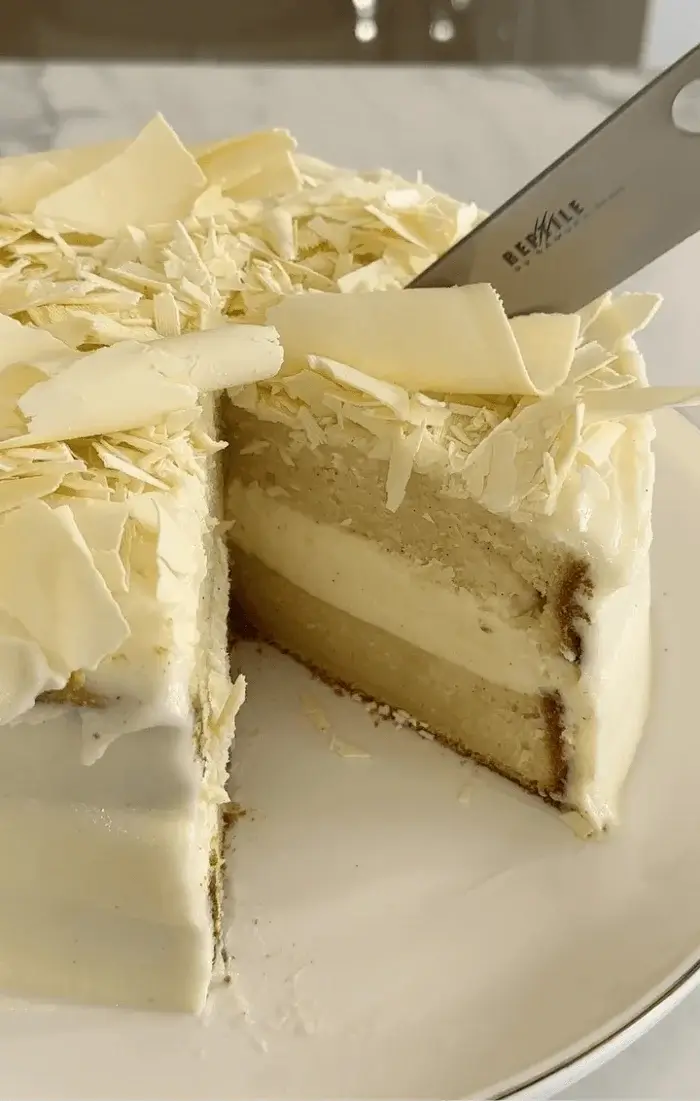
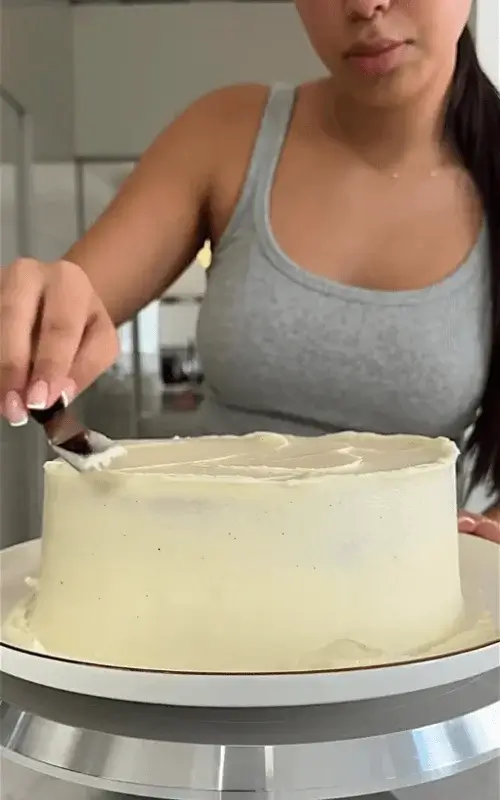
- Frost the top and sides of the cake with the buttercream, smoothing with an offset spatula. Decorate with white chocolate curls or sprinkles, if desired.
- Refrigerate until ready to serve.
FAQ
What makes this vanilla layer cake so soft and moist?
The texture of this vanilla layer cake comes from a combination of ingredients that add both fat and moisture to the batter. Butter provides richness and flavor, while sour cream contributes moisture and a tender crumb. The eggs add structure while also helping the cake remain soft after baking. Milk loosens the batter and creates a smooth consistency that bakes evenly throughout the cake.
Another important factor is proper mixing. Beating the butter and sugars until light and fluffy incorporates air into the batter, which helps create a lighter texture. Baking only until a toothpick comes out with a few moist crumbs also prevents overbaking, which is one of the most common causes of dry cake. The combination of sour cream, milk, butter, and careful baking time makes this vanilla layer cake exceptionally soft and moist.
Can I make this vanilla layer cake recipe without a stand mixer?
Yes, this vanilla layer cake recipe can be made without a stand mixer. A hand mixer is the best alternative because it can cream the butter and sugars effectively, which is an important step for creating a light and tender cake. If using a hand mixer, beat the butter and sugars for about the same amount of time specified in the recipe until the mixture becomes pale and fluffy.
While it is possible to mix the batter by hand with a whisk and spatula, achieving the same level of aeration requires significantly more effort. Properly creamed butter traps tiny air pockets that expand during baking, contributing to the cake’s rise and texture. When preparing this vanilla layer cake recipe without a stand mixer, take extra care not to overmix once the flour is added. Overmixing can develop excess gluten and result in a denser cake.
How do I keep the layers from drying out?
Keeping cake layers moist starts with avoiding overbaking. For this vanilla layer cake recipe, remove the cake when a toothpick inserted into the center comes out with a few moist crumbs attached. Allowing the cake to bake until completely dry often results in a firmer texture after cooling.
Once the layers are cool, wrap them tightly in plastic wrap to prevent moisture loss. If storing overnight, keep them at room temperature in an airtight container. For longer storage, freeze the wrapped layers. During assembly, the cream filling adds additional moisture between the layers, helping maintain softness. Refrigerating the finished vanilla layer cake also helps preserve freshness, especially in warmer environments where cakes tend to dry out more quickly.
How do I know when the cake is fully baked?
The most reliable way to determine whether this vanilla layer cake is fully baked is to insert a toothpick into the center of the cake. If it comes out with a few moist crumbs attached, the cake is done. If wet batter remains on the toothpick, continue baking and check again after a few minutes.
The top should appear golden brown and feel lightly springy when gently pressed. The edges may begin pulling slightly away from the sides of the pan, which is another indication that the cake has finished baking. Oven temperatures can vary, so start checking near the lower end of the recommended baking time. Avoid opening the oven door repeatedly during the first part of baking, as temperature fluctuations can affect the rise of this vanilla layer cake and potentially lead to an uneven texture.
Can I reduce the sugar in this vanilla layer cake recipe?
Sugar plays an important structural and moisture-retaining role in this vanilla layer cake recipe, not just a sweetening function. It helps create a tender crumb by interfering with gluten development and contributes to browning and moisture retention. Reducing sugar too much can result in a drier, denser cake with a less tender texture.
That said, moderate reductions of about 10 to 15 percent are generally safe and will not significantly affect the structure. Larger reductions may require additional adjustments to fat or liquid content to maintain balance. The filling and buttercream will also affect overall sweetness, so consider the entire dessert when making changes.
Can I use all-purpose flour in this vanilla layer cake recipe?
Yes, all-purpose flour can be substituted if self-rising flour is unavailable. For every cup of self-rising flour, add approximately 1½ teaspoons baking powder and ¼ teaspoon salt. Since this vanilla layer cake recipe uses 2½ cups of self-rising flour, you would add about 3¾ teaspoons baking powder and slightly more than ½ teaspoon salt to achieve similar results.
Self-rising flour provides both structure and leavening, helping the cake rise evenly. When making substitutions, whisk the flour, baking powder, and salt thoroughly before adding them to the batter. This ensures even distribution and consistent texture. While the finished cake may have slight variations in crumb depending on the flour brand used, the vanilla layer cake recipe will still produce a tender and flavorful result when the substitution is measured accurately.
Why did my cake sink in the middle?
Several factors can cause a cake to sink in the center. One common reason is underbaking. If the structure has not fully set before the cake is removed from the oven, the center may collapse as it cools. Always verify doneness with a toothpick before removing the cake from the oven.
Another cause is opening the oven door too early during baking. Sudden temperature changes can interrupt the rising process and weaken the cake’s structure. Overmixing the batter after adding flour may also contribute to sinking because excess gluten development can affect how the cake rises. Using inaccurate measurements or expired leavening agents can create similar problems.
Why does my cake taste eggy?
An eggy taste can result from an imbalance in ingredient ratios or insufficient flavoring. In this vanilla layer cake recipe, vanilla bean paste is used specifically to provide a strong aromatic base that balances the richness of the eggs. If vanilla is reduced or low-quality eggs are used, the flavor of the eggs may become more noticeable.
Overbaking can also intensify egg flavor by drying out the cake and concentrating certain compounds. Ensuring accurate measurements and proper baking time helps maintain flavor balance. Additionally, thoroughly beating the eggs into the batter ensures they are fully incorporated, preventing localized eggy pockets.
Why is sour cream used in this vanilla layer cake recipe?
Sour cream plays a significant role in both flavor and texture. Its fat content helps create a rich crumb, while its acidity tenderizes the gluten in the flour, resulting in a softer cake. This ingredient also contributes moisture without thinning the batter excessively, allowing the cake to remain sturdy enough for layering.
In addition to texture benefits, sour cream adds a subtle tang that balances the sweetness of the sugars and frosting. This creates a more complex flavor profile compared to cakes made with milk alone. Many professional bakers use sour cream in layer cakes because it helps maintain freshness for longer periods. In this vanilla layer cake recipe, sour cream works together with the butter, eggs, and milk to create a cake that stays moist and tender for days after baking.
How do I make the buttercream smoother?
Smooth buttercream begins with properly softened butter. The butter should be soft enough to mix easily but not melted. Starting with butter at the correct temperature allows the powdered sugar and pudding mix to incorporate more evenly, reducing the chance of lumps.
Beating the frosting long enough is equally important. Continue mixing until the ingredients are fully combined and the texture appears light and creamy. Sifting the powdered sugar before adding it can further improve smoothness. If the buttercream seems too thick, a small amount of milk or cream can be added gradually. Chilling the cake briefly after applying a thin crumb coat also helps create a smoother final finish.
Can I use low-fat sour cream in this vanilla layer cake recipe?
Low-fat sour cream can be used, but the texture and richness of the cake may differ slightly. Full-fat sour cream contributes moisture and fat, both of which help create the tender crumb associated with this vanilla layer cake recipe.
The cake may be slightly less rich and could dry out more quickly over time. However, it will still provide some of the acidity and moisture benefits that sour cream contributes. If using a reduced-fat version, monitor the baking time carefully and avoid overbaking.
Can I freeze this cake?
Yes, this vanilla layer cake freezes very well. The cake layers can be wrapped tightly in plastic wrap and then covered with aluminum foil before freezing. Properly wrapped layers can maintain quality for up to three months in the freezer.
To thaw, transfer the layers to the refrigerator overnight or leave them at room temperature for several hours while still wrapped. This prevents condensation from forming directly on the cake surface. The fully assembled cake can also be frozen, although the texture of the whipped cream filling may change slightly after thawing. For the best results, freeze the cake layers separately and assemble the vanilla layer cake closer to serving time.
How should I store leftover vanilla layer cake?
Place the cake in an airtight container or cover it loosely with plastic wrap to prevent it from absorbing refrigerator odors.
For the best texture and flavor, consume the cake within three to four days. Before serving, allow slices to sit at room temperature for about 15 to 20 minutes. This softens the buttercream and enhances the vanilla flavor. If you need longer storage, individual slices can be wrapped and frozen.
Why does my buttercream look grainy?
Grainy buttercream is usually caused by powdered sugar that has not fully dissolved or butter that was not softened properly before mixing. Starting with room-temperature butter helps the ingredients blend smoothly and prevents small lumps from forming throughout the frosting.
Another factor may be insufficient mixing time. Continue beating the buttercream until it becomes light, smooth, and creamy. Sifting the powdered sugar before adding it can also improve texture. If the frosting still appears grainy, allowing it to rest for a few minutes and then mixing again may help.
How do I get even cake layers?
Make sure the batter is spread evenly in the pan before baking and place the pan in the center of the oven for consistent heat distribution. Once baked, allow the cake to cool completely before slicing.
For precise layers, use a long serrated knife and rotate the cake while cutting. Some bakers mark the cake around the sides before slicing to create a guide line. Chilling the cake before cutting can also make the process easier because the crumb becomes firmer.
Can I turn this vanilla layer cake recipe into cupcakes?
Simply divide the batter among lined muffin tins, filling each cavity about two-thirds full. This allows room for the cupcakes to rise without overflowing.
Cupcakes typically bake much faster than a full cake. Start checking for doneness around 18 to 22 minutes, depending on your oven and the size of the cupcake pan. A toothpick inserted into the center should come out clean or with a few moist crumbs attached. Once cooled, frost with the same filling and buttercream used in the vanilla layer cake recipe.
Can I add fruit between the layers?
Fresh strawberries, raspberries, blueberries, blackberries, and sliced peaches all pair exceptionally well with vanilla cake. The fruit can be layered directly over the filling to add freshness, flavor, and texture.
Avoid adding excessive moisture, as this can cause the filling to become unstable. If using frozen fruit, thaw and drain it thoroughly before incorporating it into the cake. Fruit preserves or compotes can also be spread in a thin layer beneath the filling for more concentrated flavor. Combining fresh fruit with the light cream filling creates a balanced dessert that feels lighter than a fully frosted cake.