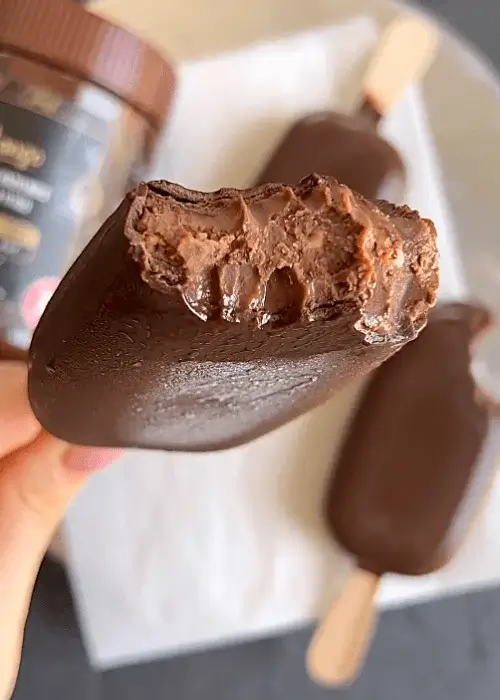
Vegan Hazelnut Chocolate Ice Cream Bars
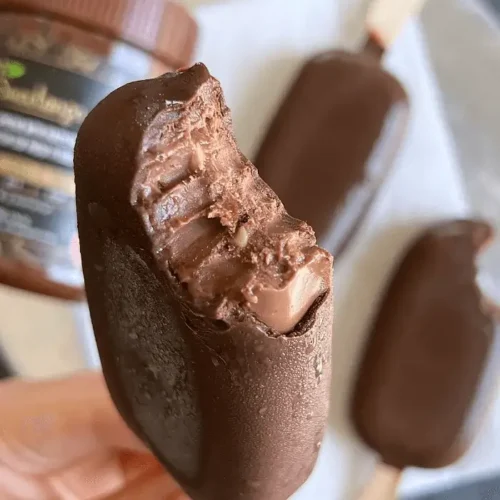
Watch the Full Step-by-Step
- Kitchen scale
- Popsicle sticks
- Popsicle molds
INGREDIENTS
- 13.5 ounces/400 grams coconut cream
- ¼ cup dairy-free chocolate chips
- 5.3 ounces/150 grams chocolate hazelnut spread
- 1 tablespoon potato starch or tapioca flour
Coating:
- 10.5 ounces/300 grams dairy-free dark chocolate, chopped
- 3 tablespoons oil

INSTRUCTIONS
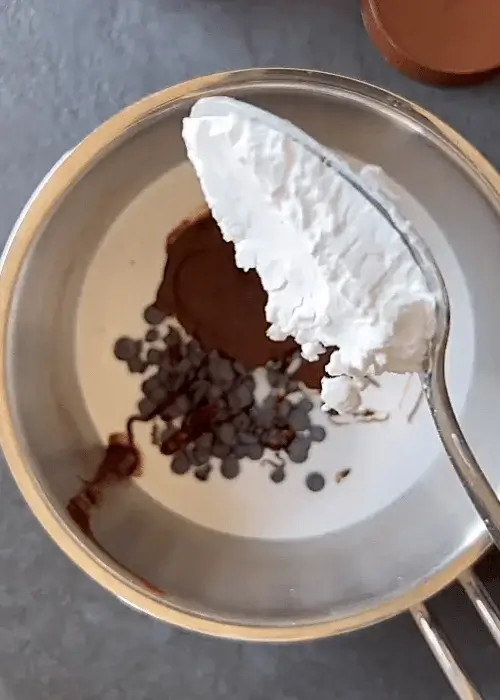
- In a saucepan, combine the coconut cream, chocolate chips, chocolate hazelnut spread, and potato starch.
- Cook over low heat, whisking constantly, until the chocolate is melted and the mixture is smooth. Remove from the heat.
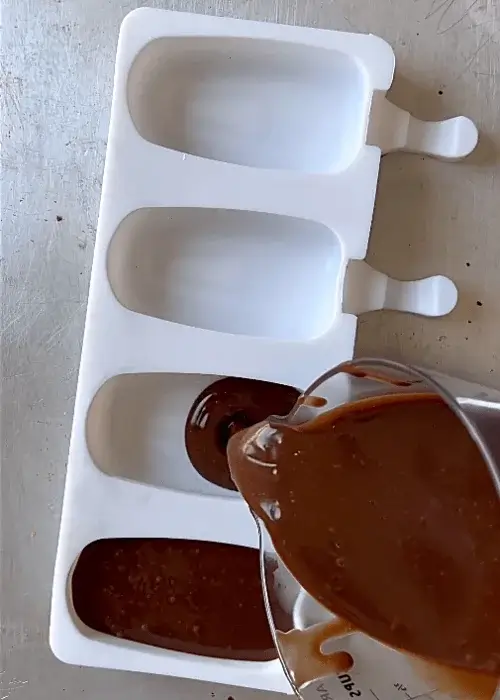
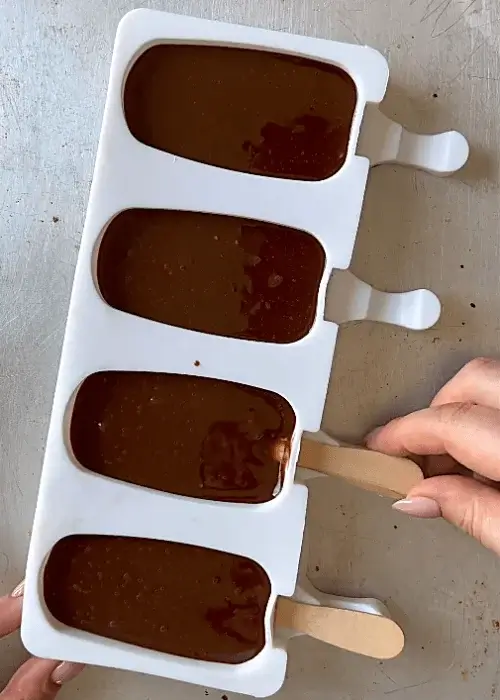
- Transfer the mixture to a measuring cup and pour into popsicle molds. Insert sticks and freeze until solid, at least 5 hours or overnight.
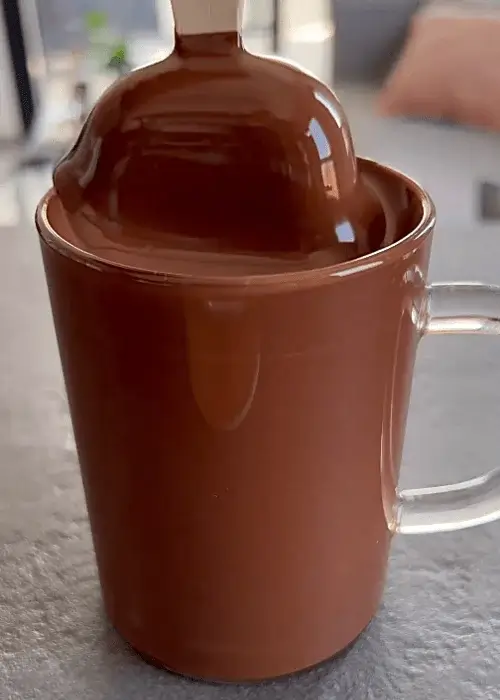
- For the coating, melt the dark chocolate with the canola oil in a bowl. Transfer to a tall glass.
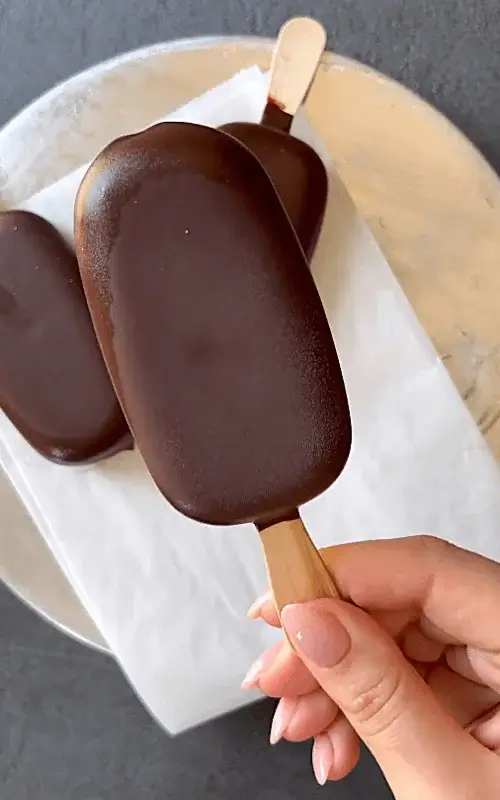
- Remove the bars from the molds and dip each one into the chocolate coating. Return to the freezer until the coating is firm.
- Store the chocolate ice cream bar in the freezer for up to 1 month.
FAQ
What makes chocolate ice cream bars creamy instead of icy?
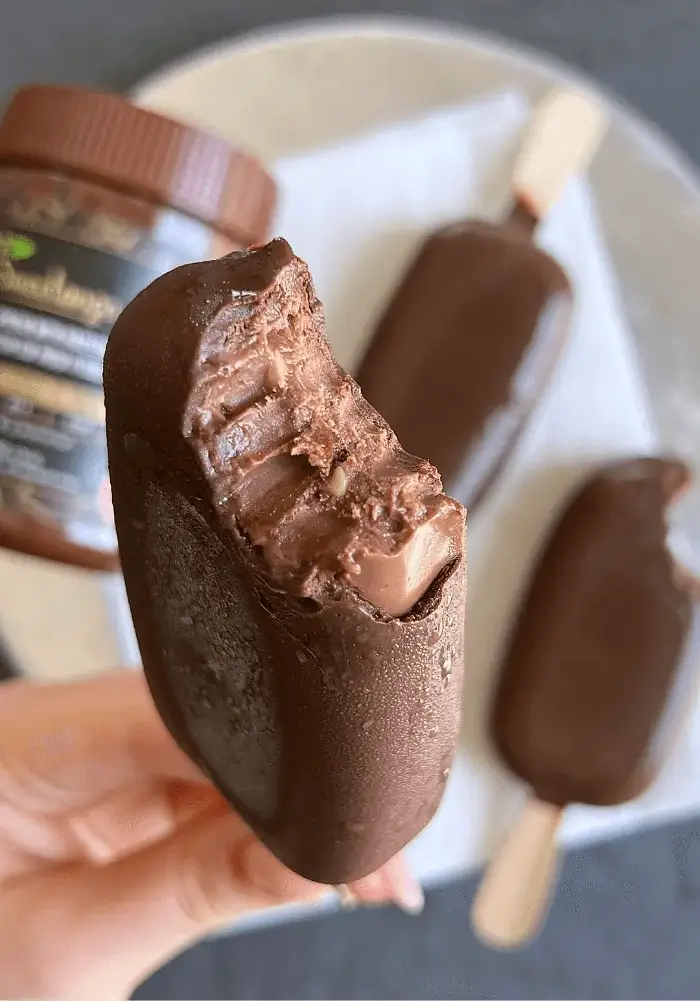
A chocolate ice cream bar stays creamy when the fat and sugar balance is correct and when the mixture is fully emulsified before freezing. Coconut cream provides a high fat base that helps prevent large ice crystals from forming, which is the main cause of iciness in frozen desserts. The chocolate hazelnut spread also contributes fat and emulsifiers that improve texture.
Constant whisking while heating is important because it disperses fat evenly throughout the mixture. Another key factor is freezing time and temperature stability; the faster and more evenly the mixture freezes, the smaller the ice crystals will be. Avoid frequent thawing or partial melting, as this breaks the structure and leads to a grainy texture.
Why do my chocolate ice cream bars turn grainy after freezing?
A grainy chocolate ice cream bar is usually caused by fat separation or uneven emulsification before freezing. When coconut cream, chocolate, and starch are not fully blended, the mixture can split into fat-rich and water-rich layers, which freeze at different rates. Another common cause is overheating the mixture, which can destabilize the emulsifiers in chocolate hazelnut spread.
Rapid freezing without proper mixing can also trap uneven particles. To fix this, the base should be whisked continuously over low heat until completely smooth and glossy, then poured immediately into molds. Ensuring a stable emulsion before freezing is the most important step for preventing graininess in a chocolate ice cream bar.
Can I use a different nut butter instead of chocolate hazelnut spread?
Yes, but the texture and flavor will change significantly. Chocolate hazelnut spread adds sweetness, emulsifiers, and a smooth fat structure that helps bind the frozen base. If substituting, almond butter or peanut butter can be used, but both are thicker and less sweet, so additional sweetener and a small amount of oil or cocoa powder may be needed to maintain balance.
The final chocolate ice cream bar may also set slightly firmer and have a more pronounced nut flavor. It is important to choose a very smooth nut butter without added crunch or separation, and to fully blend it into the warm coconut mixture to avoid grainy pockets after freezing.
What is the best way to dip chocolate ice cream bars evenly?
Even coating on a chocolate ice cream bar depends on temperature control, viscosity, and technique. The melted chocolate should be fully smooth with oil evenly incorporated, and held in a tall, narrow container so the bar can be fully submerged. The bar itself must be very cold and solid so the coating sets instantly on contact.
Dipping should be done in one continuous motion without repeated submersion, which causes uneven layers. Allowing excess chocolate to drip off briefly before placing the bar back into the freezer helps prevent pooling at the base. Working quickly but steadily ensures the coating remains thin, glossy, and uniform across the entire chocolate ice cream bar.
Why does the coating crack on chocolate ice cream bars after dipping?
Cracking usually happens due to a temperature contrast between the frozen bar and the melted chocolate coating. When a very cold chocolate ice cream bar is dipped into warm melted chocolate, the coating hardens instantly and contracts, which can cause visible cracks. To reduce this, the coating should be slightly cooled before dipping so the temperature difference is less extreme.
Another factor is chocolate composition; dairy-free dark chocolate with higher cocoa content sets more brittle than milk chocolate, increasing the chance of cracking. Adding oil, as in this recipe, helps soften the shell slightly and improves flexibility. Working quickly during dipping also helps ensure an even, thin coating that is less prone to structural breakage.
What is the role of potato starch in chocolate ice cream bars?
Potato starch in a chocolate ice cream bar acts as a stabilizer that improves texture and reduces ice crystal formation. When heated with the coconut cream and chocolate mixture, the starch gelatinizes slightly, thickening the base and helping bind water molecules so they do not freeze into large crystals. This results in a smoother, creamier bite after freezing.
Potato starch also helps prevent separation between fat and liquid, especially in dairy-free recipes where emulsification is more fragile. Tapioca flour can be used similarly, but potato starch typically creates a slightly silkier finish. The amount used is small, but it plays an important structural role in maintaining consistency throughout the frozen chocolate ice cream bar.
What is the best way to prevent ice crystals in chocolate ice cream bars?
Preventing ice crystals in a chocolate ice cream bar depends on reducing free water, stabilizing the fat structure, and minimizing air exposure during freezing. Coconut cream is already relatively high in fat, which helps, but the key is ensuring the mixture is fully emulsified before freezing so water and fat are evenly distributed. Whisking thoroughly over low heat dissolves the chocolate and starch evenly, which reduces separation later.
Another factor is avoiding temperature fluctuations in the freezer; repeated thawing and refreezing creates larger ice crystals. Using airtight molds or wrapping the bars tightly after unmolding also limits moisture exchange. Finally, a slightly higher fat content from chocolate hazelnut spread and oil in the coating improves overall stability and reduces iciness.
Can I turn chocolate ice cream bars into a dessert sandwich instead?
Yes, a chocolate ice cream bar base can be adapted into a dessert sandwich with minor adjustments. Instead of pouring into molds, the mixture can be spread into a flat layer in a lined tray, frozen until firm, then cut into rectangles and placed between cookies or thin cake layers. Because the base is soft once slightly thawed, it bonds well with baked components.
However, structural stability depends on maintaining the original fat and starch balance so the filling does not melt too quickly. For best results, cookies should be sturdy and not overly crumbly. This variation still preserves the creamy frozen center of the chocolate ice cream bar while changing the presentation and texture contrast.
Can I make chocolate ice cream bars without molds?
Yes, a chocolate ice cream bar can be made without traditional molds, but the shape and texture control will be less precise. One alternative is to pour the mixture into a parchment-lined loaf pan, freeze it until firm, then cut into rectangular bars. Another option is using silicone ice cube trays or small containers to create uniform portions.
The key is ensuring the mixture is poured at a slightly cooled but still liquid state so it settles evenly. After freezing, the bars should be carefully removed and optionally reshaped slightly before coating. While molds give a more professional shape and consistent thickness, alternative methods still produce a functional chocolate ice cream bar as long as freezing is done evenly and the base is not over-aerated.
What type of coconut cream works best for chocolate ice cream bars?
The best coconut cream for a chocolate ice cream bar is a full-fat canned coconut cream with minimal additives and a high percentage of solids. The cream should be thick and separated from liquid, as this higher fat concentration creates a smoother frozen texture and reduces iciness. Brands that contain stabilizers or gums can also work, but pure coconut cream typically yields a cleaner flavor.
Before using, the can should be chilled so the cream separates fully from the water, then only the thick top portion is measured if extra richness is desired. This fat structure is essential because it replaces dairy fat and gives the chocolate ice cream bar its creamy mouthfeel after freezing.
Why is my chocolate coating too thick or too thin?
The thickness of the coating on a chocolate ice cream bar depends on chocolate type, oil ratio, and temperature during dipping. If the coating is too thick, it usually means the chocolate has cooled too much or contains insufficient oil, making it set prematurely on contact. If it is too thin, the chocolate may be too warm or over-diluted with oil, preventing proper setting and adhesion.
Dairy-free chocolate also tends to behave more brittle, so small adjustments in oil can have a noticeable effect. The ideal coating temperature is warm enough to stay fluid but not hot enough to melt the frozen bar instantly. Dipping quickly and allowing excess chocolate to drip off helps achieve a thin, even shell that hardens smoothly.
Can I store chocolate ice cream bars for longer than a month?
A chocolate ice cream bar can technically be stored for longer than a month, but quality will gradually decline due to freezer burn and fat oxidation. The coconut cream base is stable, but over time ice crystals may form on the surface and the chocolate coating can develop slight bloom, which affects appearance and texture.
Proper storage in airtight wrapping or sealed containers slows this process significantly. Keeping the freezer at a consistent deep-freeze temperature below 0°F (-18°C) is essential for longevity. While safe to eat beyond a month, the best texture and flavor of a chocolate ice cream bar is typically within the first 3 to 4 weeks, when the coating is still crisp and the interior remains smooth and creamy.
Can I make chocolate ice cream bars without added oil in the coating?
Yes, but removing oil from the coating of a chocolate ice cream bar changes both texture and handling. Oil is included in the recipe to thin the melted chocolate, making it easier to dip and creating a slightly softer shell that does not crack too aggressively.
Without oil, the coating will set harder and more brittle, which can lead to cracking when biting into the bar. It also becomes more difficult to achieve an even, thin layer because pure melted chocolate thickens quickly as it cools. If omitting oil, the chocolate must be melted carefully and kept at a stable temperature, and dipping should be done quickly. The result is a firmer, snappier shell on the chocolate ice cream bar.