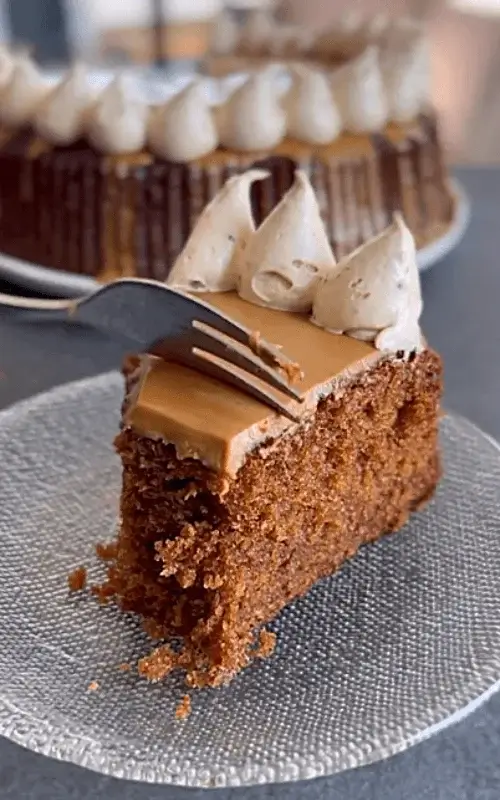
Simple Honey Cake Recipe with Biscoff Topping (Dairy Free)
Watch the Full Step-by-Step
- 10-inch/26-centimeter round cake pan
- Large mixing bowl
- Round piping tip
- Toothpick
- Kitchen scale
INGREDIENTS
- 2½ cups/300 grams all-purpose flour
- 1 cup/200 grams granulated sugar
- 4 large eggs
- 1 cup/240 milliliters oil
- 1 cup/340 grams honey
- 1 cup/240 milliliters boiling water, with 1 black tea bag
- 1 tablespoon/12 grams baking powder
- 1 teaspoon/5 grams baking soda
- 2 teaspoons ground cinnamon
- Pinch fine salt
Topping:
- 7 ounces/200 grams Biscoff cookie spread, melted
Whipped cream:
- 1 cup/250 milliliters oat-based whipping cream
- 2 heaping tablespoons instant vanilla pudding mix
- 2 heaping tablespoons Biscoff cookie spread

INSTRUCTIONS
- Heat the oven to 325°F/160°C. Line the bottom of a 10-inch/26-centimeter round cake pan with parchment paper.
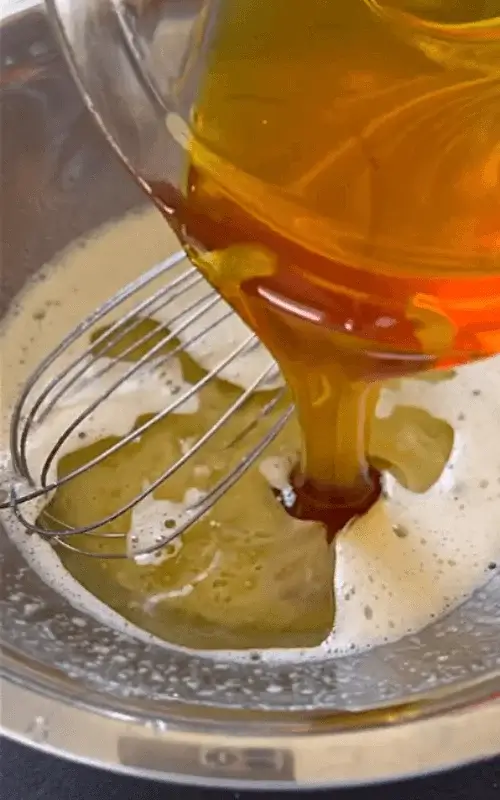
- In a large bowl, whisk the eggs and sugar until combined. Add the oil and honey and whisk until smooth.
- Add half the flour, baking powder, baking soda, cinnamon and salt. Whisk to combine. Add the hot tea and whisk again, then add the remaining flour and whisk until smooth.
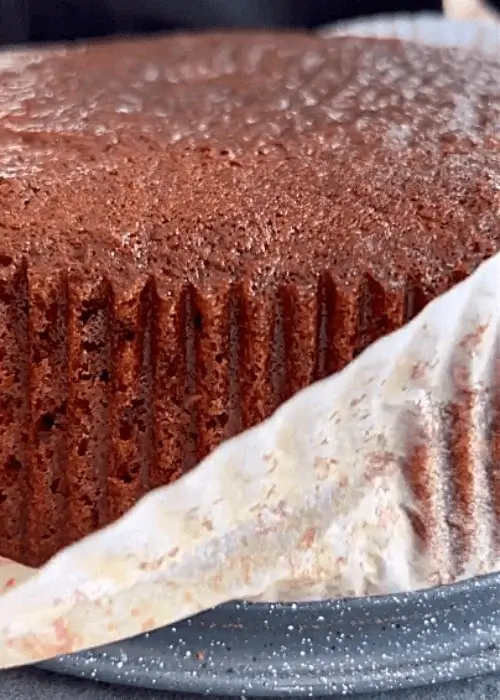
- Pour the batter into the prepared pan. Bake until the cake is set and a toothpick inserted in the center comes out clean, 50 to 60 minutes.
- Let the cake cool completely in the pan, about 3 hours.
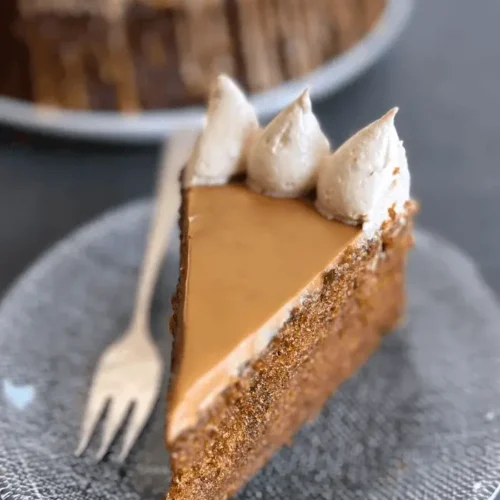
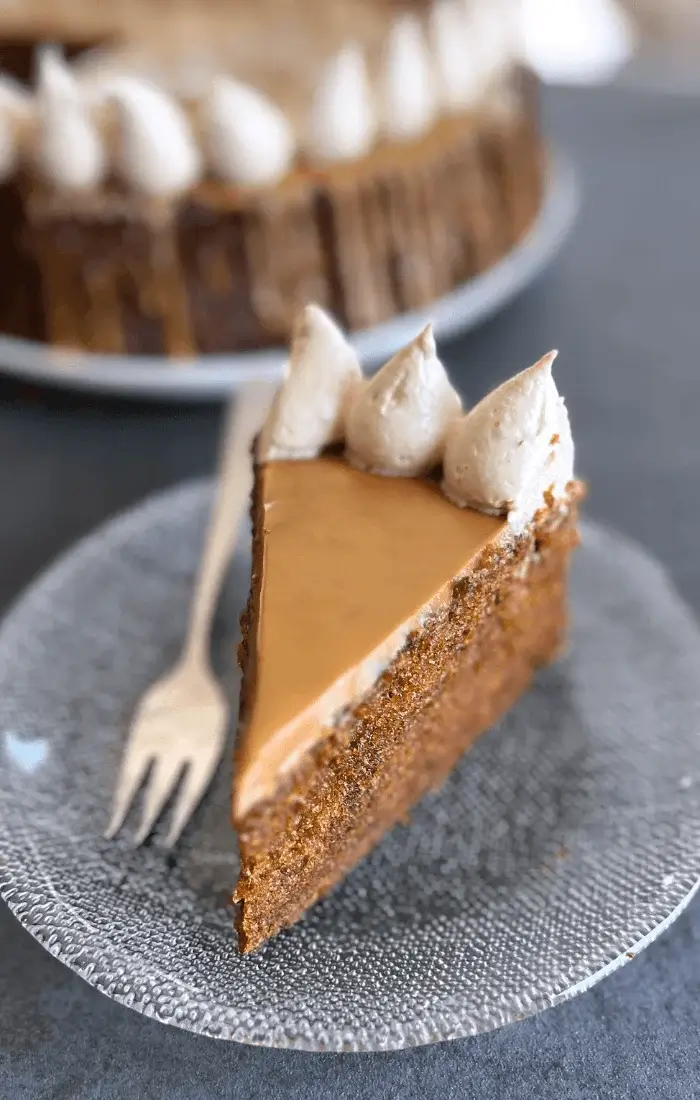
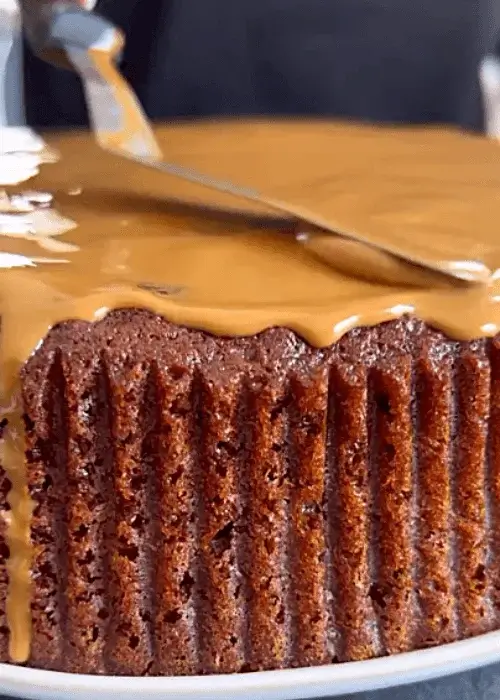
- Remove the cake from the pan and transfer to a serving plate. Pour the melted Biscoff spread over the top and spread evenly with a small offset spatula or the back of a spoon. Refrigerate for 30 minutes.
- Meanwhile, beat the non-dairy whipping cream, pudding mix and Biscoff spread in a stand mixer until stiff peaks form. Transfer to a piping bag fitted with a round tip.
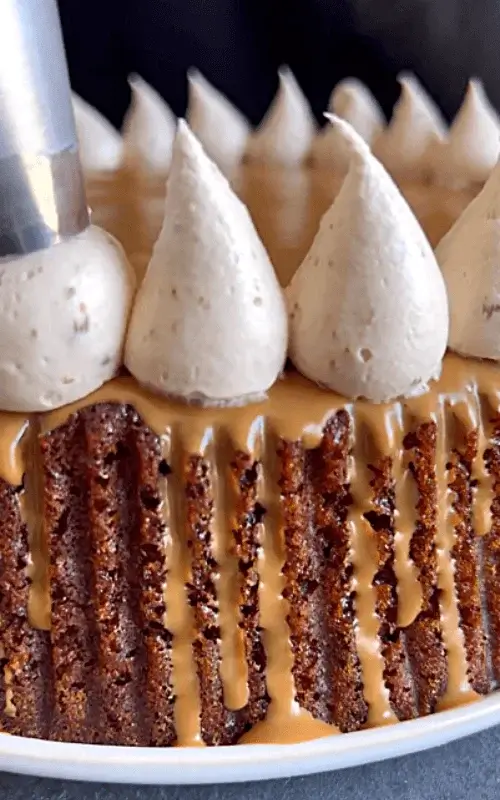
- Pipe small mounds of Biscoff cream around the edge of the cake. Refrigerate for about 1 hour before serving.
- For the best flavor and texture, serve the cake the next day. Store in an airtight container in the refrigerator for up to 4 days.
FAQ
Can I make this simple honey cake recipe without tea?
Yes, you can make this simple honey cake recipe without tea, although the tea contributes subtle depth and balances the sweetness of the honey. If you do not want to use tea, replace the 1 cup/240 milliliters of boiling tea with 1 cup/240 milliliters of boiling water. For a little extra flavor, you can add a small amount of brewed coffee, but keep the quantity the same so the batter consistency does not change.
Avoid reducing the liquid, since the cake depends on the full amount for its moist texture. The finished cake will still have the characteristic honey flavor, but it may taste slightly simpler without the tea.
Can I make this simple honey cake recipe gluten-free?
The cake uses 2½ cups/300 grams of all-purpose flour, so you would need a gluten-free flour blend designed for baking that can replace wheat flour by weight. A blend containing a suitable binder, such as xanthan gum, is generally more reliable than using a single gluten-free flour such as almond or coconut flour. Almond and coconut flour have different absorption and structural properties and cannot be substituted one-for-one without reformulating the recipe.
You should also verify that the instant vanilla pudding mix, Biscoff spread, oat-based whipping cream, baking powder, baking soda, and tea are appropriate for your dietary requirements. If strict gluten avoidance is necessary, check each product’s current labeling rather than assuming every ingredient is gluten-free.
Why does honey cake taste better the next day?
Honey cake often improves after resting because the moisture and flavors have time to distribute throughout the crumb. Freshly baked honey cake can have a slightly firmer or more pronounced baked flavor, while resting allows the honey, cinnamon, and tea flavors to become more integrated. The oil-based batter also helps the cake remain moist as it sits. This is one reason a simple honey cake recipe is well suited to preparing a day before serving.
Once the cake has cooled completely and the Biscoff topping and cream have been added, refrigerate it in an airtight container. Allowing the cake to rest overnight gives the flavors more time to develop, while the refrigeration helps stabilize the Biscoff cream. The texture should remain moist rather than becoming stale.
Can I make the Biscoff cream without instant vanilla pudding mix?
Yes, but the pudding mix in this simple honey cake recipe helps stabilize and thicken the oat-based whipped cream, so omitting it can produce a softer topping. If your oat-based whipping cream is specifically formulated to whip and hold its shape without additional stabilizers, you may be able to omit the pudding mix. However, the resulting cream may not hold piped shapes as firmly, particularly during refrigeration. If you want to maintain the structure of the original recipe, the instant vanilla pudding mix should be included.
Make sure you use instant pudding mix rather than a cook-and-serve variety, since the two products behave differently and the recipe does not involve cooking the cream. The Biscoff spread also adds body and flavor, but it does not necessarily provide enough structure on its own to replace the stabilizing effect of the pudding mix.
Can I make this simple honey cake recipe with regular whipped cream?
Yes, but using regular whipped cream changes the recipe from dairy-free to a dairy-containing dessert. The original recipe uses oat-based whipping cream to keep the cake dairy-free. If dairy is not a concern, you can use heavy whipping cream instead. Because regular heavy cream does not contain the stabilizing ingredients found in some non-dairy whipping products, the resulting cream may soften more quickly.
For a more stable topping, you can whip the heavy cream with the instant vanilla pudding mix and Biscoff spread as directed. Keep the finished cake refrigerated and avoid leaving it at room temperature for extended periods. If the cake needs to remain completely dairy-free, check the labels of the Biscoff spread, pudding mix, and oat-based whipping cream, since formulations can vary between products and markets.
How do I keep the Biscoff topping from becoming too firm?
The Biscoff topping in this simple honey cake recipe naturally becomes firmer when refrigerated because the spread contains fats that solidify when chilled. To keep the topping easier to cut, spread the melted Biscoff in a relatively thin, even layer rather than applying a very thick coating. Letting the cake sit at room temperature for a short period before serving can also soften the topping slightly, although the cake should not be left out for an extended time because of the whipped cream.
Avoid overheating the Biscoff spread when melting it; gentle heating is sufficient to make it spreadable. If the topping becomes very firm in the refrigerator, allow the cake to sit briefly before slicing. The Biscoff layer will soften as it warms slightly while the chilled cream remains stable.
How should I store this honey cake?
Store the finished honey cake in an airtight container in the refrigerator for up to 4 days. Refrigeration is important because the cake is topped with a whipped cream mixture, which needs to remain chilled for food safety and stability. Keeping the cake covered also prevents it from absorbing odors from other foods in the refrigerator and helps prevent the exposed cake from drying out.
The Biscoff topping may firm up when chilled, while the whipped cream should remain stable when properly refrigerated. For the best texture and flavor, remove only the portion you plan to serve rather than leaving the entire cake at room temperature. If serving the cake after it has been refrigerated overnight, it can be served chilled or allowed to sit briefly before serving so the topping softens slightly.
Can I freeze this honey cake?
The plain baked honey cake can generally be frozen, although the finished cake with Biscoff cream is better stored refrigerated. To freeze the cake, let it cool completely first, then wrap it tightly in plastic wrap followed by a layer of aluminum foil or place it in a well-sealed freezer container. Freeze the undecorated cake for up to about 2 to 3 months for the best quality. Thaw it overnight in the refrigerator and decorate after it has fully thawed.
Freezing the completed cake can affect the texture of the whipped cream, causing it to become less smooth after thawing. The Biscoff spread itself freezes reasonably well, but the whipped topping is the more delicate component. For the best result, bake and freeze the cake ahead, then prepare the topping and Biscoff cream when you are ready to serve.
Why is my honey cake dense or dry?
A dense honey cake can result from overmixing the batter, inaccurate flour measurements, expired leavening agents, or an oven that is too cool. Once the flour is added, whisk only until the batter is smooth and no dry streaks remain. Overmixing can develop excess gluten and produce a heavier crumb. For the most accurate results, measure the flour by weight when possible; the recipe calls for 2½ cups/300 grams.
A dry cake is often caused by overbaking, so begin checking at 50 minutes rather than automatically baking for the full 60 minutes. A toothpick inserted into the center should come out clean or with a few moist crumbs. Because ovens vary, the cake may finish sooner or require the full baking time. Allowing the cake to cool completely before decorating also helps preserve its structure and moisture.
Can I make this simple honey cake recipe in a different size cake pan?
Yes, but changing the pan size affects both the cake’s thickness and baking time. The original simple honey cake recipe is designed for a 10-inch/26-centimeter round cake pan. A smaller pan produces a deeper cake, which generally requires more time to bake, while a larger pan produces a thinner cake that may bake more quickly. Avoid filling the pan more than about two-thirds full because the batter needs room to rise.
If using a different shape or size, begin checking the cake before the original 50-minute mark and test the center with a toothpick. The toothpick should come out clean or with a few moist crumbs. Glass, ceramic, and metal pans can also bake differently, so the cake should be judged by doneness rather than time alone. Keeping the pan approximately the same capacity will give you the most predictable result.
Can I use extra-virgin olive oil in this simple honey cake recipe?
Yes, but changing the pan size affects both the cake’s thickness and baking time. The original simple honey cake recipe is designed for a 10-inch/26-centimeter round cake pan. A smaller pan produces a deeper cake, which generally requires more time to bake, while a larger pan produces a thinner cake that may bake more quickly. Avoid filling the pan more than about two-thirds full because the batter needs room to rise.