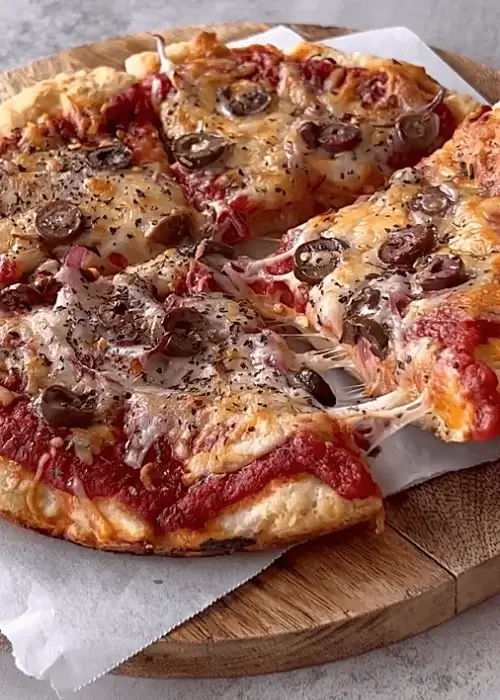
No-Yeast Greek Yogurt Crust Pizza (High Protein)

Watch the Full Step-by-Step
- Oven-safe skillet
- Kitchen scale
INGREDIENTS
Dough:
- 1 cup/120 grams all-purpose flour
- 1 cup/240 grams plain nonfat Greek yogurt
- 2 teaspoons baking powder
- ¼ teaspoon salt
- ¼ teaspoon garlic powder
Toppings:
- ½ cup marinara or pizza sauce
- 1 cup/115 grams mozzarella, shredded
- ½ cup olives, sliced onions, or vegetables of choice

INSTRUCTIONS
- Heat the oven to 400°F/200°C.
- Stir together the flour, baking powder, salt, and garlic powder in a medium bowl. Add the yogurt and mix until a rough dough forms, then knead briefly in the bowl until smooth. If the dough is sticky, dust lightly with additional flour.
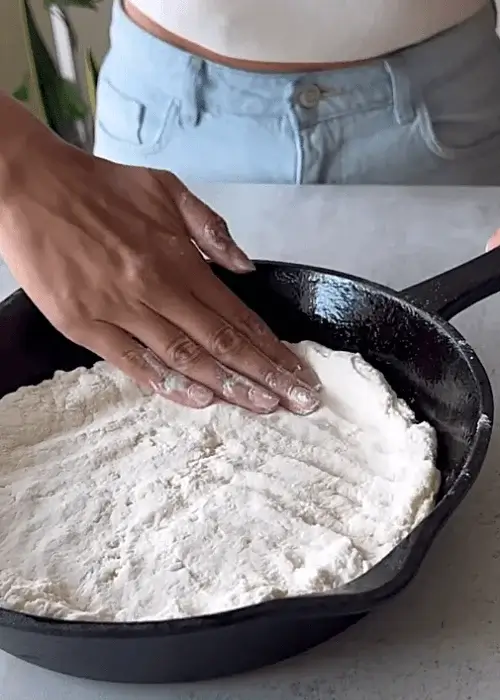
- Lightly oil a 9- to 10-inch skillet and press the dough into an even layer. For a thinner crust, roll it onto a parchment-lined baking sheet.
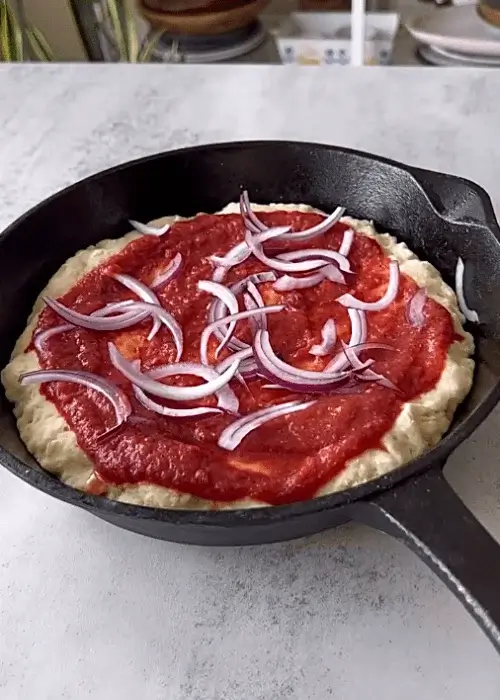
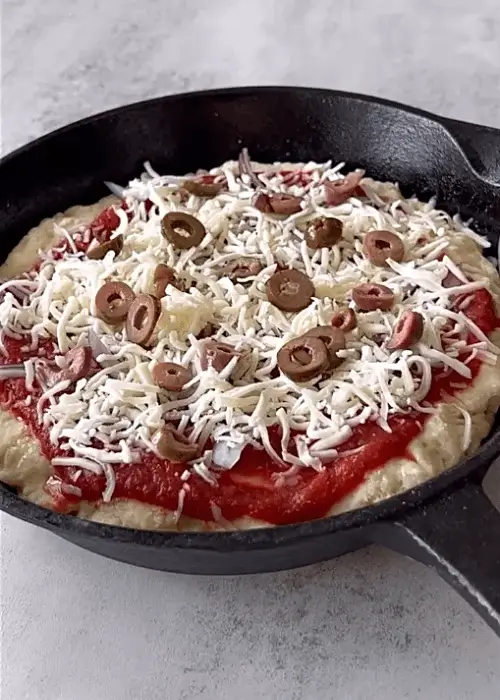
- Bake until the dough is set but not yet browned, about 10 minutes. Remove from the oven, spread with sauce, and top with cheese and desired toppings.
- Return to the oven and bake until the cheese is melted and the crust is golden at the edges, 12 to 15 minutes. Let rest briefly before slicing and serving.

FAQ
What makes a Greek yogurt crust pizza different from traditional pizza dough?
A Greek yogurt crust pizza differs from traditional pizza dough primarily in its leavening method and structure. Instead of relying on yeast fermentation, which requires time for proofing and gluten development, this dough uses baking powder for immediate lift. The Greek yogurt contributes both moisture and acidity, reacting with the baking powder to create a light, tender crumb.
It also adds protein, which strengthens the dough without extended kneading. The result is a crust that is slightly denser than classic pizza but still soft inside with crisp edges when baked properly. This method eliminates long resting times and simplifies preparation, making Greek yogurt crust pizza more accessible for quick cooking without sacrificing structural integrity.
How do you keep Greek yogurt crust pizza from becoming too sticky or wet?
Managing hydration is critical when working with Greek yogurt crust pizza because yogurt introduces both liquid and fat into the dough. If the dough feels overly sticky, it usually means the flour-to-yogurt ratio needs slight adjustment or the yogurt contains excess whey. Using thick, strained Greek yogurt helps control moisture.
During mixing, the dough may initially feel sticky, but brief kneading allows the flour to hydrate fully and develop structure. If it remains tacky, lightly dusting with flour in small increments prevents over-drying. Avoid adding too much flour at once, as this can make the crust dense. Pressing the dough into an oiled pan instead of handling it excessively also reduces sticking while maintaining the intended texture of Greek yogurt crust pizza.
What cheeses work best on Greek yogurt crust pizza?
Greek yogurt crust pizza works well with cheeses that melt smoothly and provide balanced moisture. Mozzarella is the most common choice due to its meltability and mild flavor, which complements the slightly tangy crust. Low-moisture mozzarella is particularly effective because it reduces excess liquid during baking.
Blends that include provolone, fontina, or Monterey Jack can add complexity while maintaining good melt. Hard cheeses like Parmesan are best used as finishing elements rather than the primary topping. Avoid overly wet cheeses unless used sparingly, as they can soften the crust.
Can you make Greek yogurt crust pizza without a skillet?
Yes, Greek yogurt crust pizza can be made without a skillet by using a parchment-lined baking sheet. This approach is ideal if you prefer a thinner, more evenly crisped base. Rolling the dough out between parchment sheets or pressing it directly onto the lined tray prevents sticking and eliminates the need for excess flour.
A skillet typically produces a slightly thicker crust with softer interior edges due to contained heat, while a baking sheet allows more direct exposure to oven heat, encouraging a firmer bottom crust. Both methods work effectively, but the choice depends on the desired texture. Regardless of the method, pre-baking the crust remains essential to ensure the structure sets before adding toppings in a Greek yogurt crust pizza.
What type of Greek yogurt works best?
The best option is plain, thick, nonfat or low-fat Greek yogurt with minimal liquid separation. Consistency matters more than fat content, as excess moisture can weaken the dough and make it difficult to handle. Full-fat yogurt can be used, but it may yield a slightly softer, richer crust due to higher fat content.
Avoid flavored or sweetened yogurts, as they alter both taste and structure. If the yogurt appears watery, straining it briefly through a fine-mesh sieve improves results. A dense, spoonable texture ensures the dough forms properly and maintains balance between tenderness and structure, which is essential for achieving a reliable Greek yogurt crust pizza.
Can you cook Greek yogurt crust pizza in an air fryer?
Greek yogurt crust pizza can be cooked in an air fryer, though adjustments are needed due to space and airflow. The dough should be shaped to fit the basket, typically smaller and slightly thicker to prevent tearing. Pre-baking remains important, and temperatures around 375°F/190°C work well for even cooking without over-browning the exterior too quickly.
After the initial bake, toppings can be added and the pizza returned to the air fryer until the cheese melts and edges crisp. Because air fryers circulate heat more aggressively, checking frequently helps avoid overcooking. This method can produce a crisp exterior while maintaining a soft interior in Greek yogurt crust pizza.
How do you achieve a crispy crust on Greek yogurt crust pizza?
Achieving a crispy crust in Greek yogurt crust pizza depends on heat management and pre-baking technique. The initial bake without toppings is critical because it allows the dough to set and release excess moisture. Using a properly preheated oven at 400°F/200°C ensures consistent heat transfer. Lightly oiling the pan promotes surface browning and prevents sticking while encouraging a crisp bottom layer.
For additional crispness, spreading the dough thinner increases surface area exposure to heat. Baking on a metal surface, such as a skillet or sheet pan, conducts heat more efficiently than glass or ceramic. Finishing the pizza until the edges turn golden and the cheese fully melts ensures the crust develops both structure and texture typical of a well-executed Greek yogurt crust pizza.
Can you use whole wheat flour for Greek yogurt crust pizza?
Yes, whole wheat flour can be used in Greek yogurt crust pizza, but it changes both texture and hydration. Whole wheat flour absorbs more liquid than all-purpose flour due to its bran content, which means the dough may require slightly more yogurt or a small addition of water to remain workable. It also produces a denser, more robust crust with a nuttier flavor.
For best results, many cooks use a blend of 50 percent whole wheat and 50 percent all-purpose flour to maintain structure while improving nutrition. Using 100 percent whole wheat can make the crust heavier and less tender, so adjusting expectations and hydration is essential when adapting Greek yogurt crust pizza to whole grain flour.
Why do you need to pre-bake the crust?
Pre-baking is essential for Greek yogurt crust pizza because it sets the structure of the dough before adding moisture-rich toppings. Without this step, the dough can remain undercooked in the center or become soggy as the sauce releases steam during baking.
The initial bake allows the baking powder to activate fully, creating lift and stabilizing the crumb. It also begins the browning process, which contributes to flavor and texture. Skipping pre-baking often results in a dense or gummy base.
Why is my Greek yogurt crust pizza dense instead of light?
Density in Greek yogurt crust pizza usually comes from overworking the dough or using too much flour. Unlike yeast dough, which benefits from extended kneading to develop gluten, this dough only requires brief mixing to come together. Over-kneading tightens the gluten network and results in a tougher, denser crust.
Another factor is excess flour added to counter stickiness, which reduces moisture and prevents proper expansion during baking. Additionally, expired baking powder can limit leavening, leading to a flat texture. Ensuring fresh leavening, minimal handling, and balanced hydration will help maintain a lighter structure in Greek yogurt crust pizza.
How thin should you roll the dough?
It depends on the desired texture, but generally it should be pressed or rolled to about ¼ inch thick for balanced results. Thicker dough yields a softer, bread-like interior, especially when baked in a skillet, while thinner dough creates a firmer, crisper crust when baked on a sheet pan.
Because this dough does not rise significantly like yeast dough, its final thickness closely reflects how it is shaped before baking. Even thickness is more important than exact measurement, as uneven areas may bake inconsistently.
What sauces work best with Greek yogurt crust pizza?
Greek yogurt crust pizza pairs well with a wide range of sauces due to its neutral yet slightly tangy base. Classic marinara remains the most balanced option, providing acidity and sweetness that complement the crust.
Pesto works well for a richer, herb-forward profile, while white sauces like garlic cream or ricotta-based spreads enhance the dough’s mild tang. Barbecue sauce can also be used for a sweeter, smoky variation. The key is to avoid overly watery sauces, as excess moisture can soften the crust.

Does Greek yogurt crust pizza taste tangy?
Greek yogurt crust pizza has a mild tang, but it is not overpowering. The acidity of the yogurt contributes a subtle flavor that enhances the overall profile without dominating it. Once baked and combined with sauce, cheese, and toppings, the tang becomes more of a background note rather than a primary flavor.
The level of tang can vary depending on the brand and fat content of the yogurt used, as some are more acidic than others. In most cases, the taste is balanced and complements savory toppings well, making Greek yogurt crust pizza appealing even to those who typically prefer traditional pizza dough.
Can you freeze Greek yogurt crust pizza dough?
Freezing Greek yogurt crust pizza dough is possible, but it is more effective to freeze the partially baked crust rather than raw dough. Because the dough relies on baking powder for leavening, freezing can reduce its effectiveness over time, leading to less rise during baking.
Pre-baking the crust locks in structure and allows for better texture when reheated. Once cooled, the crust can be wrapped tightly and frozen for several weeks. When ready to use, toppings can be added directly from frozen, and the pizza can be baked until heated through.
Can you make Greek yogurt crust pizza gluten-free?
Greek yogurt crust pizza can be adapted to be gluten-free by replacing all-purpose flour with a gluten-free flour blend designed for baking. These blends typically contain a mix of rice flour, starches, and binding agents like xanthan gum to mimic gluten structure.
Because gluten-free flours absorb liquid differently, the dough may require slight adjustments in hydration, either by adding a bit more yogurt or allowing the mixture to rest briefly to hydrate fully. The texture will differ slightly, often being more delicate and less elastic, but still functional.