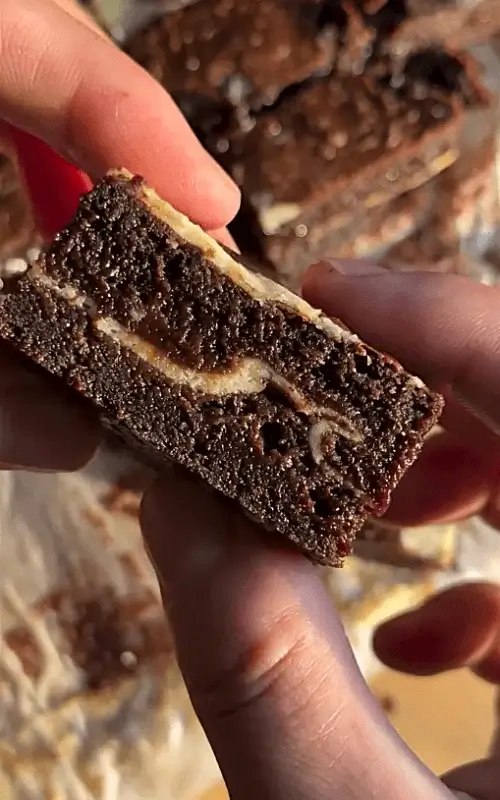
Fudgy Cheesecake Brownies
Watch the Full Step-by-Step
- 9-by-12-inch (30-by-24-cm) baking pan
- Heatproof bowl
- Mixing bowls
- Kitchen scale
INGREDIENTS
- 12 ounces/340 grams dark chocolate, chopped
- 8½ ounces/240 grams unsalted butter
- 1¼ cups/250 grams sugar
- 4 large eggs, at room temperature
- ¼ cup cocoa powder, sifted
- 1 teaspoon vanilla paste
- ⅔ cup/80 grams all-purpose flour
- ¼ teaspoon salt
- 2 cups/450 grams cream cheese, at room temperature
- 2 large eggs, at room temperature
- 1 teaspoon vanilla paste
- ⅓ cup/70 grams sugar

INSTRUCTIONS
- Heat oven to 350°F/175°C. Line a 9-by-12-inch (30-by-24-cm) pan with parchment, leaving overhang on two sides.
- Set a heatproof bowl over a saucepan of simmering water. Melt chocolate and butter, stirring until smooth. Remove from heat and whisk in sugar. Add eggs one at a time, whisking until glossy and fully incorporated. Whisk in cocoa powder, vanilla, flour and salt just until smooth.
- In a medium bowl, whisk cream cheese until completely smooth. Add eggs, vanilla and sugar, whisking until fluid and lump-free.
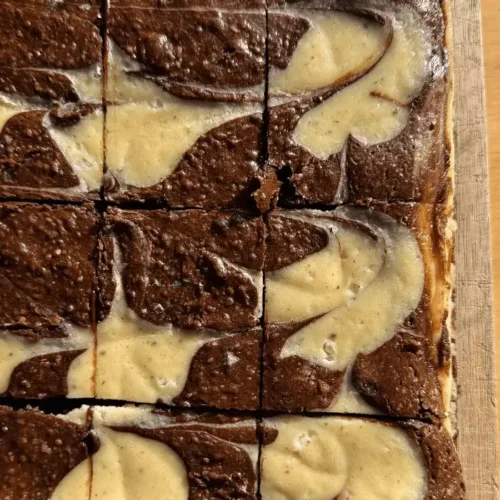
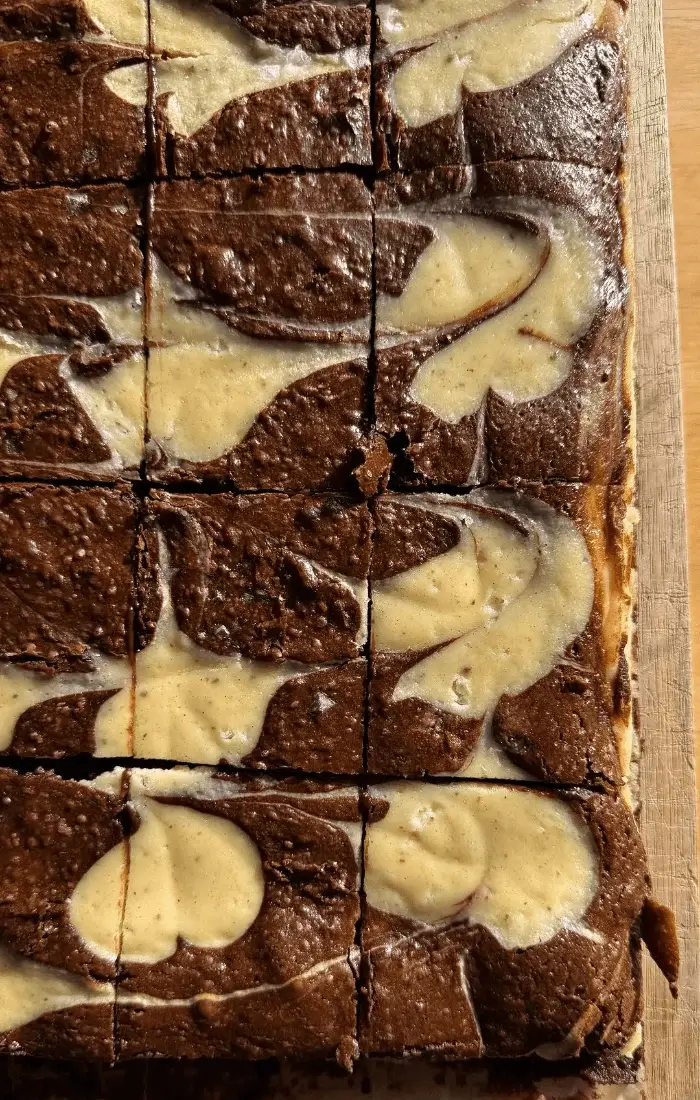
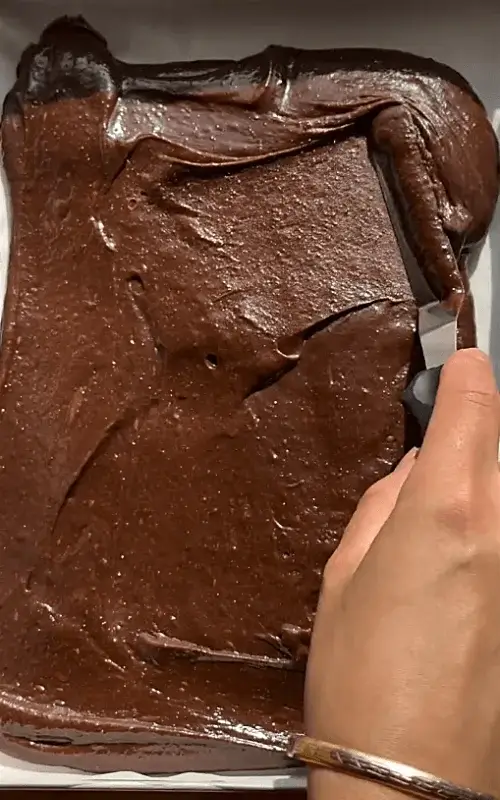
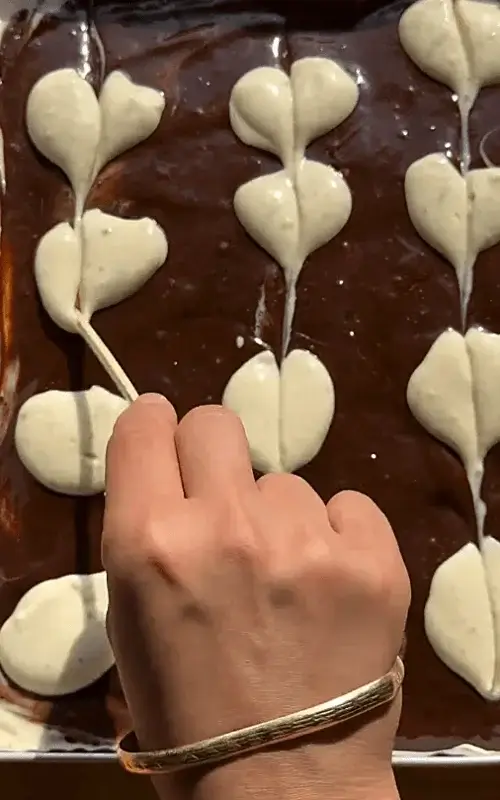
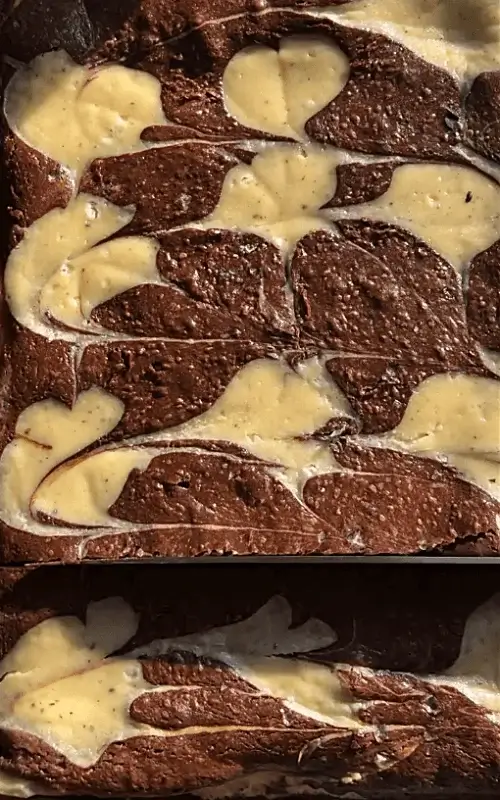
- Spread half the chocolate batter in the pan. Spoon over half the cheesecake mixture and smooth lightly. Top with remaining chocolate batter. Dollop remaining cheesecake mixture over the surface and swirl with a knife to marble.
- Bake until the edges are set and the center is slightly soft but not liquid, 22 to 28 minutes. A toothpick inserted in the center should come out with moist crumbs.
- Transfer to a rack and cool completely in the pan. Refrigerate until fully set before slicing for clean edges.
FAQ
What is the secret to making cheesecake brownies extra fudgy?
It lies in balancing the chocolate batter with the cheesecake layer while carefully controlling baking time and temperature. Using high-quality dark chocolate and unsalted butter melted together creates a dense, glossy base that holds moisture well. Gradually incorporating eggs and sugar ensures the batter emulsifies without curdling, which maintains a smooth, rich texture.
The cheesecake layer should be well-whisked and lump-free, providing a creamy contrast without adding excess liquid that could thin the batter. Baking at 350°F/175°C just until the edges are set and the center is slightly soft allows the brownies to remain moist, while the marble effect of the cheesecake creates visual appeal and layers of contrasting texture. Cooling completely in the pan before refrigerating helps the structure firm up.
Why are the edges of my cheesecake brownies hard?
Hard edges in cheesecake brownies usually result from overbaking, pan type, or batter distribution. Using a metal pan or a dark nonstick pan can conduct heat more aggressively, causing the edges to set faster and become firmer than the center. Overbaking evaporates moisture, turning edges dry and hard while leaving the interior fudgy.
Uneven spreading of the chocolate and cheesecake layers can also concentrate heat at the edges. To prevent hard edges, bake at 350°F/175°C and check the brownies early, removing them when edges are set but the center is slightly soft. Using parchment paper with overhang allows easy lifting without scraping the edges.
How can I prevent cheesecake brownies from cracking?
Preventing cheesecake brownies from cracking requires careful preparation and handling of both the chocolate and cheesecake layers. Overmixing the cheesecake mixture can incorporate too much air, which expands during baking and causes cracks, so it is important to whisk only until smooth and lump-free. Ensuring that the eggs in both layers are at room temperature allows them to blend evenly without creating bubbles that contribute to cracking.
Baking at a moderate 350°F/175°C temperature and monitoring the brownies closely is crucial; overbaking dries the edges and causes cracks in the cheesecake swirl. Swirling the cheesecake into the chocolate gently, without dragging the knife too deeply, maintains structural integrity while creating a marbled effect. Allowing the brownies to cool completely in the pan and then refrigerating them helps the layers settle uniformly, reducing stress that might otherwise cause cracks in the finished cheesecake brownies.
Can I make cheesecake brownies without eggs?
Eggs in both the chocolate and cheesecake layers act as binders and provide moisture, richness, and stability, so replacing them with alternatives is essential. Common substitutes include unsweetened applesauce, mashed banana, yogurt, or commercial egg replacers; typically, ¼ cup of applesauce or mashed banana can replace one large egg.
For cheesecake brownies, it’s best to use a combination of a moisture-retaining substitute like yogurt or silken tofu in the cheesecake layer and applesauce or a commercial egg replacer in the chocolate layer to preserve fudginess. Baking time may need slight adjustment since egg-free batters often cook faster or slower depending on moisture content.
How do I know when cheesecake brownies are done?
Cheesecake brownies are done when the edges are set and the center is slightly soft but not liquid. A toothpick inserted in the center should come out with moist crumbs rather than wet batter. Overbaking will dry out the chocolate layer and can crack the cheesecake swirl, while underbaking will leave the middle too loose to slice cleanly.
The top may appear slightly puffed or matte, and a gentle jiggle in the center is normal. Allowing the brownies to cool completely in the pan helps the center firm up while maintaining a fudgy texture. Checking for these visual and tactile cues ensures perfectly baked cheesecake brownies every time.
What is the best way to store cheesecake brownies?
After baking, allow the brownies to cool completely in the pan to prevent condensation from forming inside the storage container, which could make the chocolate layer soggy. Cover tightly with plastic wrap or aluminum foil, or transfer to an airtight container, and store in the refrigerator for up to five days.
For longer storage, cheesecake brownies freeze well; wrap each portion individually in plastic wrap, then place in a freezer-safe container or zip-top bag. Thaw in the refrigerator overnight before serving to maintain the fudgy texture and creamy cheesecake layer.
How do I achieve a perfect marbled effect in cheesecake brownies?
Start by spreading half of the chocolate batter evenly in the pan. Spoon half of the cheesecake mixture over the chocolate, smoothing lightly to create even coverage without fully mixing. Add the remaining chocolate batter on top.
Use a small spoon or knife to dollop the remaining cheesecake mixture over the surface. Swirl gently with a knife in a figure-eight or circular motion, being careful not to overmix, which would blend the layers and reduce the visual contrast.
Can I reduce sugar in cheesecake brownies?
The sugar in the chocolate layer not only sweetens but also contributes to moisture and gloss, helping the batter emulsify properly. In the cheesecake layer, sugar balances the tang of the cream cheese. Cutting sugar too drastically can make the chocolate layer dense, the cheesecake tangy, and the brownies less fudgy.
A small reduction of 10–15% is usually safe, but avoid substituting with artificial sweeteners unless designed for baking, as they can alter texture. Gradually reducing sugar while monitoring batter consistency allows for slightly less sweet cheesecake brownies without compromising richness or structural integrity.
Can cheesecake brownies be made gluten-free?
Cheesecake brownies can be adapted to a gluten-free diet by replacing the all-purpose flour with a gluten-free flour blend. Choose a blend designed for baking, ideally one that contains a mix of rice flour, potato starch, and tapioca starch, which provides a texture similar to traditional flour. Sifting the gluten-free flour before adding it to the chocolate batter prevents clumps and helps achieve a smooth, fudgy base.
Some gluten-free flours absorb more liquid, so slightly reducing the amount of liquid ingredients or adding an extra egg can help maintain the correct consistency. Ensure that all other ingredients, including cocoa powder, vanilla paste, and chocolate, are certified gluten-free to avoid cross-contamination.
Can I use a different type of chocolate for cheesecake brownies?
Dark chocolate with 60–70% cocoa is recommended for the richest fudgy result, but semisweet or milk chocolate can be substituted for a sweeter, softer base. High-quality chocolate is crucial because lower-quality chocolate may contain stabilizers or less cocoa butter, affecting how the batter melts and bakes.
When substituting chocolate, ensure that the weight remains the same, and be mindful that sweeter chocolate may require slight reductions in sugar. Chips or baking squares can also work, but they should be chopped uniformly for even melting.
How can I make cheesecake brownies more chocolatey?
You can increase both the quality and quantity of chocolate in the base while maintaining the balance with the cheesecake layer. Using chocolate with higher cocoa content, such as 70–75%, enhances the depth of flavor without increasing sweetness.
You can also fold in small chocolate chunks or chips into the chocolate batter for pockets of melted chocolate in every bite. Incorporating a tablespoon or two of cocoa powder can intensify the chocolate flavor further. Be careful not to add too much chocolate or cocoa powder, as it can make the brownies dry or overly dense.