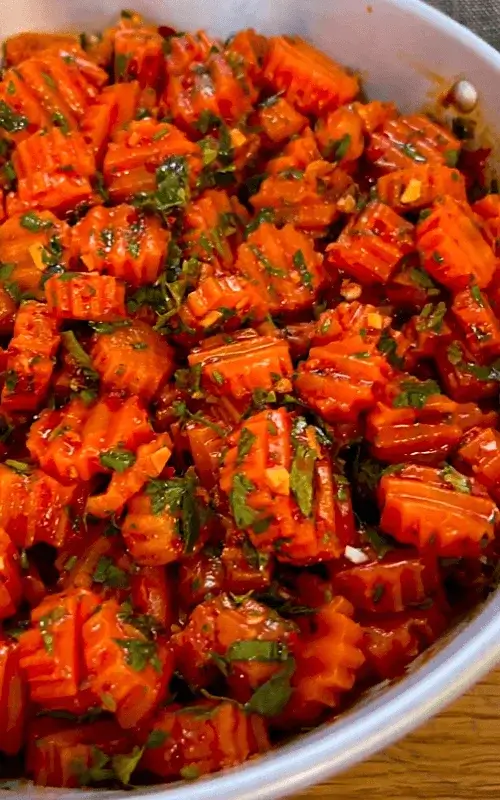
Spicy Moroccan Carrot Salad
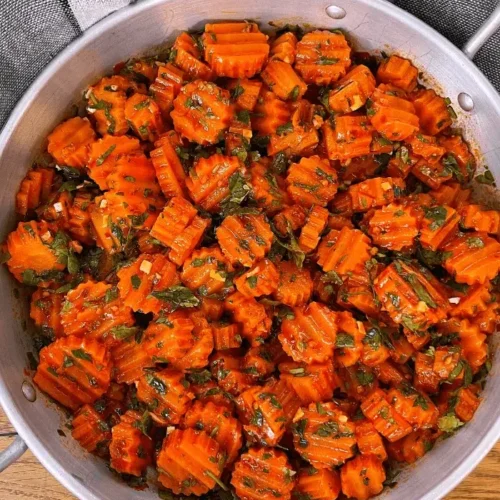
Watch the Full Step-by-Step
- Large pot
- Colander
- Chef's knife
- Large mixing bowl
INGREDIENTS
- 2 pounds/900 grams carrots, peeled
- ½ cup fresh cilantro, chopped
- ½ cup fresh parsley, chopped
- 6 garlic cloves, minced
- 2 tablespoons harissa
- 1 tablespoon preserved lemon, finely chopped
- 6 tablespoons olive oil
- ¼ cup white vinegar
- Juice of 1 lemon
- 1 tablespoon ground cumin
- 1 teaspoon sugar
- 1 teaspoon salt, plus more for the cooking water
- ½ teaspoon black pepper

INSTRUCTIONS
- Bring a large pot of generously salted water to a boil. Add the carrots and cook until just tender when pierced with the tip of a knife, 15 to 20 minutes. Drain well and let cool until easy to handle.
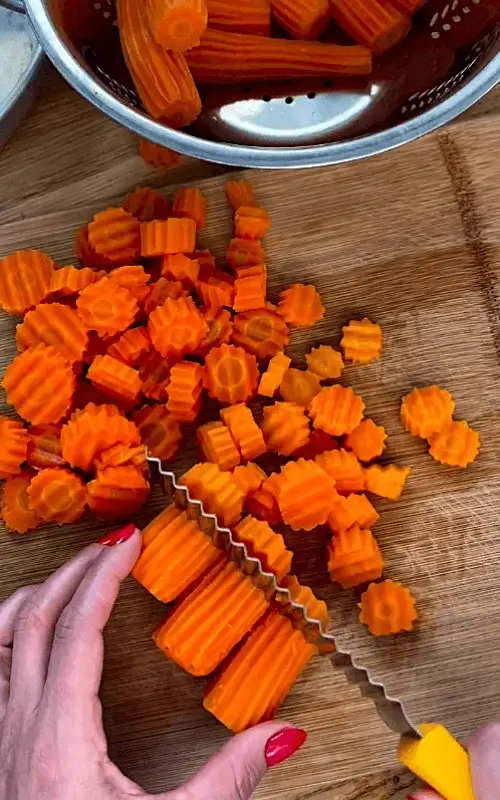
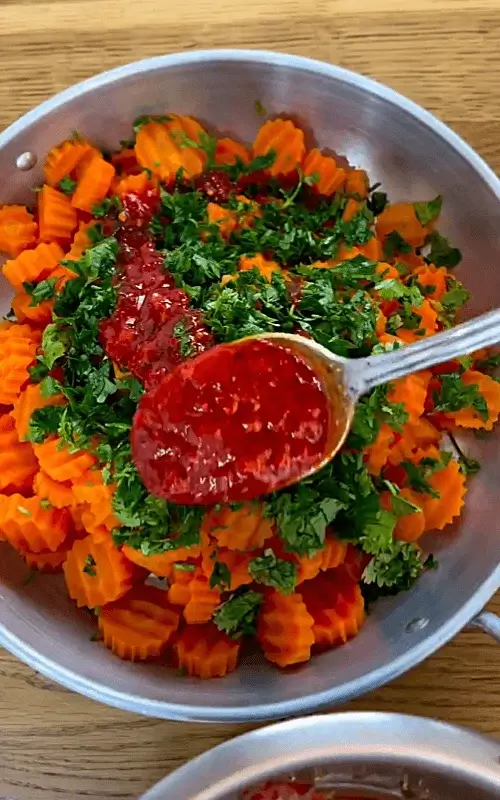
- Cut the carrots into thick rounds or bite-size pieces and transfer to a large serving bowl.
- In a small bowl, whisk together the harissa, preserved lemon, olive oil, vinegar, lemon juice, cumin, sugar, salt, and black pepper until smooth.
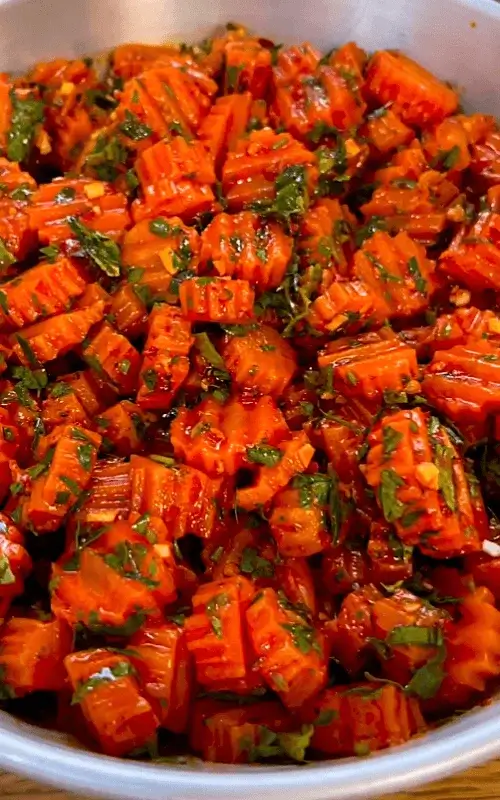
- Add the parsley, cilantro, and garlic to the carrots. Pour the dressing over the top and gently toss until evenly coated.
- Refrigerate for at least 30 minutes before serving to allow the flavors to meld. Taste and adjust the seasoning with additional salt or lemon juice, if needed. Serve chilled or at room temperature.
FAQ
What is Moroccan carrot salad made of?
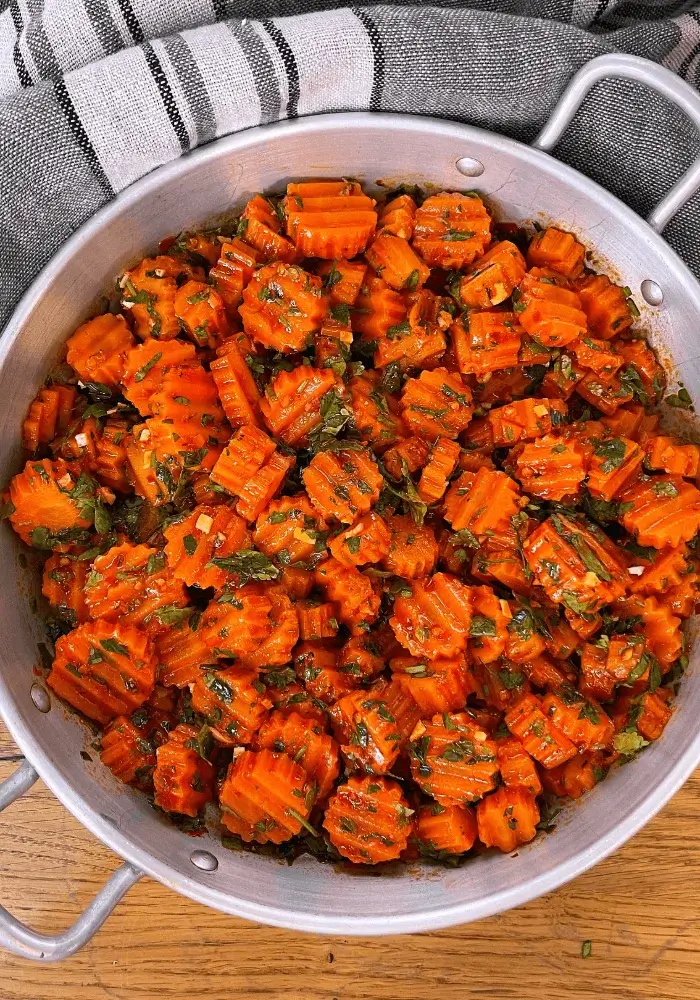
Moroccan carrot salad is built around simple cooked carrots, fresh herbs, garlic, and a strongly seasoned dressing. In this version, the carrots are boiled until just tender, then tossed with chopped cilantro and parsley, minced garlic, harissa, preserved lemon, olive oil, white vinegar, lemon juice, ground cumin, sugar, salt, and black pepper.
The flavor profile is bright, spicy, tangy, and earthy rather than creamy or heavy. The carrots should be tender enough to eat easily, but not so soft that they fall apart. Moroccan carrot salad is especially good because the ingredients are inexpensive, widely available, and easy to prepare ahead of time.
Can I make this salad without vinegar?
If omitting the vinegar, increase the fresh lemon juice slightly to maintain the salad’s acidity. Lemon juice alone creates a fresher citrus flavor, while vinegar contributes a sharper tang that helps balance the sweetness of the carrots and the richness of the olive oil.
White wine vinegar or apple cider vinegar can also be substituted if white vinegar is unavailable. The most important goal is maintaining enough acidity to keep the flavors lively. Moroccan carrot salad should taste balanced, with the citrus, spices, herbs, and olive oil working together rather than allowing one ingredient to overpower the others.
What should Moroccan carrot salad be served with?
Moroccan carrot salad works well as a side dish for grilled meats, roasted chicken, fish, lamb, and vegetable-heavy meals. Its bright acidity and gentle heat make it especially useful alongside rich or smoky foods because it cuts through heaviness and refreshes the palate. It also fits nicely on a mezze table with dips, flatbread, olives, hummus, and other salads.
Because Moroccan carrot salad can be served chilled or at room temperature, it is practical for picnics, barbecues, and holiday spreads. The salad adds color and contrast to the plate, and the spice from harissa gives it enough character to stand out without overpowering the main dish. It is flexible enough to work with both casual and more formal meals.
What type of harissa is best for this salad?
A traditional North African harissa paste is the best choice for Moroccan carrot salad because it delivers concentrated flavor along with balanced heat. Harissa made from roasted red peppers, dried chilies, garlic, olive oil, and spices provides both depth and complexity without overwhelming the carrots. Different brands vary considerably in spice level, so taste the harissa before adding the full amount.
If it is especially hot, start with a smaller quantity and adjust after mixing the salad. A smoother paste blends more evenly into the dressing than a chunky version. Moroccan carrot salad should have noticeable warmth, but the heat should complement the sweetness of the carrots rather than dominate the dish.
Can you use baby carrots for Moroccan carrot salad?
Yes, baby carrots can be used for Moroccan carrot salad, although whole carrots are generally the better choice. Whole carrots tend to have a sweeter, fresher flavor and a firmer texture after cooking. Baby carrots are often peeled and shaped from larger carrots, so they may become softer more quickly when boiled.
If using baby carrots, cook them only until they are just tender, then slice them into bite-size pieces if desired. Allow them to cool slightly before adding the dressing so they stay intact. Moroccan carrot salad relies on the carrots holding their shape while absorbing the flavorful dressing, making careful cooking more important than the type of carrot you choose.
Can I make the salad without preserved lemon?
You can make Moroccan carrot salad without preserved lemon, although the flavor will be different. Preserved lemon contributes a unique combination of citrus brightness, saltiness, and gentle fermented complexity that fresh lemon alone cannot fully replicate.
If you do not have preserved lemon, increase the fresh lemon juice slightly and add a little extra lemon zest for additional citrus flavor. You may also need a small pinch of extra salt to replace the preserved lemon’s salinity.
Can I use roasted garlic instead of raw garlic?
Roasted garlic can be used in Moroccan carrot salad if you prefer a milder, sweeter garlic flavor. Raw garlic provides a sharp bite that contrasts with the sweetness of the carrots and complements the acidity of the lemon juice and vinegar.
Roasted garlic, on the other hand, becomes soft and mellow, blending more smoothly into the dressing. If substituting, mash the roasted cloves into a paste before whisking them into the dressing so they distribute evenly. Both versions are delicious, but raw garlic produces a more traditional Moroccan carrot salad with a brighter, more assertive flavor.
How long does Moroccan carrot salad last in the refrigerator?
Moroccan carrot salad keeps well in the refrigerator for up to 4 days when stored in an airtight container. Because the dressing contains olive oil, vinegar, lemon juice, and preserved lemon, the flavors continue to develop as the salad rests. The herbs may soften slightly over time, but the overall taste often becomes more balanced after the first day.
Before serving leftovers, stir the salad well since some dressing may settle at the bottom of the container. Taste and adjust with a little fresh lemon juice or a pinch of salt if needed. Moroccan carrot salad should always be refrigerated promptly after serving and should not remain at room temperature for more than 2 hours.
Do you serve Moroccan carrot salad warm or cold?
Moroccan carrot salad is traditionally served chilled or at cool room temperature rather than hot. After cooking, the carrots should be drained and allowed to cool slightly before being mixed with the herbs and dressing. Refrigerating the salad for at least 30 minutes gives the carrots time to absorb the flavors and allows the spices, citrus, and herbs to blend together.
If you prefer not to serve it cold, let the salad sit at room temperature for about 20 to 30 minutes before serving. Moroccan carrot salad remains flavorful either way, but serving it slightly cool helps highlight the bright lemon, fresh herbs, and earthy cumin while keeping the texture pleasantly firm.