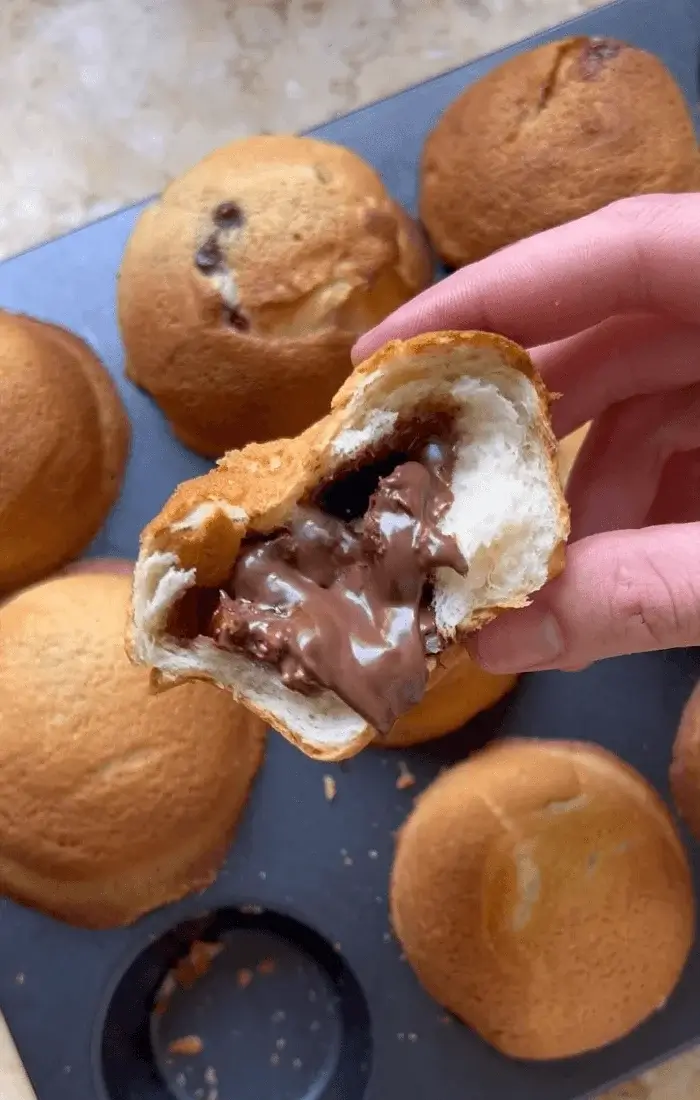
Chocolate Brioche Buns with Coffee Crust
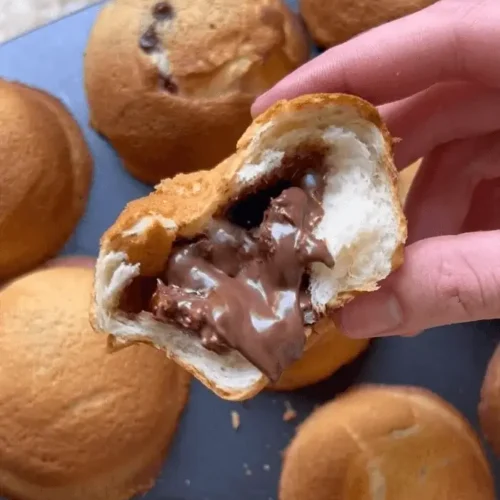
Watch the Full Step-by-Step
- Mixing bowls
- Muffin pan
- Kitchen scale
INGREDIENTS
- 3¾ cups/500 grams all-purpose flour
- 2¼ teaspoons/11 grams active dry yeast
- ¾ cup/180 milliliters milk
- ⅓ cup/75 grams granulated sugar
- 3½ ounces/100 grams unsalted butter, cubed
- 2 large eggs
- Pinch of salt
- 1 cup/300 grams chocolate spread
Coffee topping:
- 3 ounces/80 grams unsalted butter, melted
- ⅓ cup/80 grams light brown sugar
- 1 large egg
- ⅔ cup/80 grams all-purpose flour
- 1 tablespoon instant coffee dissolved in 1 tablespoon boiling water

INSTRUCTIONS
- Heat the milk, butter, sugar, and salt in a small saucepan over low heat until the butter melts. Remove from the heat and whisk in the eggs.
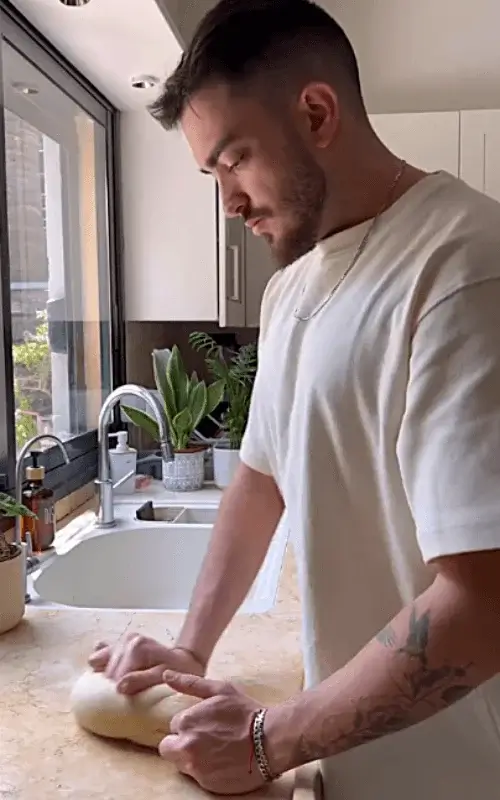
- Combine the flour and yeast in the bowl of a stand mixer fitted with a dough hook. Add the milk mixture and knead on low speed until the dough is smooth and elastic, about 10 minutes.
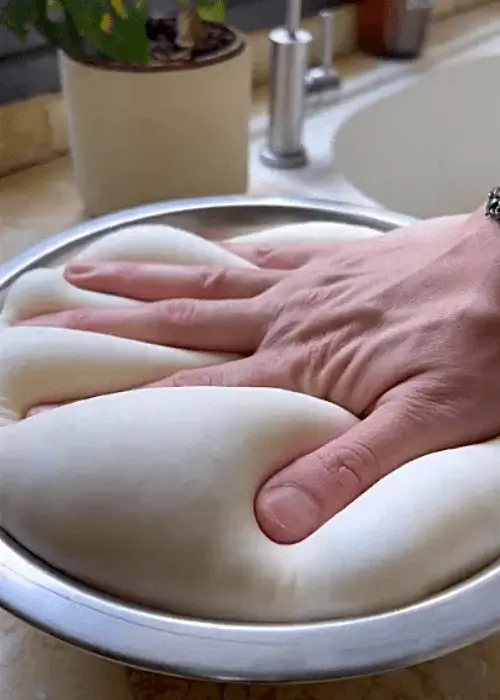
- Cover the bowl and let the dough rise at room temperature until doubled in size, 1 to 1½ hours.
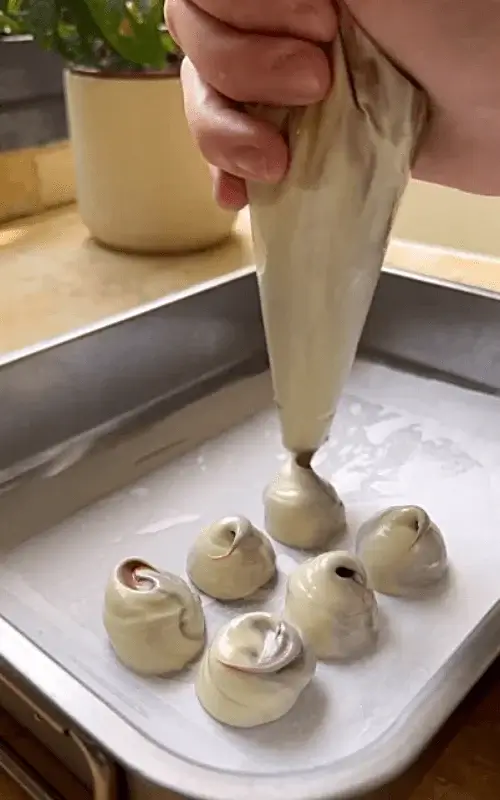
- Spoon the chocolate spread into 8 small portions on a parchment-lined tray and freeze until firm.
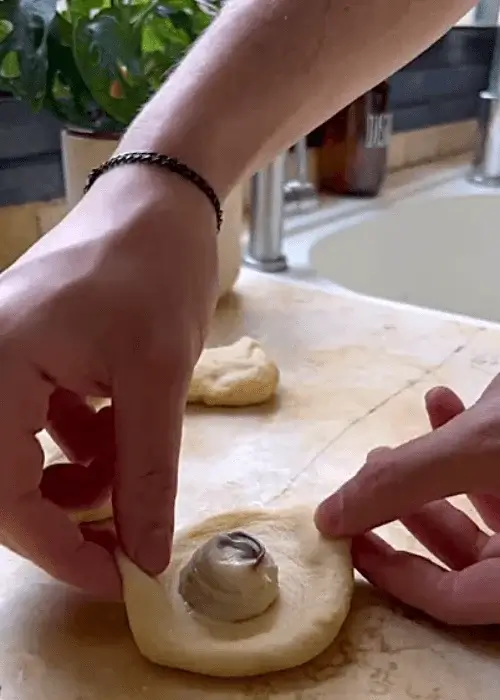
- Divide the dough into 8 equal pieces. Flatten each piece, place a frozen chocolate portion in the center, and pinch the dough closed. Roll into smooth balls.
- Arrange the buns in a greased muffin pan. Cover and let rise until puffed, about 45 minutes.
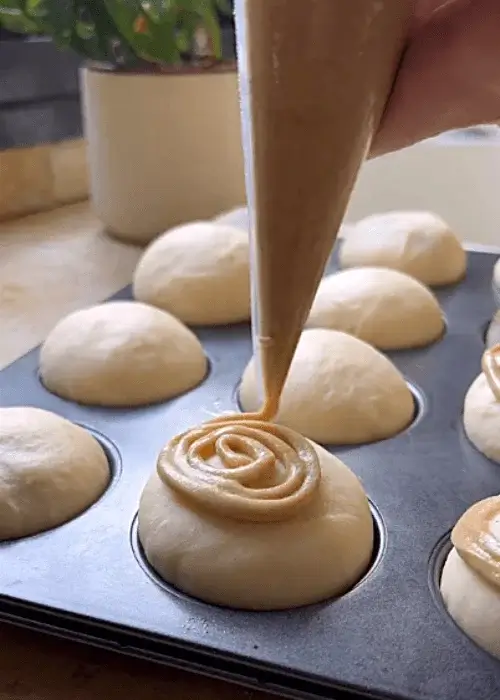
- Meanwhile, whisk the melted butter, brown sugar, egg, flour, and dissolved coffee until smooth. Transfer the mixture to a piping bag.
- Pipe the coffee topping over the buns.
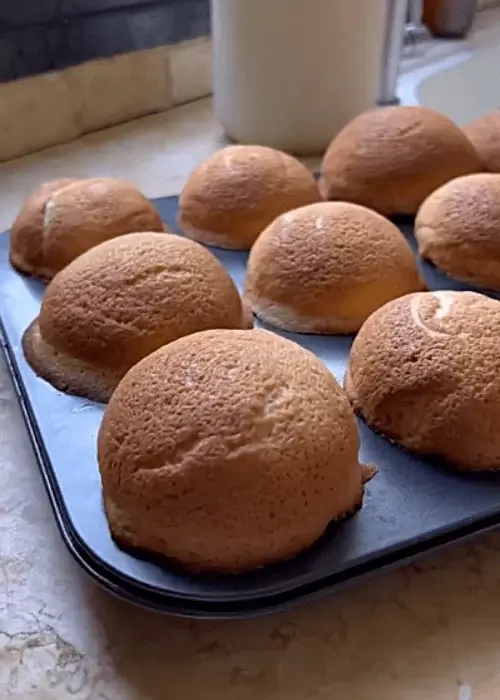
- Heat the oven to 350°F/180°C. Bake until golden brown and cooked through, about 30 minutes.
- Let cool slightly before serving.
FAQ
What makes chocolate brioche buns soft and fluffy?
To keep chocolate brioche buns soft and fluffy, the key is creating a rich, well-developed dough with proper hydration, fat, and fermentation. The combination of milk, eggs, and butter creates a tender crumb, while kneading develops the gluten structure needed to trap air and produce a light texture. The dough should feel smooth and elastic after kneading, not sticky or dense.
The first rise is important because it allows the yeast to produce gas and build flavor. Under-proofing can create heavy buns, while over-proofing may weaken the structure. Using room-temperature ingredients, allowing enough rising time, and baking until just golden helps maintain a soft interior. Storing the baked chocolate brioche buns in an airtight container also helps preserve their texture.
How can I prevent the chocolate filling from leaking out?
To prevent the filling from leaking, the chocolate spread should be firm before shaping and the dough should be sealed completely around it. Freezing small portions of the chocolate spread makes it easier to handle and keeps it centered while the buns are formed. When closing the dough, pinch the edges together firmly so there are no openings where the chocolate can escape during baking.
Avoid overfilling the buns because too much filling can put pressure on the dough seams as it expands. Rolling the filled dough into a smooth ball with the sealed side underneath also helps keep the filling contained. Proper shaping is especially important for chocolate brioche buns because the dough becomes softer as it rises.
Why do you freeze the chocolate filling before making the chocolate brioche buns?
Freezing the chocolate filling makes the shaping process easier and helps the chocolate stay centered inside the dough while baking. Soft chocolate spread can become difficult to handle when placed inside a delicate brioche dough because it may spread or leak before the buns are sealed. By freezing small portions first, the filling becomes firm enough to wrap with the dough and creates a more defined chocolate center.
During baking, the frozen filling gradually melts as the brioche cooks, resulting in a smooth, rich texture inside the bun. This technique is especially helpful for chocolate brioche buns because the dough is soft and enriched, making it more sensitive to handling compared with regular bread dough.
How do I get a stronger coffee flavor in the topping?
To get a stronger coffee flavor in the topping of chocolate brioche buns, use a concentrated amount of instant coffee dissolved in a small amount of hot water. Dissolving the coffee first ensures it distributes evenly through the topping instead of creating dry granules.
You can adjust the intensity slightly by adding more coffee, but adding too much liquid may thin the topping and affect how it sits on the buns. The coffee crust is designed to complement the chocolate filling, creating a balance between bitterness and sweetness. A strong coffee flavor works especially well because the rich brioche dough and chocolate center already provide a sweet, buttery base.
How do I know when chocolate brioche buns are fully baked?
Chocolate brioche buns are fully baked when the exterior is evenly golden brown and the dough feels set rather than soft or doughy. Since brioche contains butter, milk, and eggs, the crust may brown faster than the interior cooks, so it is important to bake them for the full recommended time. The tops should look firm, and the buns should have a light, airy texture when gently pressed.
If using a thermometer, the internal temperature should generally reach around 190°F/88°C for enriched breads. Avoid removing the buns too early, as the center may remain undercooked. Letting the chocolate brioche buns cool slightly after baking also allows the crumb to finish setting while keeping the filling smooth.
Can I reduce the sugar in chocolate brioche buns?
The sugar in chocolate brioche buns contributes to both flavor and texture, so reducing it will slightly change the final result. Sugar adds sweetness, helps keep the crumb tender, and supports browning during baking. A small reduction is usually possible, but removing too much may make the buns less soft and less flavorful.
Since the filling already contains chocolate spread, the overall sweetness also depends on the type of spread used. If you prefer a less sweet version, using a darker chocolate spread can balance the flavor without significantly changing the dough. It is best to avoid major ingredient changes in brioche recipes because the balance of flour, fat, liquid, and sugar affects the structure.
Why did my brioche buns not rise properly?
Brioche buns may fail to rise properly because of inactive yeast, incorrect temperatures, insufficient kneading, or an unsuitable proofing environment. Yeast needs warmth and time to produce the gases that expand the dough. If the milk mixture is too hot, it can reduce yeast activity, while a cold environment can slow fermentation significantly.
The dough also needs enough kneading to develop gluten so it can hold the air created by the yeast. Another common issue is adding too much flour, which can make the dough heavy and restrict expansion. Checking that the dough doubles during the first rise and becomes visibly puffy during the second rise helps ensure the buns will bake up light and airy.
Why does brioche dough need more kneading than regular bread dough?
Brioche dough requires more kneading because it contains ingredients that make the dough richer and softer than traditional bread dough. The eggs, milk, sugar, and butter add flavor and tenderness but also make gluten development slower. Proper kneading helps strengthen the gluten network so the dough can hold the gases produced by the yeast and rise properly.
Without enough kneading, chocolate brioche buns can turn out dense instead of light and airy. During mixing, the dough may look sticky at first, but as the gluten develops it becomes smoother and more elastic. Using a stand mixer with a dough hook makes the process easier because enriched dough needs consistent mixing to reach the right texture without adding too much extra flour.
What is the best way to activate yeast for chocolate brioche buns?
For chocolate brioche buns, active dry yeast should be mixed with the flour as directed in the recipe rather than separately activated unless the recipe specifically requires it. Yeast works best when combined with ingredients that are not too hot, because high temperatures can reduce its effectiveness. The milk mixture should be warm enough to melt the butter but not boiling before it is added to the dough.
Once combined, the yeast begins working during the first rise, producing gas that expands the dough. Fresh, properly stored yeast is important because old yeast may rise slowly or fail completely. A properly fermented dough should noticeably increase in volume and feel lighter when ready.
How should I store chocolate brioche buns after baking?
Chocolate brioche buns are best enjoyed fresh because the texture is at its softest shortly after baking. To store them, allow the buns to cool completely before placing them in an airtight container or sealed bag at room temperature. Keeping them covered prevents moisture loss and helps maintain the tender crumb created by the enriched dough. They can usually stay fresh for a few days, although the crust may soften over time.
For longer storage, the buns can be frozen once fully cooled. Wrap them individually and thaw at room temperature before serving. A short warm-up in the oven can restore some of the fresh-baked texture and make the chocolate filling soft again.
Why is milk used in chocolate brioche buns instead of water?
Milk is used in chocolate brioche buns because it adds richness, flavor, and tenderness to the dough. Compared with water, milk contains proteins and fats that contribute to a softer crumb and a more delicate texture. The natural sugars in milk also help with browning during baking, creating a more appealing golden crust.
In an enriched dough like brioche, milk works together with butter and eggs to create the soft, fluffy structure that makes the buns different from regular bread. Milk also helps dissolve the sugar and distribute the ingredients evenly throughout the dough. Using milk at the correct temperature is important because overly hot liquid can damage yeast activity, while cold milk can slow the rising process.
What type of chocolate spread works best for chocolate brioche buns?
A thick chocolate spread works best for chocolate brioche buns because it stays inside the dough during shaping and creates a smooth filling after baking. A spread that is too thin may leak through the seams or make the dough harder to seal. Freezing portions of the chocolate spread before assembling the buns helps maintain a clean shape and keeps the filling concentrated in the center.
Hazelnut-based chocolate spreads, dark chocolate spreads, or milk chocolate spreads can all work depending on the flavor you prefer. The main goal is choosing a filling with a creamy consistency that melts gently while the brioche bakes, creating a soft chocolate center without making the dough soggy.
Can I freeze chocolate brioche buns?
Yes, chocolate brioche buns freeze well when stored properly. Freezing is a good option if you want to prepare them in advance or save leftovers. After baking, allow the buns to cool completely before wrapping them tightly to prevent freezer burn and moisture loss. They can be thawed at room temperature and gently warmed before serving to soften the crumb and refresh the texture.
You can also freeze the shaped, unbaked buns before the final rise, then thaw them in the refrigerator and allow them to rise before baking. This method gives a fresher result because the buns are baked closer to serving time. Proper storage helps preserve the soft brioche texture and chocolate filling.
Can I make chocolate brioche buns without a stand mixer?
Yes, chocolate brioche buns can be made without a stand mixer, although the dough requires more effort by hand. Brioche dough is rich and sticky, so kneading by hand takes longer than making a basic bread dough. The goal is to develop enough gluten until the dough becomes smooth, stretchy, and elastic.
A common method is to knead the dough on a lightly greased surface instead of adding extra flour, because too much flour can make the buns heavier. The butter and eggs will make the dough feel different from regular bread dough, but continued kneading will improve the texture. Once properly developed, the dough should rise well and create soft, bakery-style buns.
Why did my chocolate brioche buns turn out dense?
Dense chocolate brioche buns are usually caused by issues with kneading, proofing, yeast activity, or ingredient measurements. If the dough is not kneaded enough, it will not develop the gluten structure needed for a light texture. If the dough does not rise long enough, the yeast will not have enough time to create air pockets.
On the other hand, over-proofing can cause the dough structure to weaken and collapse. Cold ingredients can also slow down yeast activity, making the rising process longer. Accurate measurements are important because enriched dough relies on a careful balance of flour, liquid, fat, and sugar. Following the full rise times and checking that the dough doubles in size will help create lighter chocolate brioche buns.