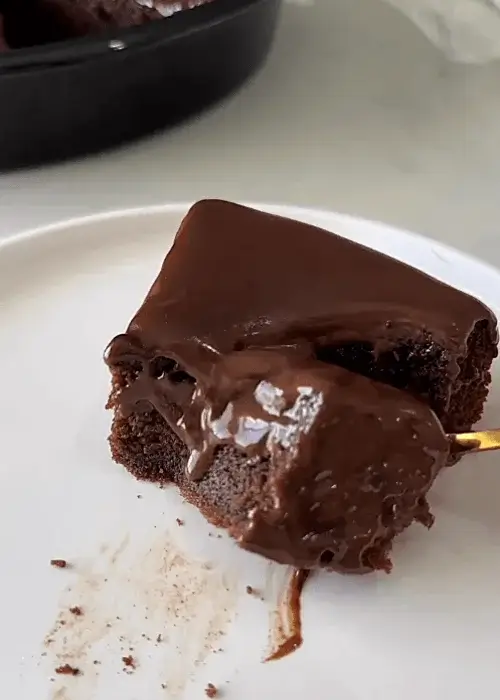
Classic Chocolate Cake with Ganache
Watch the Full Step-by-Step
- Mixing bowls
- Small saucepan
- Kitchen scale
INGREDIENTS
- 4 large eggs
- 1 cup/200 grams sugar
- 1 cup/200 grams oil
- 3.5 ounces/100 grams dark chocolate, chopped
- 3 tablespoons/20 grams unsweetened cocoa powder
- 1¼ cups/160 grams self-rising flour
- 1 cup/240 milliliters water
- 2.8 ounces/80 grams dark chocolate, chopped
- 2.8 ounces/80 grams milk chocolate, chopped
- ¾ cup/200 milliliters heavy whipping cream

INSTRUCTIONS
- Heat the oven to 340°F/170°C with the convection setting. Grease a baking pan.
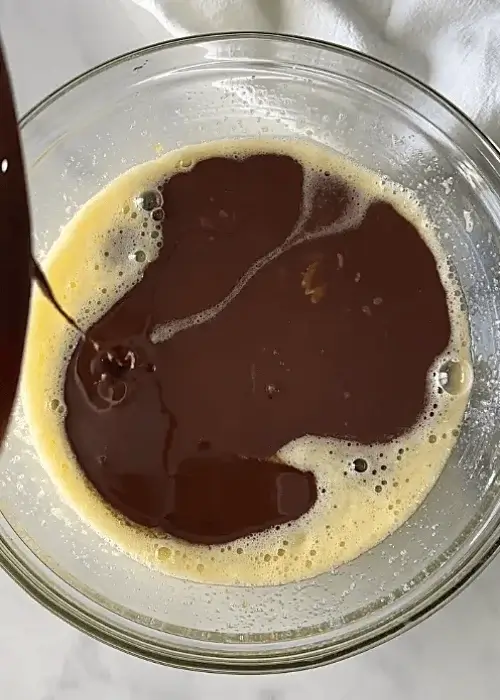
- Melt the dark chocolate and oil together in short intervals, stirring after each, until smooth.
- Whisk the eggs and sugar in a large bowl until well combined. Add the melted chocolate mixture and whisk until smooth.
- Sift in the cocoa powder. Add the self-rising flour and water and stir just until the batter is smooth.
- Pour the batter into the prepared pan. Bake until a toothpick inserted in the center comes out with a few moist crumbs, 30 to 35 minutes, depending on the size of the pan.
- Let the cake cool completely in the pan.
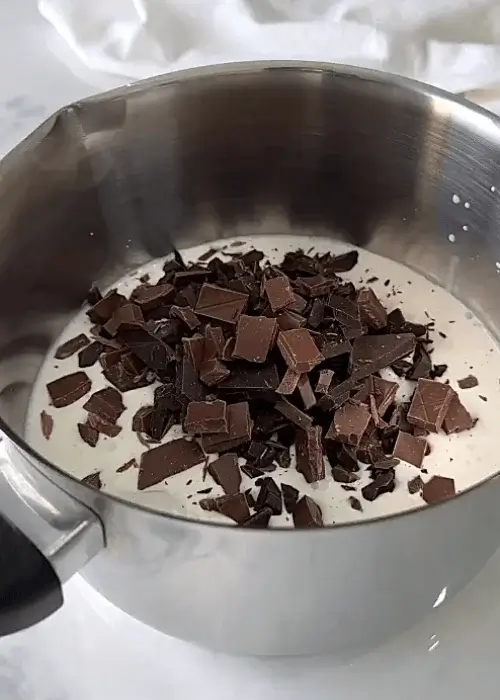
- Make the ganache: Combine the dark chocolate, milk chocolate and heavy cream in a small saucepan over medium heat. Cook, stirring occasionally, just until the chocolate has melted and the mixture is smooth. Do not let it boil.
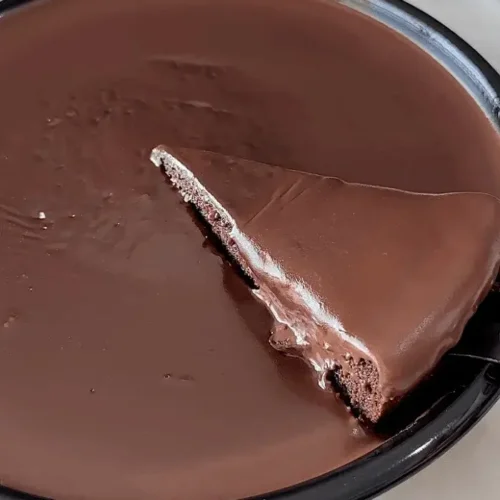
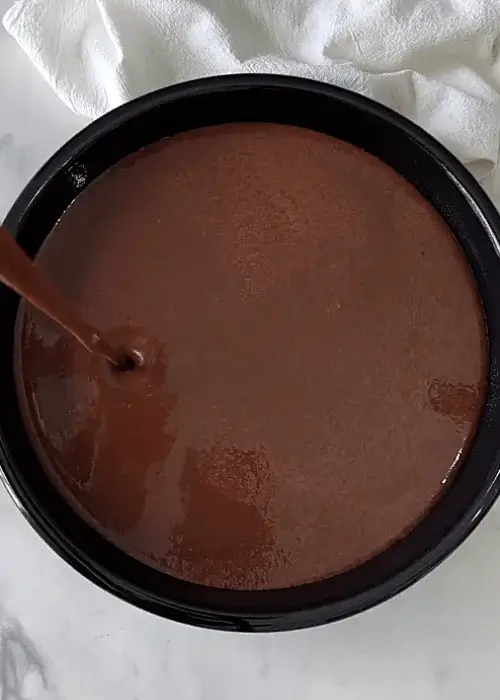
- Pour the ganache over the cooled cake. Refrigerate until the ganache is set, about 1 hour. Slice and serve.
RECIPE NOTES
FAQ
What makes a chocolate cake with ganache moist and tender?
This chocolate cake with ganache gets much of its moist texture from the combination of oil, water, eggs, and melted dark chocolate in the batter. Oil remains liquid at room temperature, so it keeps the cake softer than butter-based cakes, even after chilling. Water also provides the moisture needed to hydrate the flour and cocoa without making the batter excessively rich or heavy.
The eggs contribute structure while retaining enough moisture to keep the crumb tender. The melted dark chocolate adds cocoa solids and fat, giving the cake a richer texture and deeper chocolate flavor. It is important not to overmix the batter after adding the flour, because excessive mixing develops gluten and can make the finished cake dense or chewy. Baking only until a toothpick comes out with a few moist crumbs is also important. Overbaking is one of the main causes of dry chocolate cake.
Can I make this chocolate cake with ganache without a convection oven?
Yes. This chocolate cake with ganache can be baked in a conventional oven, but the temperature should generally be increased because conventional ovens do not circulate hot air as efficiently as convection ovens. The recipe specifies 340°F/170°C with convection, so a conventional oven can typically be set to about 350°F/175°C. The exact baking time will depend on the size, shape, and material of the pan.
Begin checking the cake toward the lower end of the suggested 30-to-35-minute range. Insert a toothpick into the center rather than near the edge. It should come out with a few moist crumbs rather than completely wet batter. If it comes out completely clean, the cake may already be slightly overbaked. Oven temperatures vary considerably, so the toothpick test is more reliable than time alone. Let the cake cool completely in the pan before adding the ganache.
What type of chocolate should I use for the cake and ganache?
Use good-quality dark chocolate for the cake and for the dark chocolate portion of the ganache. The recipe also uses milk chocolate in the ganache, which balances the bitterness of the dark chocolate and gives the topping a smoother, sweeter flavor. For the cake batter, dark chocolate with a cocoa percentage around 50 to 70 percent works well because it provides a pronounced chocolate flavor without making the cake excessively bitter.
The cocoa powder should be unsweetened because the recipe already contains sugar. For the ganache, choose chocolate that melts smoothly and has a flavor you enjoy on its own. Chocolate chips can work, but chopped chocolate bars often produce a smoother ganache because they are formulated to melt evenly. Avoid chocolates containing large inclusions, such as nuts or caramel pieces, because they can affect the texture of the ganache.
How can I get clean slices?
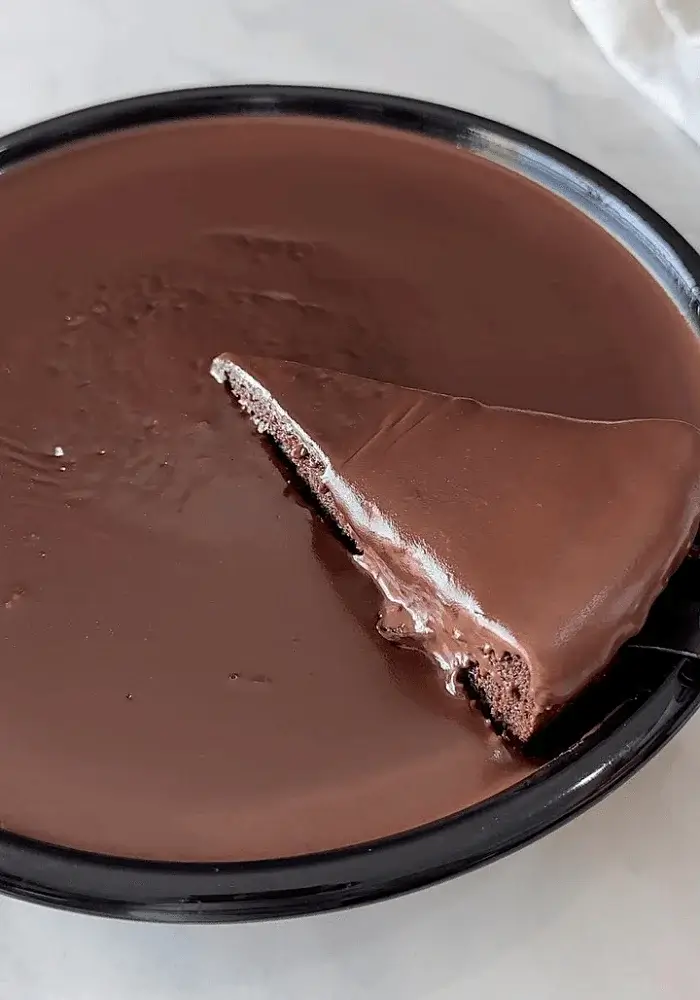
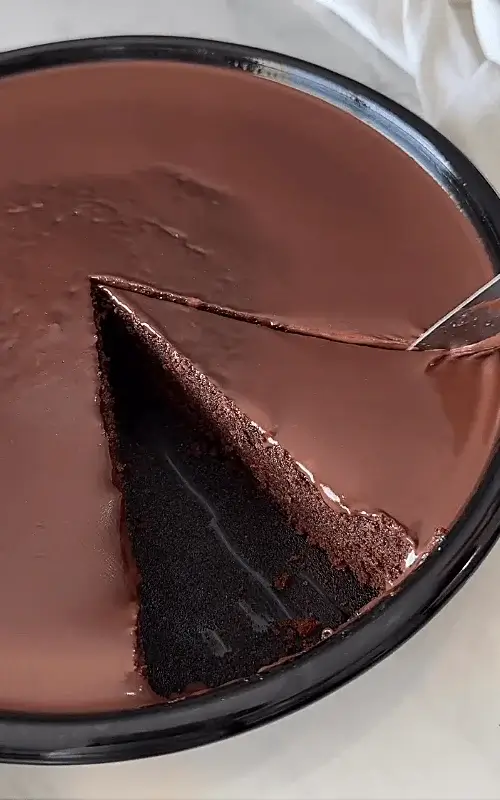
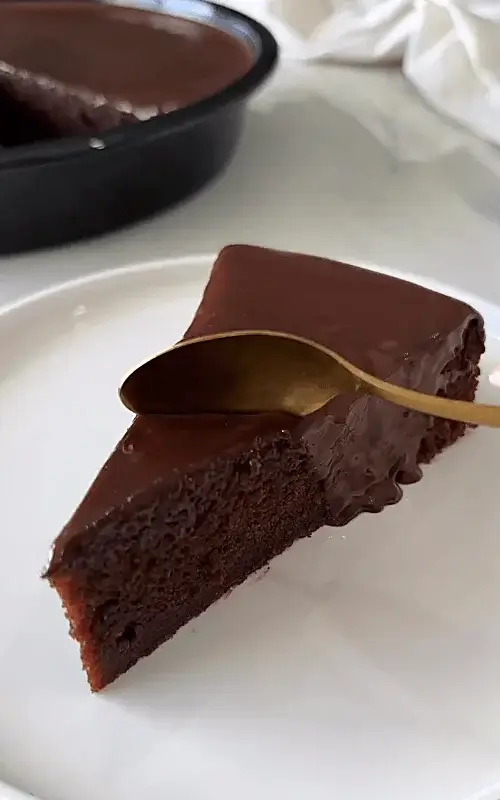
For clean slices, allow the ganache on the chocolate cake with ganache to set completely in the refrigerator before cutting. A sharp chef’s knife or other long, thin knife works best because it can cut through the cake and topping in one smooth motion. Dip the knife briefly in hot water, then dry it thoroughly before making each cut. The warm blade helps glide through the chilled ganache without cracking or dragging it. Wipe the knife clean after each slice and repeat the process for the next cut.
Avoid pressing down heavily on the cake because this can compress the tender crumb and push the ganache toward the sides. If the cake has been refrigerated for several hours and the ganache is very firm, letting it sit at room temperature for a short time can make slicing easier. Cutting the cake while it is properly chilled, rather than while the ganache is still soft, will produce the cleanest edges.
How do I know when the chocolate cake is fully baked?
The most reliable way to determine when the cake is finished is to test the center with a toothpick or thin skewer. According to the recipe, the toothpick should come out with a few moist crumbs attached. It should not contain streaks of raw batter, but it also does not need to be completely clean. A completely clean toothpick can indicate that the cake has been baked longer than necessary, particularly because chocolate cakes continue to firm slightly as they cool.
The surface should look set rather than wet, and the center should no longer appear liquid or excessively jiggly. Because baking time depends on the size and material of the pan, 30 to 35 minutes is a guideline rather than an absolute rule. A deeper cake generally takes longer, while a wider, shallower cake can finish sooner. Avoid repeatedly opening the oven during the first part of baking because this can cause the cake to lose heat and affect its rise.
How should I store this chocolate cake with ganache?
Store chocolate cake with ganache covered in the refrigerator after the ganache has been applied and set. Refrigeration is recommended because the ganache contains heavy whipping cream, and keeping the finished cake cold helps maintain both food safety and the structure of the topping. Cover the cake well so it does not dry out or absorb odors from other foods in the refrigerator. The cake’s oil-based crumb helps it remain relatively tender while chilled, although the ganache will naturally become firmer.
Before serving, you can let the cake sit at room temperature for a short period if you prefer a softer texture. Keep the cake refrigerated again after serving rather than leaving it out for extended periods. If you need to store it for longer, freezing is also possible with proper airtight wrapping. Always use clean utensils when cutting and serving the cake to reduce contamination.
Can I use all-purpose flour instead of self-rising flour?
Self-rising flour is specified in this chocolate cake with ganache because it provides both the flour and leavening needed for the recipe. If you only have all-purpose flour, you can generally substitute it, but you will need to add a leavening agent separately. For the recipe’s 1¼ cups/160 grams of self-rising flour, a common substitution is 1¼ cups/160 grams all-purpose flour combined with baking powder and salt.
However, because the exact formulation of self-rising flour varies by brand and the original recipe does not list separate quantities for baking powder or salt, the substitution may produce a slightly different result. Do not simply replace the self-rising flour with an equal amount of all-purpose flour without adding leavening, because the cake may rise less and become denser. For the most predictable result, self-rising flour is the preferred choice.
Why is my chocolate cake with ganache dense?
A dense chocolate cake can result from several factors, including overmixing, incorrect flour measurement, insufficient leavening, or underbaking. In this chocolate cake with ganache, the batter should be mixed only until the flour and water are incorporated and the mixture is smooth. Once flour is added, excessive stirring develops gluten, which can make the cake heavier and more elastic. Measuring the flour by weight is especially helpful because too much flour can create a thick, dense batter.
The recipe uses 1¼ cups/160 grams of self-rising flour, so weighing it provides the most consistent result. The cake also needs to bake fully; removing it while the center still contains wet batter can produce a dense or gummy texture. At the same time, overbaking can make the cake dry rather than light. Make sure your self-rising flour is fresh and that your oven reaches the stated temperature before baking.
Why did my chocolate ganache turn grainy instead of smooth?
A grainy ganache is usually caused by overheating, improper mixing, or chocolate that has not fully emulsified with the cream. For this chocolate cake with ganache, the chocolate and heavy cream should be heated gently over medium heat and stirred only until the chocolate melts and the mixture becomes smooth. The cream should not be allowed to boil. Excessive heat can cause the cocoa butter to separate from the other ingredients, producing a greasy or grainy texture.
Using chocolate that melts unevenly can also contribute to the problem. Chopping the chocolate into relatively small, even pieces helps it melt uniformly. If the ganache appears slightly uneven, continued gentle stirring can sometimes bring it back together. Avoid adding cold liquid directly to hot ganache because sudden temperature changes can make emulsification more difficult. Once smooth, pour the ganache over the completely cooled cake and refrigerate it until set.
Can I freeze this chocolate cake with ganache?
Yes, chocolate cake with ganache can be frozen, although the texture of the ganache may change slightly after thawing. To freeze it successfully, allow the ganache to set completely in the refrigerator first. Then cover the cake tightly with plastic wrap or another airtight covering and place it in a freezer-safe container or additional protective wrapping. Proper protection is important because exposed cake can develop freezer burn and absorb odors.
Thaw the cake in the refrigerator rather than at room temperature so condensation is minimized and the ganache remains stable. Once thawed, allow it to sit briefly at room temperature before serving if you want a softer crumb and ganache. Do not repeatedly freeze and thaw the cake because repeated temperature changes can negatively affect both the crumb and topping. For the best texture, freeze the cake in individual portions if you expect to serve it gradually.