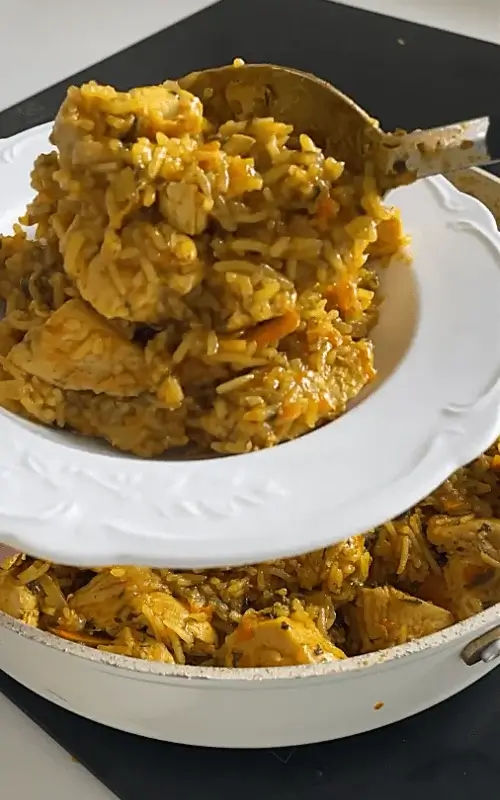
Easy One Pot Chicken and Rice
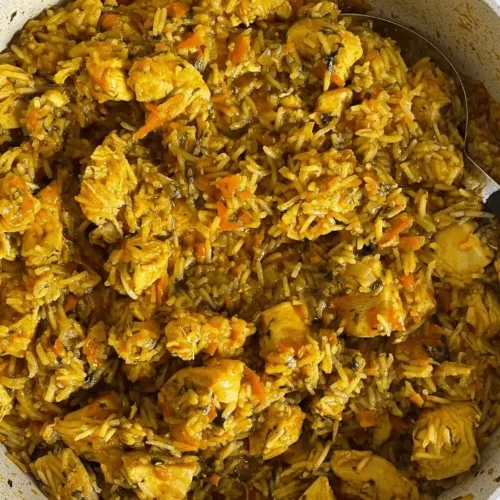
Watch the Full Step-by-Step
- Chef's knife
- Box grater
INGREDIENTS
- 2 tablespoons oil
- 2 large onions, thinly sliced
- 2.2 pounds/1 kilogram boneless, skinless chicken breast, cut into bite-size pieces
- 1 large carrot, grated
- 2 cups long-grain white rice, rinsed
- 3 to 3½ cups boiling water
- 2 tablespoons fresh cilantro, finely chopped
- 2 tablespoons fresh dill, finely chopped
- 1½ teaspoons salt, or to taste
- ½ teaspoon black pepper
- 1 teaspoon paprika
- ¼ teaspoon ground turmeric
- 1 teaspoon onion powder
- ½ teaspoon garlic powder

INSTRUCTIONS
- Heat the oil in a wide, heavy pot over medium heat. Add the onions and cook, stirring occasionally, until deeply golden, 10 to 15 minutes.
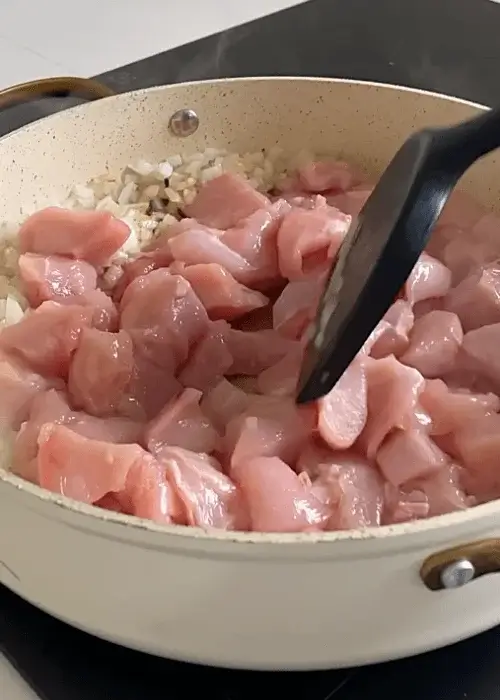
- Add the chicken and cook until lightly browned on all sides, about 5 minutes.
- Stir in the carrot, salt, pepper, paprika, turmeric and chicken bouillon, and cook until fragrant, 2 to 3 minutes.
- Add the rice, cilantro and dill, and stir well to coat.
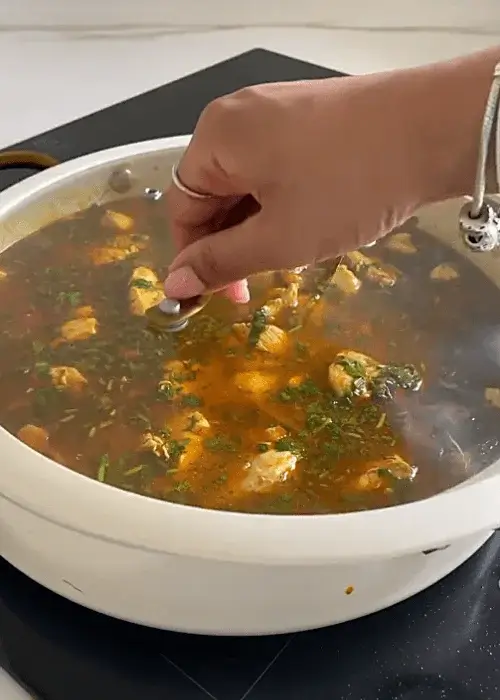
- Pour in the boiling water and bring to a simmer. Cover, reduce heat to low and cook until the rice is tender and the liquid absorbed, 35 to 40 minutes.
- Remove from heat and let sit, covered, for 5 to 10 minutes. Fluff gently and serve.
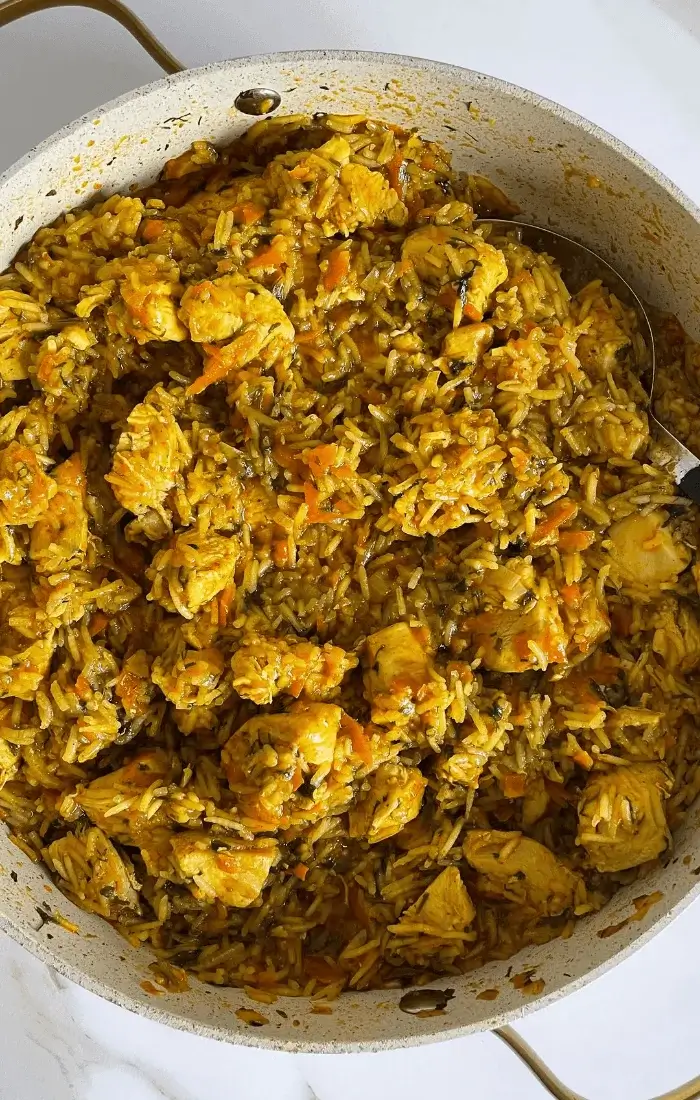
FAQ
What type of rice works best for easy one pot chicken and rice?
Long-grain white rice is the most reliable choice for easy one pot chicken and rice because it cooks evenly and stays separate rather than becoming sticky or clumped. Varieties like jasmine or basmati both work well, though jasmine tends to be slightly softer while basmati remains more distinct and fluffy.
Short-grain rice should be avoided unless you intentionally want a creamier, stickier texture, as it releases more starch during cooking. Brown rice can be used, but it requires a longer cooking time and more liquid.
Rinsing the rice thoroughly before cooking is critical, as it removes excess surface starch and prevents gumminess. This step ensures that the grains absorb the seasoned liquid more evenly, resulting in a balanced flavor throughout the dish. Using the correct rice-to-liquid ratio is also essential; too much water leads to mushy rice, while too little results in undercooked grains.
Can I substitute chicken thighs for chicken breast?
Chicken thighs are an excellent substitute in easy one pot chicken and rice and are often preferred for their higher fat content and deeper flavor. Unlike chicken breast, which can dry out if overcooked, thighs remain tender and juicy even after extended cooking. Boneless, skinless thighs are the easiest swap and require no major adjustments, while bone-in thighs can also be used but may need slightly longer cooking time to ensure they are fully cooked.
When using thighs, you may notice more rendered fat during cooking, which can enhance the richness of the dish. However, if excessive fat accumulates, you can spoon off a small amount before adding the rice. The cooking method remains the same, but it is important to ensure the chicken reaches a safe internal temperature. Browning the thighs properly at the start helps build a deeper flavor base, which carries through the rice as it cooks.
Why is my rice undercooked or mushy in easy one pot chicken and rice?
Texture issues in easy one pot chicken and rice usually come down to incorrect liquid ratios, heat control, or cooking technique. Undercooked rice often results from insufficient liquid or cooking time, while mushy rice is typically caused by excess water or too much stirring during cooking. Maintaining a consistent low simmer is crucial, as high heat can evaporate liquid too quickly before the rice fully cooks.
Another common mistake is lifting the lid during cooking, which releases steam and disrupts the controlled environment needed for proper absorption. The type of pot also matters; a heavy, wide pot distributes heat more evenly and prevents hot spots that can cause uneven cooking. Measuring both rice and water accurately is non-negotiable, and allowing the dish to rest after cooking helps the remaining moisture redistribute evenly.
What can I serve with easy one pot chicken and rice?
Fresh, crisp salads provide contrast to the warm, savory rice, with options like cucumber salad, tomato salad, or a simple green salad dressed with lemon and olive oil. These add brightness and acidity, which balance the richness of the dish.
Yogurt-based sides, such as plain yogurt or a light yogurt sauce with herbs and garlic, complement the spices and add a cooling element. Pickled vegetables or olives can also introduce a sharp, tangy contrast that cuts through the savory flavors. If you prefer something heartier, roasted vegetables like zucchini, eggplant, or carrots work well without overpowering the main dish.
How do I increase flavor depth in easy one pot chicken and rice?
Allowing onions to fully caramelize creates natural sweetness and umami, which forms the foundation of the dish. Browning the chicken rather than just steaming it also develops Maillard reactions, which contribute savory complexity. These early steps are essential and should not be rushed, as they define the final flavor profile.
Spice blooming is another critical technique. Cooking paprika, turmeric, and aromatics briefly in hot oil before adding liquid helps release fat-soluble flavor compounds, making the spices more pronounced and integrated. Using fresh herbs at the end adds brightness that contrasts the richness of the rice and chicken. A small amount of bouillon or concentrated stock base can also deepen umami without complicating the method.
What is the best pot to use for easy one pot chicken and rice?
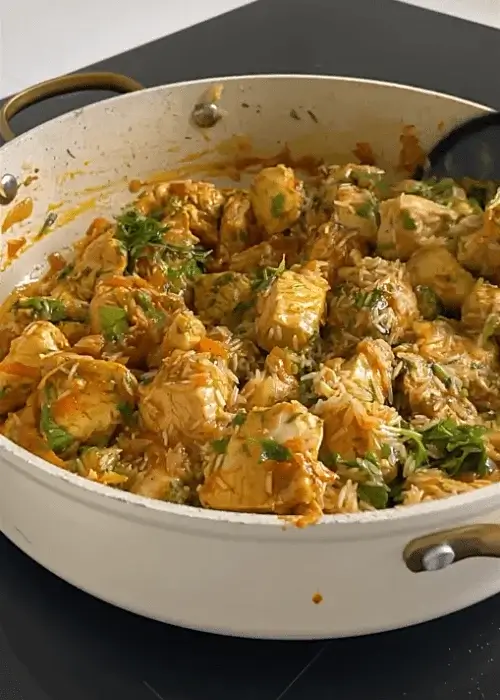
The best pot for easy one pot chicken and rice is a heavy-bottomed wide pot or a Dutch oven because both provide even heat distribution and reduce the risk of scorching the rice at the bottom. A wider surface area allows the onions and chicken to brown properly before the rice is added, which is essential for developing depth of flavor.
Thin pots tend to create hot spots that lead to uneven cooking, where some rice grains overcook while others remain underdone. A tight-fitting lid is also critical because the dish relies on steam to fully cook the rice once the liquid is added.
Cast iron enameled Dutch ovens are especially effective because they maintain steady heat throughout the cooking process, even when the temperature is reduced to low. Stainless steel heavy-bottom pots also work well if they have good heat retention. Nonstick pots are acceptable but less ideal for building fond during the initial sauté stage, which contributes to overall flavor.
Can I make easy one pot chicken and rice without onions?
Onions contribute sweetness, savory flavor, and aromatic depth when caramelized, so omitting them will result in a slightly flatter profile unless replaced thoughtfully. Alternatives include leeks, shallots, or even finely minced celery, which can mimic some of the aromatic base while maintaining structure in the dish.
If you remove onions entirely, it becomes more important to rely on seasoning and spices like paprika, turmeric, garlic powder, and onion powder already in the recipe. These will help rebuild complexity, but the dish will lean more toward a straightforward seasoned rice and chicken rather than a layered aromatic pilaf. Browning the chicken more deeply at the start also becomes more important to create additional flavor compounds.
How do I prevent the chicken from drying out?
Preventing dry chicken in easy one pot chicken and rice depends on timing, heat control, and cut size. Cutting the chicken into evenly sized bite-size pieces ensures uniform cooking, so no pieces overcook while others finish. Searing the chicken briefly before adding liquid helps lock in surface flavor, but the key is avoiding overcooking at this stage since the chicken will continue cooking during the rice simmering phase.
Using a lid and maintaining low heat is critical because high heat forces moisture out of the chicken too quickly. The steam environment created during the rice cooking stage helps gently finish the chicken, keeping it tender. Another important factor is not over-stirring after adding the liquid, as excessive agitation can break down chicken fibers and accelerate moisture loss. Allowing the dish to rest after cooking also helps redistribute juices throughout the meat.
Can I add vegetables to easy one pot chicken and rice?
The best vegetables are those that either cook quickly or hold their texture well during a long simmer. Options like peas, bell peppers, zucchini, spinach, or green beans can be incorporated successfully. Firmer vegetables should be added earlier in the cooking process, while delicate greens like spinach should be stirred in at the very end.
It is important to consider water content because vegetables like zucchini release moisture, which can slightly alter the rice’s final texture. If adding high-moisture vegetables, reducing the boiling water slightly can help maintain balance. Frozen vegetables can also be used and do not need to be thawed before adding, though they may slightly extend cooking time.
What causes uneven seasoning in easy one pot chicken and rice?
When salt and spices are added only at the end or not fully incorporated during the sauté phase, they tend to sit unevenly in the pot, leading to bites that are either overly seasoned or bland. The most important moment for seasoning integration is after the chicken and vegetables are added, when the fat and moisture in the pot can carry the spices evenly across the mixture.
Another common issue is failing to coat the rice thoroughly before adding water. The rice should be stirred so every grain is lightly coated in the seasoned mixture, which ensures consistent flavor absorption during steaming. The liquid itself should also be well-seasoned, since rice absorbs it directly as it cooks. Stirring too aggressively after adding water can redistribute seasoning unevenly or break grains, so the balance is to mix thoroughly before simmering, then avoid disturbance during cooking.