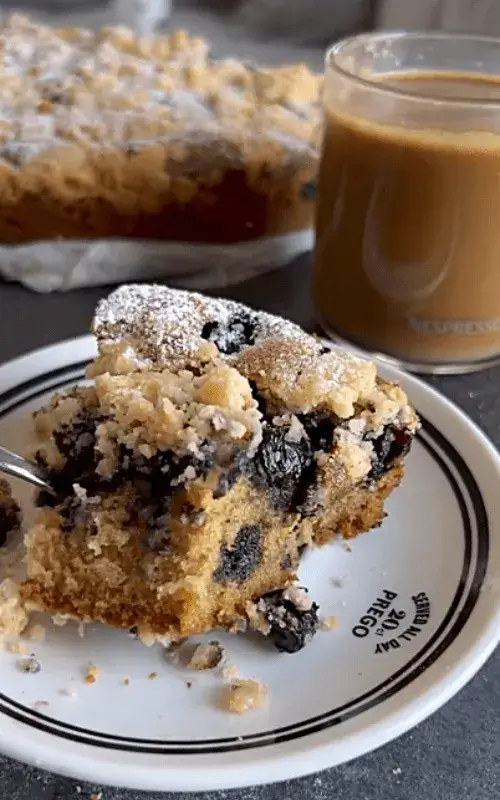
Blueberry Pound Cake Recipe with Crumb Topping
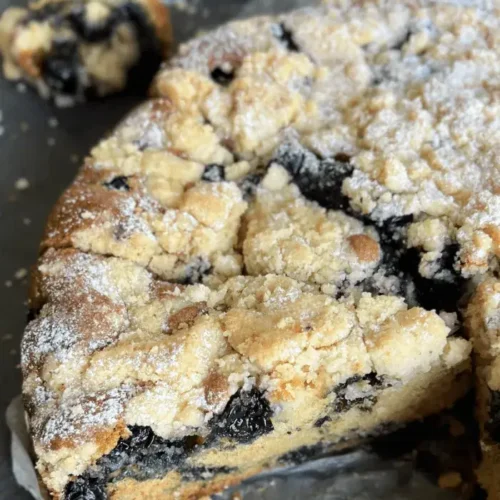
Watch the Full Step-by-Step
- 10-inch (26 cm) round cake
INGREDIENTS
Topping:
- ⅓ cup/65 grams sugar
- ⅔ cup/85 grams all-purpose flour
- 2.1 ounces/60 grams cold unsalted butter, cubed
Batter:
- 4.2 ounces/120 grams unsalted butter, very soft
- 1¼ cups/250 grams sugar
- ½ cup/100 grams oil
- 4 large eggs
- 3 cups/360 grams all-purpose flour
- 1½ teaspoons baking soda
- ½ teaspoon baking powder
- ½ cup/120 grams milk
- ¾ cup plus 1 tablespoon/200 grams sour cream
- 1 teaspoon vanilla extract
- A pinch of salt
- 2 cups/300 grams fresh or frozen blueberries

INSTRUCTIONS
- Heat the oven to 340°F/170°C. Grease a 10-inch round cake pan and line the bottom with parchment paper.
- Make the crumb topping: Combine the cold butter, sugar, and flour in a food processor. Pulse until coarse crumbs form. Set aside.
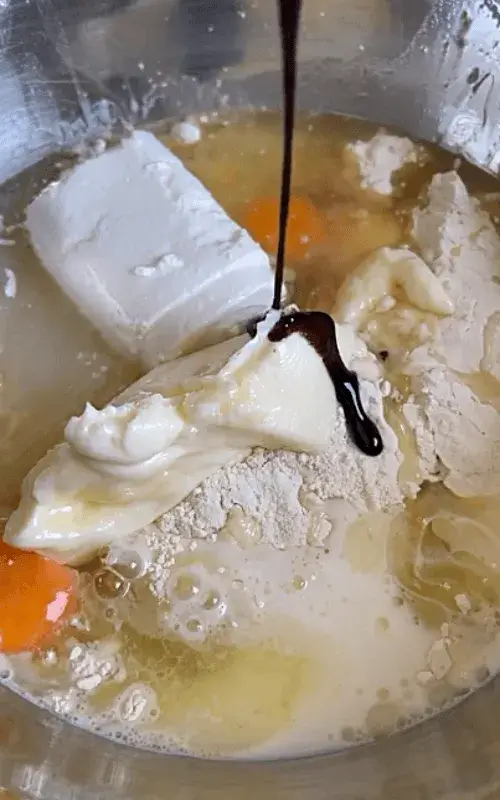
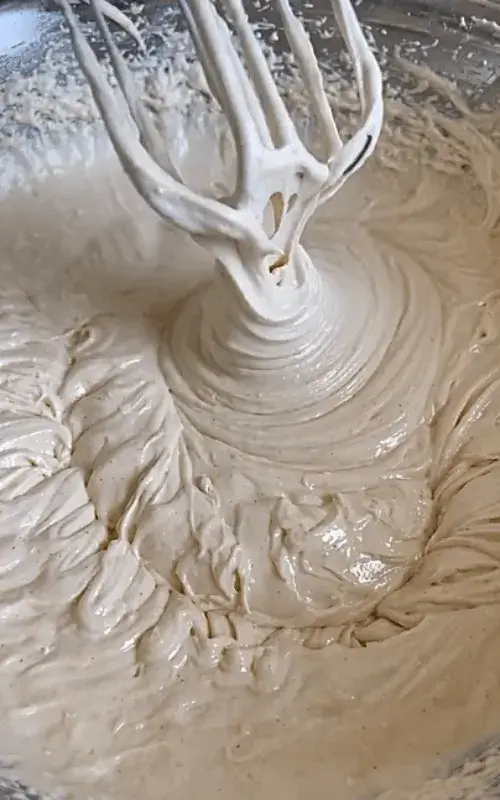
- Make the cake batter: In the bowl of a stand mixer fitted with the whisk attachment, combine the flour, baking soda, baking powder, sugar, canola oil, milk, eggs, softened butter, sour cream, vanilla, and salt. Mix until smooth and slightly thick.
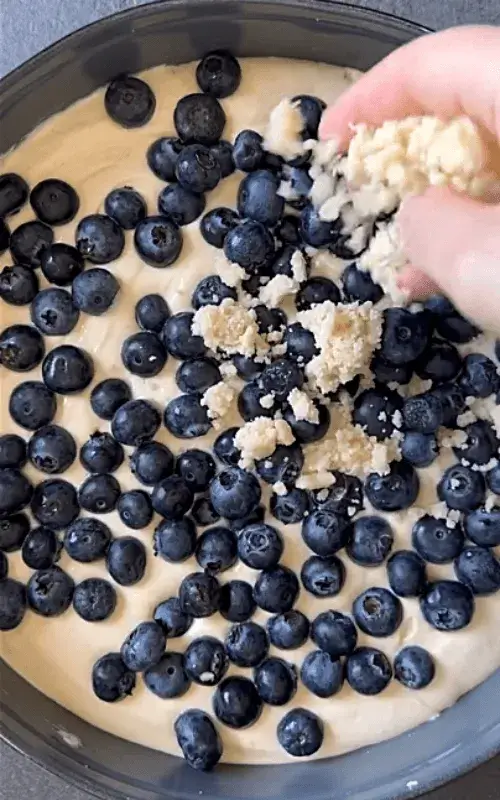
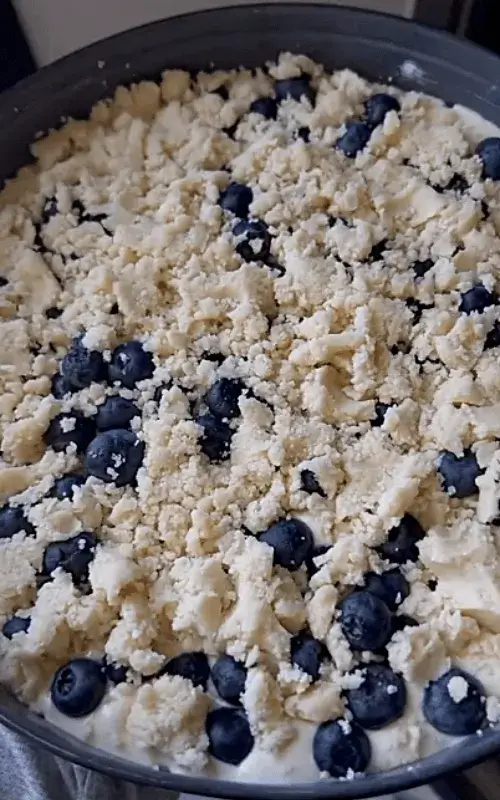
- Pour the batter into the prepared pan. Scatter the blueberries over the top, then sprinkle evenly with the crumb topping.
- Bake for about 45 minutes, until lightly golden and a toothpick inserted into the center comes out clean.
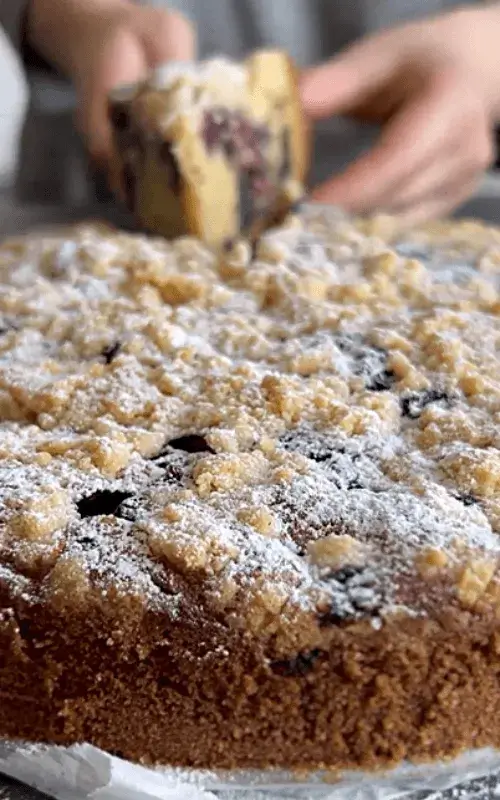
- Let the cake cool, then dust with powdered sugar. Slice and serve.
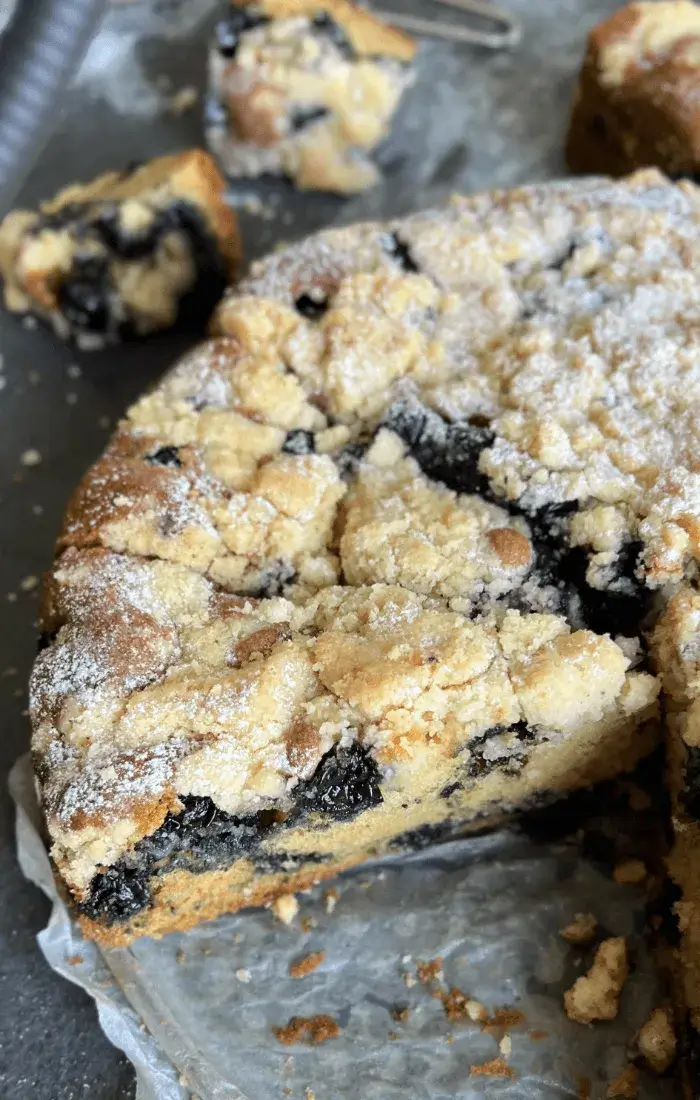
FAQ
What makes this blueberry pound cake recipe moist and tender?
This blueberry pound cake recipe gets its moist, tender texture from a combination of butter, oil, eggs, milk, and sour cream. Each ingredient contributes differently to the final crumb. Butter adds flavor and richness, while oil helps keep the cake moist even after it cools. Sour cream adds moisture and acidity, which contributes to a tender texture by limiting excessive gluten development when combined with the flour.
The eggs provide structure and help bind the ingredients together, while milk adds additional moisture and helps create a smooth batter. Proper mixing is also important. Mix the batter just until smooth and avoid overmixing, which can develop too much gluten and make the cake tough or dense.
How do I prevent the crumb topping from becoming too hard?
The crumb topping should be crisp and crumbly rather than hard or dense. To achieve this texture, use cold butter and process the ingredients only until coarse crumbs form. Overprocessing can cause the butter to blend too thoroughly with the flour and sugar, creating a compact mixture that bakes into a harder layer. Accurate measurements also matter.
Too much flour can make the topping dry and firm, while too much butter can cause it to spread and lose its crumb structure. For this blueberry pound cake recipe, use the specified 60 grams of cold unsalted butter, 65 grams of sugar, and 85 grams of all-purpose flour. Distribute the topping evenly over the blueberries and avoid pressing it down into the batter. Bake until lightly golden.
How do I keep blueberries from sinking to the bottom of the cake?
One way to reduce sinking is to use a thick cake batter that can support the weight of the fruit. This blueberry pound cake recipe has a relatively thick batter thanks to the combination of flour, butter, eggs, and sour cream. Another helpful technique is to scatter the blueberries over the top of the batter rather than folding them into the mixture. This is exactly how the recipe is prepared.
As the cake bakes, the batter rises around the blueberries, helping distribute them throughout the finished cake. If using frozen blueberries, add them directly from the freezer rather than thawing them first. Excess liquid from thawed berries can make the batter wetter and affect the distribution of the fruit. Avoid adding significantly more blueberries than the recipe calls for, since too much fruit can weigh down the cake.
What can I serve with blueberry pound cake?
Blueberry pound cake pairs well with coffee, tea, and other breakfast or brunch drinks. Its buttery texture, sweet blueberries, and crumb topping make it suitable for serving on its own, but a few simple additions can make it more substantial. Fresh berries, such as strawberries, raspberries, or additional blueberries, complement the fruit in the cake without overpowering it.
A spoonful of lightly sweetened whipped cream or plain Greek yogurt can add a creamy contrast. For dessert, vanilla ice cream is another good option, particularly when the cake is served slightly warm. You can also serve it with a little lemon curd for a brighter flavor. Since this blueberry pound cake recipe already includes a sweet crumb topping, additional accompaniments are best kept simple.
Can I make this blueberry pound cake recipe without a food processor?
Yes, you can make the crumb topping without a food processor. The food processor simply makes it easier to combine the cold butter, sugar, and flour into coarse crumbs. To do this by hand, place the flour and sugar in a mixing bowl and add the cold butter, cut into small cubes. Use a pastry cutter, two forks, or your fingertips to work the butter into the dry ingredients until the mixture resembles coarse crumbs.
Work relatively quickly so the butter stays cold. Avoid mixing until the topping becomes a smooth dough, since the goal is to maintain small, distinct crumbs that will become crisp and golden during baking. Once the topping is ready, set it aside and follow the remaining instructions as written.
Why is my crumb topping melting into the cake?
Crumb topping can melt into the cake when the butter becomes too warm before baking or when the mixture is processed for too long. For this blueberry pound cake recipe, the butter should be cold and cubed before combining it with the flour and sugar in a food processor. Pulse only until coarse crumbs form. If the butter softens significantly, refrigerate the topping for 15 to 20 minutes before using it.
Another factor is the consistency of the cake batter. If the batter is too thin, the topping may sink rather than remain on the surface. Follow the ingredient quantities carefully and avoid adding extra liquid. Distribute the crumb topping evenly over the blueberries just before baking. These steps help the topping maintain its shape and develop a golden, crumbly texture in the oven.
Can I use Greek yogurt instead of sour cream?
Yes, plain Greek yogurt can be used instead of sour cream in this blueberry pound cake recipe. Both ingredients provide moisture, acidity, and richness, making Greek yogurt a suitable substitute. Use the same amount by weight: 200 grams. Full-fat Greek yogurt is the closest substitute because it has a thicker consistency and higher fat content than low-fat varieties.
If using a particularly thick Greek yogurt, the batter may be slightly thicker, but this should not significantly affect the recipe. Avoid flavored or sweetened yogurt, since added sugar and flavorings can change the taste of the cake. Regular plain yogurt is another possible substitute, although its thinner consistency may produce a slightly looser batter. For the most consistent results, choose plain, full-fat Greek yogurt.
Can I use a hand mixer instead of a stand mixer?
Yes, a hand mixer can be used to prepare the batter for this blueberry pound cake recipe. A stand mixer is convenient, but it is not essential. Use a large mixing bowl and beat the ingredients with a hand mixer fitted with standard beaters until the batter is smooth and slightly thick. Scrape down the sides of the bowl as needed to ensure the butter, sour cream, and other ingredients are evenly incorporated.
Once the flour is added, mix on low speed and stop as soon as the batter is combined. Overmixing can develop gluten and affect the cake’s texture. The crumb topping can still be prepared separately in a food processor, or by hand using a pastry cutter or two forks. Follow the same pan size, oven temperature, and baking instructions.
How do I know when blueberry pound cake is fully baked?
The most reliable way to determine whether blueberry pound cake is fully baked is to insert a toothpick into the center of the cake. It should come out clean or with a few moist crumbs, but without wet batter. This recipe bakes at 340°F (170°C) for approximately 45 minutes in a 10-inch round cake pan.
However, actual baking time can vary depending on your oven, the temperature of the ingredients, and whether you use fresh or frozen blueberries. The top should be lightly golden, and the center should look set rather than wet or visibly sunken. If the top is browning too quickly while the center remains underbaked, loosely cover the cake with aluminum foil and continue baking. Allow the cake to cool before slicing so the crumb has time to set.
Can I add lemon zest to blueberry pound cake recipe?
Yes, lemon zest is a natural addition to blueberry pound cake recipe because its bright citrus aroma complements the sweet, slightly tart flavor of the blueberries. You can add approximately 1 to 2 teaspoons of finely grated lemon zest to the cake batter without significantly changing its consistency. For better distribution, mix the zest into the sugar before combining it with the other batter ingredients.
Rubbing the zest into the sugar with your fingertips helps release its aromatic oils. Use only the yellow outer layer of the lemon peel and avoid the white pith underneath, which can taste bitter. The original blueberry pound cake recipe does not include lemon, so this is an optional flavor variation rather than a required ingredient. The crumb topping can remain exactly as written.
Can I freeze blueberry pound cake?
Yes, blueberry pound cake can be frozen for longer storage. Allow the cake to cool completely after baking, then wrap it tightly in plastic wrap followed by a layer of aluminum foil, or place it in a freezer-safe airtight container. You can freeze the whole cake or divide it into individual slices for easier serving. For individual portions, separate the slices with parchment paper to prevent them from sticking together.
Freeze for up to 3 months for the best quality. When ready to serve, thaw the cake overnight in the refrigerator or let individual slices thaw at room temperature. Add powdered sugar after thawing rather than before freezing, since moisture can cause it to dissolve. The crumb topping may lose some of its crispness after freezing, but the cake should retain its moist texture.
Can I use a different-sized cake pan for this blueberry pound cake recipe?
This blueberry pound cake recipe is designed for a 10-inch (26 cm) round cake pan, which provides enough room for the batter, blueberries, and crumb topping. You can use a different pan, but the baking time will change depending on its dimensions and depth. A smaller pan will produce a deeper cake that requires more time to bake, while a larger pan will create a thinner cake that may bake more quickly.
Avoid filling the pan more than about two-thirds full to leave room for the cake to rise. If you use a different pan, check for doneness with a toothpick rather than relying entirely on the original 45-minute baking time. Make sure the pan is properly greased and lined with parchment paper to make removing the cake easier.
Can I reduce the sugar in this blueberry pound cake recipe?
You can reduce the sugar, but it is best to make only a modest adjustment because sugar contributes more than sweetness to a cake. It also helps retain moisture, encourages browning, and affects the tenderness of the crumb. In this blueberry pound cake recipe, the 250 grams of sugar in the batter contribute to the cake’s structure and flavor.
Reducing the amount by approximately 10 to 15 percent is a reasonable starting point if you prefer a less sweet cake. Keep in mind that a significant reduction may produce a firmer, less moist texture and a less golden crust. The sugar in the crumb topping can also be reduced slightly, although it helps create the crisp, sweet finish. Avoid removing large amounts of sugar without adjusting the rest of the recipe.