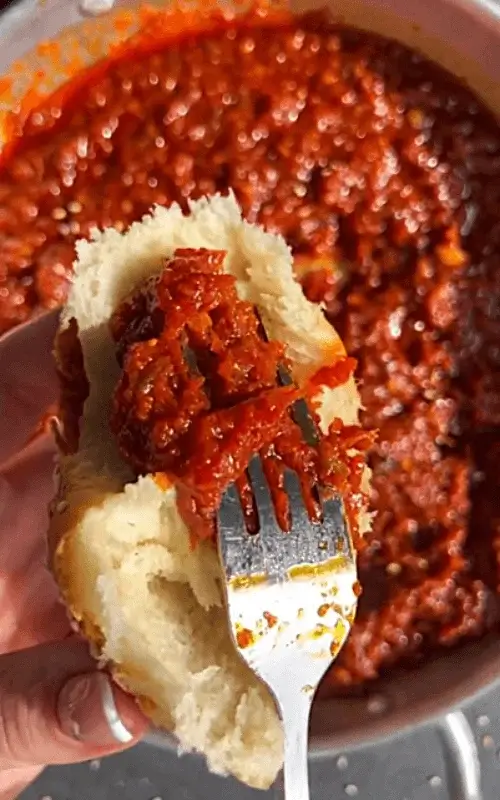
Matbuha: Slow-Cooked Tomato Jam Recipe (with Challah Rolls)
Watch the Full Step-by-Step
- Large pot
- Small skillet
- Large skillet
- Potato masher
INGREDIENTS
Matbuha:
- 5.5 pounds/2.5 kilograms ripe Roma tomatoes
- 10 to 15 garlic cloves, thinly sliced
- 3 green hot peppers, thinly sliced
- 1 tablespoon salt
- ½ tablespoon sugar
- ¾ cup oil
- 2 tablespoons hot Moroccan paprika
- Pinch ground cumin, optional
Challah rolls:
- 2.2 pounds/1 kilogram all-purpose flour
- 2 tablespoons/20 grams dry yeast, or 2 ounces/60 grams fresh yeast
- ½ cup/100 grams sugar
- ¾ cup/180 milliliters oil
- 2 cups/500 milliliters lukewarm water
- 1 tablespoon salt
Toppings:
- 1 egg, beaten
- Sesame seeds and/or poppy seeds

INSTRUCTIONS
Matbuha:
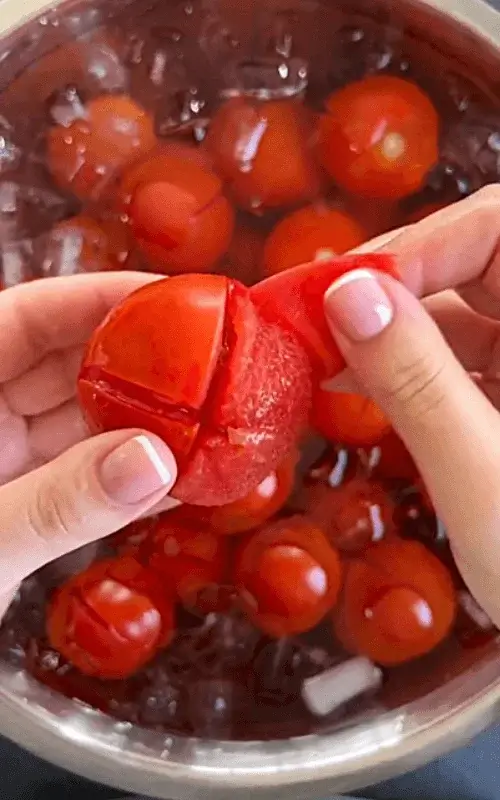
- Cut a small X into the bottom of each tomato.
- Bring a large pot of water to a boil. Add the tomatoes, cover, and cook until the skins begin to loosen, about 10 minutes. Transfer to an ice bath.
- Peel the tomatoes, cut into small pieces, and set aside.
- Heat the canola oil in a large pot over medium heat. Add the peppers and garlic and cook until softened and lightly golden, about 3 minutes.
- Add the tomatoes, salt, and sugar. Stir to combine.
- Reduce the heat to low and cook, stirring occasionally, until the tomatoes break down and the mixture thickens, about 2 hours. If desired, mash lightly with a potato masher for a smoother texture.
- Heat the oil in a small skillet. Add the paprika and cumin, if using, and stir until fragrant, about 30 seconds.
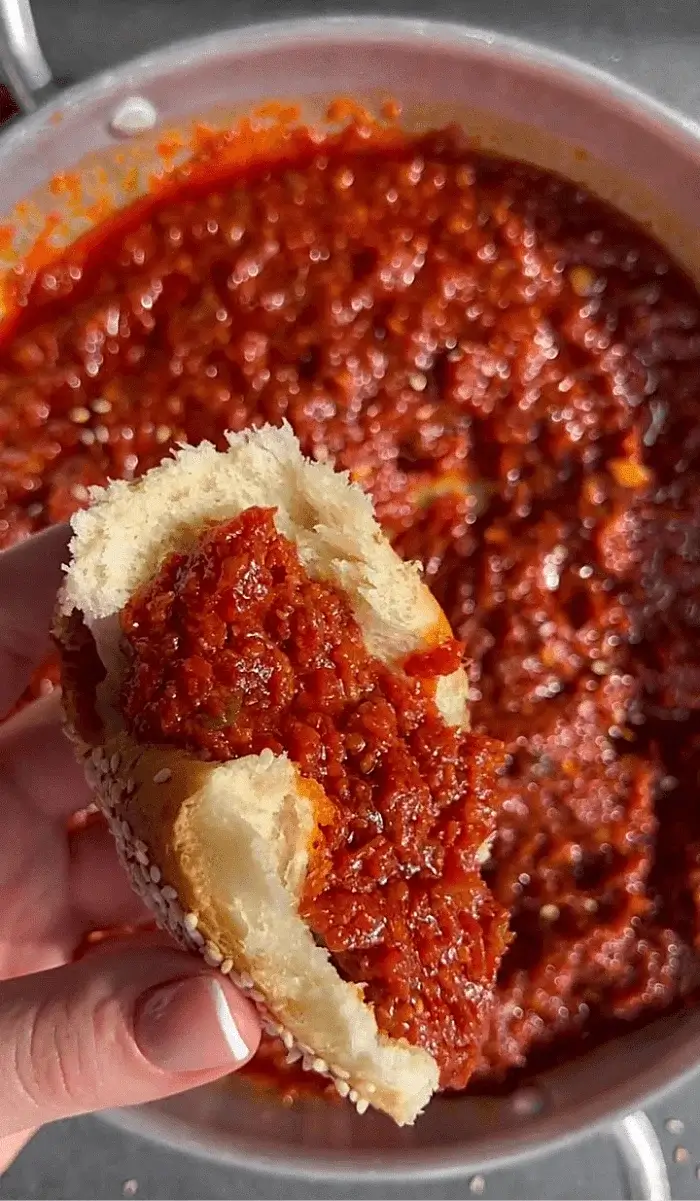
- Pour the seasoned oil into the tomato mixture and stir well. Continue cooking until the matbuha is thick, glossy, and jamlike.
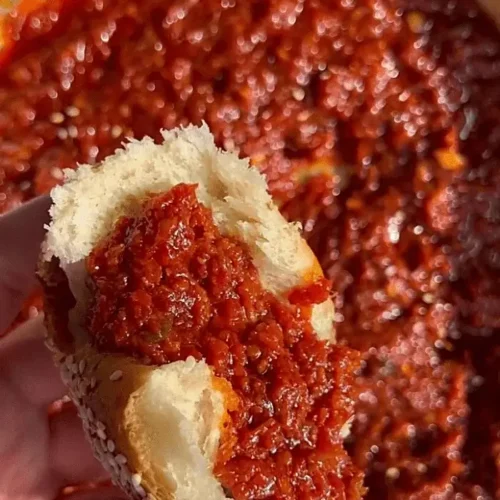
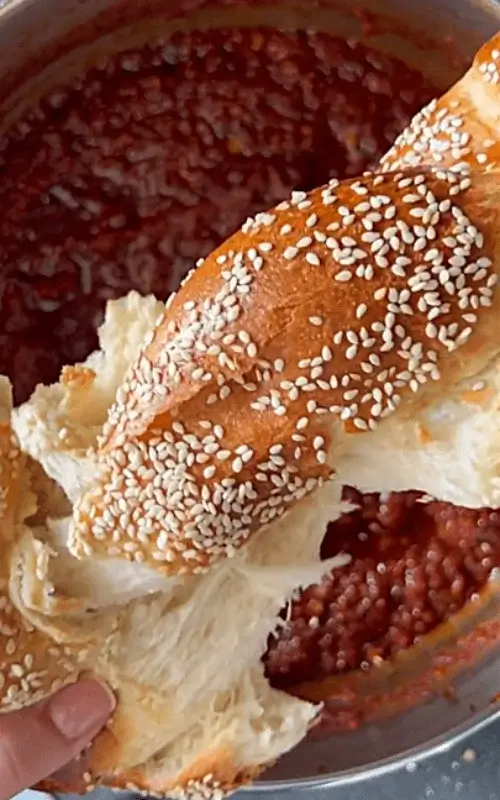
- Cool completely before refrigerating. Serve with fresh bread.
Challah rolls:
- In a stand mixer fitted with the dough hook, sift the flour and add the yeast and sugar. Mix on low speed. Slowly drizzle in the oil and water, then add the salt. Continue kneading for 10 minutes, until the dough is smooth and elastic.
- Transfer the dough to a greased bowl, cover with a kitchen towel or plastic wrap, and let it rise at room temperature for 1 hour, or until doubled in size.
- Set your oven to 350°F (175°C) with convection/turbo mode, if available.
- Divide the dough into 20 equal pieces. Roll each piece into a long rope. To braid: Bring one end of the dough strip to the center. Loop the other end through the hole created, and flip the second loop and thread the remaining end through, letting it peek out slightly.
- Arrange the rolls on a parchment-lined baking sheet. Cover and let them rise for another 30 minutes.
- Brush each roll with beaten egg and sprinkle with sesame or poppy seeds.
- Bake for 25 minutes, or until deeply golden. Check that the bottoms are golden brown before removing.
- Let the rolls cool before serving. Enjoy fresh, or freeze for later. To reheat, warm in a low oven 120°F (50°C) until soft and fragrant.
- Tip: These rolls pair beautifully with butter, jam, or a drizzle of honey.
FAQ
What is matbuha and how is it different from other tomato spreads?
Matbuha is a slow-cooked North African tomato and pepper mixture that develops a thick, jamlike consistency through extended simmering. Unlike quick tomato sauces, matbuha is intentionally reduced over a long period, which concentrates natural sugars in the tomatoes and creates a deeper, more complex flavor profile. In the context of a matbuha tomato jam recipe, the key distinction is that it is not just a sauce but a preserved-style condiment.
The addition of garlic, hot peppers, and paprika gives it a layered heat and smokiness that sets it apart from Italian-style tomato sauces or fresh salsas. While similar to some Mediterranean cooked relishes, matbuha is defined by its texture and slow reduction, which can take up to two hours or more. The result is spreadable, rich, and often used as a base or accompaniment rather than a standalone dish.
Why does matbuha need to be cooked for such a long time?
The long cooking time is essential for both flavor development and texture transformation. Fresh tomatoes contain a high percentage of water, which must be slowly evaporated to achieve the thick, jamlike consistency that defines matbuha. As the mixture simmers, natural sugars in the tomatoes concentrate, which enhances sweetness and balances the heat from peppers and spices.
The slow reduction also allows the garlic and paprika to fully infuse the oil and tomato base, creating a more unified flavor. Rapid cooking would leave the mixture watery and acidic, lacking the depth expected from traditional matbuha. Stirring during the process prevents scorching while encouraging even breakdown of the tomatoes. This method is similar to other preserved-style condiments where time is a structural ingredient, not just a cooking step, ensuring the final product is thick, glossy, and shelf-stable when refrigerated.
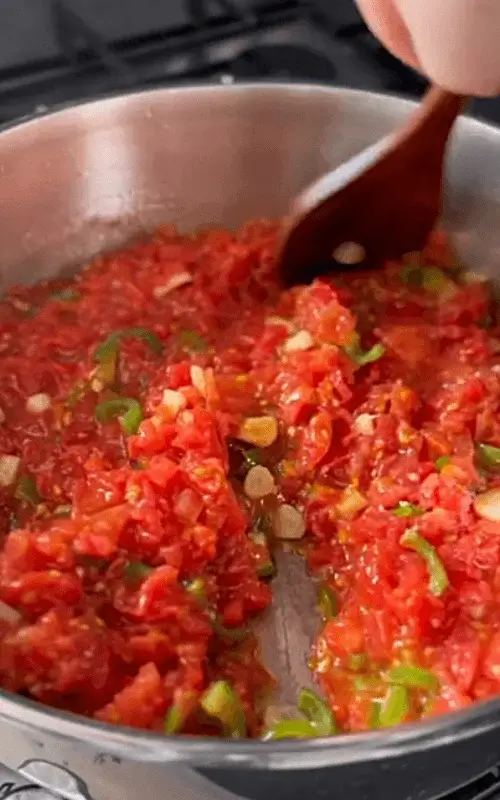
What type of tomatoes are best for this recipe?
The best tomatoes are dense, meaty varieties such as plum or Roma tomatoes. These tomatoes have lower water content and fewer seeds, which makes them ideal for long cooking without becoming overly watery. The goal is to achieve a thick, concentrated texture, so starting with a tomato that already has a firm flesh structure significantly reduces cooking time and improves consistency.
High-water tomatoes can still be used, but they require longer reduction and may produce a looser final texture. Flavor also matters: ripe tomatoes with natural sweetness reduce the need for added sugar and enhance the balance between acidity, heat, and spice. In traditional matbuha preparation, the choice of tomato directly affects how quickly the mixture transforms into a jamlike spread, making it one of the most important decisions in the process.
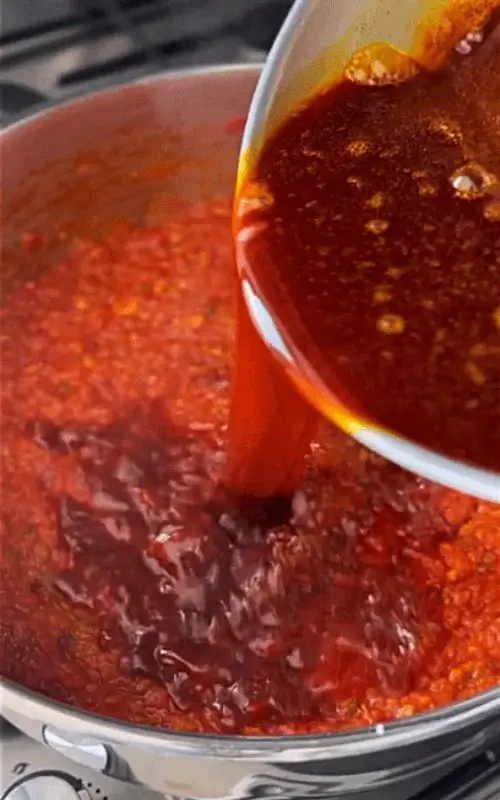
Why is oil added in stages?
Oil is added in stages to build layered flavor and control texture development in the tomato jam recipe. The first addition of oil is used to sauté garlic and hot peppers, which releases their aromatic compounds and creates a flavored base. This step infuses the fat with heat and sweetness before the tomatoes are introduced.
The second oil stage, often combined with paprika and optional cumin, is added later to bloom the spices separately. This prevents the spices from burning during long simmering and ensures they maintain their full color and aroma. In matbuha, oil is not just a cooking medium but a carrier of flavor that integrates the spice profile into the tomato reduction.
What is the role of paprika?
Paprika plays a central role by providing both color and depth of flavor in the tomato jam recipe. Hot Moroccan paprika contributes a mild smokiness and controlled heat that complements the natural acidity of the tomatoes and the sharpness of the garlic and peppers. When bloomed in oil, paprika releases fat-soluble compounds that intensify its color, turning the mixture into a deep red, almost brick-like hue.
This step is critical because adding paprika directly into simmering tomatoes without oil would result in a flatter, less integrated flavor. In matbuha, paprika also helps bridge the gap between sweet and spicy elements, rounding out the overall profile. Over time during cooking, its flavor becomes more integrated into the reduction, ensuring that the final spread has consistent seasoning throughout rather than isolated pockets of spice.
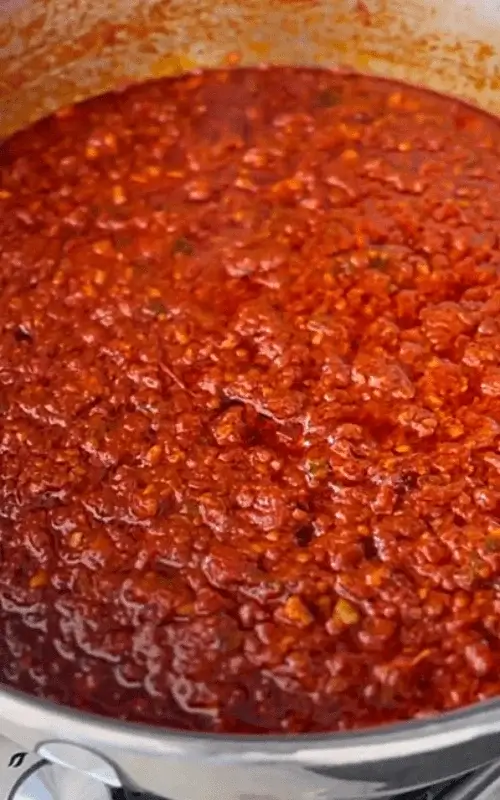
How does texture change during cooking and what is the ideal final consistency?
The texture of matbuha evolves significantly throughout the cooking process in a tomato jam recipe. Initially, the mixture is loose and watery after the tomatoes are added and begin to release their juices. As simmering continues, water evaporates and the tomato fibers break down, thickening the mixture. Stirring helps accelerate this breakdown while preventing scorching.
Toward the end of cooking, the mixture transitions from a chunky sauce to a cohesive, glossy paste. The ideal consistency is thick enough to hold its shape on a spoon but still spreadable, similar to a soft jam or relish. It should not be dry or pasty, nor should it be runny like a sauce. In traditional matbuha preparation, achieving this balance is critical because it determines whether the final product functions as a spread, condiment, or cooking base.
Can matbuha be used in other dishes beyond being a spread?
Matbuha is highly versatile and functions as both a condiment and an ingredient in other dishes. In many kitchens, especially where matbuha is part of a tomato jam recipe tradition, it is used as a base for shakshuka, where eggs are poached directly in the cooked mixture. It can also be added to sandwiches, wraps, and grain bowls to provide acidity, heat, and depth.
When mixed into stews or braises, it acts as a concentrated tomato flavoring that replaces fresh tomato and seasoning components. Some cooks use it as a topping for grilled fish or meat, where its acidity helps balance rich proteins. Because it is already fully cooked and seasoned, matbuha integrates quickly into dishes without additional preparation. Its versatility comes from its reduced texture and concentrated flavor, making it a foundational element in many North African-inspired meals.