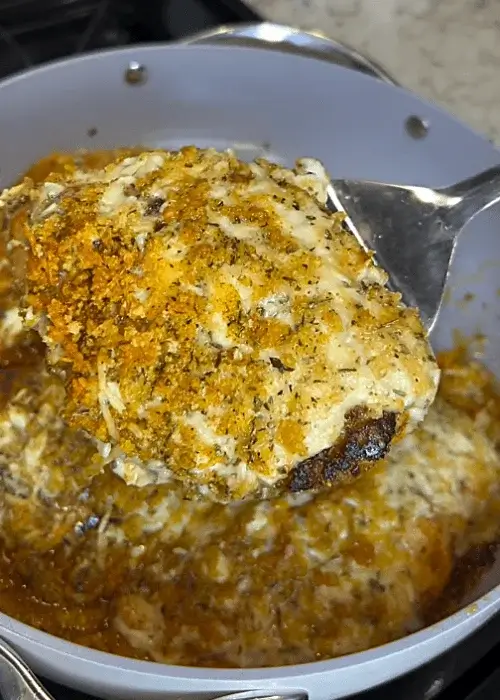
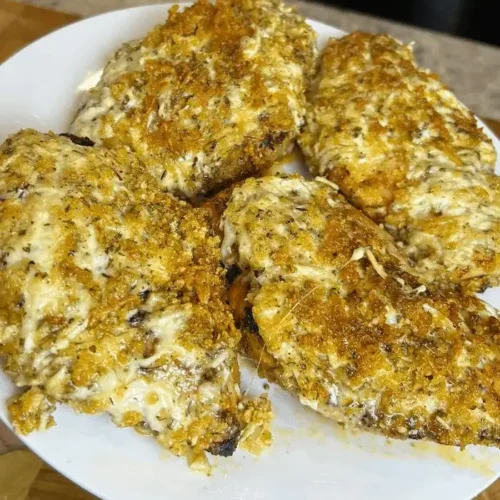
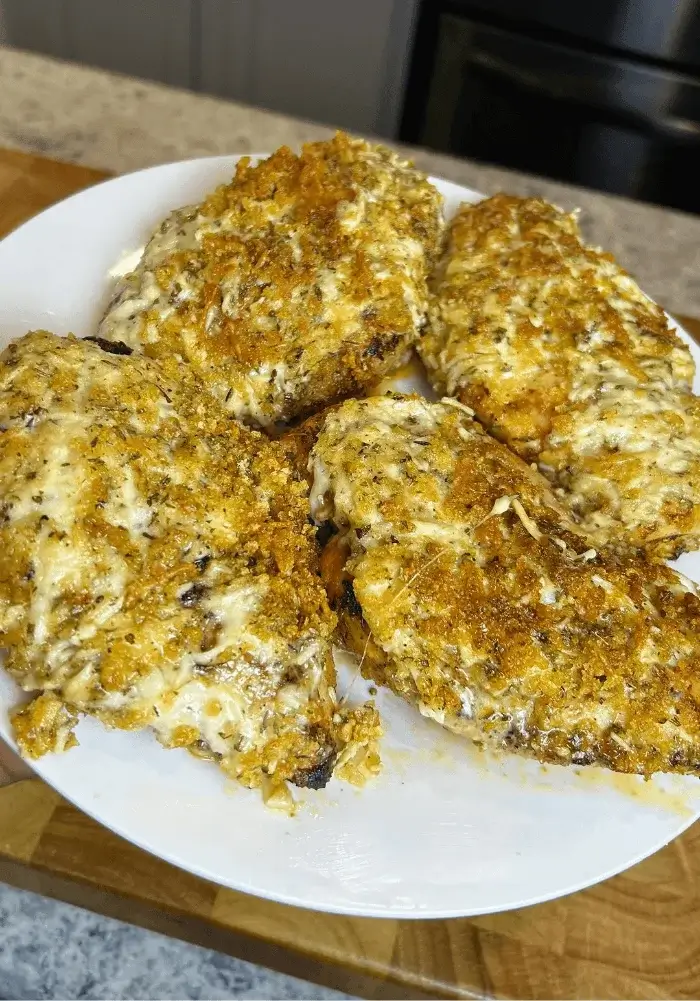
Baked Parmesan Crusted Chicken Breast
Watch the Full Step-by-Step
- Large oven-safe skillet
- Medium mixing bowls
- Kitchen scale
- Thermometer
- Rubber spatula
INGREDIENTS
- 2 pounds/900 grams boneless chicken breasts
- 1 tablespoon olive oil
- 1 teaspoon salt
- ½ teaspoon black pepper
- 1 teaspoon paprika
- 1 teaspoon onion powder
- 1 teaspoon garlic powder
- 1 teaspoon dried thyme
- ⅓ cup mayonnaise
- 1 tablespoon ranch seasoning
- 1 tablespoon lemon juice
- 4 tablespoons Parmesan cheese, finely grated
- ½ cup mozzarella cheese, shredded
- 1 teaspoon Worcestershire sauce
- 2 tablespoons finely chopped parsley
- ¾ cup panko breadcrumbs
- 1 teaspoon Italian seasoning
- ½ teaspoon paprika
- 2 tablespoons Parmesan cheese, finely grated
- 1 tablespoon melted butter, optional

INSTRUCTIONS
- Heat the oven to 375°F/190°C.
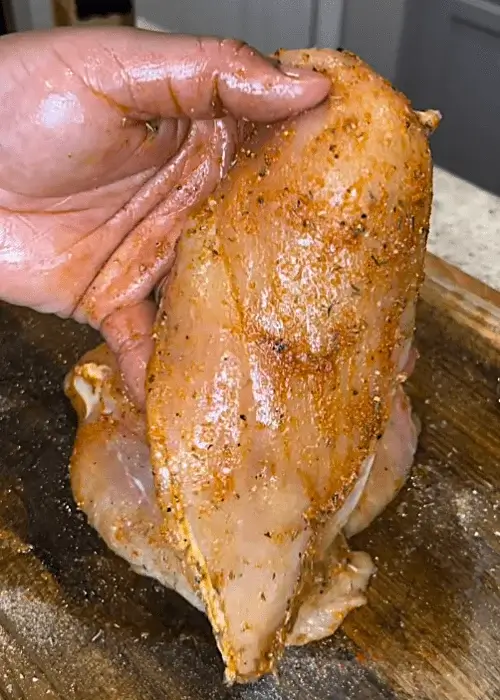
- Pat the chicken dry. Rub with the olive oil and season all over with the salt, pepper, paprika, onion powder, garlic powder, and thyme.
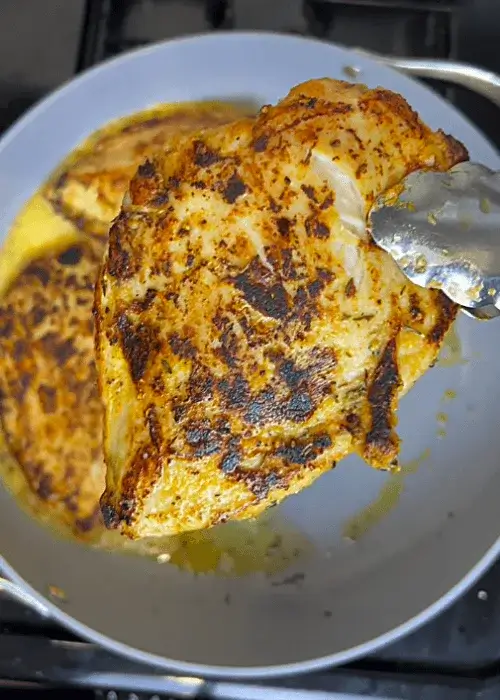
- Heat a large oven-safe skillet over medium-high. Sear the chicken until golden brown, 3 to 4 minutes per side.
- Transfer to the oven and roast until the thickest part reaches 165°F/75°C, 10 to 15 minutes.
- Meanwhile, in a medium bowl, stir together the mayonnaise, ranch seasoning, lemon juice, Parmesan, mozzarella, Worcestershire sauce, and parsley until smooth.
- In a second bowl, combine the panko, Italian seasoning, paprika, and Parmesan. Stir in the butter, if using.
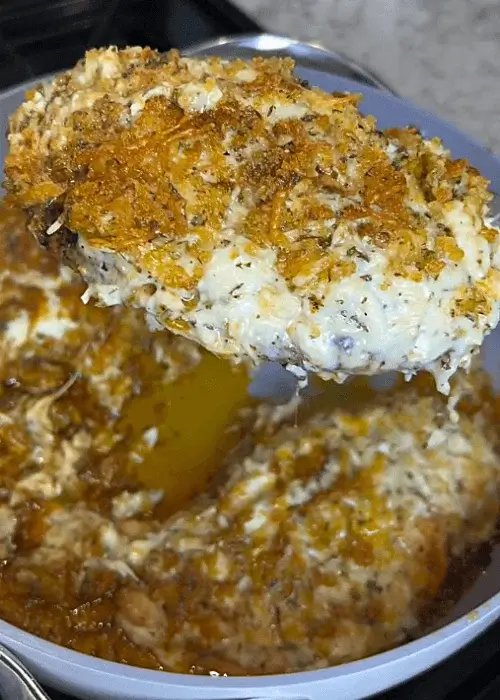
- Remove the chicken from the oven. Spread the Parmesan mixture evenly over the chicken, then sprinkle with the breadcrumb mixture.
- Broil on high until the topping is golden brown and crisp, 1 to 3 minutes.
- Let rest for 5 minutes before serving.
FAQ
How do you keep baked parmesan crusted chicken breast juicy?
Keeping baked parmesan crusted chicken breast juicy depends on controlling heat, moisture retention, and not overcooking. The most important factor is using evenly sized chicken breasts, ideally pounded slightly so they cook at the same rate. Searing the chicken before baking creates a surface crust that helps lock in juices. Cooking to an internal temperature of 165°F/75°C and removing it immediately prevents carryover overcooking.
The mayonnaise-based Parmesan layer also plays a key role, acting as a moisture barrier that protects the meat during the final broil. Resting the chicken for at least 5 minutes after cooking allows juices to redistribute instead of running out when sliced. Avoid skipping the resting step or cooking at too high a temperature for too long.
How do you prevent the topping from sliding off?
Preventing the topping from sliding off baked parmesan crusted chicken breast depends on surface preparation, temperature control, and layering technique. The chicken should be patted completely dry before seasoning and searing, since excess moisture prevents proper adhesion. Searing also helps create a slightly rough, caramelized surface that allows the Parmesan mixture to grip better.
The topping should be applied while the chicken is hot but not overly oily or wet, as excess fat can cause slippage. The Parmesan mixture acts as a “binder layer” between the chicken and breadcrumbs, so it should be spread evenly rather than thickly piled. Adding the breadcrumb layer immediately after ensures it sticks to the cheese base before it sets. Finally, broiling should be done on a stable rack position so the heat hits evenly.
Can baked parmesan crusted chicken breast be made without searing?
Yes, baked parmesan crusted chicken breast can be made without searing, but the texture and flavor profile will change slightly. Searing primarily develops browning through the Maillard reaction, which adds depth and a savory crust before oven roasting. Without it, the chicken will still cook through in the oven, but the exterior will be lighter in color and slightly less flavorful. To compensate, the oven temperature can be increased slightly or the broiler can be used for a longer finishing stage to develop more surface browning.
Another approach is to season more aggressively or add a small amount of smoked paprika to enhance depth. The Parmesan and breadcrumb topping will still provide texture and flavor contrast even without searing. However, for classic baked parmesan crusted chicken breast results, searing remains the most effective method for building layered flavor and maintaining a firm exterior structure under the topping.
Can you use chicken thighs instead?
Chicken thighs can be used instead of chicken breast for baked parmesan crusted chicken breast, but the cooking process and texture will differ. Thighs contain more fat and connective tissue, which makes them naturally juicier and more forgiving during cooking. They are less likely to dry out compared to chicken breast, but they also require slightly longer cooking times to fully render fat and reach safe internal temperature.
Bone-in thighs will take longer than boneless, while boneless thighs more closely match the timing of chicken breasts. The Parmesan topping adheres similarly, but the higher fat content in thighs may cause slightly more bubbling under the crust during broiling. Flavor-wise, thighs produce a richer, deeper result due to their fat content. However, baked parmesan crusted chicken breast is typically designed around lean chicken breast, so substituting thighs shifts the dish toward a heavier, more rustic profile rather than a clean, structured presentation.
What is the best way to reheat baked parmesan crusted chicken breast?
Reheating baked parmesan crusted chicken breast without losing crispiness requires dry heat and controlled temperature to restore texture without drying out the chicken. The best method is an oven or toaster oven set to around 325°F/165°C. The chicken should be placed on a wire rack over a baking sheet so heat circulates around it, preventing sogginess on the bottom.
Covering is not recommended, as trapped steam softens the breadcrumb layer. Heating for 10 to 15 minutes is usually sufficient depending on thickness, and a brief 1–2 minute broil at the end can help re-crisp the topping. Microwaving should be avoided for texture reasons, as it introduces steam that collapses the crust. If using an air fryer, a short reheating cycle at moderate heat can also restore crispness effectively.
What is the best cheese combination for baked parmesan crusted chicken breast?
The best cheese combination for baked parmesan crusted chicken breast is a balance of sharp, salty cheese and mild, meltable cheese. Parmesan is essential for its nutty, salty intensity and its ability to brown under high heat, especially during broiling. Mozzarella is used alongside it because it melts smoothly, creating a creamy, cohesive layer that helps bind the topping to the chicken. This combination prevents the topping from becoming too dry or brittle.
Some variations may include provolone for extra stretch or a small amount of cream cheese for added richness, but these are optional and not necessary for structure. The key is maintaining a ratio where Parmesan provides flavor intensity while mozzarella provides melt and body. Using pre-grated cheese is not ideal, as it often contains anti-caking agents that reduce melt quality.
What can you serve with baked parmesan crusted chicken breast?
Baked parmesan crusted chicken breast pairs well with sides that balance its rich, creamy topping and savory crust. Light vegetables such as roasted asparagus, green beans, or sautéed spinach provide freshness and acidity that cut through the richness of the Parmesan and mayonnaise layer. Starches like mashed potatoes, garlic butter rice, or roasted baby potatoes complement the dish by absorbing the flavorful juices released during baking.
A simple lemon-dressed salad also works well, adding brightness and texture contrast. For low-carb options, cauliflower mash or zucchini noodles maintain balance without heaviness. Because baked parmesan crusted chicken breast is already rich in fat and umami, sides should generally be simple, lightly seasoned, and not overly creamy or heavy. Acidic elements like lemon juice or vinegar-based dressings are particularly useful for lifting the overall flavor profile and preventing palate fatigue.
Can baked parmesan crusted chicken breast be made in an air fryer?
Baked parmesan crusted chicken breast can be adapted for an air fryer with adjustments to temperature and timing, though texture will differ slightly from oven baking. The air fryer’s circulating heat produces faster browning and a crispier exterior, which can be beneficial for the breadcrumb topping. However, the Parmesan-mayo layer must be applied carefully to prevent it from dripping through the basket or over-browning too quickly.
Cooking typically occurs at a moderate temperature, around 360°F/182°C, to ensure the chicken cooks through without burning the topping. The chicken should still reach 165°F/75°C internally. One advantage of the air fryer is reduced cooking time and enhanced crispness in the panko layer. However, the surface may become more uniformly crisp rather than having the layered broiled finish typical of oven baked parmesan crusted chicken breast.
How do you get the breadcrumb topping crispy?
Getting the breadcrumb topping crispy on baked parmesan crusted chicken breast depends on fat distribution, heat exposure, and breadcrumb type. Panko breadcrumbs are essential because their larger, airy structure crisps more effectively than fine breadcrumbs. Lightly mixing the panko with melted butter helps promote even browning and enhances crunch, though it should not be saturated. The topping should be added after the chicken is fully cooked so it only needs a short broil, preventing it from becoming soggy during long baking.
Positioning the rack closer to the broiler allows direct high heat exposure, which is necessary for crisping. Watching closely during this stage is important because the transition from golden to burnt happens quickly. The moisture from the Parmesan mixture below also helps the topping adhere without steaming it. When done correctly, baked parmesan crusted chicken breast achieves a crisp, layered crust that contrasts cleanly with the creamy cheese base and tender chicken underneath.
Why does baked parmesan crusted chicken breast use mayonnaise in the topping?
Mayonnaise in baked parmesan crusted chicken breast functions as both a fat and moisture carrier that helps create a stable, creamy topping. It contains oil and egg emulsification, which allows it to bind Parmesan, mozzarella, and seasonings into a cohesive layer that adheres to the chicken during baking and broiling. Unlike butter or cream alone, mayonnaise does not break or separate under moderate heat, making it especially effective for oven finishes.
It also protects the chicken surface from drying out while the cheese melts and the breadcrumbs toast. The acidity in mayonnaise subtly enhances flavor balance, especially when combined with lemon juice and Worcestershire sauce. When heated, it contributes to browning without burning as quickly as pure dairy fats. In baked parmesan crusted chicken breast, this creates a stable base layer that supports both moisture retention and topping adhesion, ensuring the crust stays intact while the chicken remains juicy.
Why is my baked parmesan crusted chicken breast not browning properly?
If baked parmesan crusted chicken breast is not browning properly, the issue usually comes from moisture levels, oven temperature, or topping composition. Excess moisture on the chicken surface or in the Parmesan mixture can prevent browning by creating steam instead of dry heat contact. Another common cause is insufficient broiler temperature or placing the rack too far from the heat source, which reduces direct exposure needed for caramelization.
Using finely grated or pre-shredded cheese with anti-caking agents can also slow browning, since these additives inhibit melting and color development. The breadcrumb mixture must also contain enough fat, such as butter or natural cheese oils, to encourage golden crisping. If the topping layer is too thick, heat cannot penetrate evenly, leading to uneven color.