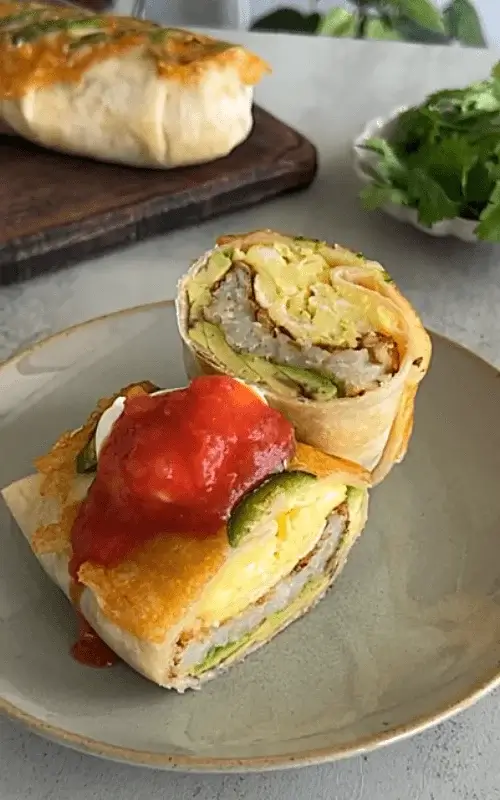
Crispy Egg and Cheese Breakfast Burrito
Watch the Full Step-by-Step
- Nonstick skillet
INGREDIENTS
- 2 tortillas
- 4 large eggs
- 2 hash browns
- ½ avocado, sliced
- ½ jalapeño pepper, thinly sliced
- 2 tablespoons shredded mozzarella cheese
- Salt, to taste
- Cooking spray, as needed

INSTRUCTIONS
- Cook hash browns in an air fryer at 400°F/200°C for 10 minutes or bake at 400°F/200°C for 12 to 15 minutes until crisp.
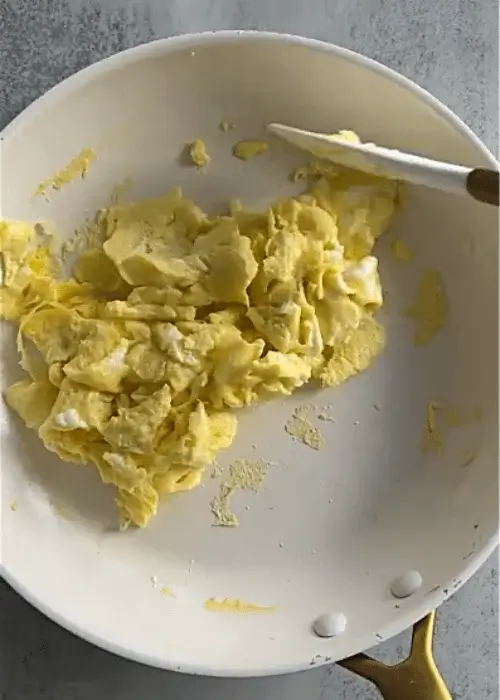
- Heat a nonstick skillet over medium-low heat. Coat lightly with cooking spray. Whisk eggs with salt, then cook slowly, stirring, until softly set, 5 to 6 minutes.
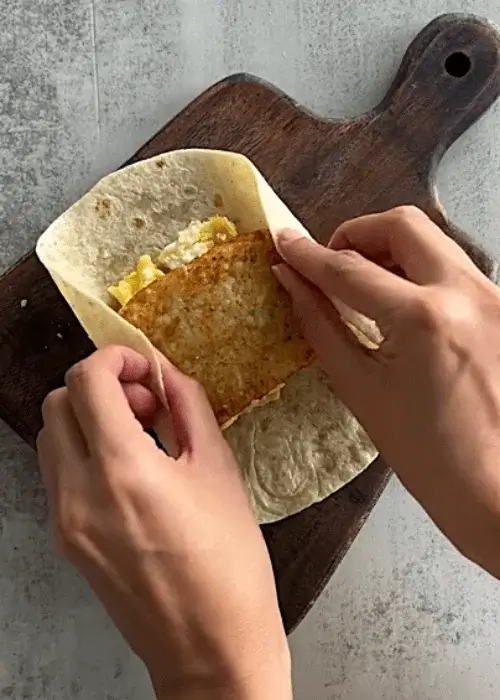
- Divide avocado, eggs, and hash browns between tortillas. Roll tightly into burritos, folding in sides. Set seam-side down.
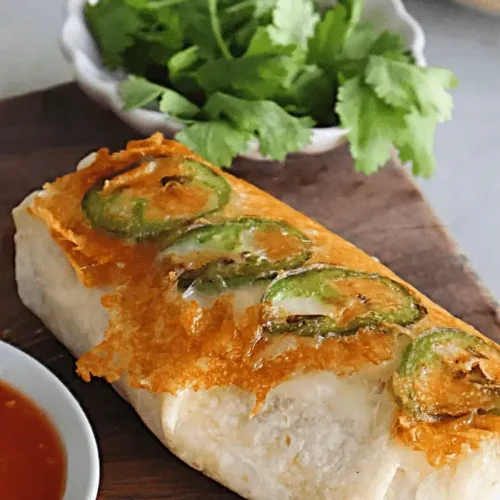
- Heat skillet over medium heat. Add jalapeño slices in two lines and cook until softened, about 2 minutes.
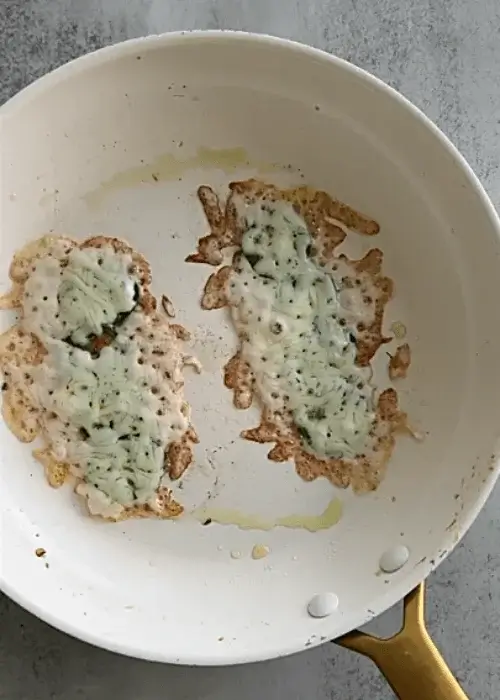
- Sprinkle mozzarella over jalapeños. Increase heat to medium-high and cook until melted and lightly browned, 1 to 2 minutes.
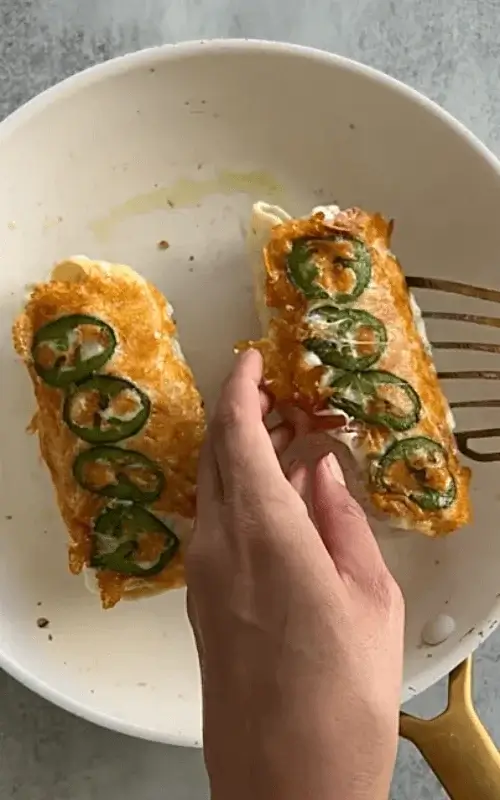
- Place burritos seam-side down onto cheese. Press gently to adhere, then flip and cook until crisp on both sides, about 2 minutes per side.
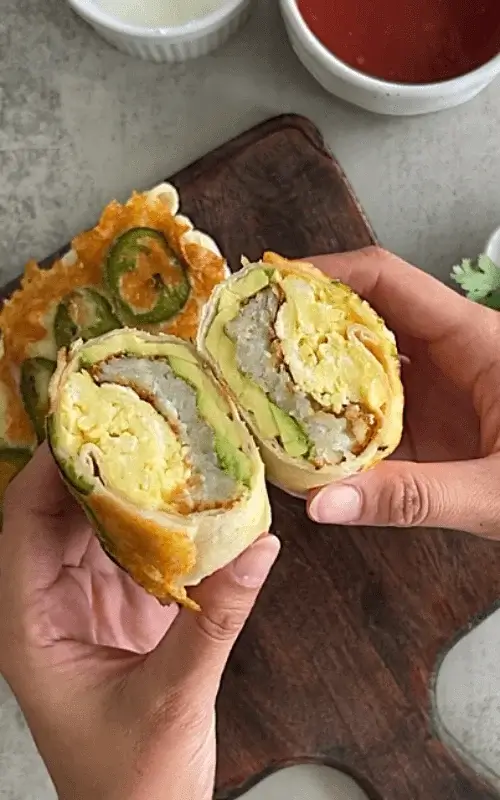
- Serve immediately with salsa, sour cream, or Greek yogurt.
FAQ
Can I make egg and cheese breakfast burrito ahead of time and reheat it?
An egg and cheese breakfast burrito can be prepared ahead of time, but texture management is the key factor in maintaining quality. The eggs, hash browns, and tortilla all respond differently to refrigeration, so proper assembly and reheating technique matter. For best results, cook all components fully, allow them to cool before assembling, and wrap the burrito tightly in foil or parchment.
Refrigerate for up to 2 to 3 days. When reheating, avoid the microwave alone because it softens the tortilla and reduces crispness. Instead, reheat in a skillet over medium-low heat or in an oven or air fryer at 350°F/175°C until warmed through. The egg and cheese breakfast burrito will retain a better structure if reheated covered first, then finished uncovered for crisping.
What is the best way to keep egg and cheese breakfast burrito from getting soggy?
Preventing sogginess in an egg and cheese breakfast burrito depends on moisture control at every stage of cooking. Eggs should be cooked gently but not over-soft, as excess moisture will release during storage or assembly. Hash browns should be cooked until deeply crisp to create a dry structural layer that absorbs moisture instead of releasing it.
Avocado should be sliced rather than mashed to limit water release, and any excess liquid ingredients like salsa or sour cream should be added only at serving time. The tortilla should also be lightly warmed before rolling to reduce cracking without trapping steam. After cooking, letting the burrito rest for a minute before cutting or serving helps internal steam escape, keeping the texture intact.
Can I substitute ingredients in egg and cheese breakfast burrito?
Substitutions in an egg and cheese breakfast burrito are flexible, but each swap affects texture and structure. Hash browns can be replaced with roasted potatoes, tater tots, or even leftover fries, as long as they are crisp and dry. Cheese can be adjusted based on melt quality; mozzarella creates a mild stretch, while cheddar adds stronger flavor and sharper browning when forming the crispy crust.
Avocado can be replaced with sautéed spinach, sautéed mushrooms, or even guacamole if added sparingly to avoid excess moisture. The key is maintaining a balance between creamy, crispy, and savory elements so the egg and cheese breakfast burrito still holds together when rolled and seared.
Can I use fresh potatoes instead of frozen hash browns?
Fresh potatoes can be used in an egg and cheese breakfast burrito, but they require additional preparation to achieve the same texture as frozen hash browns. The key difference is moisture content. Fresh potatoes must be shredded or diced and then thoroughly rinsed to remove excess starch. After rinsing, they should be dried completely before cooking.
To replicate hash brown texture, the potatoes should be pan-fried or air-fried until deeply golden and crisp, not just softened. This step is essential because soft potatoes will release steam inside the burrito and compromise structure. When done properly, fresh potatoes can provide a more rustic, flavorful version of an egg and cheese breakfast burrito, but they require more active cooking time and attention than frozen hash browns.
What is the best tortilla type for egg and cheese breakfast burrito?
The tortilla choice significantly affects the structure of an egg and cheese breakfast burrito. Large flour tortillas are the most reliable because they are flexible, pliable, and strong enough to hold moisture-heavy fillings without tearing. A tortilla between 10 to 12 inches works best for proper rolling and sealing.
If the tortilla is too dry or stiff, it will crack during folding, so warming it briefly in a dry skillet or microwave improves elasticity. Whole wheat tortillas can be used, but they tend to be less flexible and may require more careful handling. Gluten-free tortillas often lack structure unless specifically designed for burritos, so they are less stable for this application.
Why are my eggs watery inside the burrito?
Watery eggs inside an egg and cheese breakfast burrito are usually caused by undercooking, excessive heat fluctuations, or trapped steam. Eggs naturally contain a high amount of water, and when cooked too quickly over high heat, proteins tighten unevenly and release moisture later. Cooking slowly over medium-low heat creates a more stable curd structure that retains moisture properly without leaking liquid into the burrito.
Another common issue is assembling the burrito while the eggs are still steaming hot, which creates condensation inside the tortilla. Allowing the eggs to rest briefly before rolling reduces excess moisture. Ingredients like avocado or salsa can also contribute water content if added excessively.
How do I stop the burrito from unrolling while cooking?
The initial fold must compress the filling firmly without overstuffing, as excess filling forces the tortilla open during cooking. After rolling, placing the burrito seam-side down allows the heat to set the shape and act as a natural seal.
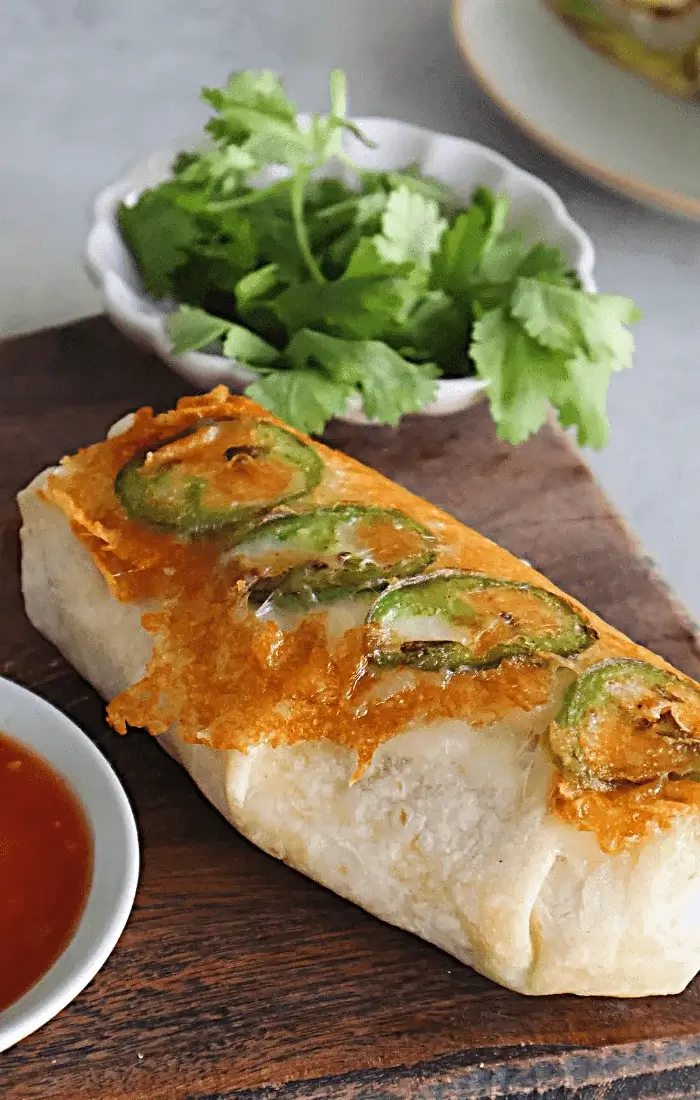
In this recipe, the cheese crust also acts as an adhesive layer, which improves stability further once the burrito is placed on it. Pressing lightly during this step ensures full contact and reduces movement. If the burrito still loosens, it often indicates excess moisture or insufficient tortilla flexibility.
What sauces pair best with egg and cheese breakfast burrito?
Salsa is the most common pairing because its acidity cuts through the richness of eggs, cheese, and avocado. Fresh pico de gallo adds texture and brightness without overwhelming the burrito. For creamier options, sour cream or Greek yogurt provides cooling contrast and helps balance the jalapeño heat in the crispy cheese layer.
Hot sauce can be used for additional heat but should be applied lightly to avoid overpowering the base flavors. Chipotle-based sauces or smoky salsas also work well because they complement the browned cheese crust.