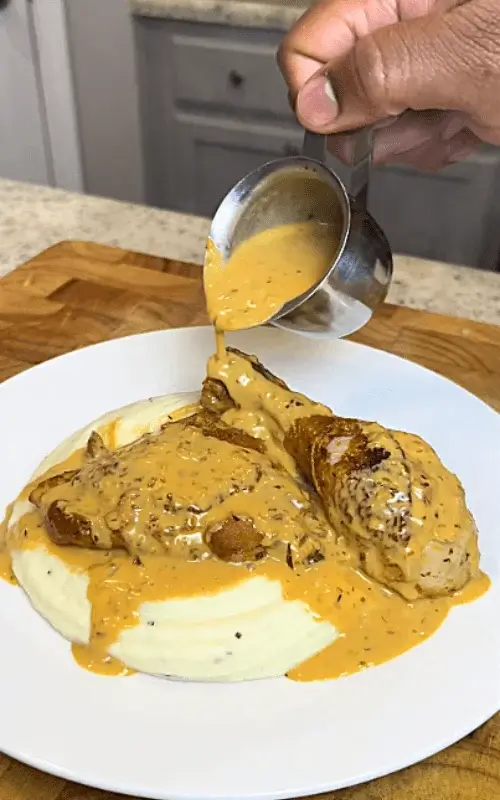
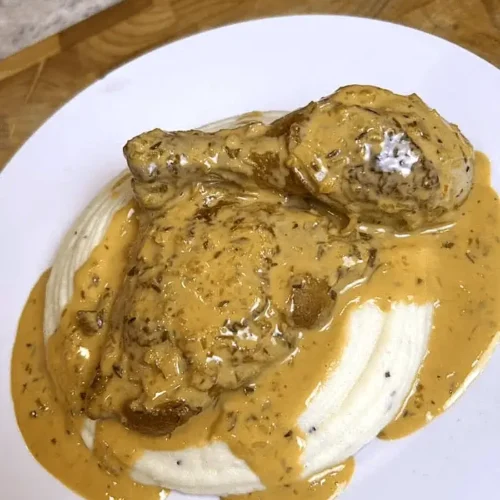
French Chicken in Vinegar with Mashed Potatoes
Watch the Full Step-by-Step
- Chef's knife
- Large pot
- Colander
- Potato masher
INGREDIENTS
- 3 pounds/1.4 kilograms chicken pieces
- 1 teaspoon salt, as needed
- 2 tablespoons oil
Sauce:
- 2 medium shallots, finely diced
- 4 garlic cloves, minced
- 1 tablespoon tomato paste
- ½ cup white wine vinegar
- ½ cup dry white wine
- 1 cup chicken broth
- 1 teaspoon fresh thyme leaves
- 1 tablespoon fresh tarragon, chopped
- ½ cup heavy cream
Mashed potatoes:
- 2.2 pounds/1 kilogram gold potatoes, peeled and cut
- 4 tablespoons/2 ounces unsalted butter
- ½ cup warm milk
- Salt, as needed

INSTRUCTIONS
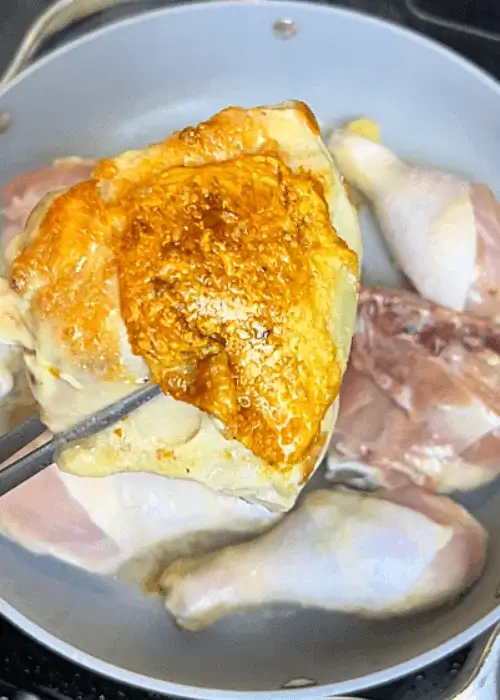
- Season chicken generously with salt. Heat oil in a Dutch oven over medium-high heat. Sear chicken until well browned on both sides, 10 to 12 minutes total. Transfer to a plate.
- Reduce heat to medium. Add shallots and garlic and cook until softened, 2 to 3 minutes. Stir in tomato paste and cook for 1 minute.
- Add vinegar and wine, scraping up browned bits. Simmer until slightly reduced, 3 to 4 minutes.
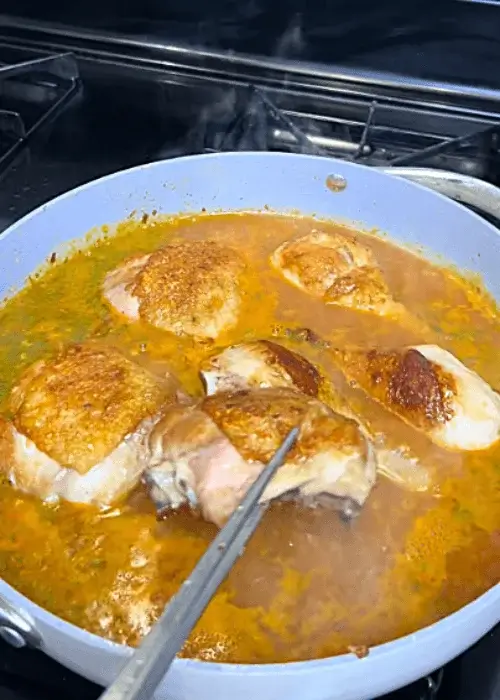
- Add broth, thyme, and tarragon. Bring to a simmer. Return chicken to pot, skin side up. Cover and cook gently until chicken reaches 165°F/75°C, about 20 minutes.
- Meanwhile, boil potatoes in salted water until very tender, 15 to 18 minutes. Drain and mash or rice. Stir in butter and warm milk until smooth. Season with salt.
- Transfer chicken to a plate. Stir cream into sauce and simmer until lightly thickened. Return chicken to warm through.
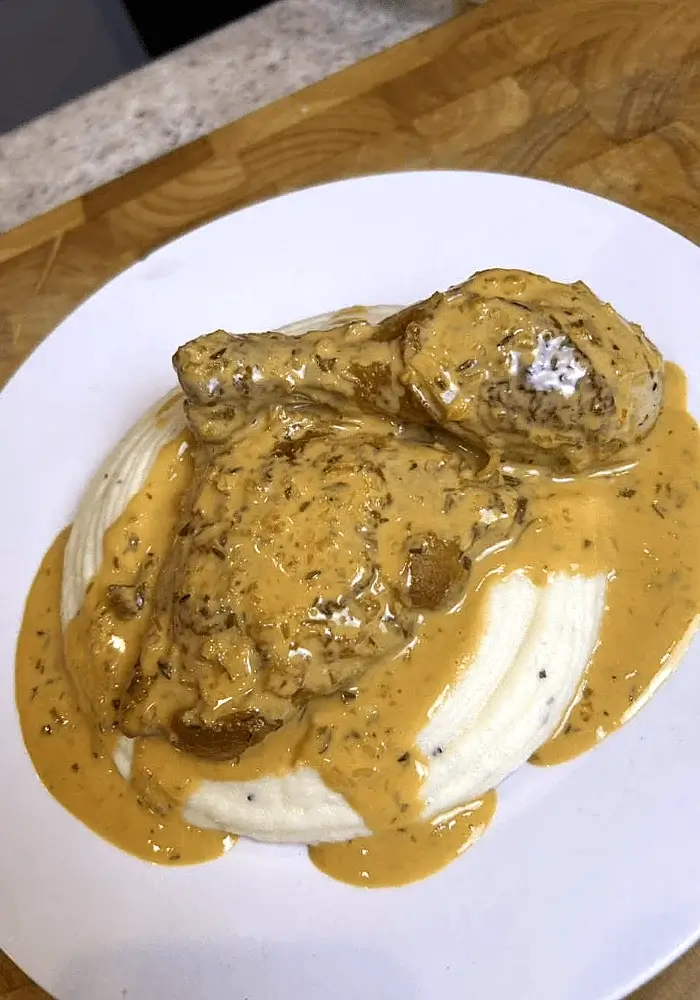
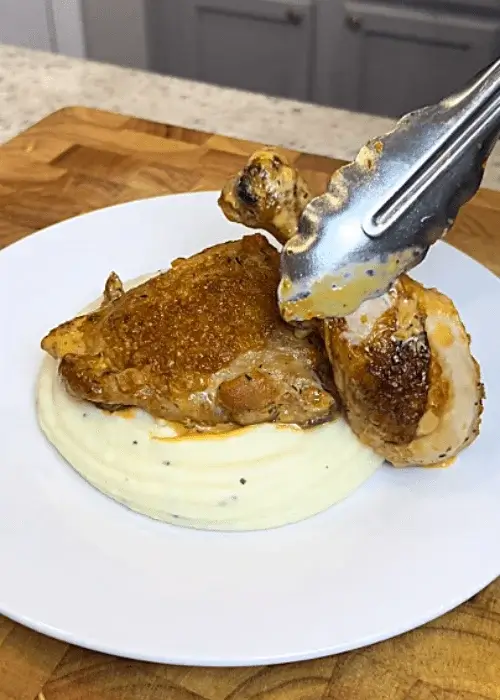
- Serve chicken over mashed potatoes, spooning sauce over top.
FAQ
What is chicken in vinegar, and why does it taste so distinctive?
Chicken in vinegar is a French-style braised chicken dish built around the contrast between sharp vinegar, dry white wine, aromatics, and rich cream. The vinegar gives the sauce brightness and acidity, while the wine adds depth and the cream softens the edges so the finished dish does not taste harsh. In this recipe, the chicken is first browned, which creates savory flavor in the pan, then gently simmered until tender.
That combination of searing and braising is what makes chicken in vinegar taste layered rather than one-note. The sauce also picks up flavor from shallots, garlic, thyme, and tarragon, which gives it a classic French profile. Served with mashed potatoes, the dish becomes balanced: tangy, savory, creamy, and substantial all at once.
What is the best way to prevent curdling when adding cream?
Preventing curdling in chicken in vinegar relies on temperature control and sequencing. The sauce should be taken off a hard boil before cream is added, because high heat combined with acidity increases the risk of separation. In this recipe, the cream is added after the chicken is removed and the sauce has already reduced, which helps stabilize the environment.
Stirring it in gradually while the heat is low allows it to emulsify properly. Using heavy cream instead of lighter dairy also improves stability due to its higher fat content. If the sauce still looks slightly split, gentle whisking and very low heat can usually bring it back together. Avoid boiling after cream is incorporated to maintain a smooth, cohesive texture in chicken in vinegar.
Why is the chicken browned before it is simmered?
Browning is important because it develops flavor that cannot be created by simmering alone. When the chicken is seared, the surface caramelizes and forms fond, which are the browned bits stuck to the bottom of the pan. Those bits dissolve later when the vinegar and wine are added, enriching the sauce.
In chicken in vinegar, this step also improves texture by creating a more appealing exterior before the braise begins. The goal is not to cook the chicken through during searing, but to build a flavor base and develop color. If the chicken is crowded in the pan, it will steam instead of brown, so it is best to give the pieces enough space. A proper sear gives the final dish a deeper, more complete taste.
Why does the sauce sometimes turn too thin or too thick?
Sauce consistency in chicken in vinegar depends on reduction, cream, and starch release from the chicken and aromatics. If the sauce is too thin, it usually means it has not reduced enough after adding broth, or the pan was covered too loosely, allowing excess evaporation control to be lost. Increasing simmer time uncovered helps concentrate it.
If the sauce becomes too thick, it is often due to over-reduction or too much evaporation before the cream is added. The starch from potatoes served alongside does not directly affect the sauce, but timing does: once cream is added, prolonged boiling can also tighten the texture too much. The goal is a sauce that lightly coats a spoon and clings to chicken without feeling heavy or gluey.
Can I use a different cut of chicken for chicken in vinegar?
Yes, but the best result usually comes from bone-in, skin-on chicken pieces such as thighs, drumsticks, or a cut-up whole chicken. These cuts stay moist during braising and add more flavor to the sauce because the bones and skin contribute richness. Boneless, skinless chicken can work, but it will cook faster and may become dry if simmered too long.
If using boneless pieces, reduce the braising time and check early for doneness. A whole cut-up chicken is especially good for chicken in vinegar because it gives you a mix of dark and light meat, which creates variety in texture and flavor. The key is to choose pieces that can hold up to gentle simmering without falling apart before the sauce is finished.
Can I substitute herbs in chicken in vinegar?
Tarragon is a defining herb in chicken in vinegar, giving the sauce its slightly anise-like, classic French character. Thyme provides earthiness and structure, balancing the sharper elements of vinegar and wine. If tarragon is unavailable, parsley or chervil can be used, but the dish will lose some of its signature identity.
Rosemary is generally too strong and can overpower the sauce. Dried herbs can be used in smaller quantities, but fresh herbs are preferred because they infuse more cleanly into the braise. Any substitution should aim to preserve balance between acidity, richness, and herbal brightness rather than introduce dominant flavors.
How do I know when the chicken is done?
The safest and most reliable way to know when chicken in vinegar is done is to check the internal temperature. The chicken should reach 165°F/75°C at the thickest part. At that point, it is safe to eat and should still remain juicy if it was braised gently. Visual clues help too: the meat should pull away from the bone more easily, and the juices should run clear.
Because this recipe uses simmering rather than roasting, it is important not to cook at a hard boil, which can make the meat stringy. Gentle heat keeps the chicken tender while the sauce develops. If you are using different cuts, check the smaller pieces first, because they may finish before the larger ones.
What is the purpose of reducing the vinegar and wine before adding broth?
Reducing the vinegar and wine before adding broth concentrates their flavor and removes some of their raw sharpness. In chicken in vinegar, this step is important because it transforms the liquid from harsh and acidic into something more balanced and integrated.
As the mixture simmers, alcohol from the wine cooks off, and the vinegar mellows slightly while still retaining its brightness. This reduction also helps build the foundation of the sauce so that when broth is added, it does not dilute flavor but instead extends it. Skipping this step would result in a thinner, more aggressively acidic sauce that lacks depth. Proper reduction ensures the final sauce is layered, not one-dimensional.