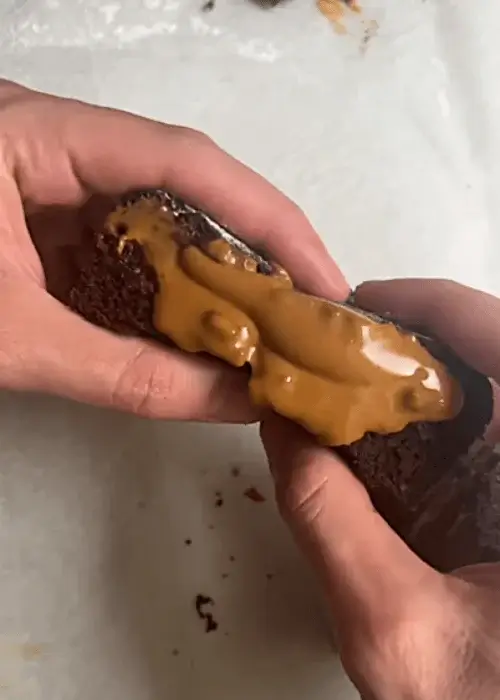
Vegan Chocolate Lava Cakes with Biscoff Centers
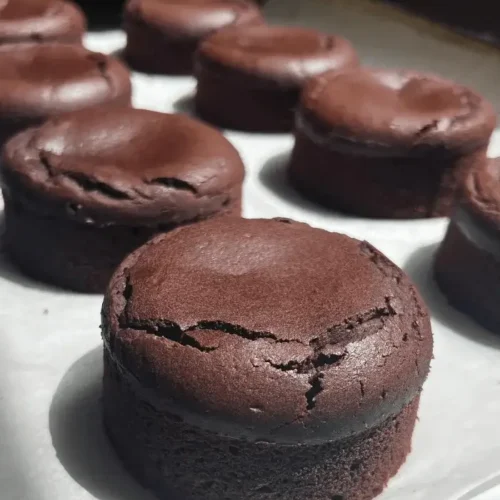
Watch the Full Step-by-Step
- 8 ring molds
- Baking sheet
- Small saucepan
- Kitchen scale
INGREDIENTS
- 9 ounces/250 grams vegan dark chocolate, finely chopped
- ⅓ cup/75 grams granulated sugar
- ⅓ cup/75 grams light brown sugar
- 2 cups plus 2 tablespoons/500 grams oat milk
- ⅓ cup plus 1 tablespoon/100 grams oil
- 1¾ cups/220 grams all-purpose flour
- ¾ cup/75 grams cocoa powder
- 2½ teaspoons/10 grams baking powder
- ½ teaspoon salt
- 1 cup/400 grams Biscoff spread

INSTRUCTIONS
- Heat the oven to 350°F/180°C. Line 8 pastry rings or ramekins with parchment paper and place on a sheet pan.
- Set a heatproof bowl over a saucepan of barely simmering water. Add the chocolate and stir until melted and smooth. Remove from the heat, add the granulated sugar and brown sugar, and whisk until glossy. Let cool slightly.
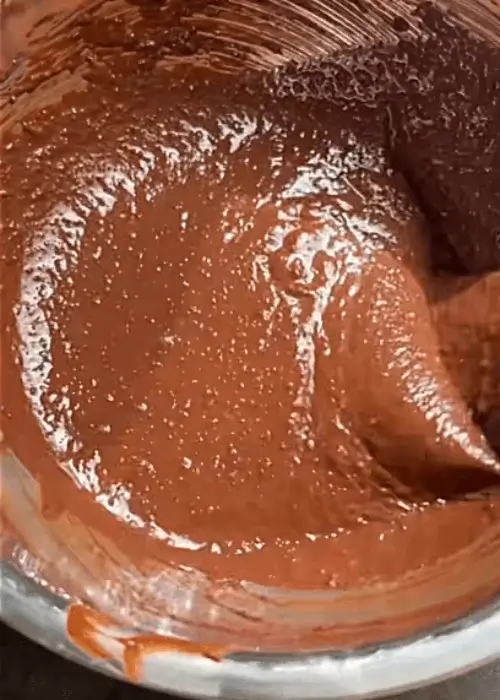
- In a large bowl, whisk together the soy milk and oil. Add the flour, cocoa powder, baking powder, and salt, and whisk until no dry streaks remain. Whisk in the melted chocolate mixture until the batter is smooth and evenly combined.
- Fill each prepared ring one-third full with batter. Spoon 1 tablespoon Biscoff spread into the center of each cake, then cover with more batter until the rings are three-quarters full.
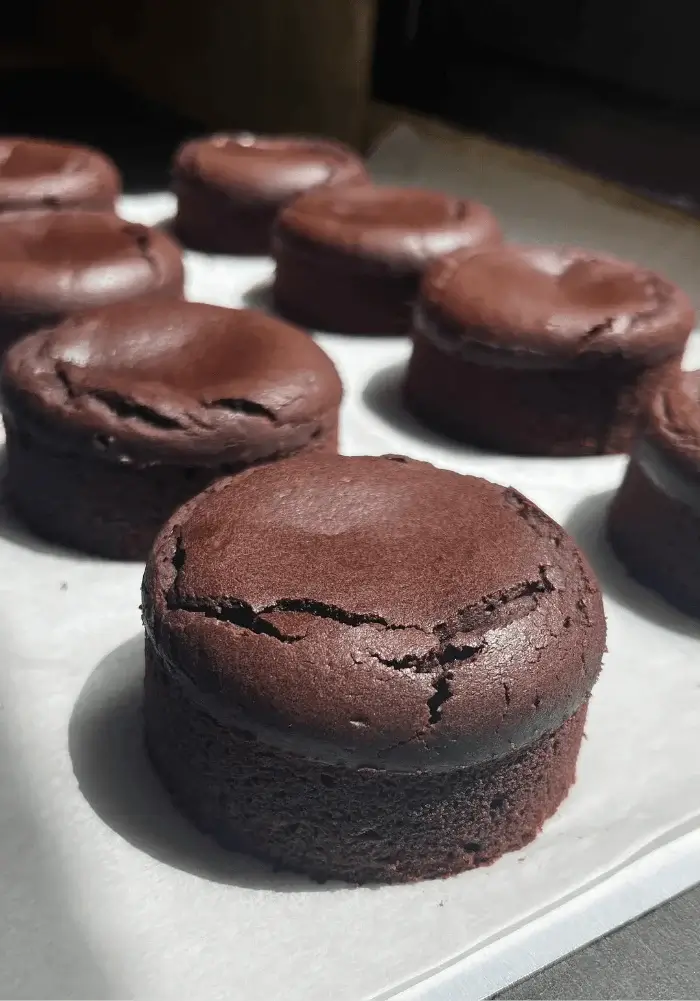
- Bake until the edges are set and the centers still tremble slightly, 10 to 12 minutes. Let stand for 1 minute, then serve warm.
FAQ
What makes a vegan chocolate lava cake turn out with a molten center?
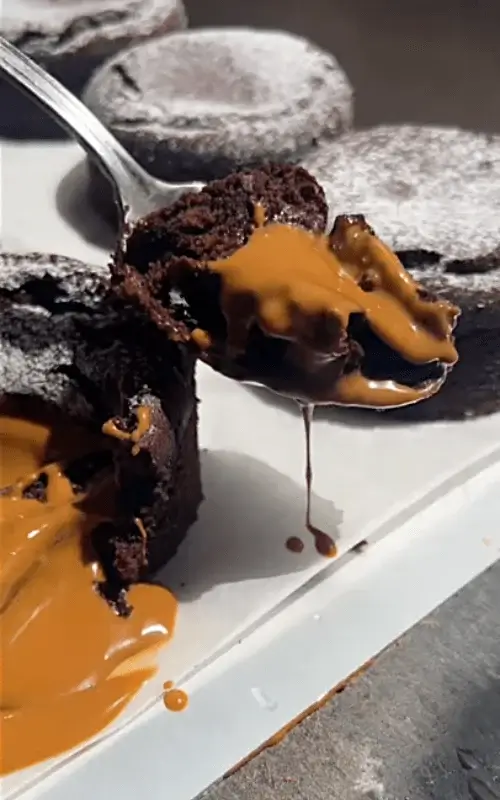
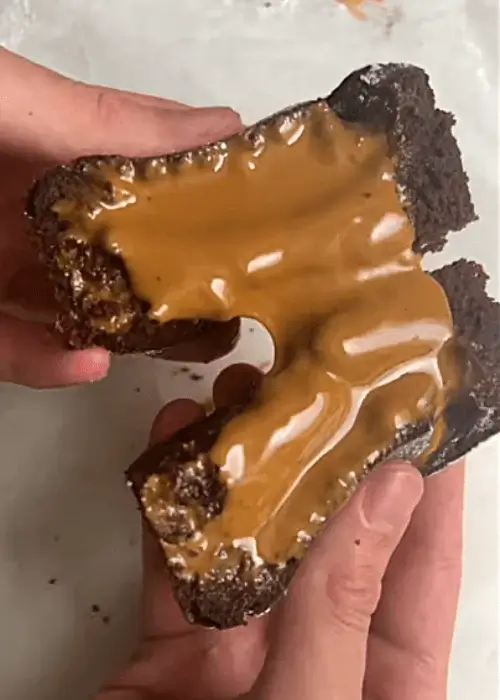
A vegan chocolate lava cake achieves a molten center primarily through precise control of bake time, batter composition, and filling ratio. The key factor is the short baking window at a relatively high temperature, typically 350°F/180°C, which sets the outer structure of the cake while leaving the interior underbaked. In this recipe, the combination of cocoa powder, oil, and oat milk creates a loose batter that bakes quickly at the edges but remains fluid in the center. The addition of Biscoff spread further enhances the molten effect.
Proper assembly also matters. Filling the molds only three-quarters full ensures the heat penetrates evenly while preserving a core that remains soft. Overfilling or using overly thick batter can prevent the heat gradient necessary for a lava texture. The brief rest after baking is also important, since carryover heat continues cooking the exterior while the center stabilizes without fully setting. Timing is critical; even an extra 1–2 minutes can eliminate the lava effect and produce a fully baked cake.
Can I substitute oat milk in a vegan chocolate lava cake, and how does it affect texture?
Oat milk plays a functional role in a vegan chocolate lava cake because it provides moisture, mild sweetness, and a relatively neutral fat profile compared to other plant milks. It contributes to a soft crumb without interfering with the chocolate structure. Substituting it is possible, but the outcome depends on the alternative. Soy milk is the closest substitute because it has similar protein content and emulsification behavior, which helps stabilize the batter. Almond milk can be used, but it produces a slightly lighter and less rich texture due to lower fat and protein content.
Coconut milk introduces more fat and can make the cake denser and more aromatic, which may or may not be desirable depending on the intended flavor profile. The liquid ratio must remain consistent, as reducing or increasing hydration will directly impact batter viscosity and baking time. In a vegan chocolate lava cake, consistency is critical because the batter must be fluid enough to rise quickly but structured enough to hold the molten Biscoff center without collapsing during unmolding.
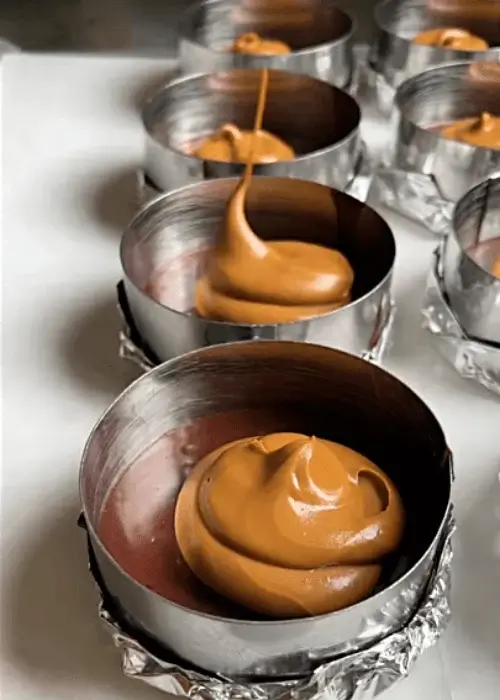
Why does Biscoff spread work so well as the center of a vegan chocolate lava cake?
Biscoff spread functions effectively as a molten center in a vegan chocolate lava cake because of its high sugar and fat composition combined with a smooth emulsified texture. Unlike solid chocolate or fruit fillings, it does not set firmly when baked at moderate temperatures. Instead, it softens into a thick, caramel-like liquid that mimics a lava flow when the cake is cut open. Its viscosity is ideal because it remains contained within the batter during baking but becomes fluid once exposed to heat.
The flavor profile also complements the deep cocoa base. The caramelized biscuit notes in Biscoff enhance the bitterness of dark chocolate, creating balance rather than excess sweetness. Structurally, it is stable enough to hold shape when spooned into the batter but not so rigid that it disrupts the baking process. This makes it more reliable than many alternative fillings, which can either dissolve completely or remain too solid after baking.
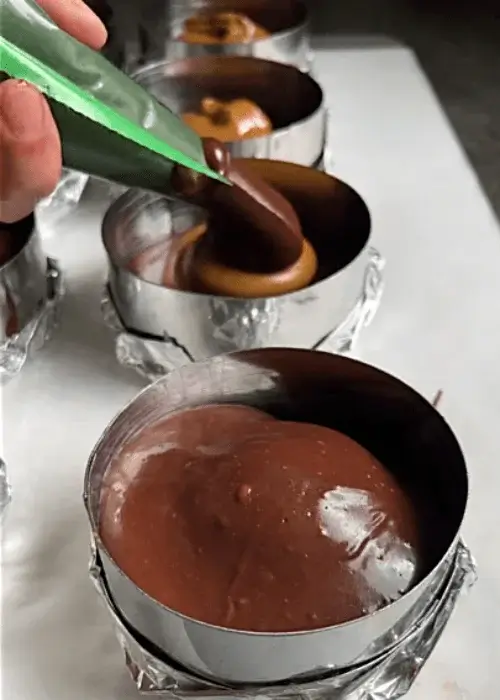
How do you know when a vegan chocolate lava cake is perfectly baked?
A vegan chocolate lava cake is properly baked when the exterior is fully set and slightly firm to the touch, while the center still shows visible movement when the pan is gently shaken. At 350°F/180°C, this typically occurs within 10 to 12 minutes, depending on the oven calibration and the material of the ramekins or rings. The edges should appear matte and slightly pulled away from the sides of the mold, indicating structural stability.
The center, however, should remain soft and tremble slightly rather than being fully liquid or fully solid. Visual cues are more reliable than strict timing, since small variations in batter distribution or oven hot spots can affect doneness. Overbaking by even a couple of minutes will cause the molten core to set, eliminating the lava effect. After removal from the oven, a short resting period allows the structure to stabilize while preserving the molten interior, ensuring that the cake maintains its signature texture when unmolded.
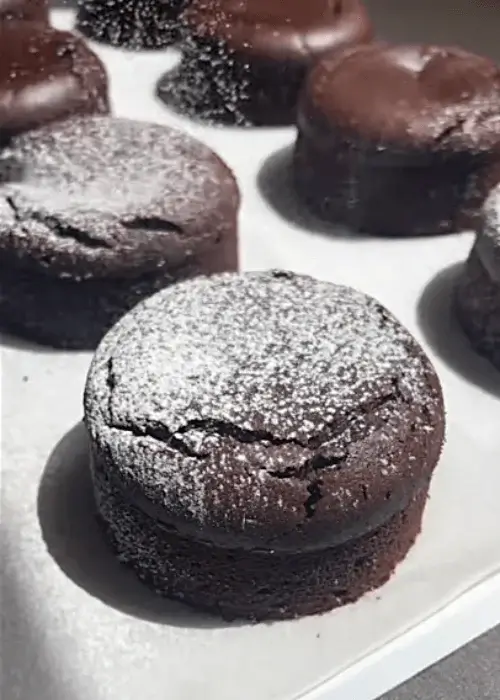
What type of chocolate works best in a vegan chocolate lava cake?
The best chocolate for a vegan chocolate lava cake is high-quality vegan dark chocolate with a cocoa content between 60% and 75%. This range provides enough cocoa solids to create a deep, slightly bitter base that balances the sweetness of the sugar and Biscoff spread. Chocolate with too low a cocoa percentage tends to be overly sweet and can result in a cloying dessert, while very high percentages above 80% may produce a more bitter and less balanced flavor profile unless additional sugar is adjusted.
The chocolate’s melt behavior is equally important. A couverture-style chocolate melts smoothly and emulsifies well with plant-based milk and oil, creating a glossy batter that bakes evenly. Compound chocolate can also work but may yield a slightly waxier texture and less depth of flavor. The chocolate forms the structural and flavor backbone, so its quality directly impacts both the molten center and the final crumb texture.
How important is resting time after baking?
Resting time after baking is a critical step in a vegan chocolate lava cake because it allows the outer structure to stabilize while preserving the molten center. Immediately after removal from the oven, the cake continues to cook from residual heat, a process known as carryover cooking. A short resting period of about one minute helps the edges firm up slightly, making unmolding safer and reducing the risk of structural collapse.
If the cake is served too quickly, it may break apart when handled, especially since vegan formulations lack eggs, which provide additional structural binding. If rested too long, however, the internal heat can continue setting the center, reducing or eliminating the lava effect. The timing must therefore be precise and consistent.
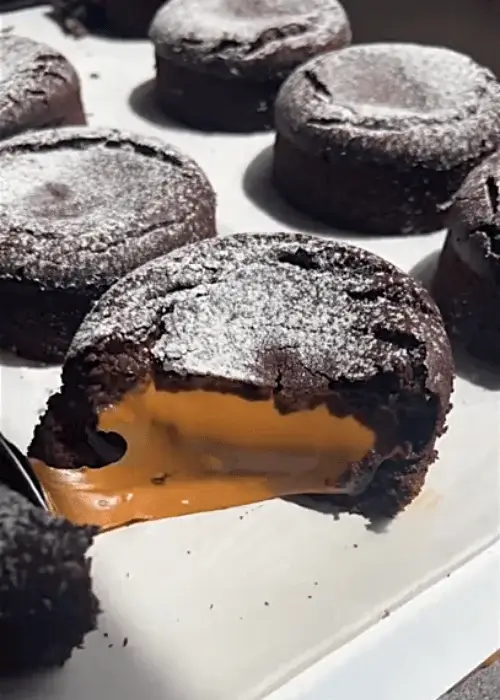
Can you make vegan chocolate lava cake ahead of time and bake it later?
Yes, a vegan chocolate lava cake can be prepared in advance and baked later, which is often preferred for timing precision and serving consistency. The batter can be mixed and portioned into prepared ramekins or pastry rings, then covered tightly and refrigerated for up to 24 hours. This resting period can actually improve flavor development as the cocoa and sugar hydrate more fully. However, the batter must be brought closer to room temperature before baking to ensure even heat distribution.
If baked directly from the refrigerator, the exterior may set too slowly while the center remains undercooked, increasing the risk of collapse when unmolding. It is also possible to freeze assembled unbaked cakes for longer storage, typically up to one month, though baking time must be extended slightly. Consistency in temperature before baking is critical because the molten center depends on precise thermal gradients during the short bake window.
Why does my cake taste dry instead of gooey?
A dry vegan chocolate lava cake usually results from overbaking, incorrect flour ratio, or insufficient fat and moisture balance. Overbaking is the most common cause; even 2–3 extra minutes in the oven can fully set the interior, eliminating the molten center and drying out the crumb. Because the cake relies on a short baking window, precise timing at 350°F/180°C is critical to maintaining the lava effect.
Incorrect measurement of flour or cocoa powder can also significantly alter texture. Too much flour increases structure and absorbs moisture, leading to a dense, dry result. Cocoa powder is highly absorbent as well, and if not balanced with enough liquid or oil, it can intensify dryness. In a vegan chocolate lava cake, the oat milk and oil work together to maintain emulsification and softness, so reducing either will affect the final texture.
Why did my vegan chocolate lava cake collapse after baking?
A vegan chocolate lava cake can collapse for several structural reasons, most commonly underbaking, overfilling, or insufficient batter structure. Underbaking prevents the outer layer from forming a stable crumb, so when the mold is removed, the soft interior cannot support itself. Overfilling can also cause uneven heat distribution, leading to weak structural walls that break during unmolding. Additionally, plant-based batters lack eggs, which normally provide structural binding, so balance between flour, fat, and liquid is especially important.
Another factor is cooling time. Removing the cake from the mold too early can cause it to fall apart because the outer structure has not yet set enough to support the molten center. Conversely, overcooling can cause the center to fully set, eliminating the lava effect and making the cake feel dense.
Can you use ramekins instead of pastry rings?
Yes, ramekins are a standard and reliable alternative to pastry rings for making a vegan chocolate lava cake. They provide built-in structure, which makes unmolding easier and reduces the risk of batter leakage during baking. Ceramic ramekins retain heat slightly longer than metal rings, which can subtly extend the carryover cooking phase after removal from the oven. This should be accounted for by monitoring bake time closely, typically staying within the 10 to 12 minute range.
Pastry rings, on the other hand, allow for more even lateral heat exposure, which can produce a slightly more uniform crust and a more dramatic molten center when properly lined with parchment. Ramekins may yield a slightly taller cake due to their vertical structure. In both cases, proper greasing or parchment lining is essential to prevent sticking.
Can this cake be made gluten-free without changing texture too much?
Yes, this vegan chocolate lava cake can be made gluten-free, but the flour substitution must be chosen carefully to maintain structure while preserving the molten center effect. A 1:1 gluten-free baking flour blend is typically the most reliable option because it contains stabilizers like xanthan gum or rice flour blends that mimic gluten’s binding properties. This helps the cake hold its shape during baking without becoming overly dense or crumbly.
Single flours such as almond flour or coconut flour behave differently. Almond flour can produce a richer, more moist cake but may reduce structural stability, increasing the risk of collapse. Coconut flour is highly absorbent and requires significant recipe adjustments, often leading to a drier crumb if not carefully balanced.
What is the role of oil in a vegan chocolate lava cake?
Oil replaces the structural and emulsifying functions that butter would normally provide in a traditional recipe. Since there are no eggs or dairy, fat becomes a primary contributor to tenderness, moisture retention, and mouthfeel. Neutral oils such as canola, sunflower, or light vegetable oil are preferred because they do not compete with the chocolate or Biscoff flavors. The oil coats flour proteins, limiting gluten development, which helps keep the crumb soft and prevents the cake from becoming bready or dry.
Oil also affects how the batter behaves during baking. It remains liquid at room and oven temperatures, unlike solid fats that melt and re-solidify, which contributes to a more fluid interior and supports the lava effect. In a vegan chocolate lava cake, this is important because the molten center depends on a delicate balance between structure and flow. Too little fat results in a dry, cakey texture, while too much can prevent proper setting of the outer layer, causing collapse after baking.