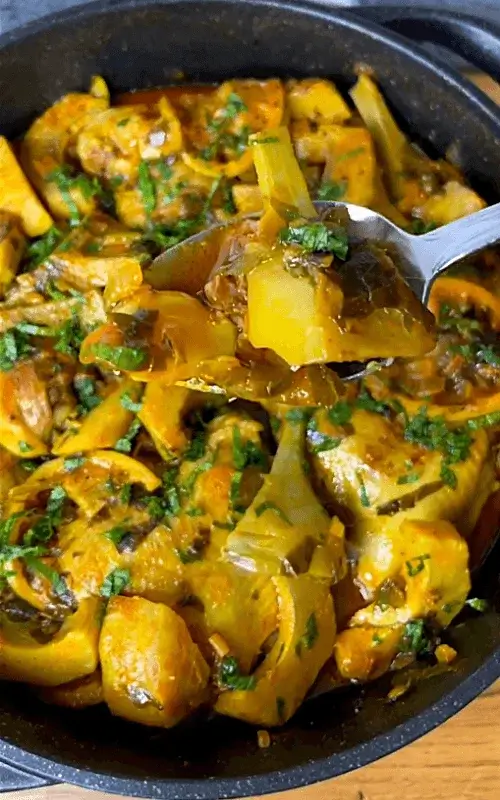
One-Pot Chicken with Artichokes and Lemon
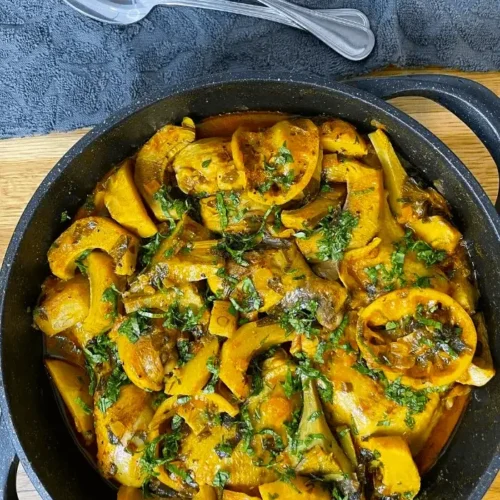
Watch the Full Step-by-Step
INGREDIENTS
- 2 pounds/900 grams chicken pieces
- 15 artichoke hearts, fresh or frozen, quartered
- 1 medium onion, finely chopped
- 8 garlic cloves, lightly crushed
- ½ cup celery leaves, finely chopped
- ½ lemon, thinly sliced
- 4 tablespoons olive oil
- 1 teaspoon ground turmeric
- 1 teaspoon sweet paprika
- 1 tablespoon granulated garlic
- ½ tablespoon sugar
- 1 tablespoon salt, plus more to taste
- 1 teaspoon ground black pepper
- 3 cups water, plus more as needed

INSTRUCTIONS
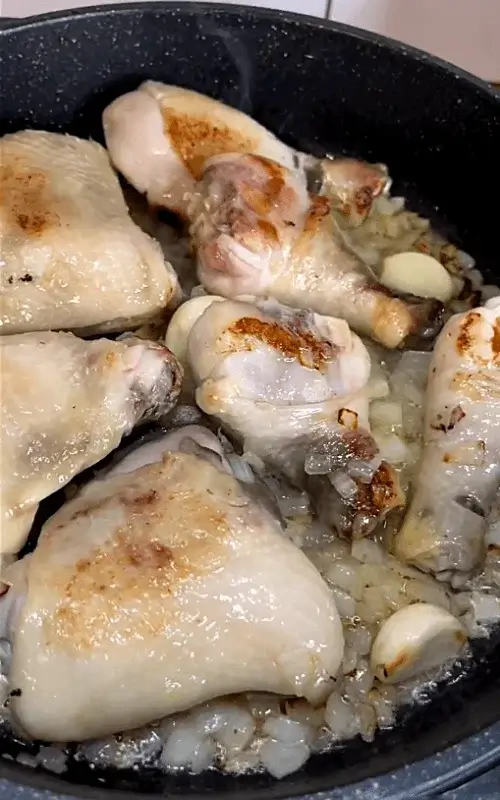
- Heat a wide pot or Dutch oven over medium-high heat and add the olive oil. Season the chicken lightly with salt and add to the pot. Sear until well browned on all sides, about 8 to 10 minutes.
- Add the onion and cook, stirring occasionally, until softened and lightly golden, about 5 minutes. Stir in the garlic and cook until fragrant, about 1 minute.
- Add the artichokes, lemon slices and half of the celery leaves. Sprinkle in the turmeric, paprika, granulated garlic, sugar, salt and black pepper. Pour in the water to mostly cover the chicken and bring to a gentle simmer.
- Cover the pot, leaving a small opening, and cook until the chicken is tender and the sauce has lightly reduced, about 1 hour and 15 minutes. Add more water if the pot becomes dry.
- Stir in the remaining celery leaves during the last 5 minutes of cooking. Taste and adjust seasoning before serving.
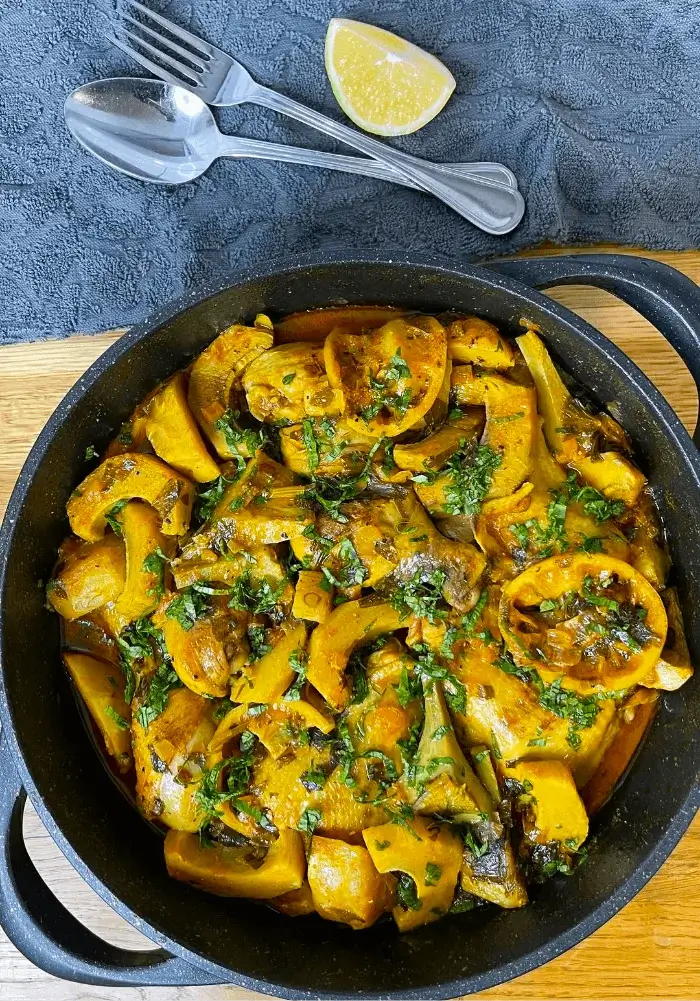
FAQ
What is the best type of chicken to use for this recipe?
For chicken with artichokes and lemon, bone-in chicken pieces are generally the best choice because they provide more flavor and remain tender during the long simmering process. Cuts such as thighs, drumsticks, or a mix of thighs and breasts work well because the bones release collagen and fat that enrich the cooking liquid and create a fuller sauce. Skin-on pieces are also beneficial because searing the skin develops browned flavors that carry through the entire dish.
Boneless chicken can technically be used, but it tends to cook faster and may become dry during the extended braising time required for chicken with artichokes and lemon. If using boneless meat, the cooking time should be reduced significantly and the sauce monitored closely. Many cooks prefer dark meat for this recipe because it stays moist even after more than an hour of simmering, while chicken breast can become firm if overcooked.
Is it better to use fresh or frozen artichokes?
Both fresh and frozen artichokes work well in chicken with artichokes and lemon, but they offer slightly different advantages depending on convenience and availability. Frozen artichoke hearts are the easiest option because they are already trimmed, cleaned, and cut into uniform pieces. This eliminates the time-consuming preparation required for whole artichokes and ensures consistent cooking in the braise. Frozen artichokes also absorb the flavors of the sauce effectively because their cell structure softens during freezing.
Fresh artichokes can produce excellent results in chicken with artichokes and lemon when they are properly trimmed and quartered. Fresh artichokes provide a slightly firmer texture and a brighter vegetable flavor, but they require removing the tough outer leaves, trimming the stems, and scraping out the choke before cooking. For many home cooks, frozen artichokes provide the best balance of convenience and flavor without sacrificing the overall character of the dish.
What should the sauce consistency be for chicken with artichokes and lemon?
The sauce for chicken with artichokes and lemon should be light but slightly reduced, not thick like a gravy. It should have enough body to coat the chicken and artichokes while still remaining brothy. During cooking, some of the liquid evaporates and combines with the chicken juices, spices, and aromatics to form a flavorful, golden sauce.
If the sauce is too thin at the end, you can simmer the pot uncovered for 10 to 15 minutes to concentrate it. If it becomes too thick or reduces too much, adding a small amount of water will restore balance. The goal is a sauce that carries the bright lemon flavor and savory depth of the chicken without overpowering the dish.
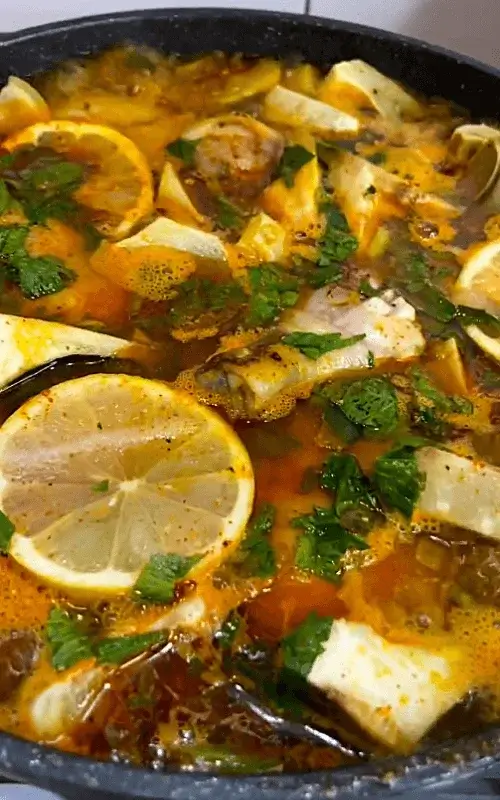
Why is lemon important in chicken with artichokes and lemon?
Lemon plays a crucial role in chicken with artichokes and lemon because it balances the richness of the chicken and enhances the natural flavor of the artichokes. The acidity from the lemon slices brightens the braising liquid and prevents the dish from tasting heavy after long cooking. During simmering, the lemon releases juice and aromatic oils from the peel, which infuse the sauce with a gentle citrus fragrance that complements garlic, turmeric, and paprika.
In addition to flavor, lemon also helps highlight the mild, earthy taste of artichokes. Artichokes contain natural compounds that can taste slightly flat without acidity, and lemon corrects this by sharpening their flavor profile. When cooking chicken with artichokes and lemon, thin slices of lemon are usually added early so they soften and mellow, creating a subtle citrus note throughout the sauce rather than a sharp sour taste at the end.
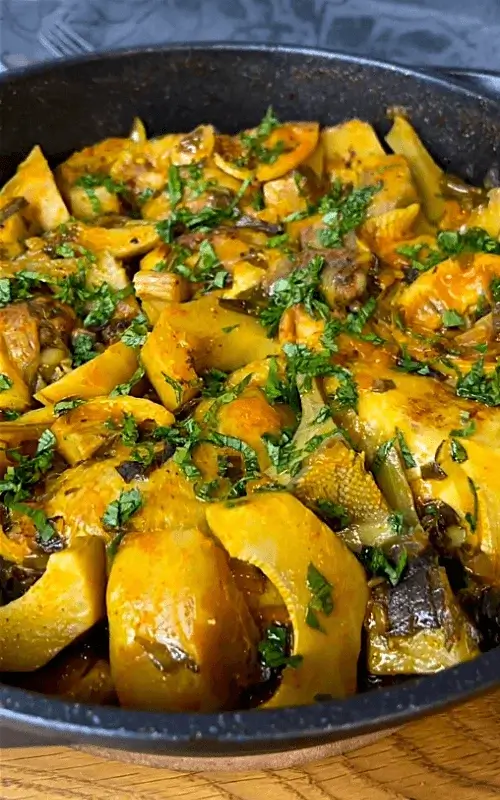
How do you know when the chicken is fully cooked?
The chicken is fully cooked when the chicken becomes tender and easily pulls away from the bone while the sauce has reduced slightly and concentrated in flavor. Because this dish cooks gently for more than an hour, the chicken should reach a stage where a fork slides easily into the thickest part of the meat. At that point, the connective tissue has softened and the chicken will have a moist, shreddable texture.
Another reliable indicator is internal temperature. The chicken in chicken with artichokes and lemon should reach at least 165°F or 74°C in the thickest portion of the meat. However, braised dishes often cook beyond that temperature to achieve tenderness rather than just safety. The artichokes should also be soft enough to cut with a spoon, and the sauce should appear slightly reduced but still plentiful enough to coat the chicken and vegetables.
Can you make chicken with artichokes and lemon in a slow cooker?
Searing the chicken beforehand is important because it develops browned flavors that a slow cooker cannot create on its own. After searing, transfer the chicken along with the aromatics, spices, artichokes, lemon, and liquid into the slow cooker. Cook on low for 6 to 7 hours or on high for about 3 to 4 hours until the chicken is tender.
One key consideration is liquid control. Slow cookers trap moisture, so you may need slightly less water than in the stovetop version. If the sauce is too thin at the end, remove the lid and cook on high for 20 to 30 minutes to reduce it. The result is a softer, more stew-like version of chicken with artichokes and lemon, with fully developed flavor but less caramelization than the original method.