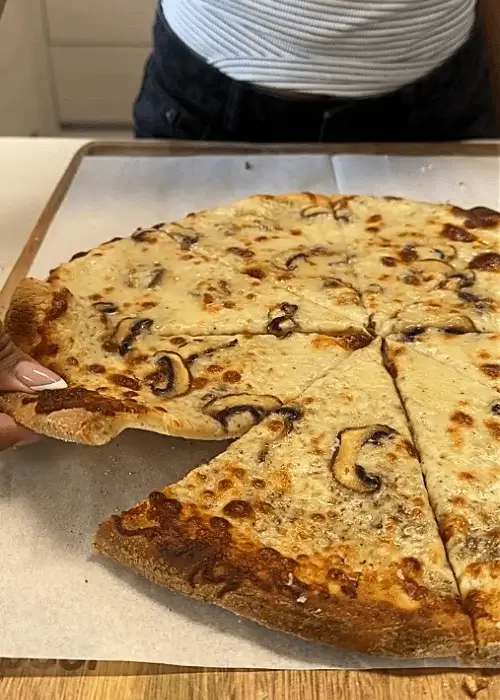
Fast Homemade White Mushroom Pizza
Watch the Full Step-by-Step
- Baking sheet
- Kitchen scale
INGREDIENTS
Dough:
- 4⅓ cups/550 grams bread flour
- 1⅓ cups/320 grams cold water
- 1½ teaspoons/5 grams dry yeast
- 1½ teaspoons/6 grams sugar
- 2 teaspoons/6 grams olive oil
- 2½ teaspoons/13 grams salt
Toppings:
- ½ cup heavy cream
- 6 cups/700 grams mozzarella, shredded
- ½ cup grated Parmesan
- 6 ounces/170 grams Portobello mushrooms, thinly sliced
- ½ teaspoon ground black pepper

INSTRUCTIONS
- Combine water, yeast, sugar, flour, oil, and salt in a bowl until a rough dough forms. Knead in a stand mixer with a dough hook for 6 minutes on medium speed. Divide into 3 balls (~300 grams each) and place in lightly oiled containers. Let rise for 3 hours (1.5 hours in the fridge, 1.5 hours at room temperature).
- Preheat a wood-fired oven to 550°F/285°C or a home oven to its highest setting, 480–540°F/250–280°C, using an inverted baking sheet.
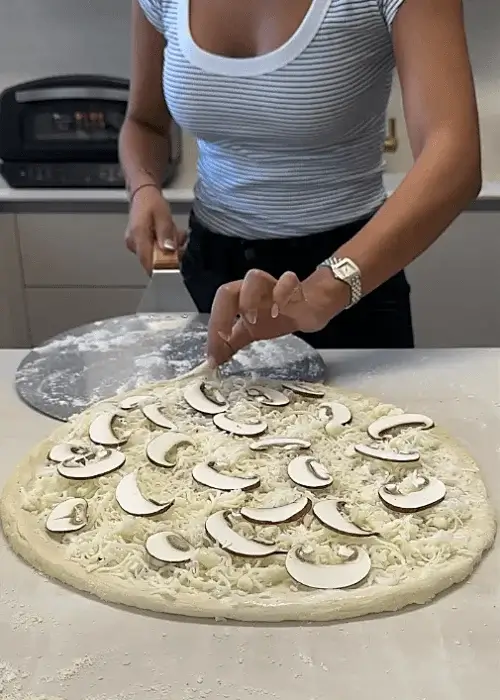
- Lightly flour a work surface and stretch dough from the center outward, rotating gently until thin and round with slightly thicker edges.
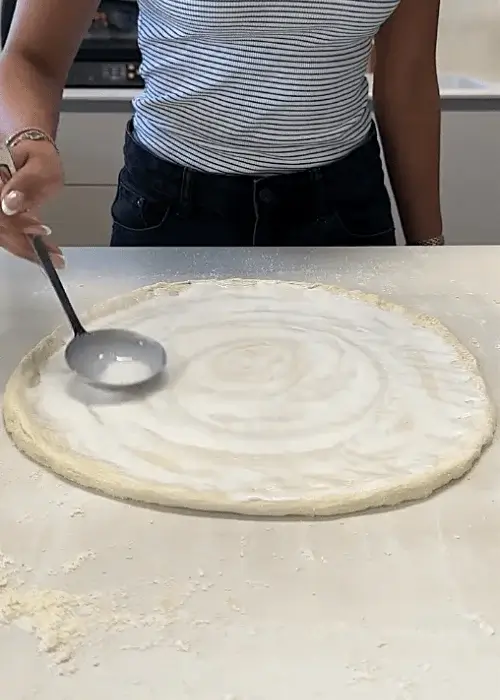
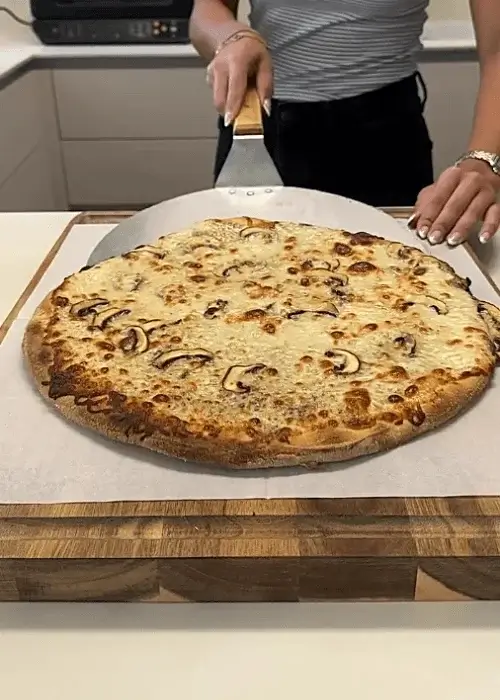
- Spread a thin layer of cream over each base. Sprinkle with black pepper, grate Parmesan, add mozzarella, and top with Portobello slices. Bake 10 minutes in a wood-fired oven or 12 minutes in a conventional oven until golden on top and bottom.
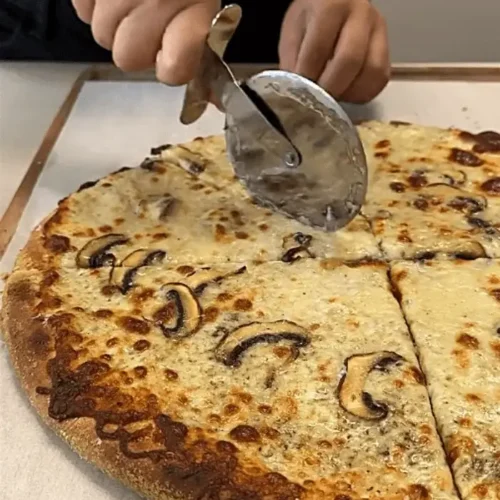
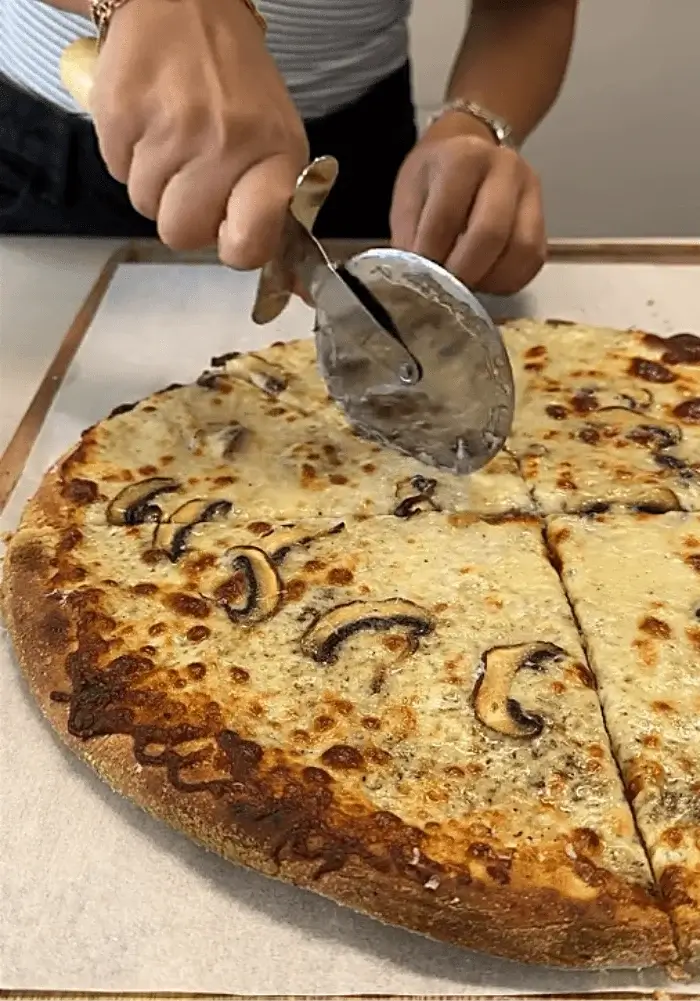
- Remove, grate extra Parmesan if desired, slice, and serve immediately.
FAQ
What type of flour is best for making white mushroom pizza?
Bread flour is the optimal choice because it has a higher protein content than all-purpose flour. The increased gluten in bread flour provides elasticity and structure, allowing the dough to stretch thin without tearing while still holding the toppings and cheese. This protein content also contributes to a chewy, slightly airy crust with a crisp exterior when baked at high temperatures.
If bread flour is unavailable, a high-gluten all-purpose flour can work, but the dough may be slightly less elastic. Proper kneading and adequate fermentation are critical for developing gluten and ensuring the dough rises evenly. Using cold water and following the recommended rise times also improves texture and flavor for a classic white mushroom pizza.
How should I prepare Portobello mushrooms?
Portobello mushrooms should be cleaned and sliced thinly for white mushroom pizza to ensure even cooking and prevent excess moisture on the crust. Use a damp paper towel or soft brush to remove dirt rather than washing them under running water, which can make them soggy. Slice the caps evenly, about ⅛ to ¼ inch thick, so they cook at the same rate as the cheese and dough.
If desired, you can lightly sauté the mushrooms before adding them to the pizza to enhance their earthy flavor and remove some water, which helps maintain a crisp crust. Avoid overcrowding the pizza with mushrooms, as too many slices can create steam and prevent the top from browning evenly.
What is the best oven temperature and method for baking white mushroom pizza?
High heat is essential to achieve a crisp crust and properly melted, slightly golden cheese. A wood-fired oven preheated to around 550°F/285°C is ideal, as it provides even, intense heat that cooks the pizza in about 10 minutes. For a conventional home oven, preheat to the maximum setting, typically between 480–540°F/250–280°C, using an inverted baking sheet to mimic the effect of a pizza stone.
Position the pizza close to the top heating element to encourage browning on both the top and bottom. Baking at lower temperatures can result in a soggy crust and unevenly melted cheese. Ensure the dough is stretched thin, and toppings are distributed evenly for consistent cooking, producing a professional-quality white mushroom pizza with a golden crust and perfectly bubbly cheese.
What are the best techniques for stretching the dough?
Begin by lightly flouring your work surface and hands to prevent sticking. Start from the center of the dough ball and press outward using fingertips or the palms of your hands, rotating the dough as you go to maintain a circular shape.
Avoid over-stretching, which can tear the dough and cause uneven cooking. Allow the edges to remain slightly thicker to hold toppings and form a natural crust. For larger pizzas, lifting the dough and letting gravity stretch it slightly while rotating can help achieve uniform thinness.
What is the ideal cheese combination for white mushroom pizza?
Mozzarella is essential due to its excellent melting properties and creamy, mild flavor that complements the earthy mushrooms. A generous amount of shredded mozzarella creates a stretchy, gooey layer over the dough. Grated Parmesan adds sharpness and umami, enhancing the overall taste without overpowering the creaminess.
Some recipes may include a small amount of ricotta or fontina for extra richness, but mozzarella and Parmesan remain the foundation. Avoid overly wet cheeses that release too much liquid during baking, which can make the crust soggy.
How do I get a crispy crust without burning the toppings?
Achieving a crispy crust on white mushroom pizza without burning the toppings requires careful attention to oven temperature, dough thickness, and topping distribution. Stretch the dough thin but leave slightly thicker edges to maintain structure. Preheat your oven or baking surface fully—ideally to 480–550°F/250–285°C—so the crust cooks quickly, developing a crisp exterior before the cheese or mushrooms overcook.
Avoid overloading the pizza with toppings, especially moist ingredients like mushrooms or cream, which can steam the crust and make it soggy. Use an inverted baking sheet or pizza stone to provide direct heat to the bottom. Keep a close eye on baking time, and remove the pizza as soon as the edges are golden brown.
Can I make white mushroom pizza with a gluten-free crust?
Gluten-free blends often contain rice flour, tapioca starch, or potato starch to mimic the structure of wheat dough, but they lack natural elasticity, so the dough may be more delicate and harder to stretch. Using xanthan gum or psyllium husk can help provide binding and chewiness similar to traditional bread flour.
Pre-baking the crust for 5–7 minutes before adding cream, cheese, and mushrooms helps prevent sogginess. Be mindful of toppings that release moisture, such as mushrooms and cream; consider lightly sautéing or patting dry to maintain a firm base.
Can I substitute other mushrooms in white mushroom pizza?
Cremini mushrooms are a common substitute, offering a mild, earthy taste similar to Portobello but smaller in size. Shiitake mushrooms provide a more robust, umami-forward flavor, though they have a firmer texture and slightly chewy stems. Button mushrooms are widely available and cook quickly, but they can release more water, which may require pre-sautéing or blotting with paper towels.
Oyster mushrooms are delicate and tender, but they shrink significantly during baking. For any substitute, slice evenly, avoid overcrowding the pizza, and consider lightly sautéing to reduce excess moisture.
How long should I knead the dough by hand versus a stand mixer?
Kneading by hand versus a stand mixer differs primarily in time and effort, but both methods aim to develop gluten for elasticity and structure. When kneading by hand, it typically takes 8–10 minutes of firm, consistent folding and pressing motions to achieve a smooth, slightly tacky dough.
A stand mixer with a dough hook significantly reduces effort and time, usually kneading effectively in 6 minutes on medium speed. Regardless of method, the dough should pass the windowpane test, stretching thin without tearing, indicating proper gluten development.
Can white mushroom pizza be reheated without losing texture or flavor?
Oven reheating is preferred: preheat the oven to 375–400°F/190–200°C and place the pizza on a baking sheet or directly on the oven rack for 5–8 minutes. This method crisps the crust while gently warming the toppings. Avoid microwaving, which often makes the crust chewy or soggy. To restore extra crispness, lightly brush the crust with olive oil or briefly broil for 1–2 minutes at the end of reheating.