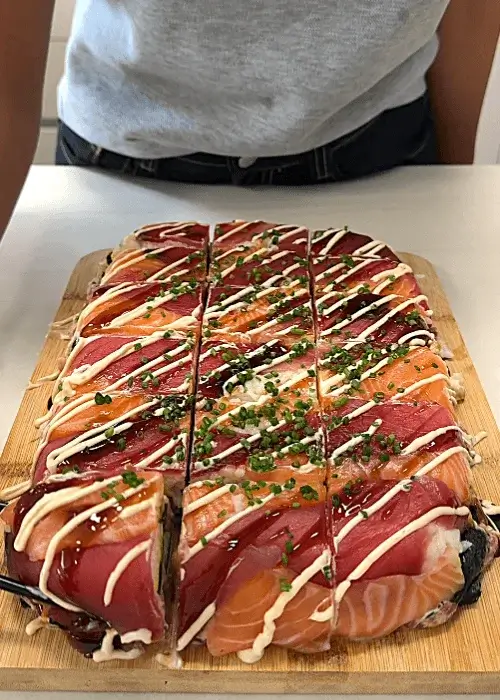
Layered Sushi Cake Recipe
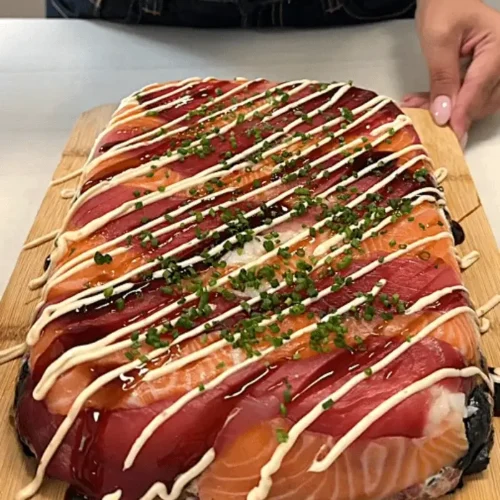
Watch the Full Step-by-Step
- Rectangular pan
- Medium saucepan
- Small saucepan
- Mixing bowls
- Chef's knife
INGREDIENTS
- 5.3 ounces/150 grams salmon sashimi
- 5.3 ounces/150 grams tuna sashimi
- 1 cup sushi rice
- ½ teaspoon fine salt
- 2 cups lukewarm water
- 3 tablespoons rice vinegar
- 1 tablespoon sugar
- ½ teaspoon fine salt
Spicy tuna layer:
- 7 ounces/200 grams tuna, cut into very small cubes
- 1 bunch chives, finely chopped
- ¼ red chile pepper, finely minced
- ½ teaspoon sriracha
- 2½ tablespoons mayonnaise
Assembly:
- 2 sheets nori
- 1 avocado, diced
- 1 small cucumber, thinly sliced
- 2 tablespoons teriyaki sauce
- 2 tablespoons spicy mayonnaise
- 1 tablespoon chives, chopped

INSTRUCTIONS
- Rinse the rice until the water runs clear, then drain well. Combine the rice, salt, and water in a saucepan and bring to a boil. Stir once, cover, and cook over low heat for 10 minutes. Remove from the heat and let stand, covered, for 12 minutes.
- Meanwhile, warm the rice vinegar, sugar, and salt in a small saucepan just until dissolved. Fold into the rice until glossy and lightly sticky. Let cool slightly.
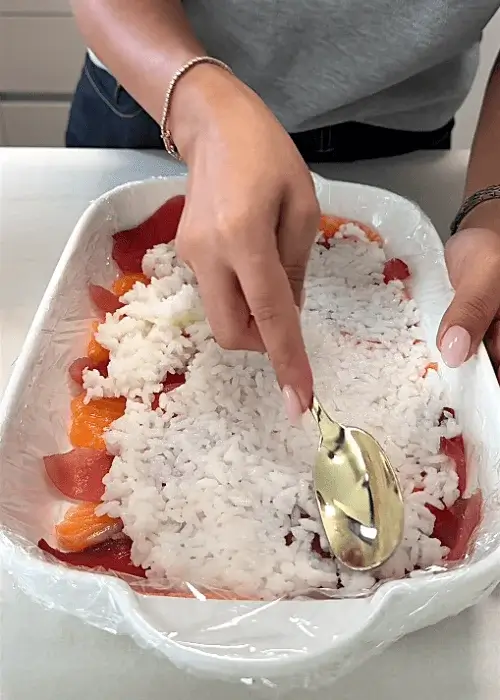
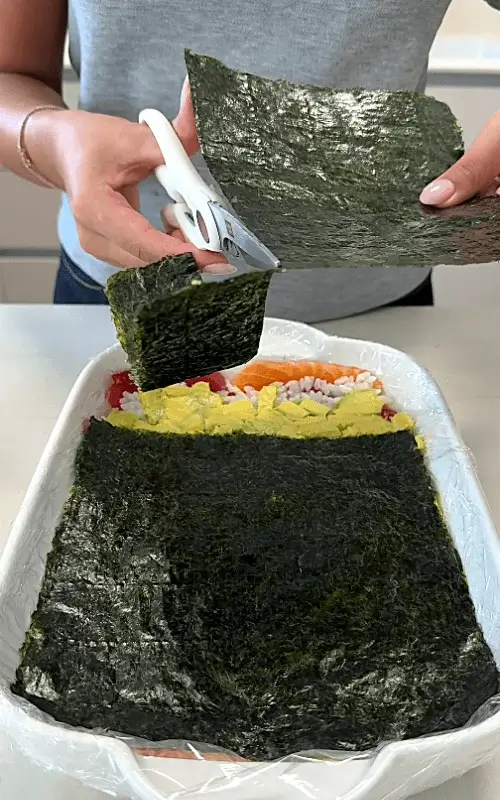
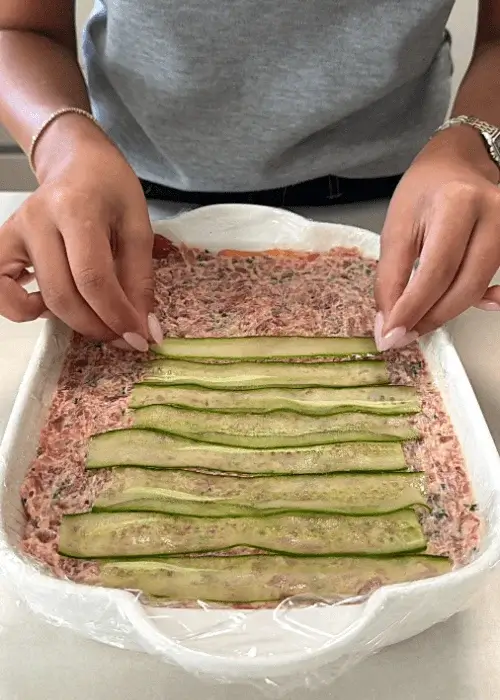
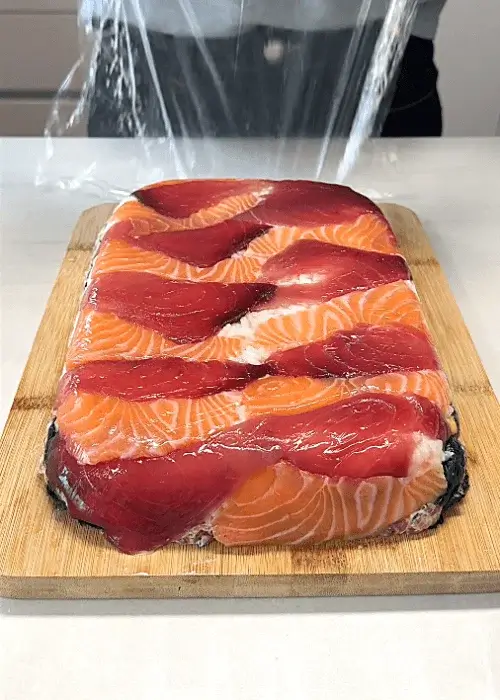
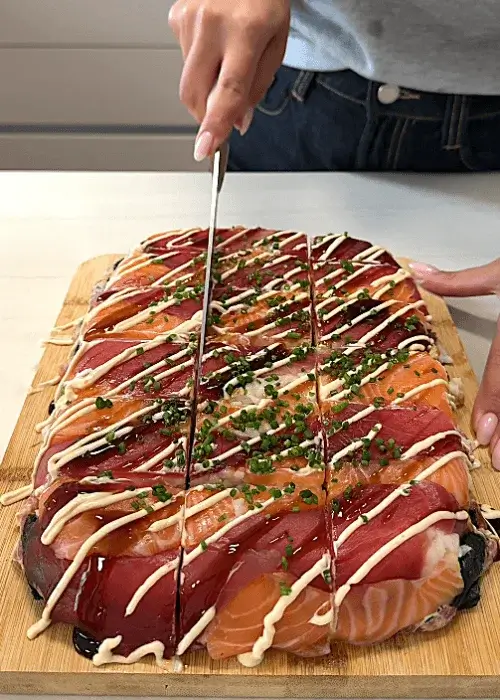
- Line a rectangular pan with plastic wrap, pressing it into the corners. Arrange the salmon and tuna in a tight, even layer. Add the rice and press firmly. Top with the avocado and cucumber, pressing gently, then cover with nori.
- Combine the tuna, chives, chile, sriracha, and mayonnaise in a bowl and mix until cohesive. Spread evenly over the nori. Chill until firm, then invert onto a serving platter.
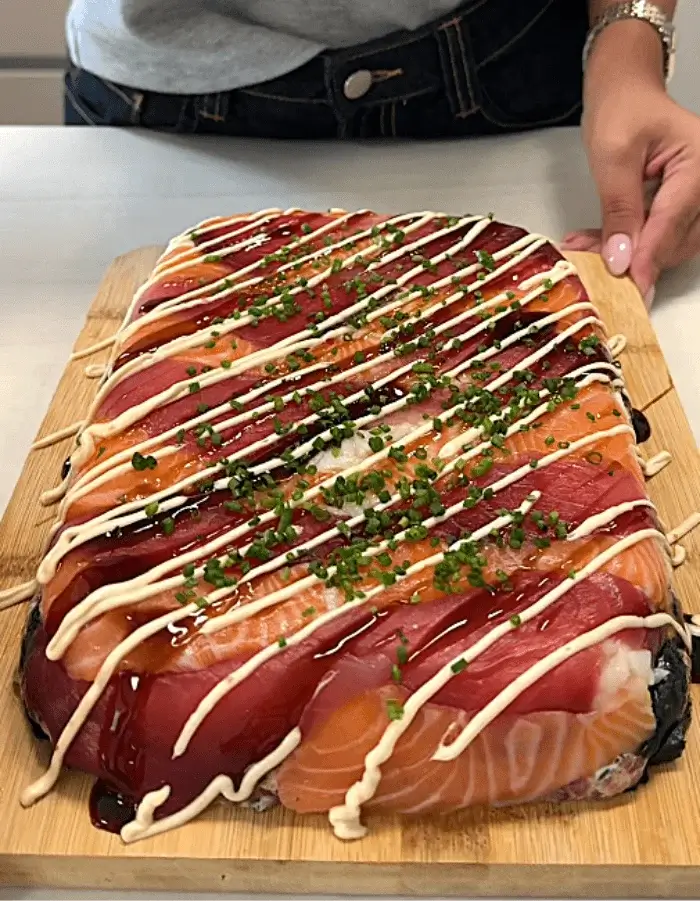
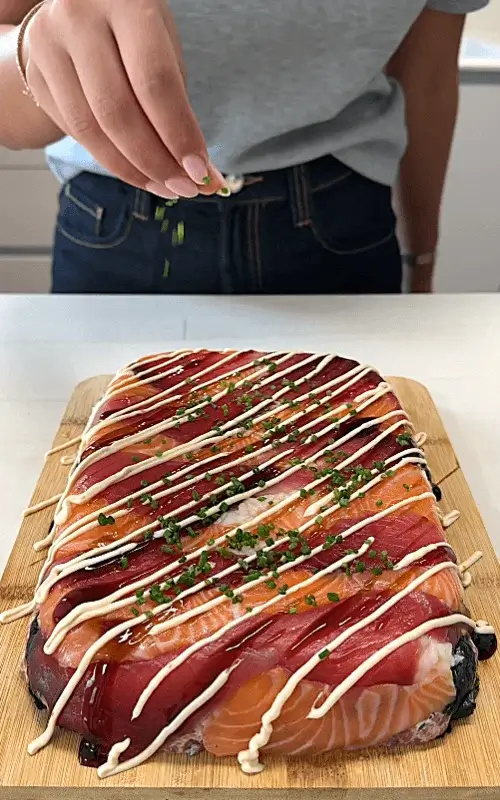
- Drizzle with teriyaki and spicy mayonnaise, and finish with chives.
FAQ
What type of rice works best for a sushi cake recipe?
Short-grain sushi rice is essential for a sushi cake recipe because of its high starch content, specifically amylopectin, which gives the rice its signature sticky and cohesive texture. This stickiness allows the layers to hold together when pressed and sliced, preventing the structure from collapsing.
Long-grain rice such as jasmine or basmati does not have the same starch composition and will result in a loose, crumbly texture that cannot support the layered format. Rinsing the rice thoroughly removes excess surface starch while preserving the internal structure, ensuring the grains remain distinct yet adhesive. Cooking with the correct water ratio and allowing the rice to steam after cooking are equally important steps.
How do you keep a sushi cake from falling apart when slicing?
Maintaining structural integrity in a sushi cake recipe depends on compression, moisture control, and proper layering. Pressing each layer firmly during assembly is critical, as it eliminates air gaps and binds the ingredients together into a compact form. The rice should be warm but not hot when assembling, as overly hot rice can soften delicate ingredients like fish and avocado, while cold rice loses its ability to mold effectively.
Using plastic wrap to line the pan helps apply even pressure and allows for clean removal after chilling. Refrigerating the assembled cake for at least 30 minutes stabilizes the fats in the fish and mayonnaise while allowing the rice to firm up. When slicing, a sharp knife dipped in water and wiped clean between cuts prevents sticking and tearing. Consistent downward pressure, rather than sawing motions, ensures clean, defined slices that hold their shape.
How far in advance can you prepare a sushi cake?
A sushi cake can be prepared several hours in advance, but timing must be managed carefully to preserve freshness and texture. Ideally, the cake should be assembled and refrigerated for 30 minutes to 4 hours before serving. This window allows the structure to firm up while maintaining the quality of the fish and rice. Preparing it too far in advance, particularly beyond 6 to 8 hours, can lead to oxidation of the fish, discoloration of avocado, and drying of the rice.
To mitigate these issues, tightly covering the cake with plastic wrap limits air exposure and moisture loss. Acidic components like rice vinegar help slow bacterial growth, but refrigeration at consistent temperatures below 40°F is critical for food safety. If making components ahead, store the rice, fish, and toppings separately and assemble closer to serving time for optimal results.
What mistakes cause a sushi cake to collapse when unmolded?
If the rice is not pressed firmly enough during assembly, air pockets remain, weakening the overall structure and causing layers to separate when unmolded. Using rice that is too wet or under-seasoned can also prevent proper cohesion, as the starch matrix has not developed enough binding strength.
Overloading with watery ingredients such as cucumber or improperly drained seafood introduces excess moisture, which softens the rice layer. Another common issue is unmolding too early, before the cake has had sufficient chilling time to set. Refrigeration allows the rice to firm and the fats in the fish and mayonnaise to stabilize.
What flavors work best in a sushi cake recipe besides tuna and salmon?
A sushi cake recipe is highly versatile, and many flavor profiles work well beyond traditional tuna and salmon. Rich, fatty fish like yellowtail or hamachi provide a buttery texture that pairs well with vinegar-seasoned rice. Cooked seafood such as shrimp, crab, or eel adds depth and a slightly sweeter umami profile, especially when glazed with teriyaki or soy-based sauces.
For non-seafood variations, marinated tofu or roasted vegetables can create a balanced vegetarian version while maintaining structure. Ingredients with creamy textures, such as avocado or spicy mayonnaise-based mixtures, help bind layers and enhance mouthfeel. The key principle in a sushi cake recipe is balancing soft, fatty, and acidic elements so each slice contains contrast in texture and flavor, rather than relying on a single dominant ingredient.
What is the best pan or mold to use for a sushi cake recipe?
The ideal pan for a sushi cake recipe is a straight-sided rectangular or square pan that allows for even pressure and clean unmolding. A loaf pan or small baking dish works well because it naturally supports tight layering and compression. Nonstick is not required, but it can make removal easier; however, lining the pan with plastic wrap is more important than the material itself.
Plastic wrap should be pressed firmly into all corners so the cake releases cleanly after chilling. The key design requirement is straight edges, since curved or sloped pans make it difficult to achieve uniform layers and clean slices. Springform pans can also be used, but they are less common for this style. In a sushi cake recipe, the mold’s role is to act as a compression frame, so stability and shape consistency matter more than any specialty equipment.
Why does pressing matter so much in a sushi cake recipe?
Pressing is one of the most important structural steps in a sushi cake recipe because it directly determines how well the layers bind together. Sushi rice contains sticky starch that activates when warm and slightly seasoned, but it still needs external pressure to form a cohesive block. Without firm compression, air pockets remain between the rice and toppings, which leads to crumbling or separation when sliced.
Pressing also helps distribute moisture evenly across the layers, especially when combining wet ingredients like avocado, cucumber, and spicy tuna mixtures. The goal is to create uniform density from bottom to top so every slice holds its shape. In a sushi cake recipe, pressing is not just shaping—it is structural engineering that ensures the cake can be unmolded and cut cleanly without collapse or shifting layers.
Why does sushi rice turn hard in a sushi cake after refrigeration?
When rice is refrigerated, the low temperature accelerates this process, causing the grains to lose moisture and become firm or dry. This is especially noticeable in compressed dishes like sushi cake, where the rice is tightly packed and has less airflow.
While vinegar seasoning helps slow bacterial growth and adds flavor, it does not prevent starch from firming over time. The effect is reversible to a degree; allowing the sushi cake to sit briefly at room temperature before serving can soften the texture slightly. However, extended refrigeration will always reduce the ideal softness expected in a freshly made sushi cake recipe, which is why it is typically served the same day.