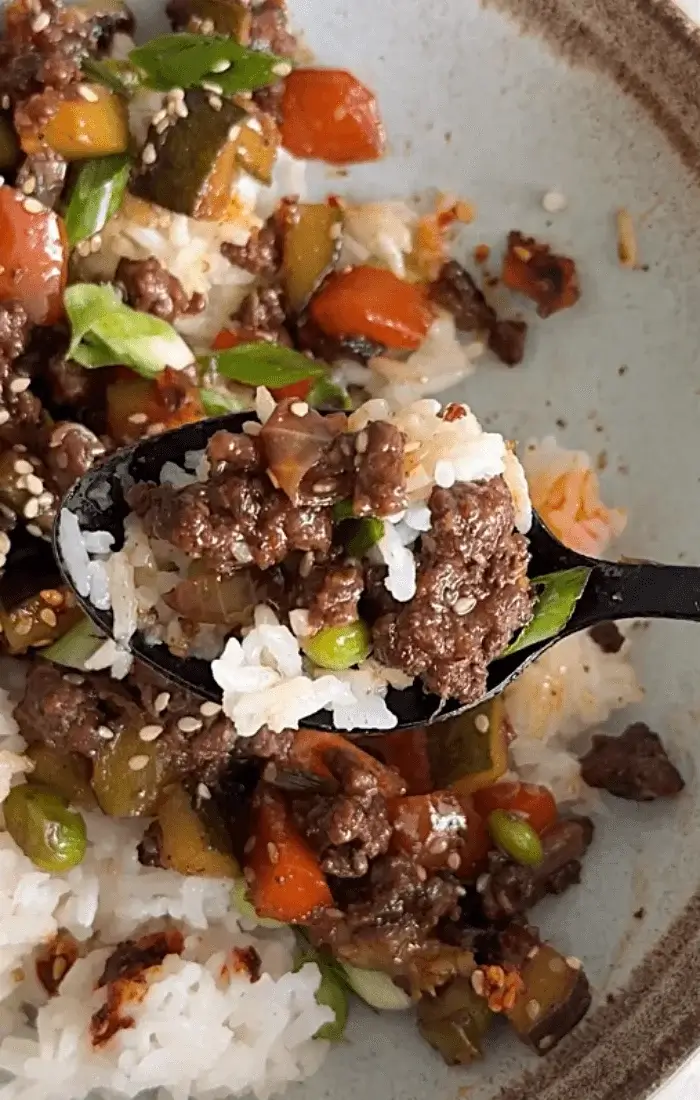
Ginger Ground Beef Bowl
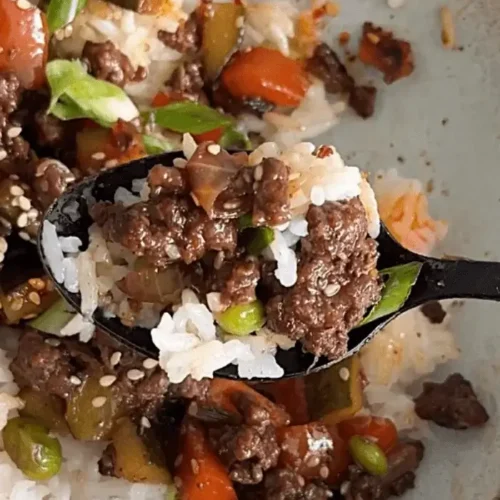
Watch the Full Step-by-Step
- Medium saucepan
- Large skillet
- Chef's knife
INGREDIENTS
- 1 pound/450 grams ground beef
- 1 medium yellow onion, diced
- 1 medium zucchini, diced
- 1 red bell pepper, diced
- 2 medium carrots, peeled and diced
- 1 cup shelled edamame, fresh or frozen
- 3 tablespoons olive oil
- 2 garlic cloves, grated
- 1 tablespoon fresh ginger, grated
- 1 tablespoon sesame oil
Sauce:
- ¼ cup coconut aminos or 3 tablespoons low-sodium soy sauce
- 2 tablespoons maple syrup
- 1 tablespoon rice vinegar
- 1 tablespoon sesame seeds
- ½ teaspoon salt, plus more to taste
- ½ teaspoon black pepper
Rice:
- 1 cup long-grain white rice
- 1½ cups water
- ¼ teaspoon salt

INSTRUCTIONS
- Bring the rice, water, and salt to a boil in a medium saucepan. Reduce heat, cover, and simmer until tender, about 15 minutes. Remove from heat and let stand, covered, for 5 minutes. Fluff with a fork.
- Heat 2 tablespoons of olive oil in a large skillet over medium. Add the onion and cook, stirring occasionally, until softened and lightly browned, 7 to 8 minutes.
- Add the garlic, ginger and ground beef. Cook, breaking up the meat with a spoon, until browned and cooked through, 8 to 10 minutes.
- Stir in the zucchini, bell pepper and carrots. Add the coconut aminos, maple syrup, rice vinegar, sesame seeds, salt and pepper. Cover and cook until the vegetables begin to soften, about 8 to 10 minutes.
- Uncover, stir in the edamame, sesame oil and remaining 1 tablespoon olive oil. Continue cooking, stirring occasionally, until the sauce reduces slightly and the vegetables are tender and lightly caramelized, 8 to 12 minutes more. Taste and adjust salt.
FAQ
What type of rice works best for a ginger ground beef bowl?
Long-grain white rice is the most reliable choice for a ginger ground beef bowl because it cooks up fluffy with distinct grains that do not clump together under saucy toppings. Jasmine rice is an excellent alternative if you want subtle floral aroma and slightly softer texture, which pairs well with the savory-sweet profile of ginger ground beef.
Basmati can also be used for a drier, more separated grain structure. Brown rice offers more fiber and a nuttier flavor, but it requires a longer cooking time and additional liquid. If using short-grain rice, expect a stickier texture that may change the overall mouthfeel of the bowl. For best results, rinse rice until the water runs mostly clear to remove excess surface starch, and allow it to steam off heat after cooking to finish hydration evenly.
How can I make ginger ground beef less oily without sacrificing flavor?
To reduce excess oil in ginger ground beef, start by selecting lean ground beef, ideally 85% lean or higher. Higher fat blends such as 80/20 release significant rendered fat during cooking, which can make the dish heavy. After browning, you can carefully tilt the skillet and spoon off excess fat without removing the flavorful browned bits.
Another effective method is to reduce the added olive oil from three tablespoons to two, since beef naturally renders its own fat. Cooking over medium heat rather than high prevents excessive fat splatter and uneven browning. Properly draining diced vegetables before adding them also reduces excess moisture, which can emulsify with fat and create a greasy texture.
Can I substitute ground turkey or chicken for the beef?
Ground turkey or chicken can successfully replace the beef, but adjustments are necessary because poultry contains less fat. Choose 93% lean turkey or a blend that includes some dark meat to prevent dryness. Since poultry releases less fat, you may need to keep the full amount of olive oil in the recipe to maintain moisture and prevent sticking.
Poultry should be cooked until it reaches an internal temperature of 165°F for food safety, and it benefits from slightly shorter cooking time to avoid a crumbly texture. Because beef has deeper umami flavor, consider increasing coconut aminos or adding a small splash of low-sodium soy sauce to compensate.
How can I reduce sodium in ginger ground beef without losing flavor?
If using soy sauce, select a low-sodium variety and reduce added salt in the recipe. Enhance flavor through aromatics rather than salt by slightly increasing fresh ginger, garlic, or rice vinegar. Acidity from vinegar sharpens perception of saltiness without requiring additional sodium.
Toasted sesame oil also intensifies aroma, making the dish feel fuller-flavored. Avoid over-reducing the sauce, as concentration increases salt perception. Taste only after the sauce has reduced to its final consistency to accurately gauge seasoning levels in the finished ginger ground beef.

How do I store and reheat ginger ground beef properly?
Allow ginger ground beef to cool to room temperature for no more than two hours before refrigerating. Store it in airtight containers to prevent moisture loss and odor absorption. It will keep safely in the refrigerator for up to four days. For reheating, use a skillet over medium-low heat with a small splash of water or broth to loosen the sauce and prevent drying.
Stir occasionally until heated through to at least 165°F. Microwave reheating is acceptable, but cover the dish loosely to retain moisture and stir halfway through for even heating. If freezing, portion the ginger ground beef into sealed freezer-safe containers for up to three months. Thaw overnight in the refrigerator before reheating for best texture.
Is ginger ground beef suitable for meal prep?
Ginger ground beef is highly suitable for meal prep because it maintains flavor and texture well after refrigeration. The sauce ingredients, including coconut aminos and rice vinegar, help preserve moisture and prevent dryness during storage. Portion the cooked beef and rice separately to prevent excess absorption, which can make the rice soggy.
Stored properly in airtight containers, the dish remains safe for up to four days in the refrigerator. For longer storage, freeze the beef portion alone, as vegetables may soften further upon thawing. When reheated gently with added moisture, ginger ground beef retains its caramelized flavor and balanced seasoning.
What is the best way to achieve caramelization in ginger ground beef?
Proper caramelization in ginger ground beef depends on heat control, surface contact, and moisture reduction. Use a wide skillet rather than a deep pot to maximize evaporation and prevent steaming. Brown the beef thoroughly before adding vegetables, allowing it to develop dark golden edges through Maillard reaction. Avoid overcrowding; if necessary, cook in batches.
Once vegetables are added, uncover during the final stage so excess liquid evaporates. Stir occasionally rather than constantly, allowing ingredients to sit against the pan surface long enough to brown. Moderate-high heat works best; low heat promotes steaming instead of caramelization. Finally, ensure the sauce is not overly diluted, as excess liquid prevents proper browning of the ginger ground beef mixture.
Can I use fresh ginger instead of jarred ginger?
Fresh ginger is strongly recommended for ginger ground beef because it delivers brighter aroma, sharper heat, and cleaner flavor compared to jarred versions. Jarred ginger often contains preservatives and added moisture, which can slightly dilute the sauce and mute its intensity.
When using fresh ginger, peel it with a spoon to remove the thin skin, then grate it finely using a Microplane or the small holes of a box grater to evenly distribute flavor. Fresh ginger releases essential oils when heated, which integrate more effectively into the fat rendered from the beef. If substituting jarred ginger, reduce the quantity slightly and sauté it briefly to cook off excess liquid before adding other sauce ingredients.

How do I prevent the vegetables from becoming mushy?
Dice vegetables into evenly sized pieces so they cook uniformly. Add firmer vegetables, such as carrots, first, followed by zucchini and bell peppers, which cook faster. Keep the pan at medium to medium-high heat so vegetables sauté rather than steam.
Avoid covering the skillet for longer than necessary; prolonged steaming breaks down cell walls and softens texture excessively. Stir occasionally but not continuously, allowing slight browning on edges. If the pan accumulates excess liquid, remove the lid and allow evaporation before continuing.
What protein-to-vegetable ratio works best in ginger ground beef?
A balanced ginger ground beef bowl typically works best at roughly a 1:1 ratio by volume of cooked beef to vegetables. One pound of ground beef pairs effectively with approximately 3 to 4 cups of diced vegetables, providing sufficient bulk without diluting flavor.
Increasing vegetables beyond this range may require minor seasoning adjustments to maintain depth. Too much beef relative to vegetables can result in a heavier, less balanced dish. The sauce should lightly coat all components without pooling at the bottom of the pan.
What is the best pan to use for cooking ginger ground beef?
A wide, heavy-bottomed skillet is ideal for cooking ginger ground beef because it promotes even heat distribution and efficient moisture evaporation. Stainless steel and cast iron are particularly effective for achieving proper browning through surface contact. Nonstick pans can work but may limit the development of fond, the browned bits that contribute depth of flavor.
The skillet should be large enough to prevent overcrowding, as crowding leads to steaming instead of caramelization. A diameter of 12 inches is generally appropriate for one pound of ground beef with vegetables. High sides help contain splatter, but surface area remains more important than depth for properly reducing and glazing the ginger ground beef mixture.
Can I freeze ginger ground beef with the rice?
While it is possible to freeze ginger ground beef with rice, freezing them separately produces better texture after reheating. Rice can become dry or slightly grainy if frozen in direct contact with sauce. For optimal results, cool both components completely, then store in airtight, freezer-safe containers.
Flattening the beef mixture into thinner portions speeds thawing and reduces ice crystal formation. Freeze for up to three months. Thaw overnight in the refrigerator rather than at room temperature. Reheat gently with a small splash of water to restore moisture. If freezing together for convenience, slightly undercook the rice initially to prevent it from becoming overly soft when reheated with the ginger ground beef.
