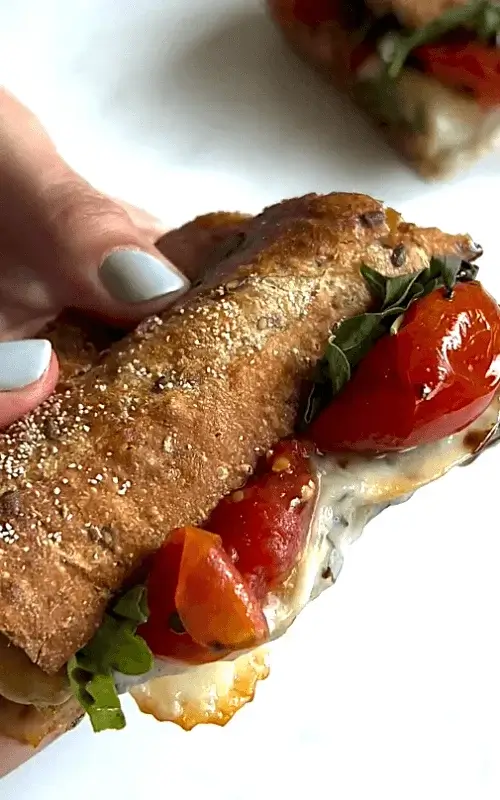
Crispy Pesto Caprese Sandwich
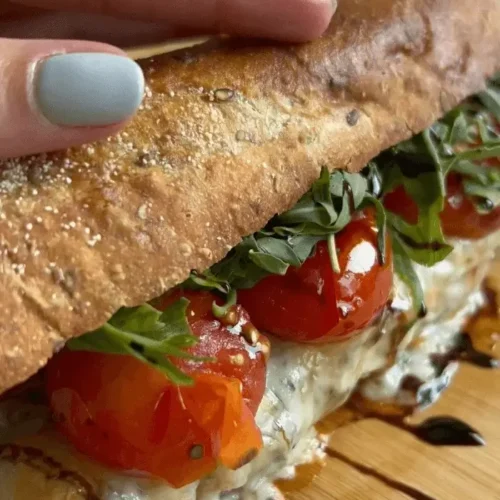
Watch the Full Step-by-Step
INGREDIENTS
- 1 baguette, split lengthwise and then crosswise
- ¼ cup pesto
- 8 ounces/225 grams fresh mozzarella, sliced
- 2 tablespoons olive oil, divided
- ½ teaspoon coarse salt
- 1 cup arugula
- 2 tablespoons balsamic glaze
- 1½ cups cherry tomatoes
- 2 garlic cloves, thinly sliced
- 2 tablespoons olive oil
- 1 teaspoon dried oregano
- ¼ teaspoon salt

INSTRUCTIONS
- Heat the oven to 375°F/190°C.
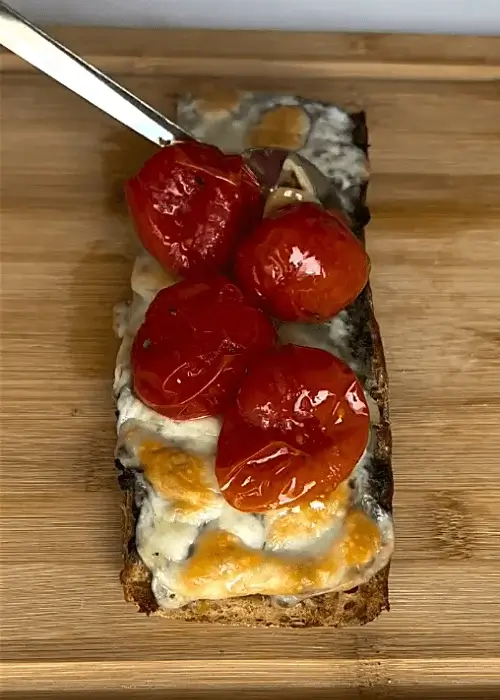
- On a sheet pan, toss the tomatoes, garlic, olive oil, oregano, and salt. Roast until softened and lightly blistered, about 15 minutes.
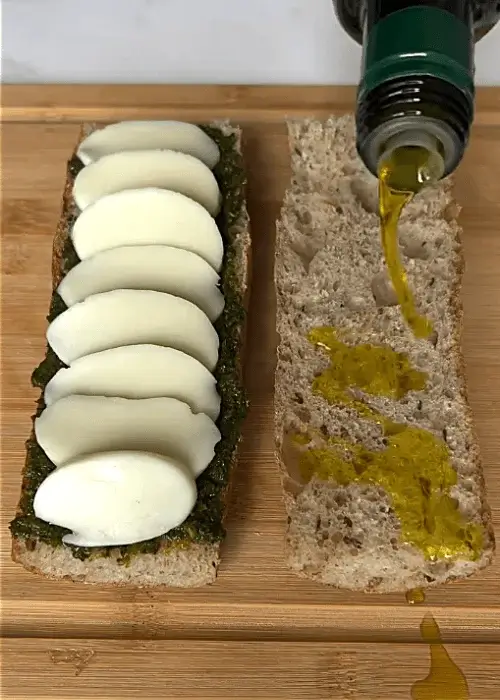
- Spread pesto on one cut side of the baguette and layer with mozzarella. Drizzle the remaining olive oil over the other half and sprinkle with coarse salt.
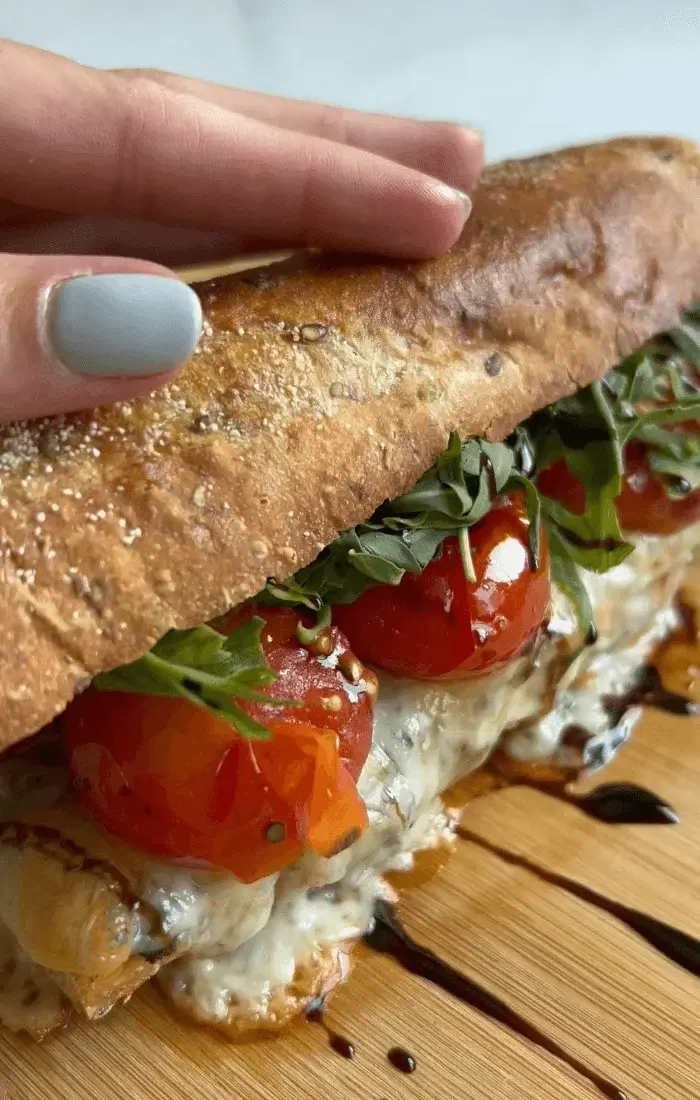
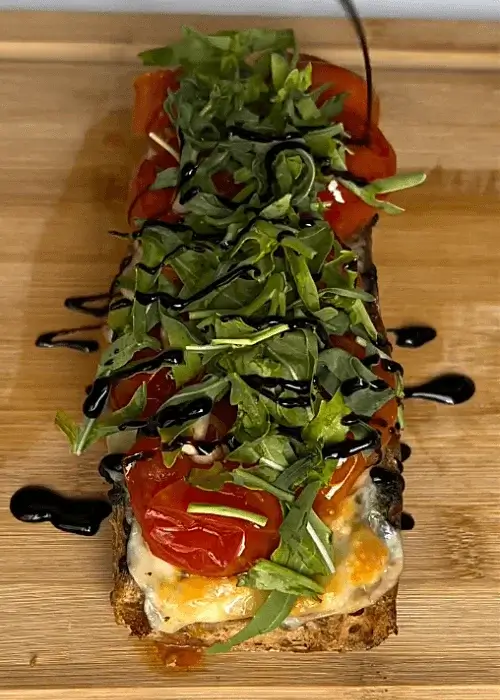
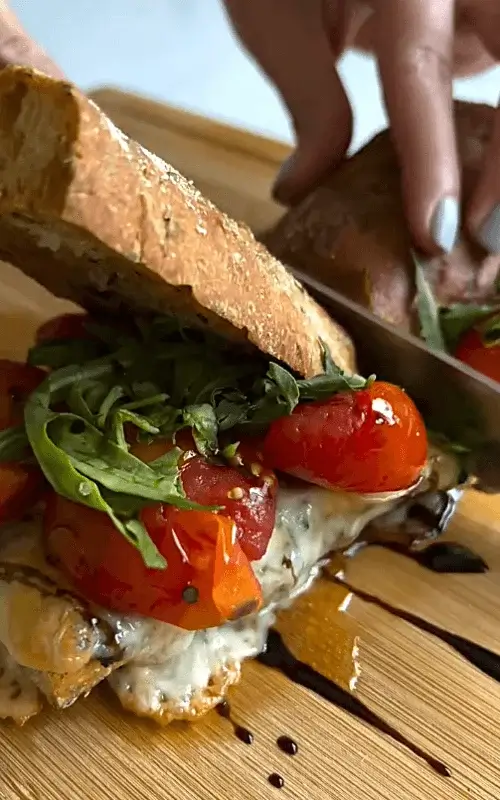
- Add the roasted tomatoes, arugula, and balsamic glaze. Close the sandwich, press gently, and slice.
FAQ
What is the best bread for a pesto caprese sandwich?
A classic baguette is ideal because its thin, crisp crust provides resistance against sogginess while the interior remains light and airy. Rustic Italian loaves or ciabatta are also strong options due to their open crumb structure, which absorbs flavor without collapsing. Avoid overly soft sandwich breads, as they tend to compress and become mushy once layered with roasted tomatoes and balsamic glaze.
Slightly toasting or warming the bread improves its structural integrity and enhances flavor absorption, making each bite more cohesive. The key is selecting a bread that can handle moisture while still offering a pleasant chew and contrast to the creamy mozzarella and rich pesto in a pesto caprese sandwich.
How do you prevent a pesto caprese sandwich from getting soggy?
The main sources of excess liquid are the tomatoes and balsamic glaze, so managing them properly is essential. Roasting the tomatoes first helps reduce their water content and concentrates flavor, while allowing them to cool slightly before assembly prevents steam from softening the bread. Spreading pesto directly onto the bread acts as a barrier layer that helps repel moisture.
It is also important to avoid overloading the sandwich with glaze; applying it lightly just before serving maintains balance without saturating the crumb. If preparing in advance, keeping components separate until the last moment preserves texture. Using a well-toasted or sturdy baguette further reduces absorption.
What variations can you add to a pesto caprese sandwich?
A pesto caprese sandwich is highly adaptable, and variations typically focus on changing texture, flavor intensity, or protein content while maintaining the core combination of pesto, mozzarella, and tomatoes. One common variation is adding prosciutto or grilled chicken for additional protein and saltiness, which complements the creamy cheese and herbaceous pesto.
Roasted vegetables such as zucchini, eggplant, or red peppers can deepen the flavor profile and add a smoky element. For cheese variations, burrata can replace mozzarella for a richer, creamier center, while smoked mozzarella introduces a more complex flavor. Different pestos, such as sun-dried tomato pesto or arugula pesto, can shift the overall taste direction while keeping the structure intact.
What type of mozzarella works best in a pesto caprese sandwich?
Fresh mozzarella is the standard choice for a pesto caprese sandwich because of its high moisture content, soft texture, and mild dairy flavor that complements pesto and tomatoes without overpowering them. Whole milk mozzarella delivers a creamier bite, while part-skim versions are slightly firmer and release less whey, which can help reduce sogginess. For best results, the cheese should be sliced and lightly patted dry before assembly to remove excess surface moisture.
Buffalo mozzarella offers a richer, more tangy profile but contains more liquid, so it requires careful draining. Pre-shredded or low-moisture mozzarella is not ideal because it lacks the soft, milky texture that defines the sandwich.
Is it necessary to roast the tomatoes for a pesto caprese sandwich?
Raw cherry tomatoes provide freshness and acidity, but they also release more water, which can soften the bread. Roasting concentrates their natural sugars, reduces moisture content, and creates a slightly caramelized flavor that pairs well with pesto and mozzarella.
The process also softens garlic and oregano, infusing the mixture with aromatic complexity. If you prefer a lighter, fresher version, you can use raw tomatoes, but it is important to slice them and lightly salt them beforehand to draw out excess liquid. For a more structured sandwich experience, roasted tomatoes are generally preferred because they help maintain balance between moisture and firmness in a pesto caprese sandwich.
What sauces or drizzles pair well with a pesto caprese sandwich?
The most traditional drizzle for a pesto caprese sandwich is balsamic glaze, which adds sweetness and acidity that contrasts with the richness of mozzarella and the herbal intensity of pesto. Reduced balsamic vinegar is preferred over straight vinegar because it is thicker and less likely to make the bread soggy. Olive oil is another essential finishing element, enhancing mouthfeel and carrying flavor across the ingredients.
Some variations include chili oil for heat or a light honey drizzle to emphasize sweetness, though these should be used sparingly to avoid overpowering the core profile. Lemon-infused olive oil can also add brightness and cut through the richness of cheese. The key is balance; sauces should enhance, not dominate, the pesto caprese sandwich, maintaining clarity of the pesto, tomato, and mozzarella combination.
What is the best way to assemble a pesto caprese sandwich for maximum flavor?
Start by spreading pesto directly onto one side of the bread so it soaks slightly into the crumb and forms a flavor base. Next, add sliced mozzarella in an even layer to create a barrier between the pesto and wetter ingredients. Roasted or fresh tomatoes should go on top of the cheese so their juices do not immediately soak into the bread.
Arugula is added last before closing the sandwich, providing a fresh, peppery contrast that stays crisp. A light drizzle of balsamic glaze should be applied at the end to avoid over-saturating the interior. Pressing the sandwich gently helps ingredients bind without compressing the bread too much. This structure ensures a balanced pesto caprese sandwich with distinct layers in every bite.
Can a pesto caprese sandwich be made vegan without losing texture?
Traditional mozzarella can be replaced with plant-based alternatives made from cashew, almond, or coconut oil bases, ideally those designed to mimic fresh mozzarella rather than melting cheese. For pesto, replacing Parmesan with nutritional yeast or vegan cheese alternatives preserves umami while keeping the basil-forward profile intact. The bread should be checked to ensure it contains no dairy or eggs.
To maintain texture, it is important to select vegan cheese that has a similar moisture level to fresh mozzarella, as overly dry or rubbery alternatives can disrupt the sandwich balance. Roasted tomatoes, arugula, and balsamic glaze remain naturally vegan and continue to provide acidity and freshness.
What cheeses can replace mozzarella in a pesto caprese sandwich?
While mozzarella is traditional in a pesto caprese sandwich, several cheeses can be used as substitutes depending on desired flavor and texture. Burrata is a common upgrade, offering a richer, creamier center that adds indulgence but also increases moisture, requiring careful balance with the bread. Fresh ricotta can be used for a softer, spreadable texture, though it lacks the structured slices of mozzarella and works better when lightly drained.
Provolone offers a firmer bite and slightly sharper flavor, making the sandwich more savory and less mild. Smoked mozzarella introduces depth and a subtle smoky aroma that complements roasted tomatoes. For a tangier profile, goat cheese can be used, though it significantly changes the flavor direction and should be applied sparingly. Each cheese choice alters the identity of a pesto caprese sandwich, but maintaining moisture control and balance remains essential regardless of substitution.
What mistakes should you avoid when making a pesto caprese sandwich?
The most common mistakes when making a pesto caprese sandwich involve moisture imbalance, ingredient overload, and poor layering. Using too much pesto can overwhelm the sandwich and create a greasy texture, while insufficient pesto leads to a flat flavor profile. Skipping the step of managing tomato moisture is another frequent issue; raw tomatoes that are not salted or roasted release water that quickly softens the bread.
Overloading the sandwich with balsamic glaze can also make it soggy and overly sweet. Another mistake is using low-quality bread that cannot support wet ingredients, leading to collapse. Uneven slicing of mozzarella results in inconsistent bites where some areas are cheese-heavy and others are dry. Finally, assembling the sandwich too far in advance causes structural breakdown.
What herbs or greens can replace arugula in a pesto caprese sandwich?
Arugula is commonly used in a pesto caprese sandwich for its peppery bite, but several other greens and herbs can be substituted depending on flavor preference. Baby spinach is the mildest alternative and provides a soft texture without overpowering other ingredients, though it lacks arugula’s sharpness. Basil leaves can be used for a more intense herb-forward profile that reinforces the pesto itself, creating a cohesive flavor theme.
Watercress offers a similar peppery quality but with a slightly more delicate structure. Mixed spring greens can also be used for a broader texture variation, though they may dilute the flavor focus. For a more aromatic approach, fresh oregano or micro basil can be added sparingly. The choice of greens in a pesto caprese sandwich ultimately depends on whether you want contrast, intensity, or subtle reinforcement of the pesto base.
How do you store leftovers of a pesto caprese sandwich without ruining it?
If the sandwich is already assembled, it should be tightly wrapped in parchment paper rather than plastic wrap to avoid trapping moisture, which softens the bread. Refrigeration is necessary for food safety due to the mozzarella and tomatoes, but cold storage will firm the bread and dull flavors, so it is best consumed within 24 hours.
For better results, store ingredients separately: keep roasted tomatoes in an airtight container, mozzarella wrapped in its liquid or lightly drained, pesto sealed to prevent oxidation, and bread at room temperature. When ready to eat, reassemble and lightly reheat the bread if desired. Avoid freezing, as it damages the texture of both mozzarella and tomatoes.