White Shakshuka with Feta and Garlic
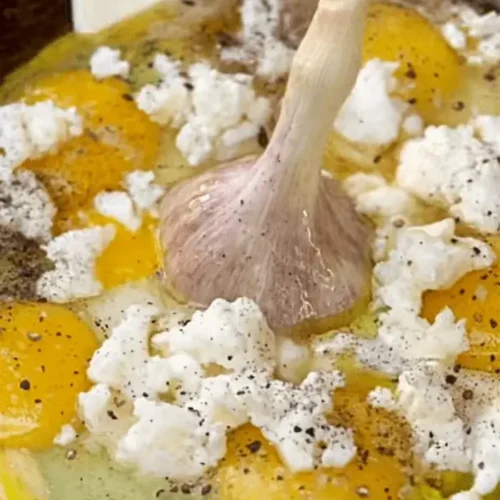
Watch the Full Step-by-Step
- Wide skillet
INGREDIENTS
- 4 tablespoons unsalted butter
- 2 tablespoons olive oil
- ½ head garlic, cloves lightly crushed
- 3 fresh thyme sprigs
- 4 to 5 large eggs
- 1 teaspoon salt
- ½ teaspoon freshly ground black pepper
- 5 ounces/140 grams feta cheese, crumbled

INSTRUCTIONS
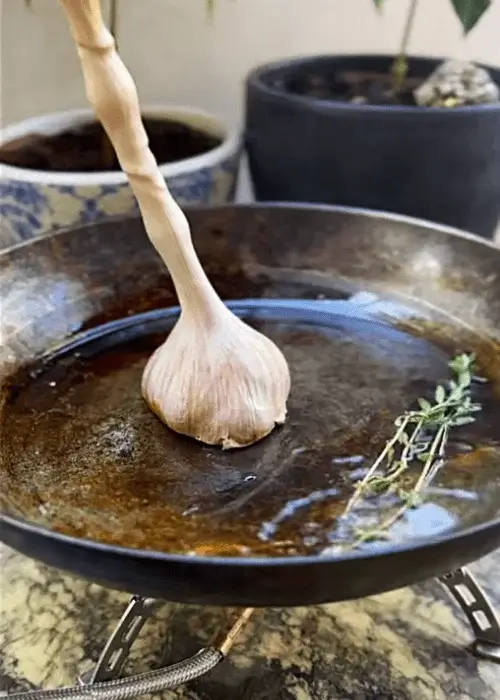
- Heat a wide skillet over medium heat. Add the butter and olive oil and cook until the butter melts and foams quietly.
- Add the garlic and thyme and cook until fragrant and pale golden, about 1 minute, adjusting the heat to prevent browning.
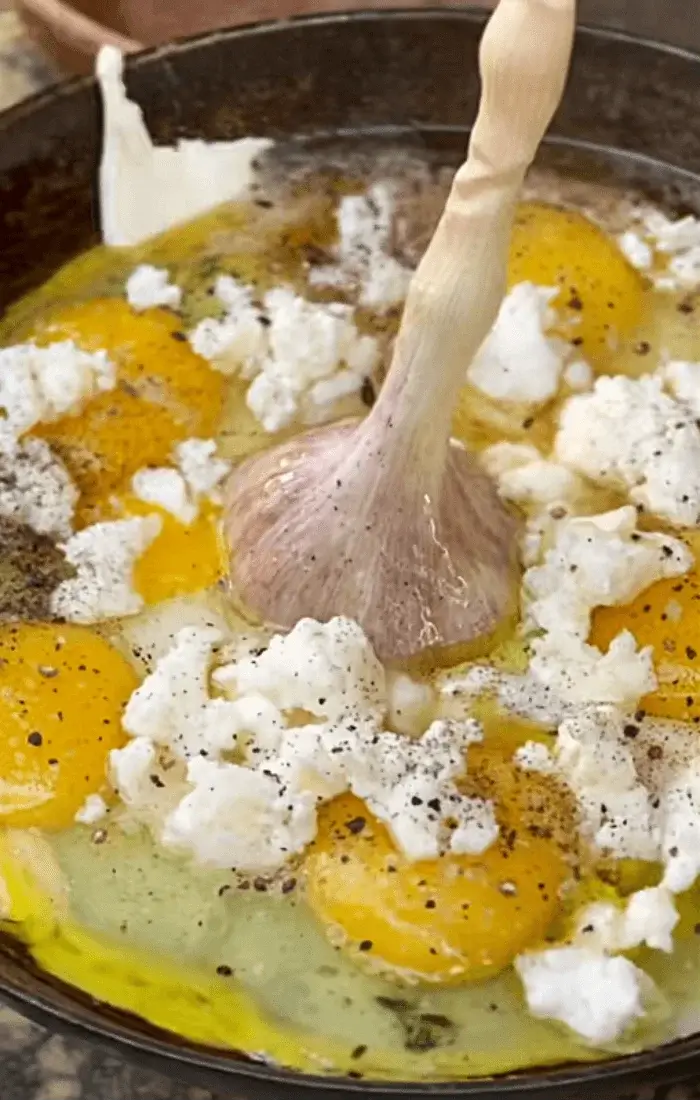
- Crack the eggs directly into the skillet, spacing them evenly. Season with salt and black pepper.
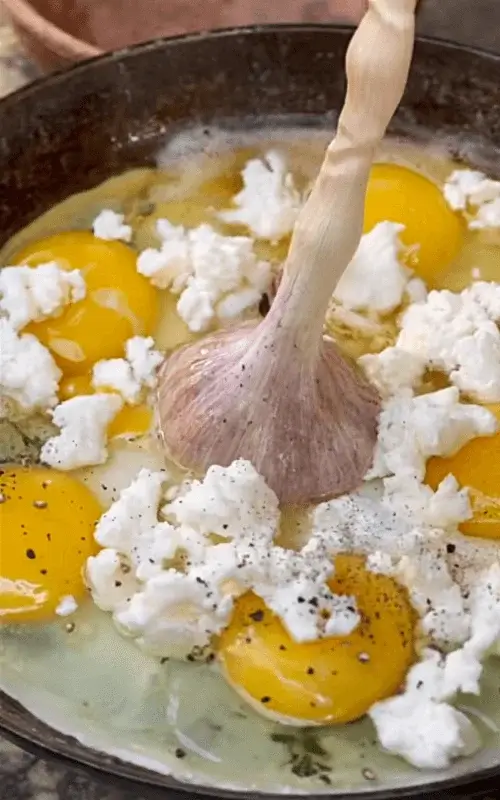
- Scatter the feta evenly over the eggs and butter. With the tip of a knife, lightly pierce each yolk to loosen it slightly without fully breaking.
- Cover the skillet tightly with foil and cook until the whites are just set and the yolks remain soft, 3 to 4 minutes.
- Remove from heat and serve immediately, with warm, crisp bread for scooping.
FAQ
What makes white shakshuka different from traditional shakshuka?
Traditional shakshuka relies on a long-simmered tomato and pepper sauce that provides acidity, sweetness, and body. White shakshuka removes tomatoes entirely and instead builds flavor from fat, aromatics, and dairy. Butter, olive oil, garlic, herbs, and cheese form a rich, savory base that gently cooks the eggs rather than simmering them in sauce. This results in a milder, creamier dish where the eggs remain the focal point.
Because there is no acidic tomato component, white shakshuka tastes rounder and more delicate, highlighting egg quality and fat balance. The absence of tomatoes also shortens cooking time significantly, making white shakshuka a faster, more minimalist preparation that still feels indulgent and complete when served with bread.
What type of feta works best for white shakshuka?
High-quality, brined feta with moderate moisture and a creamy yet crumbly structure. Sheep’s milk feta, or a sheep-and-goat blend, melts slightly while retaining definition, which is ideal for this dish. Very dry feta can remain chalky, while overly soft or whipped feta may dissolve too completely into the butter and oil.
In white shakshuka, feta functions as both seasoning and textural contrast. As it warms, it softens and releases salt into the fat, seasoning the eggs gently without overpowering them. The cheese also adds pockets of creaminess that balance the richness of the butter.
How do you control egg doneness?
Controlling egg doneness in white shakshuka depends on heat management, pan coverage, and timing. Because there is no liquid sauce to buffer heat, eggs cook directly in fat, which requires moderate, even heat. Keeping the skillet at medium prevents the whites from toughening before the yolks warm through.
Covering the pan tightly with foil is essential; it traps steam and gently sets the egg whites from above while preserving soft yolks. Piercing the yolks lightly allows them to spread without fully breaking, helping them cook evenly and faster. For white shakshuka, the ideal endpoint is just-set whites with loose, custardy yolks, typically achieved in three to four minutes. Removing the pan promptly prevents carryover cooking, which can quickly overcook eggs in a hot skillet.
Can this shakshuka be customized with additional ingredients?
White shakshuka is highly adaptable, but successful customization depends on restraint and an understanding of its core structure. The defining characteristic of white shakshuka is the absence of tomatoes and the reliance on fat, aromatics, eggs, and dairy. Additions should reinforce, not obscure, this framework.
Mild vegetables such as leeks, shallots, spinach, mushrooms, or thinly sliced zucchini can be sautéed gently in the butter and olive oil before the eggs are added. These ingredients contribute sweetness or earthiness without introducing excess moisture or acidity. Herbs beyond thyme, such as oregano or chives, also work well when used sparingly. Strong spices, heavy sauces, or acidic components can overwhelm the dish and shift it away from white shakshuka.
How does the quality of eggs affect the taste and texture?
Fresh, high-quality eggs produce firm whites and yolks that hold together during gentle cooking, while lower-quality or older eggs may spread too much, producing thinner whites and less distinct yolks. Flavor is also influenced by egg quality; pasture-raised or free-range eggs tend to have a richer, more vibrant yolk, adding natural color and umami to the white shakshuka.
Because there is no tomato sauce to mask subtle flavors, the inherent taste of the eggs is highlighted, and the difference between a high-quality and standard egg is noticeable. Using fresh eggs ensures the dish maintains its silky, creamy texture, allowing the feta to melt lightly over the yolk and whites.
What type of pan and fat balance are ideal for cooking shakshuka evenly?
The ideal pan for white shakshuka is a wide, shallow skillet made from cast iron, stainless steel, or heavy nonstick material. A wider surface area allows the eggs to spread evenly and cook at the same rate, preventing overcooked whites at the edges and undercooked centers. Heat retention is important, but excessive heat concentration can cause butter to brown too quickly, so a pan with even heat distribution is critical.
The balance of butter and olive oil serves both flavor and function. Butter provides richness and a creamy mouthfeel, while olive oil raises the smoke point and stabilizes the fat mixture. This combination allows white shakshuka to cook gently without scorching. Maintaining moderate heat and covering the pan ensures consistent doneness and preserves the delicate texture that defines white shakshuka.
What is the best bread to serve with white shakshuka?
Bread plays a critical role in the overall experience of white shakshuka because it acts as both utensil and counterbalance to richness. The best breads are sturdy enough to scoop soft eggs, melted feta, and butter without tearing. Ciabatta, sourdough, rustic country loaves, or lightly toasted baguette are ideal choices due to their open crumb and crisp exterior.
These breads absorb fat while maintaining structure, enhancing each bite rather than becoming soggy. Soft sandwich breads or overly dense loaves tend to collapse and detract from the dish. Because white shakshuka lacks a liquid sauce, bread is essential for capturing the melted cheese and seasoned fat left in the pan.
How should the shakshuka be stored or reheated?
White shakshuka can be stored in an airtight container in the refrigerator for up to 24 hours, but eggs may firm further upon cooling. Reheating is best done gently over low heat on the stovetop with a splash of olive oil or butter, or under a low broiler for a minute or two to restore warmth without overcooking the yolks. Microwaving is possible but can result in unevenly cooked whites and firmer yolks.