Spinach Cheese Pastry

Watch the Full Step-by-Step
- Mixing bowls
- Rolling Pin
- Large skillet
- Kitchen scale
INGREDIENTS
- Unsalted butter, melted, for brushing
Dough:
- 2 1/4 cups/270 grams all-purpose flour
- 1/4 cup/55 grams oil
- 1/2 teaspoon/3 grams salt
- 3/4 cup/180 grams lukewarm water
Filling:
- 3 1/2 tablespoons unsalted butter
- 4 garlic cloves, crushed
- 7.1 ounces/200 grams spinach leaves, roughly chopped
- 1/2 medium red onion, finely chopped
- 3.5 ounces/100 grams cheddar, grated
- 3.5 ounces/100 grams feta, crumbled
- 1/4 teaspoon ground black pepper
- Salt to taste

INSTRUCTIONS
- Make the dough by combining flour, oil, salt, and water by hand or with a dough hook until smooth. Cover and rest for 15 minutes.
- Meanwhile, prepare the filling. Melt butter in a skillet, sauté onion and garlic until fragrant, then add spinach and cook until wilted. Remove from heat and stir in mozzarella, Bulgarian cheese, and black pepper, adjusting salt to taste.
- Divide the dough into 10 balls. Roll each thin, place about 2 tablespoons of filling in the center, seal the edges, and gently flatten into discs.
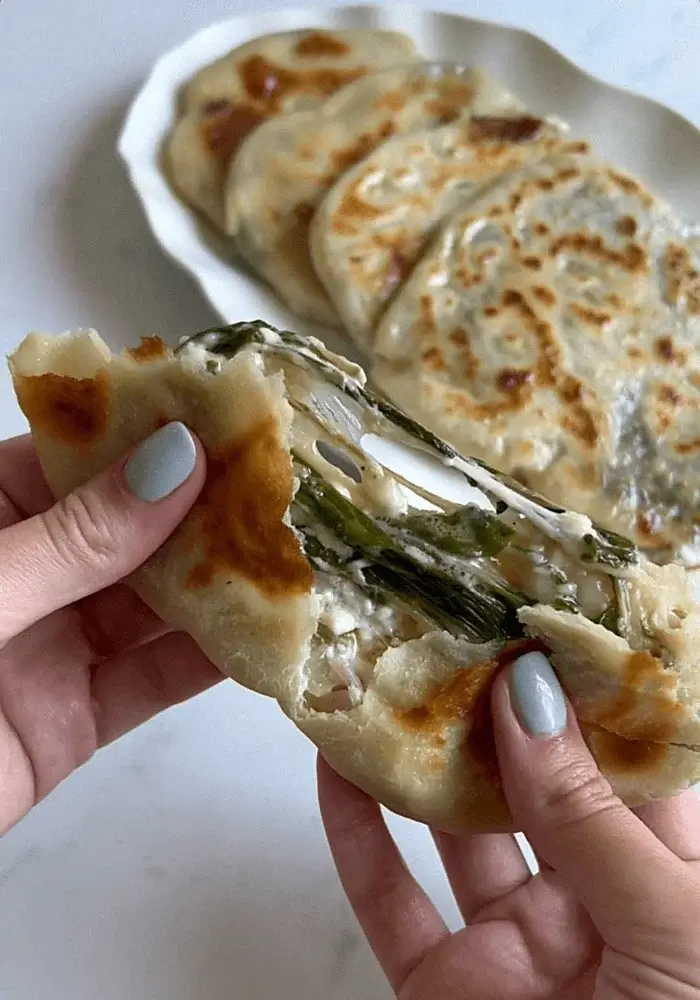
- Cook the discs in a dry skillet over medium heat, two or three at a time, until golden on both sides, 3–4 minutes per side. Brush with melted butter and serve warm.
FAQ
How can I make this spinach cheese pastry dairy-free or vegan?
Replace the butter with a plant-based version made from cashews or oats for a neutral flavor. For the filling, substitute the mozzarella and Bulgarian cheese with vegan cheese alternatives, such as almond mozzarella, oat-based feta, or cashew cream cheese. Nutritional yeast can also help provide a savory, cheesy taste. The dough already uses oil instead of butter, making it naturally vegan.
Is it possible to make this pastry gluten-free?
Yes, by substituting the all-purpose flour with a gluten-free flour blend that includes starches like tapioca or potato starch for elasticity. Adding a binding agent such as xanthan gum or psyllium husk can help mimic the stretchiness of gluten and prevent cracking while rolling. Gluten-free doughs tend to be more delicate, so rolling between parchment sheets can make handling easier.
What can I serve with this spinach cheese pastry?
This pastry pairs well with a variety of sides and dips. Yogurt-based sauces such as tzatziki or garlic yogurt add a refreshing contrast to the buttery pastry. Fresh salads with cucumbers, tomatoes, and herbs provide a light balance. For a heartier meal, the pastries can be served alongside roasted vegetables, lentil soup, or a grain salad like tabbouleh. They are versatile enough to stand alone as a snack or to be part of a larger mezze spread, complementing other savory pastries and small dishes.

Can I bake the spinach cheese pastry?
To bake, preheat the oven to 375°F/190°C, arrange the filled pastries on a parchment-lined baking sheet, and brush them with a thin layer of oil or melted butter substitute. Bake for 18 to 22 minutes, or until golden brown. Baked versions are lighter and less rich than pan-fried ones, but they maintain their structure well and are ideal for making a larger batch at once.
What herbs can I add to enhance the pastry?
Fresh herbs add depth and brightness to spinach cheese pastry. Parsley and cilantro are traditional additions, often paired with Bulgarian cheese for a Gutav-style variation. Dill works particularly well with spinach, bringing a fresh, slightly tangy taste. Mint can also be added for a refreshing twist, balancing the richness of the cheese. Use about 2 tablespoons/8 grams of chopped fresh herbs per batch of filling.
How can I store and reheat the spinach cheese pastry?
The pastry can be stored in an airtight container in the refrigerator for up to 3 days. To maintain freshness, let the pastries cool fully before refrigerating. For longer storage, freeze them individually on a baking sheet, then transfer to freezer bags, where they will keep for up to 2 months. To reheat, warm them in a 350°F/175°C oven for 8 to 10 minutes if refrigerated, or 15 to 18 minutes if frozen. Avoid microwaving, as it can make the dough soggy rather than crisp.

What cheeses work best in this pastry?
The best cheeses for this pastry are those that melt well while also adding flavor. Mozzarella provides stretch and a creamy base, while Bulgarian cheese or feta adds a tangy, salty contrast. Yellow cheeses such as mild cheddar can also be used, though they result in a stronger flavor. For a softer texture, cream cheese or ricotta may be added, but the filling should be balanced with firmer cheese so it doesn’t become too watery. Combining two cheeses often produces the best flavor and texture balance.
Can I prepare the dough in advance?
The dough can be prepared ahead of time to save effort on the day of cooking. Once mixed and kneaded, wrap the dough tightly in plastic wrap and refrigerate it for up to 24 hours. When ready to use, bring it to room temperature for 20 to 30 minutes before rolling to make it pliable again. You can also freeze the dough for up to one month. Thaw it in the refrigerator overnight, then let it rest at room temperature before shaping and filling.
How can I prevent the spinach cheese pastry from becoming soggy?
It is important to reduce excess moisture in the filling. Spinach should be cooked until most of its liquid has evaporated, and cooled slightly before being mixed with cheese. If using fresh mozzarella or feta packed in brine, pat them dry with paper towels to remove excess liquid. Sealing the dough tightly also ensures that the cheese does not leak out during cooking.