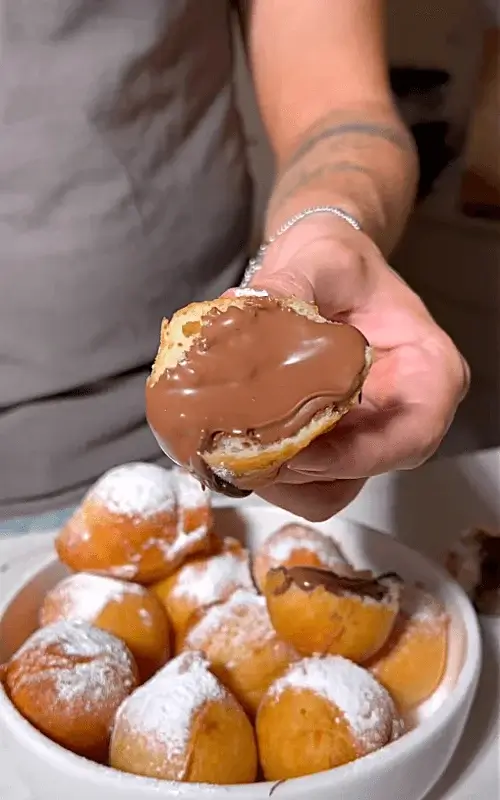
20-Minute No Yeast Donuts
Watch the Full Step-by-Step
- Deep pot
- Mixing bowls
- Ice cream scoop
- kitchen thermometer
- Kitchen scale
INGREDIENTS
- 2 cups/480 grams plain cultured yogurt
- 2 large eggs/100 grams
- 2 tablespoons sugar
- 2 tablespoons vanilla extract
- 3 cups/360 grams self-rising flour
- Your favorite spread, for filling

INSTRUCTIONS
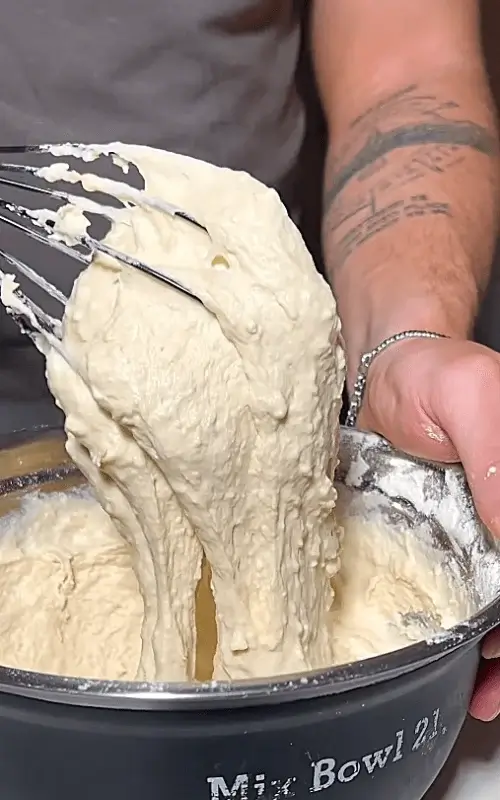
- In a large mixing bowl, whisk the yogurt, eggs, sugar, and vanilla until smooth. Add the self-rising flour and mix until the dough is thick and free of lumps.
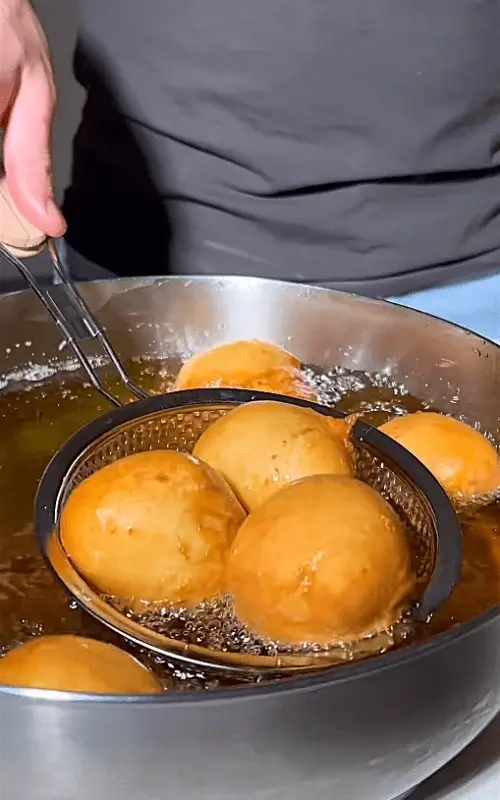
- Heat oil in a deep pot to 350°F/180°C. Using an ice-cream scoop or a spoon, drop small portions of dough into the hot oil. Fry until golden on all sides, then transfer to a paper-towel-lined tray.
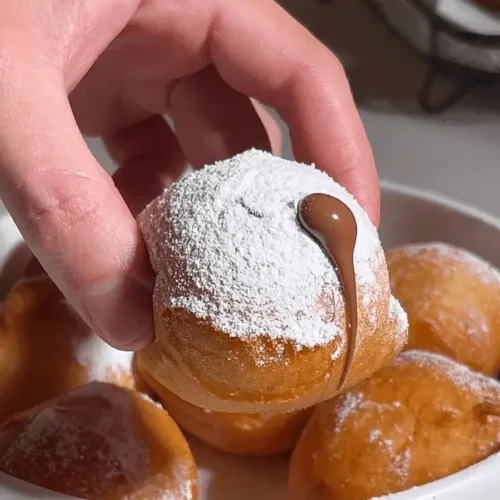
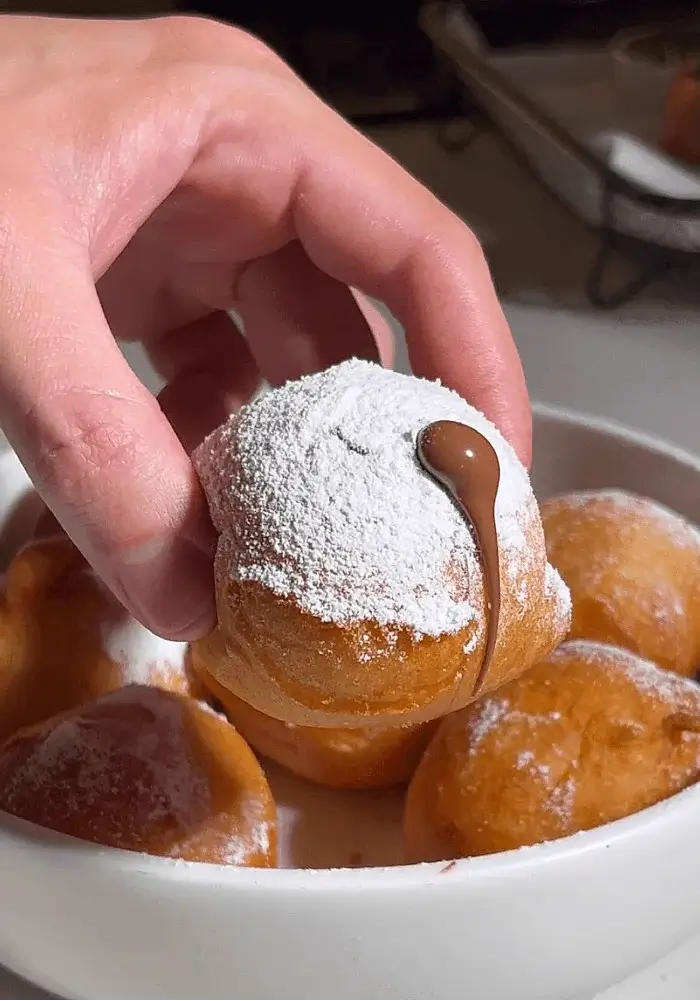
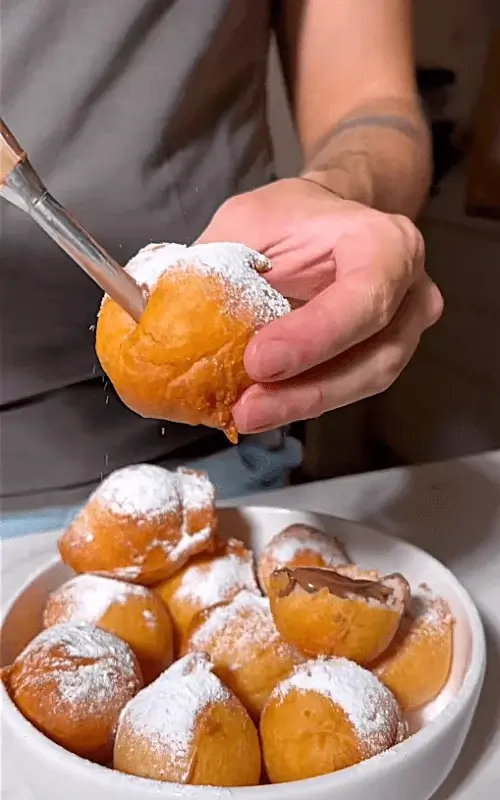
- Fill a piping bag with your chosen spread and pipe into each donut. Dust with powdered sugar and serve warm.
FAQ
What makes no yeast donuts rise if there is no yeast in the recipe?
No yeast donuts rely on the chemical leavening already built into self-rising flour, which contains baking powder and salt in balanced proportions. When the dough hits hot oil, the baking powder reacts instantly, creating steam and air pockets that expand and make the donuts puff without any rising time. This reaction is similar to the lift you see in pancakes or quick breads, where moisture and heat activate the leaveners rather than fermentation.
Because there is no resting period, the structure of no yeast donuts depends heavily on mixing technique: overmixing deflates the batter, while undermixing leaves pockets of dry flour that fry unevenly. Maintaining an oil temperature of 350°F ensures even expansion; oil that is too cool causes the donuts to absorb excess fat, while oil that is too hot browns the outside before the interior puffs properly. This controlled balance of heat and chemical lift is what gives no yeast donuts their signature quick, fluffy texture.
Why is yogurt important in no yeast donuts? Can it be substituted?
Yogurt provides moisture, acidity, and tenderness in no yeast donuts, making it a key structural ingredient rather than simply a flavor addition. The acidity activates the baking powder already present in the self-rising flour, boosting the dough’s rise the moment it enters the hot oil. Its thickness also helps create a batter that is firm enough to scoop yet soft enough to expand, which is essential for achieving that rounded, airy interior typical of no yeast donuts.
Substitutions should maintain both acidity and thickness: Greek yogurt thinned slightly with milk works well, as does buttermilk or kefir, though they produce a slightly looser batter. Milk alone is not recommended, since it lacks the acidity needed to give the donuts height and may result in dense centers. Choosing a yogurt with at least moderate fat content improves tenderness, while low-fat yogurt still works but may produce a slightly chewier crumb. Understanding these roles helps ensure consistent, reliable results with no yeast donuts.
What fillings work best, and how do they affect texture?
The donuts pair well with smooth, pipeable fillings that do not collapse the structure or soak into the crumb too quickly. Thick spreads such as chocolate hazelnut, dulce de leche, pastry cream, and fruit jam work particularly well because they remain stable when piped. These fillings complement the tender, lightly tangy interior created by the yogurt-based dough. Thinner fillings, like runny caramel or very fluid custards, can seep into the crumb and make the donuts soggy within hours.
If using a lighter filling such as whipped cream or mascarpone, it is best to fill the no yeast donuts right before eating to preserve firmness. The choice of filling also influences perceived sweetness: rich chocolate or caramel fillings make the donuts taste sweeter, while tart jam or lemon curd adds balance. Because no yeast donuts rely on quick frying rather than long fermentation, their crumb is more delicate, so picking fillings with stable consistency ensures the donuts hold their shape and remain enjoyable longer.
How do I prevent the donuts from becoming greasy or heavy?
Greasy or heavy no yeast donuts usually come from improper oil temperature, incorrect batter consistency, or overcrowding the pot. Maintaining a steady 350°F is the most important factor, since oil that is too cool causes the donuts to sit in fat longer, allowing them to absorb excess oil instead of crisping on contact. Using a thermometer is the most reliable method, and letting the oil return to temperature between batches prevents soggy results.
Batter thickness also matters: if the mixture is too runny, the donuts will not hold shape and will overcook before puffing, while an overly thick batter may remain doughy inside. Stirring the batter only until combined helps maintain the light structure that no yeast donuts need for a clean fry. Finally, adding too many scoops at once lowers the oil temperature quickly, so small, spaced-out batches work best. By combining correct temperature control, proper mixing, and careful batch management, you ensure crisp, fluffy, non-greasy no yeast donuts every time.
How long can I store these no yeast donuts?
The donuts are best eaten the day they are made because their quick-rise batter dries out faster than yeast-based doughs. The ideal storage time is within 6 to 8 hours of frying, especially if they are filled. If you need to store them longer, let the donuts cool fully, skip the powdered sugar, and store them in an airtight container lined with paper towels to absorb moisture. At room temperature, no yeast donuts keep for about 24 hours, though the exterior will soften. Reheating them in a 300°F oven for 5 to 7 minutes can revive their texture slightly.
If filled, refrigeration is recommended, but the donuts will firm up and lose some tenderness, so a brief warm-up before eating helps. For longer storage, you can freeze unfilled no yeast donuts by arranging them in a single layer until solid, then transferring them to freezer bags. Reheat straight from frozen in a 325°F oven until warmed through. This method preserves flavor better than storing at room temperature for multiple days and maintains a surprisingly good texture.
How do I know when the donuts are fully cooked in the center?
Ensuring that the donuts are fully cooked in the center relies on observing color, texture, and frying time rather than relying solely on external browning. Because no yeast donuts use chemical leavening instead of fermentation, the interior structure sets quickly once the batter expands. Typically, each donut needs 2½ to 4 minutes total fry time, depending on size. Turning them every 30 to 45 seconds promotes even cooking and prevents overly dark spots.
A properly cooked donut will feel light when lifted with a spider or slotted spoon and will spring back slightly when gently pressed. If the donut feels heavy, dense, or collapses, it likely needs more time. Another indicator is sound: fully cooked no yeast donuts often make a crisp, hollow tap when lightly tapped with the utensil. For absolute certainty, you can break one open from the first batch to check for a fully set interior with no wet or gummy spots. This quick test ensures the remaining batches fry perfectly.
Can I air-fry or bake these no yeast donuts instead?
When deep fried, the batter expands almost instantly, forming a thin crust that holds the structure while the interior steams. Air fryers and ovens rely on hot air rather than oil, so no yeast donuts typically rise less and brown unevenly without adjustments. To improve results, brushing or spraying the donuts generously with oil before air-frying helps mimic the initial oil contact. Setting the air fryer to 350°F and cooking for 6 to 8 minutes can produce a firm, lightly browned donut, though it will be more cake-like and less airy.
Baking at 375°F for 10 to 14 minutes works similarly, but the texture becomes closer to muffin bites than fried no yeast donuts. While these methods are convenient, they will not replicate the flavor and texture of frying, so expectations should be adjusted accordingly.