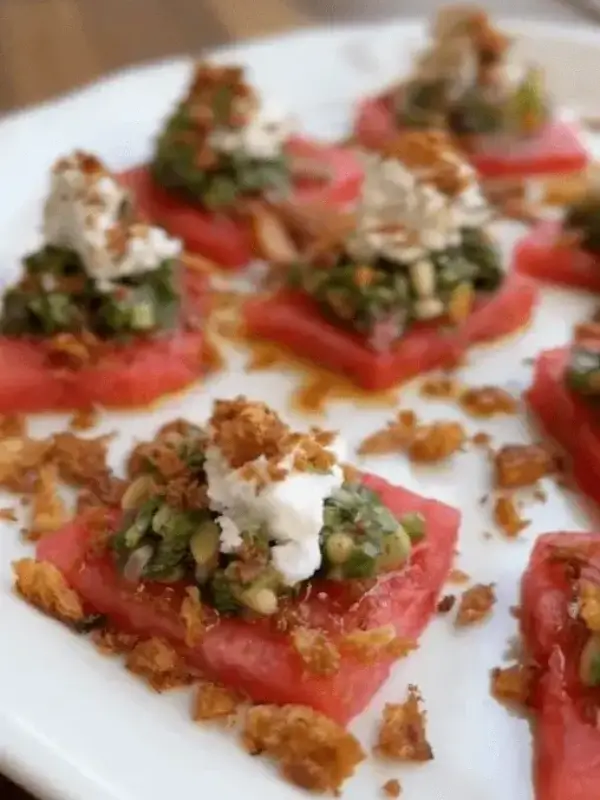
Middle Eastern Watermelon Salad
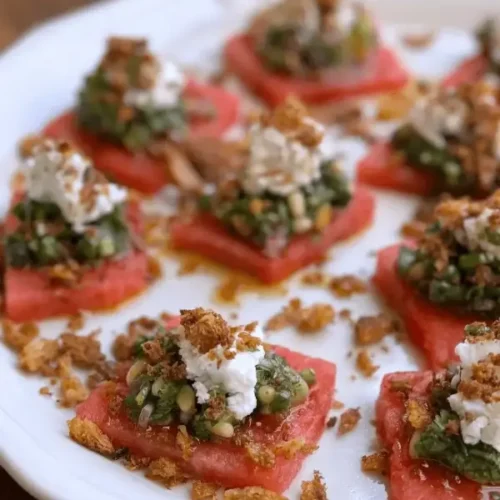
Watch the Full Step-by-Step
- Chef's knife
- Large mixing bowl
- Medium skillet
- Serving platter
INGREDIENTS
- Seedless watermelon squares, about 1 inch/2.5 cm thick
- 2 to 3 slices day-old white bread
- 3 tablespoons olive oil, plus more for drizzling
- 3.5 ounces/100 grams feta cheese
- 2 green chilies, thinly sliced
Salsa:
- Peels from 3 small cucumbers, finely chopped
- 2 scallions, thinly sliced
- 1/2 small red onion, finely chopped
- 1/2 bunch cilantro, finely chopped
- 1/4 cup basil leaves, finely chopped
- 1/4 cup mint leaves, finely chopped
- 2 tablespoons toasted pine nuts
- 1 tablespoon sumac
- 1/2 teaspoon salt, or to taste
- 1/4 cup olive oil
- 2 tablespoons freshly squeezed lemon

INSTRUCTIONS
- Heat the oven to 400°F (200°C).
- Tear the bread into bite-size pieces and toss with 1 tablespoon/15 ml olive oil. Spread evenly on a baking sheet and bake for about 10 minutes, until crisp and golden. Let cool completely, then crumble into coarse breadcrumbs by hand.
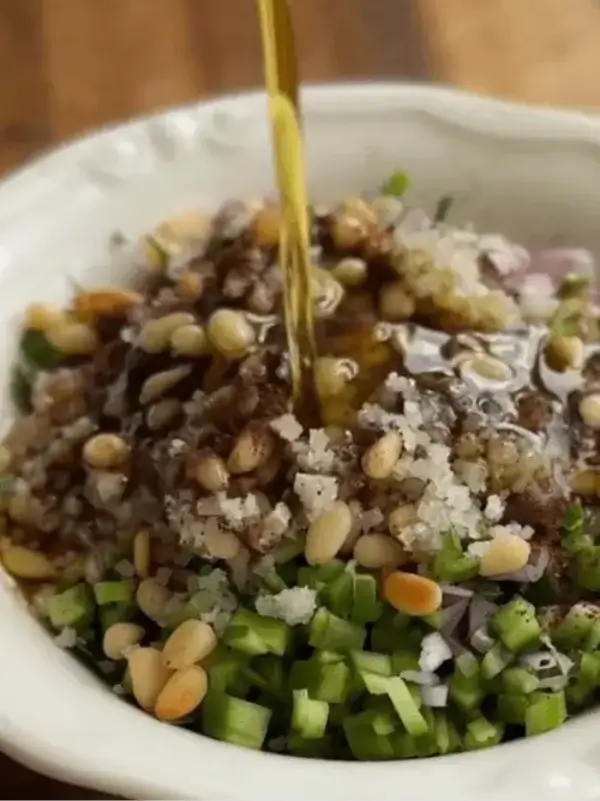
- In a large bowl, combine the cucumber peels, scallions, red onion, cilantro, basil, mint, pine nuts, sumac, salt, olive oil, and lemon juice. Toss well to form a chunky, herb-packed salsa.
- In a medium skillet, heat the remaining 2 tablespoons/30 ml olive oil over medium heat. Add the challah crumbs and cook, stirring often, for 5 to 7 minutes, or until deeply golden and crisp. Transfer to a paper towel-lined plate to cool.
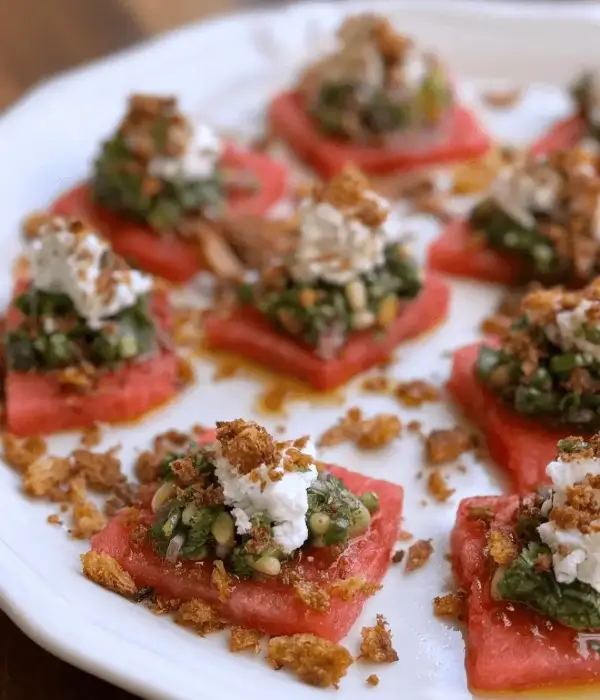
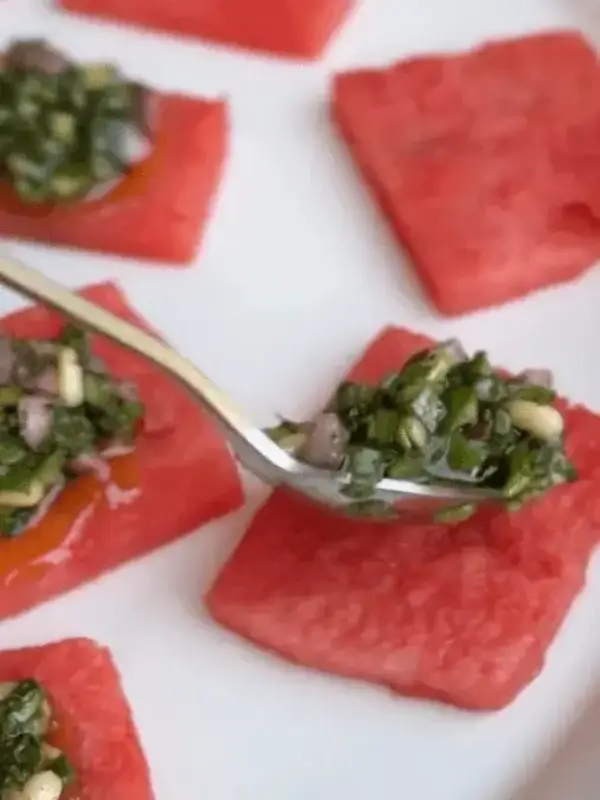
- To assemble, arrange the watermelon slices on a large serving platter. Spoon the herb salsa generously over the top. Add a few slices of green chili and scatter with crumbled feta. Drizzle lightly with olive oil and finish with a handful of the crisp challah crumbs. Serve immediately.
FAQ
What type of feta works best for Middle Eastern watermelon salad?
It’s best to use a firm, brined feta made from sheep’s milk or a combination of sheep’s and goat’s milk. This type holds its shape well and adds the ideal salty contrast to the sweet watermelon and herbed salsa. Avoid pre-crumbled feta, which is often drier and coated in anti-caking agents. Instead, buy feta in a block and crumble it by hand just before serving. Bulgarian or Greek feta tends to have the right balance of saltiness and creaminess for this refreshing dish.
Can I make this Middle Eastern watermelon salad ahead of time?
You can prep most components of the Middle Eastern watermelon salad ahead, but it’s best to assemble it just before serving. The salsa can be mixed up to 4 hours in advance and kept covered in the refrigerator. Toasted challah crumbs can be made a day ahead and stored in an airtight container at room temperature. Watermelon should be sliced and chilled no more than an hour before serving to maintain texture. Don’t add olive oil or salt to the salsa early on, as it may cause wilting or excess liquid.
What is the purpose of using cucumber peels in the salsa?
Cucumber peels add texture, color, and a hint of bitterness that balances the sweetness of the watermelon and the saltiness of the feta in a Middle Eastern watermelon salad. They also contribute a satisfying crunch without the wateriness of the cucumber flesh, which could dilute the salsa. Using just the peels helps keep the salsa vibrant and concentrated, allowing the herbs and sumac to shine through. If your cucumbers aren’t waxed or bitter, the peels are perfectly edible and offer a great way to reduce waste while enhancing the salad’s flavor profile.
What is the purpose of using cucumber peels in the salsa?
Cucumber peels add texture, color, and a hint of bitterness that balances the sweetness of the watermelon and the saltiness of the feta in a Middle Eastern watermelon salad. They also contribute a satisfying crunch without the wateriness of the cucumber flesh, which could dilute the salsa. Using just the peels helps keep the salsa vibrant and concentrated, allowing the herbs and sumac to shine through. If your cucumbers aren’t waxed or bitter, the peels are perfectly edible and offer a great way to reduce waste while enhancing the salad’s flavor profile.
Can I skip the sumac?
Sumac plays an important role in Middle Eastern watermelon salad by adding a tangy, lemony depth that complements the sweet melon and balances the richness of the feta and olive oil. While not absolutely essential, omitting it will slightly dull the overall flavor profile. If you don’t have sumac, you can substitute with a small amount of lemon zest or a splash of pomegranate molasses, though neither replicates the exact flavor. For the most authentic taste, it’s worth seeking out sumac—it’s a staple in many Middle Eastern spice blends and widely available in specialty or online markets.
What kind of watermelon is best for this salad?
Use a seedless, firm, and deeply red-fleshed watermelon for the best results in Middle Eastern watermelon salad. Choose a melon that feels heavy for its size and has a large yellow field spot—both signs of ripeness. A firm texture is important so that the watermelon slices hold their shape under the salsa and toppings. Avoid overly ripe or mealy melons, which tend to break down when plated and may water down the salad. Small personal watermelons or mini varieties work especially well since they tend to be sweeter and easier to slice into even squares.
How do I prevent the crumbs from getting soggy?
Don’t add them until the very last minute before serving. Make sure the breadcrumbs are fully cooled after frying, and drain them well on paper towels to remove any excess oil. Assemble the salad components first—watermelon, salsa, feta, and chili—then scatter the crumbs on top right before bringing it to the table. If you’re making the salad buffet-style or for a crowd, consider serving the crumbs in a small bowl on the side so guests can sprinkle them on individually.