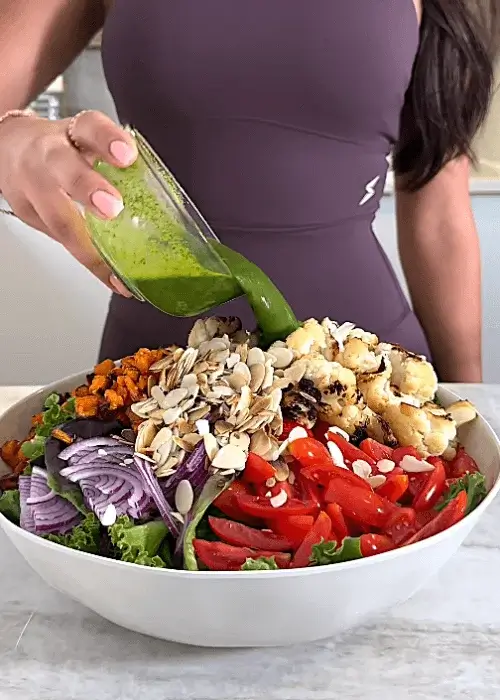
Lettuce Salad with Roasted Vegetables and Cilantro Vinaigrette
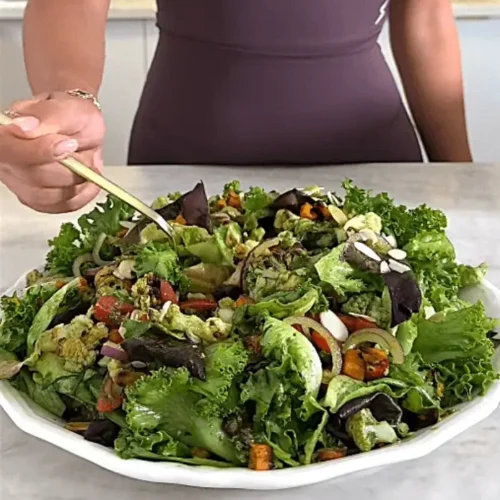
Watch the Full Step-by-Step
- Large pot
- Colander
- Rimmed baking sheet
- Blender
- Large mixing bowl
- Chef's knife
INGREDIENTS
- 4 cups/120 grams Lollo lettuce, roughly torn
- 4 cups/120 grams Salanova lettuce, roughly torn
- 2 medium sweet potatoes, peeled and cubed
- 1 medium head cauliflower, cut into florets
- ½ cup Parmesan cheese, finely grated
- 1½ cups cherry tomatoes, quartered
- ¼ cup sliced almonds
- ¼ cup red onion, thinly sliced
- Dressing:
- 1 cup fresh cilantro leaves
- ¼ cup white wine vinegar
- ¼ cup honey
- 1 tablespoon sugar
- ½ teaspoon salt
- 3 tablespoons olive oil
- 2 garlic cloves
- 3 tablespoons water

INSTRUCTIONS
- Heat the oven to 400°F/200°C. Bring a large pot of well-salted water to a boil. Add the cauliflower florets and cook until just tender, about 10 minutes. Drain thoroughly and spread on a parchment-lined rimmed baking sheet. Sprinkle evenly with the Parmesan.
- Add the sweet potatoes to the same baking sheet, drizzle lightly with olive oil, and season with salt. Roast, turning once, until the vegetables are deeply golden and tender, 30 to 35 minutes.
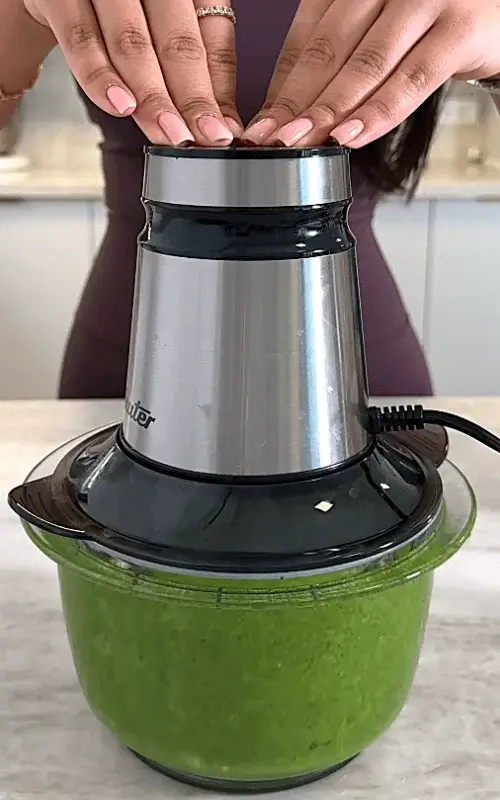
- Meanwhile, combine the cilantro, vinegar, honey, sugar, salt, olive oil, garlic, and water in a blender or food processor. Blend until completely smooth and bright green.
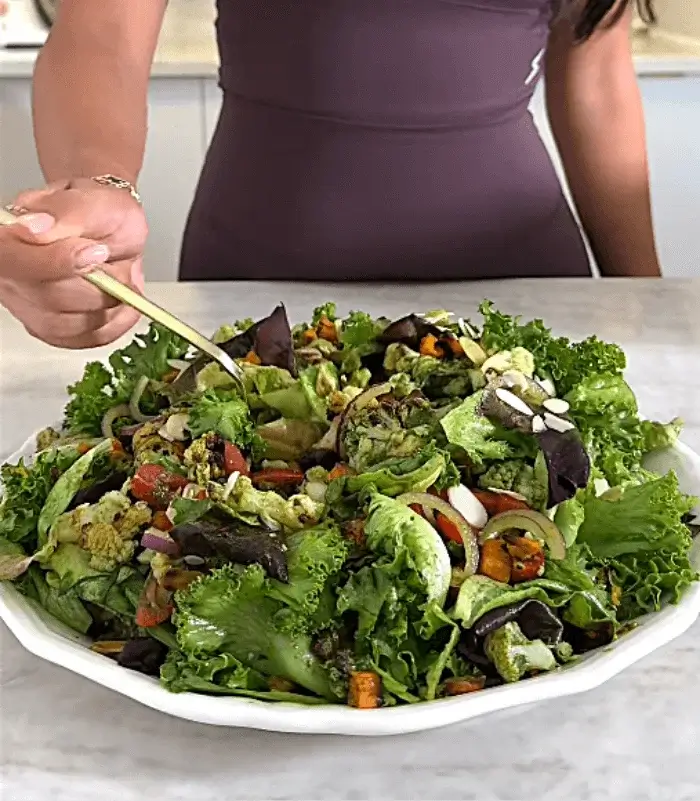
- In a large bowl, combine the lettuces, cherry tomatoes, red onion, almonds, roasted cauliflower, and sweet potatoes. Add the dressing and toss gently to coat. Transfer to a serving platter and serve immediately.
FAQ
What other vegetables can I use in this lettuce salad?
you can substitute with vegetables that roast well and provide a similar balance of sweetness and texture in this lettuce salad. Butternut squash, carrots, parsnips, or even bell peppers work nicely as a replacement for sweet potatoes. For cauliflower, broccoli florets or Romanesco can provide a similar roasted flavor and firmness.
The key is to choose vegetables that maintain structure when roasted and complement the creamy, tangy dressing. Slice vegetables into similar sizes to ensure even roasting. Adjust roasting time as needed based on the vegetable’s density to achieve caramelized, tender bites.
What can I substitute the cilantro with in the dressing?
Parsley provides a milder, fresh flavor that complements roasted vegetables without overpowering them. Basil adds a sweet and aromatic note, giving the salad a slightly Mediterranean profile. Mint offers a refreshing twist, particularly in spring or summer. For a more robust flavor, a combination of parsley and chives works well. When substituting, keep the same herb quantity by volume to maintain the dressing’s consistency.
How do I prevent the roasted vegetables from drying out?
Ensure even oil coating before roasting. Use a moderate oven temperature, around 400°F/200°C, and avoid overcrowding the pan so that steam can escape but vegetables roast evenly. Turn the vegetables halfway through roasting to achieve consistent caramelization. If you notice dryness, drizzle a small amount of olive oil after roasting to reintroduce moisture. Properly roasted vegetables should be tender with lightly caramelized edges.

What is the best way to toast the almonds?
Preheat the oven to 350°F/175°C and spread the sliced almonds in a single layer on a baking sheet. Bake for 5 to 8 minutes, stirring once halfway through, until the almonds are golden and fragrant. Alternatively, you can toast them on the stovetop in a dry skillet over medium heat, stirring frequently for about 3 to 5 minutes to prevent burning. Allow the almonds to cool completely before adding to the salad to preserve their crispness.
How can I make this lettuce salad vegan-friendly?
The salad can be easily adapted to a vegan diet by replacing the Parmesan cheese with a plant-based alternative. Nutritional yeast, vegan Parmesan, or finely ground cashews can provide a similar savory, umami flavor. Ensure that the honey in the dressing is substituted with maple syrup, agave nectar, or another plant-based sweetener.
All other ingredients—including the roasted vegetables, almonds, and lettuces—are naturally vegan. By making these adjustments, you preserve the salad’s structure, flavor balance, and bright cilantro vinaigrette.
Can the salad be served warm?
Yes! After roasting the sweet potatoes and cauliflower, you can combine them immediately with the dressing, leaving the lettuces separate until just before serving. Gently toss the lettuces with the warm vegetables at the last moment to prevent wilting, or serve the roasted vegetables on top of the fresh lettuces without mixing. The warmth of the vegetables will slightly wilt the lettuces, creating a softer texture and richer flavor.
Add protein to the lettuce salad to make it a full meal
Grilled chicken breast, roasted turkey, or seared salmon pair beautifully with the roasted vegetables and bright cilantro vinaigrette. For vegetarian or vegan options, chickpeas, lentils, tofu, or tempeh work well, either roasted, baked, or lightly pan-seared for extra flavor.
Nuts, like almonds already in the recipe, can provide a small protein boost, but pairing with a larger protein source makes the salad more filling. Add protein just before serving to maintain texture and balance.
How can I make the dressing creamier?
you can incorporate a soft, neutral ingredient while maintaining the bright, herbaceous flavor. Greek yogurt, silken tofu, or a vegan cashew cream can be blended directly into the dressing for a smooth, luxurious texture. Adjust the liquid (water or vinegar) as needed to keep it pourable but thick enough to cling to the roasted vegetables and lettuce leaves.
What type of vinegar works best in this lettuce salad dressing?
White wine vinegar is used in this recipe because it is mild and slightly fruity, allowing the roasted vegetables and cilantro to shine. You can also experiment with apple cider vinegar for a gentle, tangy sweetness, or rice vinegar for a softer, less acidic profile.
Avoid strong, overpowering vinegars like balsamic unless balanced carefully with extra honey or sweetener, as they can dominate the delicate roasted flavors. Maintaining the proper vinegar-to-oil ratio ensures the dressing emulsifies smoothly, evenly coating the lettuces and vegetables.