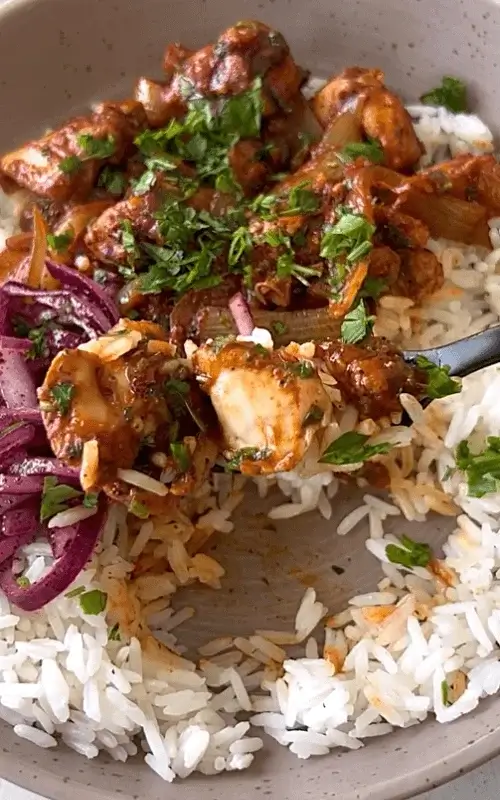
Spicy Chicken Thighs Bowl
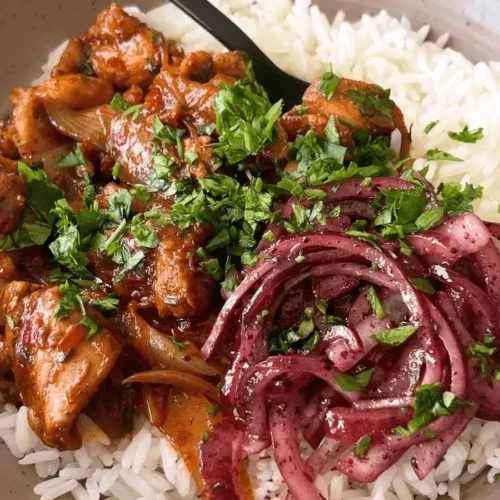
Watch the Full Step-by-Step
- Large skillet
- Mixing bowls
- Chef's knife
INGREDIENTS
Chicken:
- 1.5 pounds/680 grams boneless chicken thighs, cubed
- 1 large yellow onion, thinly sliced
- 2 tablespoons harissa, divided
- 1 tablespoon date syrup or honey
- 1 teaspoon paprika
- 1 teaspoon ground cumin
- ½ teaspoon salt
- ½ teaspoon black pepper
- 2 tablespoons water
- 2 tablespoons olive oil
- ¼ cup parsley, chopped
Sumac onions:
- 2 small red onions, halved and thinly sliced
- 1 tablespoon sumac
- 3 tablespoons lemon juice
- ¼ cup olive oil
- ½ teaspoon salt
- ¼ cup parsley, chopped
Rice:
- 1 cup long-grain white rice
- 2 cups water
- ½ teaspoon salt
Harissa substitute:
- 1 tablespoon tomato paste
- 1 teaspoon chili flakes, or cayenne, to taste
- 1 teaspoon paprika, sweet or smoked
- ½ teaspoon ground cumin
- 1 garlic clove, grated
- 1 tablespoon olive oil
- Pinch of salt

INSTRUCTIONS
- Rinse the rice under cold water until the water runs mostly clear.
- In a small saucepan, combine the rice, water and salt. Bring to a boil over high heat, then reduce to low, cover and cook until the water is absorbed and the rice is tender, 15 to 18 minutes. Remove from heat and let steam, covered, for 10 minutes. Fluff with a fork.
- In a medium bowl, toss the red onions with the sumac. Add the lemon juice, olive oil, salt and parsley, and toss well. Let stand for at least 30 minutes.
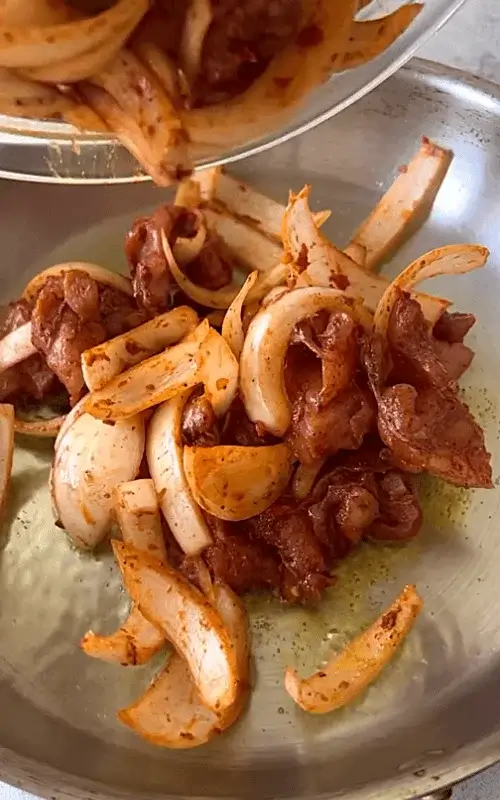
- In a large bowl, combine the chicken, yellow onion, 1 tablespoon harissa, the date syrup, paprika, cumin, salt and pepper. Toss to coat.
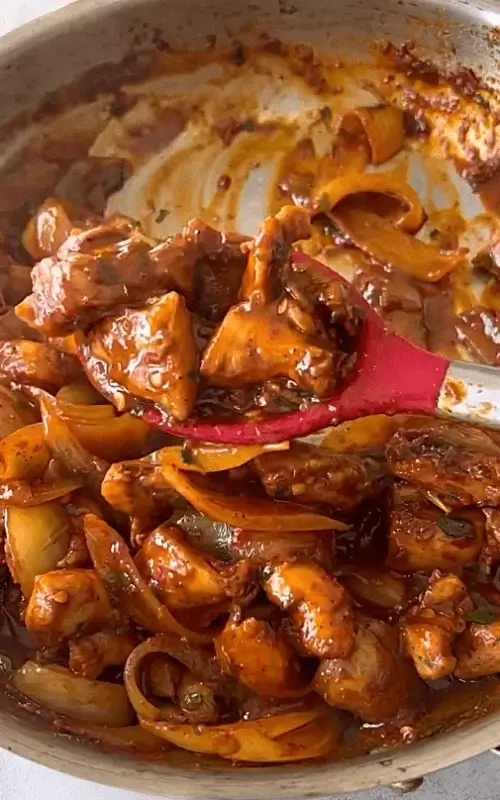
- Heat the olive oil in a large skillet over medium-high. Add the chicken mixture and cook, stirring occasionally, until browned and cooked through, 8 to 10 minutes.
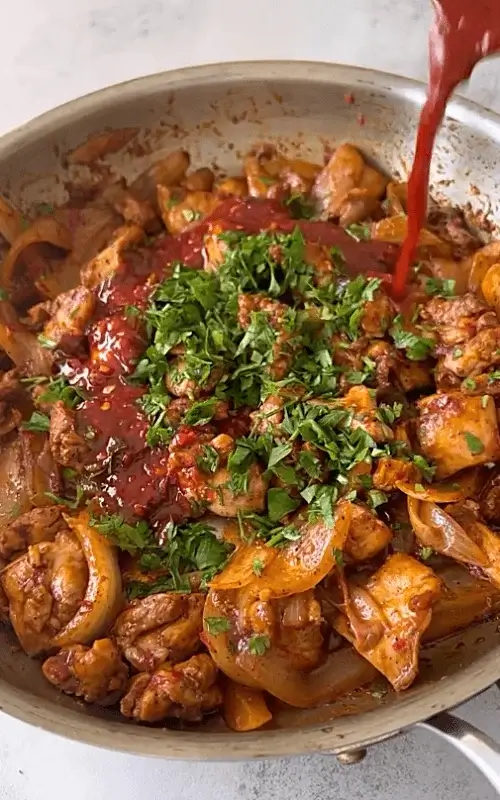
- Stir together the remaining tablespoon harissa and the water, then add to the skillet. Cook, tossing, until the sauce lightly thickens and coats the chicken, 2 to 3 minutes. Stir in the parsley.
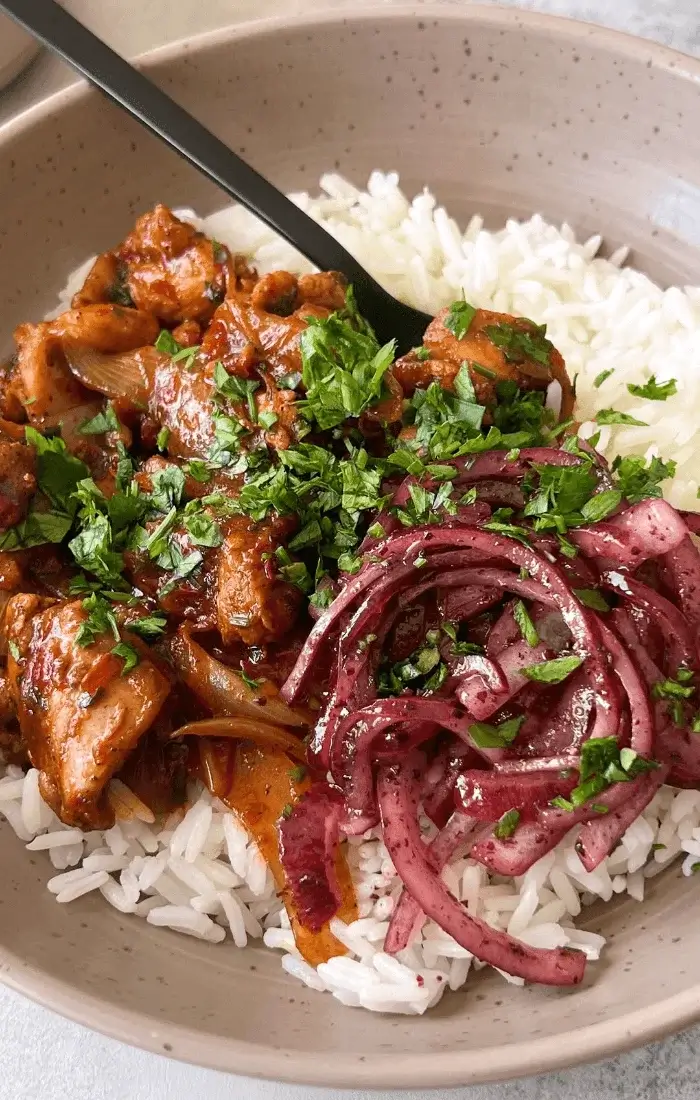
- Serve the chicken over white rice and top with the sumac onions.
FAQ
What is the best way to prevent spicy chicken thighs from overcooking?
Preventing overcooked spicy chicken thighs comes down to controlling heat, timing, and piece size. Cutting the thighs into uniform 1-inch cubes ensures even cooking, which is critical in a fast skillet preparation. Cooking over medium-high heat allows browning without excessive moisture loss, but constant stirring is necessary to avoid scorching the harissa, which contains sugars from ingredients like date syrup.
The chicken is done when it reaches an internal temperature of 165°F (74°C), but visual cues such as firm texture and opaque centers are also reliable. Once the sauce is added, the cooking time should remain short, typically 2 to 3 minutes, just enough to glaze without drying the meat. Removing the chicken promptly from heat and letting it rest briefly helps redistribute juices and maintain tenderness.
What is the best way to layer flavor when cooking spicy chicken thighs in a single pan?
Layering flavor in spicy chicken thighs using a single pan relies on sequencing ingredients so that each stage builds complexity rather than overcrowding the cooking process. The first layer is seasoning the raw chicken with spices, onion, and harissa, which allows flavor penetration before heat is applied. The second layer occurs during searing, where high heat develops browning on both chicken and onion, forming the base savory profile.
The third layer comes from the addition of a harissa-date syrup mixture, which deglazes the pan and creates a cohesive sauce that binds earlier flavors together. Each step should be timed so moisture is controlled rather than pooled, ensuring concentration instead of dilution. Finally, fresh parsley is added off heat to restore brightness. This structured layering is what prevents spicy chicken thighs from tasting flat and instead produces a complex, restaurant-style depth from a single skillet.
What role does sumac play in balancing spicy chicken thighs?
Sumac is a critical balancing agent in spicy chicken thighs because it introduces a dry, citrus-like acidity that offsets both heat and richness. Unlike lemon juice alone, sumac delivers acidity without excess moisture, which helps maintain texture in the onion topping. When mixed with red onions, it gently softens their sharpness while preserving crunch, creating a topping that is both bright and texturally contrasting.
In dishes built around bold spices like harissa, cumin, and paprika, acidity is essential to prevent palate fatigue. Sumac achieves this without overpowering the other flavors. It also enhances the perception of freshness in the dish, making the spicy chicken thighs feel lighter and more dynamic. The combination of sumac, lemon juice, olive oil, and parsley creates a layered condiment that cuts through fat while reinforcing the dish’s Mediterranean flavor profile.
Why is resting rice important before serving spicy chicken thighs bowls?
Resting rice after cooking is a critical step in achieving the correct texture for spicy chicken thighs bowls. During the resting period, residual steam redistributes moisture evenly throughout the grains, preventing wet spots or uneven softness. This also allows the starches on the surface to stabilize, resulting in a fluffier, less sticky texture when fluffed with a fork.
If rice is served immediately after boiling, it often retains uneven moisture distribution, leading to clumping or mushiness when combined with saucy chicken. In a dish like spicy chicken thighs bowls, where the sauce is already rich and coating, properly rested rice acts as a stable foundation that absorbs flavor without collapsing. The covered steaming phase also completes internal cooking without additional heat input, which prevents overcooking and ensures each grain remains distinct yet tender.

What is the purpose of adding a second layer of harissa in spicy chicken thighs?
The second addition of harissa in spicy chicken thighs serves as a flavor amplifier and sauce base rather than just a marinade component. The first portion coats the chicken before cooking, allowing the spices to penetrate and begin developing flavor under heat. The second portion is introduced later with water to form a light sauce that clings to the cooked chicken.
This layering technique ensures that harissa is present both inside and outside the meat, creating depth rather than a flat spice profile. When the sauce is briefly cooked down, it emulsifies slightly with rendered chicken fat and olive oil, producing a glossy coating. This step is essential for achieving a cohesive dish where the spicy chicken thighs are not just seasoned but fully glazed.
How do spices like cumin and paprika influence the flavor of spicy chicken thighs?
Cumin and paprika play distinct but complementary roles in shaping the flavor profile of spicy chicken thighs. Cumin contributes earthy, warm, and slightly nutty undertones that anchor the sharper heat from harissa. It also enhances savory depth, making the dish taste more rounded and aromatic. Paprika adds mild sweetness, subtle smokiness depending on the variety, and a rich red color that visually reinforces the spice profile.
When heated in oil during cooking, both spices undergo flavor blooming, which intensifies their aromatic compounds and distributes them evenly across the chicken. This process ensures that the spice flavor is not raw or powdery but integrated into the fat and surface of the meat. Together, cumin and paprika act as structural spices, building a base that supports the brighter acidity of sumac onions and the heat-forward character of spicy chicken thighs.
How can spicy chicken thighs be adjusted for different spice levels?
Spicy chicken thighs can be easily adjusted for heat tolerance without altering the core structure of the recipe by modifying the harissa quantity and balancing agents. For a milder version, reducing harissa in the marinade and sauce while slightly increasing date syrup or honey will soften the heat while maintaining flavor depth.
For a spicier profile, additional harissa or a spicier variety can be used, and a pinch of cayenne can be added without affecting texture. The key is that spice should be controlled through the paste and not through structural changes to the dish, such as altering cooking time or removing aromatics like cumin and paprika. Acid from lemon juice in the sumac onions also helps regulate perceived heat, so adjusting that element can further fine-tune balance.
What causes the sauce in spicy chicken thighs to thicken naturally in the pan?
The sauce in spicy chicken thighs thickens naturally due to a combination of reduction, emulsification, and sugar caramelization. When water and harissa are added to the hot pan, they deglaze browned bits from the chicken and onions, incorporating concentrated flavor into the liquid. As the mixture simmers, water evaporates, intensifying both texture and taste.
The date syrup or honey contributes natural sugars that slightly caramelize under heat, increasing viscosity and giving the sauce a glossy finish. Rendered chicken fat and olive oil also emulsify with the harissa paste, creating a cohesive coating rather than a separated liquid. This process is rapid because the skillet environment is shallow, increasing evaporation rate. The result is a lightly thickened glaze that clings to spicy chicken thighs without needing flour, cornstarch, or additional thickeners.
Can you meal prep spicy chicken thighs with rice and sumac onions?
Spicy chicken thighs with rice and sumac onions are well-suited for meal prep if stored correctly and assembled strategically. The chicken can be cooked fully and refrigerated for up to four days, maintaining flavor because the harissa-based sauce helps preserve moisture. Rice should be cooled quickly after cooking and stored separately to prevent it from becoming mushy.
Sumac onions can also be prepped ahead, but they are best within two to three days, as the texture softens over time while still retaining flavor. For meal prep, it is best to store each component separately and combine just before eating. Reheating the chicken gently in a skillet with a splash of water helps restore its sauciness. This approach keeps spicy chicken thighs tasting fresh rather than overly dense or dry.
Why does marinating improve spicy chicken thighs even if the time is short?
Even a short marination period significantly improves spicy chicken thighs because salt and spices begin to penetrate the surface of the meat while also altering protein structure. Salt helps denature muscle proteins, which improves moisture retention during cooking and leads to a juicier final texture. Harissa contributes fat, chili, and aromatics that adhere to the chicken, ensuring even flavor distribution before heat is applied.
Aromatics like cumin and paprika bloom slightly in the presence of fat, which enhances their volatility during cooking. Even 15 to 30 minutes of resting time allows surface seasoning to hydrate and adhere more effectively, creating a more cohesive crust during searing. While long marination is not required, this short resting window ensures that spicy chicken thighs develop deeper seasoning penetration rather than relying solely on surface coating during cooking.